
US-China AI Competition Intensifies Over Open-Weight Model Governance
The intensifying rivalry between the United States and China in artificial intelligence has taken a sharp turn with Beijing's push into open-weight models, exemplified by Moonshot AI's release of the massive Kimi K3. This 2.8-trillion-parameter system directly challenges American dominance in closed models while exposing deep divides over security, innovation, and global technological leadership.
The intensifying rivalry between the United States and China in artificial intelligence has taken a sharp turn with Beijing's push into open-weight models, exemplified by Moonshot AI's release of the massive Kimi K3. This 2.8-trillion-parameter system directly challenges American dominance in closed models while exposing deep divides over security, innovation, and global technological leadership. As export controls tighten and self-reliance strategies accelerate, the contest over model governance now shapes the future of AI worldwide.
US-China AI Rivalry Escalates Over Open-Weight Models
Washington/Beijing — Article continues...
In a recent CGTN report from the program "The Heat," analysts examined the deepening divide between Washington and Beijing on open-weight artificial intelligence models, highlighting how Chinese laboratory Moonshot AI's release of the 2.8 trillion parameter Kimi K3 has intensified debates over innovation, security, and global technological leadership.
Moonshot AI's Kimi K3 and the Open-Weight Challenge
Moonshot AI unveiled Kimi K3 as a direct competitor to leading closed models from the United States. The model's open-weight design allows researchers worldwide to access and adapt its parameters while retaining certain safeguards. This approach aligns with China's emphasis on technological self-sufficiency under the Dual Circulation strategy, enabling domestic firms to reduce reliance on foreign proprietary systems. The release comes amid ongoing US export controls on advanced semiconductors, positioning open-weight models as an alternative pathway for Chinese AI advancement.
Moonshot AI, founded in 2023 by Yang Zhilin, a Tsinghua PhD, released Kimi K3 with its reported 1-million-token context window as part of efforts aligned with China's 14th Five-Year Plan for AI development. Industry observers have compared its benchmark performance against models such as GPT-4o, Claude 4, and Gemini, noting the open-weight format's potential to support broader adaptation while security features remain in place. This release occurs against the backdrop of US semiconductor export controls, offering Chinese developers an avenue to advance capabilities through domestic resources rather than foreign closed systems.
The model's scale and accessibility reflect ongoing priorities in technological self-reliance, allowing research institutions and firms to fine-tune parameters for specialized applications. As timelines for further iterations remain fluid, the approach positions open-weight releases as a complement to closed-model strategies pursued elsewhere. Integration with national planning documents continues to shape how such tools are deployed across sectors.
American Policy Responses and Industry Pushback
US policymakers are weighing restrictions on open-weight AI distribution, citing risks of model distillation and potential military applications by adversaries. Think tanks such as the Center for Strategic and International Studies and the Center for a New American Security have outlined scenarios where unrestricted access could erode American technological edges in areas like semiconductors and quantum computing. At the same time, companies including Nvidia and Mistral have advised the Office of the United States Trade Representative and the Department of Commerce against broad curbs, warning that such measures might stifle domestic innovation and cede ground to Chinese competitors.
American policymakers continue to evaluate expansions of the Executive Order on AI, possible CHIPS Act amendments, and Bureau of Industry and Security controls targeting model weights. The US AI Safety Institute has hosted internal discussions on risks associated with unrestricted distribution, including distillation pathways that could affect semiconductor and quantum advantages. Companies such as Nvidia and Mistral have engaged the Office of the United States Trade Representative and Department of Commerce, with Mistral's CEO emphasizing that overly broad measures risk slowing US progress and shifting momentum toward competitors.
Think tank analyses from the Center for Strategic and International Studies and the Center for a New American Security have outlined scenarios involving military or adversarial applications, prompting measured consideration of targeted rather than comprehensive restrictions. These debates unfold alongside industry input stressing the need to preserve innovation incentives within alliance frameworks.
Beijing's Strategic Calculus in AI Development
Chinese officials view open-weight AI as integral to expanding regional influence and building multilateral frameworks. The Ministry of Commerce has supported initiatives that promote technology diffusion while maintaining security protocols. This stance reflects Beijing's broader foreign policy doctrine of multilateral institution-building, seen in its participation at the recent APEC-related summit where 21 economies endorsed open-source AI accompanied by strong security measures. The strategy seeks to counter US dominance in closed models and foster partnerships that enhance China's role in global standards-setting.
Broader Implications for International AI Norms
The debate over open-weight versus closed models carries consequences for global AI governance. OpenAI executives have publicly criticized China's approach, framing it as a potential vector for adversarial use. Yet the APEC consensus suggests room for hybrid frameworks that balance openness with safeguards. Second-order effects include shifts in how the European Union and ASEAN nations approach AI regulation, potentially leading to fragmented standards that complicate cross-border collaboration in research and deployment.
The EU AI Act's classification framework for open-weight models introduces transparency and risk-assessment requirements that differ from approaches discussed at the UK AI Safety Summit follow-up events. China's Global AI Governance Initiative, presented at the United Nations, advocates multilateral standards that emphasize diffusion alongside security protocols. Regulatory fragmentation across these jurisdictions creates layered compliance obligations for corporations operating in multiple markets.
ASEAN and other regional bodies are monitoring these developments, with potential for hybrid governance models to emerge from ongoing APEC-related dialogues. Such divergence may extend timelines for unified international norms while prompting firms to maintain separate development tracks for different regulatory environments.
Impacts on Developing Nations and Technology Chains
For the Global South, open-weight models like Kimi K3 could accelerate access to advanced capabilities without dependence on US licensing regimes. This dynamic may reshape tech supply chains by encouraging alternative ecosystems less tied to American export controls. However, concerns persist about uneven security practices, which could expose smaller economies to risks in critical infrastructure applications. Historical parallels with 5G competition illustrate how such divides often result in bifurcated markets rather than unified global norms.
Southeast Asian countries including Vietnam, Indonesia, and Thailand have begun integrating Chinese open-weight models into local research and commercial projects, influencing procurement choices among US allies seeking diversified technology options. In several African nations, similar models support healthcare diagnostics and agricultural planning initiatives, reducing immediate dependence on licensing structures tied to export controls. These patterns suggest emerging supply-chain adjustments that parallel earlier 5G-related market divisions.
Multinational firms face increasing complexity in navigating differing access regimes, while smaller economies weigh security-practice variations against capability gains. Historical precedents indicate such developments often lead to parallel rather than integrated technology ecosystems over extended periods.
Prospects for Future US-China AI Engagement
Looking ahead, both sides face trade-offs between security imperatives and innovation incentives. The United States retains leverage through semiconductor leadership and alliance networks, while China advances through scale and open-weight dissemination. Any resolution will likely require sustained dialogue involving specific entities such as the National Development and Reform Commission and US counterparts to address model governance without halting progress. The outcome will influence not only bilateral relations but also the trajectory of AI development across multiple domains for years to come.
By Prof. Marcus Chen, Staff Writer
This article was produced with AI-assisted research and editorial support. Reporting is based on sources cited in the article.
What's Your Reaction?
 Like
0
Like
0
 Dislike
0
Dislike
0
 Love
0
Love
0
 Funny
0
Funny
0
 Wow
0
Wow
0
 Sad
0
Sad
0
 Angry
0
Angry
0
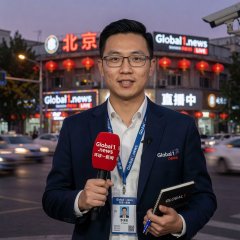
World Politics Analyst at Global1.News. Based in Beijing, covering US-China relations, global trade, and geopolitical strategy. Brings deep analytical perspective to the power dynamics shaping international affairs.















Comments (0)