
RIMPAC 2026 and the Future of Multinational Maritime Operations in the Indo-Pacific
South Korea's Strategic Stake in RIMPAC 2026 The Republic of Korea Navy's participation in RIMPAC 2026 underscores Seoul's deepening commitment to Indo-Pacific maritime security amid rising tensions with both Pyongyang and Beijing. With the exercise scheduled to run from late June through July 2026 and centered on Hawaii, South Korea deploys the Sejong the Great-class Aegis destroyer ROKS Yulgok Yi I as its primary asset.
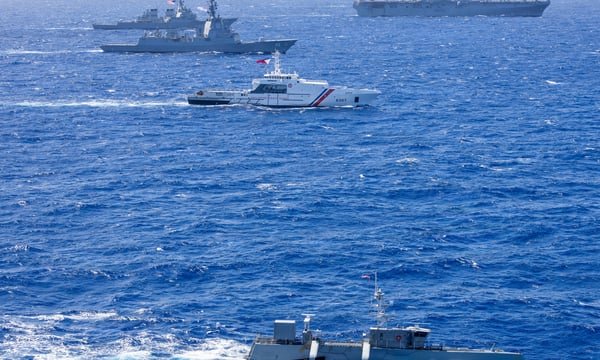
South Korea's Strategic Stake in RIMPAC 2026
The Republic of Korea Navy's participation in RIMPAC 2026 underscores Seoul's deepening commitment to Indo-Pacific maritime security amid rising tensions with both Pyongyang and Beijing. With the exercise scheduled to run from late June through July 2026 and centered on Hawaii, South Korea deploys the Sejong the Great-class Aegis destroyer ROKS Yulgok Yi I as its primary asset. This involvement aligns with Korea's broader foreign policy shift toward active regional engagement, moving beyond its traditional focus on peninsular defense to address wider sea lane vulnerabilities that affect energy imports and trade routes critical to the Korean economy.
The Role of ROKS Yulgok Yi I in Multinational Operations
ROKS Yulgok Yi I joins approximately 40 surface ships, five submarines, and over 140 aircraft from 30 participating nations, including the United States, Japan, Australia, the Philippines, and Singapore. The destroyer participates in joint torpedo firing exercises and multinational familiarization dives, demonstrating interoperability with allied forces. Prior to the main phase, South Korean vessels conducted a group sail with Philippine and Singaporean navies en route to Hawaii, highlighting practical coordination that strengthens collective response capabilities in contested waters. These activities provide Korean sailors direct exposure to advanced tactics employed by larger fleets.
Trilateral Naval Cooperation Among the US, ROK, and Japan
RIMPAC 2026 advances US-ROK-Japan trilateral naval ties at a time when North Korean missile tests and Chinese naval expansion demand synchronized deterrence. The presence of ROKS Yulgok Yi I alongside US and Japanese units facilitates shared situational awareness and command procedures that could prove decisive in a crisis on the Korean Peninsula or in the East China Sea. Such cooperation builds on recent bilateral agreements and offers a platform for refining rules of engagement that respect each nation's political constraints while enhancing collective maritime domain awareness.
Technological Experimentation and Korea's Defense Industry
The exercise places strong emphasis on unmanned systems, cyber capabilities, and at-sea 3D printing, areas where Korean defense firms seek competitive advantages. Multinational crews flying US Navy P-8A Poseidon aircraft for the first time offer Korean personnel opportunities to integrate sensor data and unmanned aerial systems into fleet operations. These demonstrations carry direct implications for Korea's shipbuilding and electronics sectors, which supply both domestic needs and export markets. Participation allows Seoul to evaluate technologies that could counter asymmetric threats from North Korean submarines while preparing for high-end contingencies involving China's growing surface fleet.
Historical Evolution of Korea's Participation in RIMPAC
Korea has steadily expanded its role in RIMPAC since its initial involvement decades ago, transitioning from observer status to a regular contributor of major surface combatants. The 30th iteration in 2026 reflects this progression, with the deployment of an Aegis-equipped destroyer signaling increased confidence in operating within large multinational formations. This evolution mirrors Korea's post-Cold War foreign policy trajectory, which has seen successive administrations balance alliance commitments with greater regional autonomy in security affairs.
Implications for Countering Chinese Naval Expansion
From Seoul's perspective, the exercise's focus on countering China's naval expansion carries particular weight given Beijing's influence over North Korea and its assertive behavior in the South China Sea and around Taiwan. RIMPAC provides a venue to rehearse sea control and denial tactics without direct confrontation, while reinforcing the message that multiple Indo-Pacific navies can operate cohesively. For Korea, these drills also serve as a hedge against potential Chinese economic coercion, preserving freedom of navigation essential to the country's export-driven economy and its position as a key US ally in Northeast Asia.
By Prof. David Park, Staff WriterThis article was produced with AI-assisted research and editorial support. Reporting is based on sources cited in the article.
What's Your Reaction?
 Like
0
Like
0
 Dislike
0
Dislike
0
 Love
0
Love
0
 Funny
0
Funny
0
 Wow
0
Wow
0
 Sad
0
Sad
0
 Angry
0
Angry
0

East Asia/Technology Correspondent at Global1.News. Seoul-based voice covering Korean politics, technology, business, and culture. Analyzes how technology and geopolitics intersect across East Asia.















Comments (0)