
Sigrid Kaag Warns Gaza Cannot Be Forgotten Amid US-Iran Tensions and Lebanon Deal
A Diplomat's Warning: Gaza Cannot Afford to Be Forgotten Sigrid Kaag, the former Dutch deputy prime minister now serving as a member of the Gaza Executive Council, delivered a stark assessment of the territory’s humanitarian emergency during her recent appearance on Al Arabiya English. She stressed that aid must reach displaced civilians without political conditions, as shortag
A Diplomat's Warning: Gaza Cannot Afford to Be Forgotten
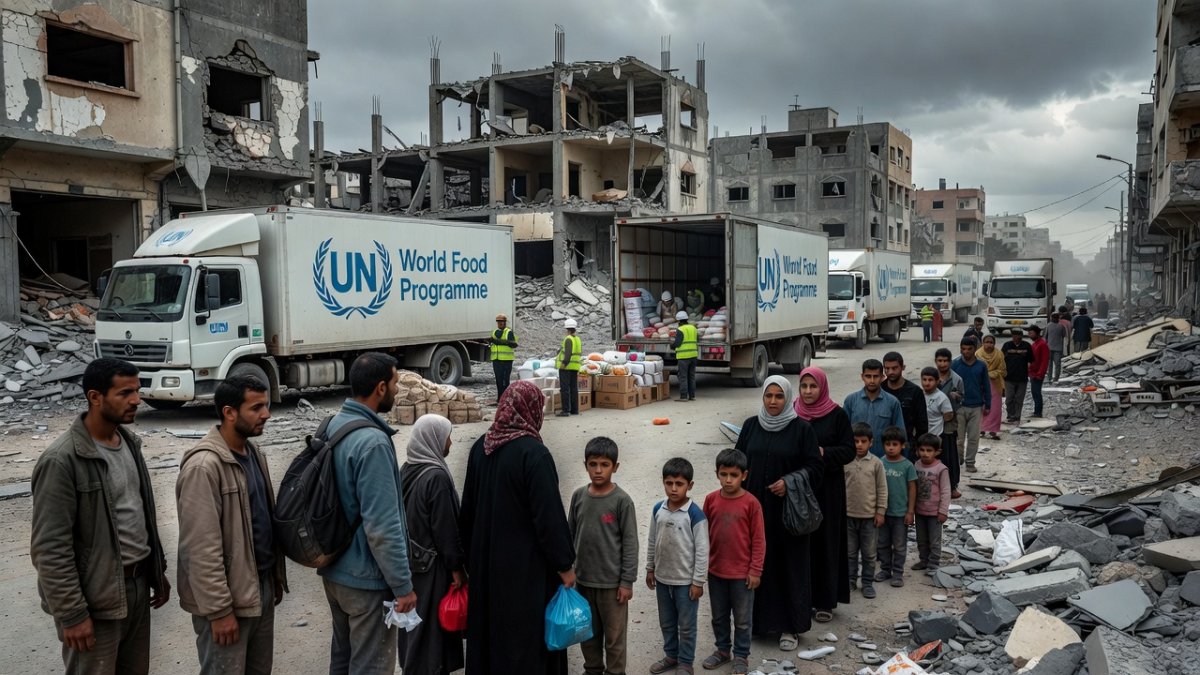
Sigrid Kaag, the former Dutch deputy prime minister now serving as a member of the Gaza Executive Council, delivered a stark assessment of the territory’s humanitarian emergency during her recent appearance on Al Arabiya English. She stressed that aid must reach displaced civilians without political conditions, as shortages of food, medicine, and shelter have reached acute levels across the strip.
Kaag described scenes of families forced into repeated displacement, with limited access to clean water and basic healthcare. International organizations operating on the ground report that the scale of need continues to outstrip available resources, even as donor fatigue sets in among several Western capitals.
The diplomat warned that global attention is drifting away from Gaza at precisely the moment when the crisis remains most critical. Media cycles have shifted toward other flashpoints, yet the underlying drivers of instability—blockades, destruction of infrastructure, and lack of reconstruction—persist without resolution.
Kaag argued that conditioning humanitarian deliveries on political concessions only deepens civilian suffering and undermines the credibility of international relief efforts. She called for immediate, unrestricted access for aid agencies to prevent further deterioration in public health indicators.
Regional actors, including Egypt and Jordan, have expressed concern that prolonged neglect of Gaza could trigger new waves of instability along their borders. Kaag noted that these states are already managing significant refugee pressures and cannot absorb additional shocks without external support.
Her intervention comes at a time when several Gulf states are recalibrating their engagement with Palestinian issues, balancing domestic priorities against traditional solidarity commitments. Kaag urged sustained diplomatic focus to keep Gaza on the international agenda.
The Iran Flashpoint: US Strikes and the Search for Off-Ramps
The June 2026 US retaliatory strikes inside Iran followed an attack on shipping in the Strait of Hormuz that disrupted vital energy routes. Kaag highlighted how these strikes have raised the risk of broader escalation while simultaneously opening narrow diplomatic channels.
President Trump’s public characterization of Iran as possessing “some military capability, not much” was interpreted by analysts as a deliberate rhetorical mix designed to signal openness to negotiations without appearing weak. Kaag observed that such language leaves room for both pressure and dialogue.
Iran retains significant leverage through its network of regional partners and its ability to influence shipping lanes, even after the recent military exchanges. Kaag noted that Tehran’s strategic depth allows it to absorb limited strikes while maintaining asymmetric options.
The Hormuz incident exposed vulnerabilities in global energy supply chains, prompting several Asian importers to accelerate diversification efforts. Kaag emphasized that any prolonged closure or threat to the strait would carry severe economic consequences far beyond the Middle East.
US officials have maintained that further strikes remain possible if Iranian actions threaten maritime traffic again. At the same time, back-channel communications reportedly continue in third countries, seeking to establish parameters for de-escalation.
Kaag stressed that military cycles alone cannot resolve the underlying disputes over nuclear enrichment and regional influence. She advocated for calibrated diplomacy that acknowledges Iran’s security concerns while addressing Gulf states’ threat perceptions.
Trump's Diplomatic Calculus: Legacy on the Line
President Trump appears to be pursuing a dual-track approach toward Iran, combining continued military pressure with an active search for a diplomatic channel. Kaag suggested this strategy reflects both domestic political calculations and a desire to shape his foreign policy legacy before the end of his term.
Republican Overseas commentators have noted that a breakthrough with Iran could bolster Trump’s image as a dealmaker capable of achieving what previous administrations could not. Yet domestic hardliners within his own party remain skeptical of any agreement that leaves Iranian enrichment capacity intact.
The core challenge lies in sequencing: addressing the nuclear file while managing Iran’s support for proxy groups across the region. Kaag observed that Gulf states are hedging their positions, quietly exploring economic openings with Tehran even as they coordinate security measures with Washington.
Trump’s team has floated the possibility of limited sanctions relief tied to verifiable steps on maritime security and nuclear transparency. Kaag indicated that Iranian negotiators are testing whether these signals represent genuine flexibility or merely tactical posturing.
Regional powers such as Saudi Arabia and the UAE are watching closely, wary of any deal that might alter the balance of power without sufficient guarantees. Kaag argued that sustainable progress requires parallel confidence-building measures involving multiple stakeholders.
Ultimately, Kaag believes Trump’s approach will be judged by whether it produces a durable reduction in tensions or simply resets the clock for the next confrontation.
Lebanon-Israel: A Narrow Window for Northern Peace
The US-mediated Lebanon-Israel agreement has created a tentative pathway for peace talks, addressing long-standing border disputes and security arrangements. Kaag welcomed the framework but cautioned that implementation faces significant hurdles linked to Hezbollah’s political and military posture.
Lebanese domestic politics remain fragile, with economic recovery dependent on external support that could be jeopardized by renewed cross-border incidents. Kaag stressed that progress on the northern front must be accompanied by tangible movement on Gaza to maintain regional coherence.
Hezbollah’s leadership has signaled conditional acceptance of the agreement’s security provisions, yet retains the capacity to disrupt implementation if it perceives core interests threatened. Kaag noted that sustained US engagement will be essential to keep both sides aligned.
Parallel economic incentives, including reconstruction funding and energy cooperation, could help anchor the agreement. Kaag argued that without visible dividends for Lebanese civilians, public support for the deal may erode quickly.
Rebuilding Trust: Institutions and the Path to Stability
Kaag acknowledged that trust in international institutions such as the United Nations and the International Criminal Court has eroded significantly among multiple Middle Eastern actors. Nevertheless, she maintained that these forums remain essential for managing disputes and legitimizing agreements.
Repeated military cycles have demonstrated their inability to produce lasting solutions. Kaag called for renewed emphasis on political compromise, arguing that security arrangements imposed without local buy-in tend to unravel under pressure.
Reform of existing mechanisms, including more inclusive representation in key decision-making bodies, could help restore credibility. Kaag suggested that regional states should play a larger role in shaping mandates rather than simply reacting to externally driven initiatives.
Without credible enforcement tools, even well-designed agreements risk remaining aspirational. Kaag emphasized the need for realistic benchmarks tied to verifiable actions by all parties.
Regional Implications: What Comes Next
Looking ahead, Kaag sees a narrow but meaningful window for coordinated diplomacy across Gaza, Iran, and Lebanon. Success will depend on aligning US leverage with regional incentives rather than relying on pressure alone.
Energy security and maritime stability remain central concerns for Asian and European powers, giving them a stake in preventing further escalation. Kaag believes their quiet involvement could help sustain momentum if Washington’s attention wavers.
Ultimately, the coming months will test whether the recent Lebanon-Israel framework and tentative US-Iran contacts can evolve into a broader architecture for de-escalation, or whether the region will revert to familiar patterns of confrontation.
By Malik Hassan, Staff Writer **Internal Linking Opportunities:** - Explore how the Lebanon-Israel agreement affects Hezbollah’s regional posture in our analysis of Lebanese security dynamics. - Read our breakdown of Gulf states’ hedging strategies amid US-Iran tensions. - See our coverage of reconstruction challenges facing Gaza’s displaced population. **Social Media Teaser (for X / Postiz):** Sigrid Kaag warns Gaza cannot be forgotten while US-Iran tensions and a new Lebanon deal reshape the region. Unconditional aid and real diplomacy are urgent. #Gaza #Iran #Lebanon **Source Video:** Al Arabiya English: Gaza Executive Council Member Sigrid Kaag on Trump, Iran, and Gaza's Humanitarian Crisis — https://www.youtube.com/watch?v=YjxMtGvXOFYThis article was produced with AI-assisted research and editorial support. Reporting is based on sources cited in the article.
What's Your Reaction?
 Like
0
Like
0
 Dislike
0
Dislike
0
 Love
0
Love
0
 Funny
0
Funny
0
 Wow
0
Wow
0
 Sad
0
Sad
0
 Angry
0
Angry
0
Middle East Correspondent at Global1.News. Based in Beirut, covering politics, conflict, energy, and society across the Middle East. Brings context and depth to a region often reduced to headlines.












Comments (0)