
Oh Se-hoon's Fifth Term as Seoul Mayor: Resilience Amid National Political Shifts
Oh Se-hoon's Fifth Term as Seoul Mayor: Resilience Amid National Political Shifts The 2026 Election Outcome and Its Narrow Margin The June 3, 2026, mayoral contest in Seoul produced an unexpected result when incumbent Oh Se-hoon secured re-election by approximately one percent, or roughly 60,000 votes. All available polls and exit polls had indicated a defeat for the incumbent,
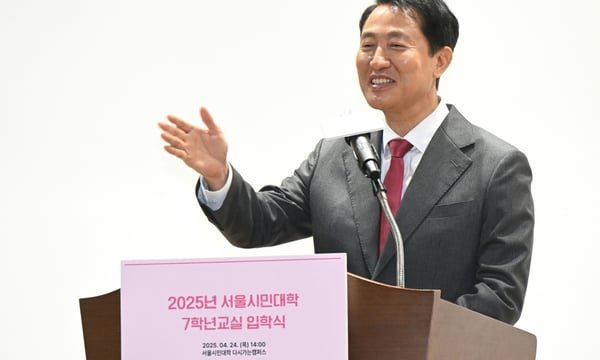
The 2026 Election Outcome and Its Narrow Margin
The June 3, 2026, mayoral contest in Seoul produced an unexpected result when incumbent Oh Se-hoon secured re-election by approximately one percent, or roughly 60,000 votes. All available polls and exit polls had indicated a defeat for the incumbent, with Oh trailing his Democratic Party rival until 7 a.m. on June 4. The final tally, announced around 9 a.m., reversed that deficit and delivered Oh a nonconsecutive fifth term. This outcome underscores the volatility of voter sentiment in South Korea's capital, where local contests often serve as proxies for national alignments between the People Power Party and the Democratic Party.
Seoul's mayoralty carries outsized weight in Korean politics because the city functions as both administrative center and economic engine. Oh's victory, framed through the campaign slogan emphasizing preservation of Seoul as the "last bastion," resonated with voters concerned about policy directions under the Lee Jae-myung administration. The narrow margin highlights how localized appeals can override broader national polling trends, particularly when candidates position themselves as pragmatic defenders of municipal autonomy.
From Environmental Lawyer to Youngest Mayor
Oh Se-hoon began his public career as an environmental lawyer in the 1990s before entering electoral politics in 2000 as a legislator for what became the People Power Party lineage. His election as Seoul mayor in 2006 at age 45 marked him as the youngest individual to hold the post. During his initial term, Seoul received UNESCO designation as a Creative City of Design in 2010, reflecting early emphasis on urban cultural policy alongside environmental priorities. These milestones established Oh's reputation for integrating international standards into municipal governance, a thread that later informed advisory work abroad.
The trajectory from legislative newcomer to city executive illustrates patterns in Korean political recruitment, where professional expertise in law and policy often accelerates advancement within conservative circles. Oh's early focus on design and sustainability also prefigured later engagements with urban administration in developing contexts, demonstrating how local leadership experience can translate into transnational advisory roles.
The 2010 Referendum Crisis and Resignation
Oh's second term encountered significant turbulence when he opposed a free school lunch ordinance and initiated a referendum on the measure. He publicly pledged to resign should the vote go against his position. The referendum failed to achieve the required threshold, yet Oh proceeded with his commitment and stepped down in December 2010 after an emotional press conference in which he kowtowed on the dais. This episode remains a defining moment in his record, illustrating both the risks of direct democratic mechanisms and the personal accountability standards Oh applied to his own pledges.
The resignation episode offers insight into the interplay between local policy disputes and national political culture in Korea. Referendums on welfare provisions such as school meals touched on broader debates over fiscal responsibility versus social equity, themes that continue to divide the People Power Party and Democratic Party platforms. Oh's willingness to tie his tenure to a single issue also set a precedent for subsequent mayoral contests where personal credibility became central to campaign narratives.
Hiatus, International Advisory Work, and Electoral Setbacks
Following his resignation, Oh entered a political hiatus from 2012 to 2016. During this period he lectured on public policy and served as an adviser on urban administration and environmental policy in Peru and Rwanda. These international assignments extended his earlier emphasis on sustainable city planning beyond Korean borders. Attempts to return to the National Assembly in 2016 and 2020 proved unsuccessful, as did his bid for party leadership in 2019. Such repeated setbacks tested the durability of his political network within conservative ranks.
The overseas advisory phase connects to Korea's broader pattern of exporting governance expertise through development cooperation. Oh's work in Peru and Rwanda aligned with Seoul's growing role in sharing urban policy models, particularly in areas of environmental management. These experiences later informed his positioning as a "rational conservative" capable of transcending domestic partisan constraints.
Comeback Through By-Elections and the 2026 Re-election
Oh re-entered the mayoralty via the 2021 by-election triggered by the suicide of Park Won-soon. He then won again in 2022 to complete the remainder of Park's original term. His absence from Seoul during the October 2022 Itaewon tragedy, owing to a business trip in Europe, drew scrutiny yet did not derail subsequent electoral prospects. The 2026 victory, achieved despite early polling deficits, relied on rhetoric framing Seoul as a bulwark against national-level policy shifts associated with the Lee Jae-myung administration.
Throughout the campaign, Oh distanced himself from People Power Party leadership by threatening to run as an independent and urging the party to sever remaining ties with former president Yoon Suk-yeol. This strategic autonomy allowed him to cultivate an image of pragmatic conservatism focused on municipal governance rather than national factional disputes. The result suggests that Seoul voters responded to candidates who emphasized local continuity over alignment with presidential legacies.
Strategic Implications for Korean Politics and Urban Governance
Oh's fifth term arrives at a moment when Seoul's administrative decisions intersect with national debates over decentralization, welfare expansion, and international city branding. His history of engaging both domestic referendums and overseas advisory roles positions him to influence how Korean municipalities balance fiscal conservatism with global urban standards. The nonconsecutive nature of his mandates also reflects the cyclical character of Korean local politics, where personal resilience often compensates for party turbulence.
Looking ahead, the administration will likely prioritize continuity in design-oriented and environmental initiatives while navigating relations with the central government. Oh's self-description as a rational conservative may facilitate selective cooperation across party lines on issues such as infrastructure and sustainability, provided municipal autonomy remains protected. This approach could serve as a model for other Korean cities seeking to insulate local priorities from national polarization.
By Prof. David Park, Staff WriterThis article was produced with AI-assisted research and editorial support. Reporting is based on sources cited in the article.
What's Your Reaction?
 Like
0
Like
0
 Dislike
0
Dislike
0
 Love
0
Love
0
 Funny
0
Funny
0
 Wow
0
Wow
0
 Sad
0
Sad
0
 Angry
0
Angry
0

East Asia/Technology Correspondent at Global1.News. Seoul-based voice covering Korean politics, technology, business, and culture. Analyzes how technology and geopolitics intersect across East Asia.













Comments (0)