
Ramata-Toulaye Sy: Senegal's Youngest Cannes Director Is Redefining African Cinema
When Ramata-Toulaye Sy walked up the steps of the Grand Théâtre Lumière at the Cannes Film Festival in May 2023, she carried more than just her debut feature film on her shoulders. The French-Senegalese director carried the hopes of a generation of African filmmakers watching a barrier fall in real time.
When Ramata-Toulaye Sy walked up the steps of the Grand Théâtre Lumière at the Cannes Film Festival in May 2023, she carried more than just her debut feature film on her shoulders. The French-Senegalese director carried the hopes of a generation of African filmmakers watching a barrier fall in real time. Her film "Banel & Adama" had secured a spot in the official competition for the Palme d'Or, making her not only the youngest director in that year's lineup but only the second Black woman in the festival's 76-year history to compete for its highest honour.
Ramata-Toulaye Sy: How Senegal's Youngest Cannes Director Is Redefining African Cinema
Dakar, Senegal — In a historic moment for Senegalese and African cinema, Ramata-Toulaye Sy claimed her place among the world's most elite filmmakers when her debut feature "Banel & Adama" premiered in competition at the 76th Cannes Film Festival. The film, a visually arresting love story set against the sweeping landscapes of northern Senegal, announced the arrival of a bold new voice in world cinema—one unafraid to challenge both Western perceptions of Africa and the conventions of African storytelling itself.
From La Fémis to the Croisette: A Filmmaker's Journey
Ramata-Toulaye Sy is a French-Senegalese filmmaker born in Bezons, France to Senegalese parents. She was 36 years old when her debut premiered at Cannes 2023. Her path began at La Fémis, the prestigious French film school where she honed her craft alongside peers from across Europe and Africa.
She wrote the Banel & Adama script for her graduation competition in 2015. That early draft already carried the seeds of her distinctive voice, blending intimate character study with the rhythms of rural Senegalese life. The training at La Fémis gave her the technical discipline to later command a full crew on location in northern Senegal.
Before stepping behind the camera as director, she co-wrote Notre-Dame du Nil with Atiq Rahimi. That collaboration sharpened her ear for dialogue rooted in African histories of conflict and resilience. She also worked as first assistant director on the film Sibel by Çagla Zencirci and Guillaume Giovanetti, learning how to manage demanding outdoor shoots.
These experiences prepared her for the intensity of Cannes. At La Fémis she absorbed both classical European technique and the freedom to experiment with form. The result was a filmmaker ready to bring a French-Malian-Senegalese co-production to the Croisette without compromise.
Sy often speaks of how her dual heritage shaped her approach. Time spent between Paris classrooms and family visits to Dakar taught her to navigate two worlds. That balance became essential when she stood before international critics at the festival.
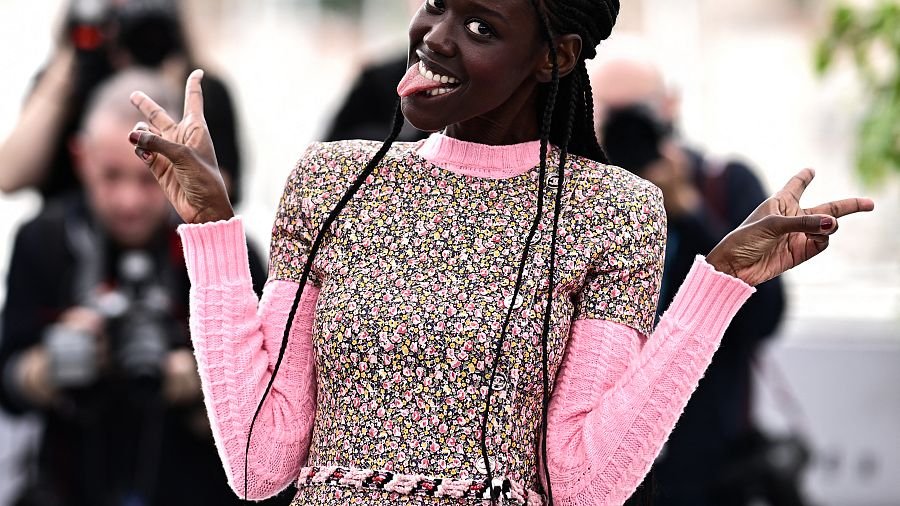
"Banel & Adama": A Love Story That Defies Tradition
The film is set in northern Senegal on the border with Mauritania. It follows a young couple whose love is tested by village traditions in a rural Fulani community. Banel and Adama dream of building a life together, yet drought, custom, and family duty press in from every side.
Sy draws from Peul/Fulani mythology and folklore to enrich the narrative. Spirits and ancestral warnings weave through the story, giving the landscape itself a living presence. The result feels both grounded in daily struggle and lifted by mythic resonance.
Visually the film employs a dreamlike style with lush cinematography that captures the harsh beauty of the Sahel. Golden light falls across sand dunes and thatched compounds, turning ordinary moments into something almost sacred. This approach rejects the dusty, desaturated Africa often seen on Western screens.
Themes of love, freedom, destiny, and community pressure run through every frame. Banel refuses the role assigned to her, while Adama must choose between personal desire and collective expectation. Their conflict mirrors tensions felt across many African villages today.
Sy blends social realism with folklore so that the supernatural feels as natural as the wind. Viewers sense the weight of generations without ever leaving the intimate story of two young people. The film stands as proof that African stories can speak universally while remaining deeply local.
Breaking Barriers: The Second Black Woman in Palme d'Or Competition
Only the second Black woman to compete for the Palme d'Or after Mati Diop's Atlantics in 2019, Sy entered rare company. She was also the youngest director in the 2023 Cannes competition lineup. Her presence marked a quiet but decisive shift in who gets to tell stories on the world's biggest stage.
The film was the only African-set entry in the 2023 Palme d'Or race. It was likewise the only first-time director in the competition. These distinctions underscored how narrow the path remains for African voices at elite festivals.
The film is a French-Malian-Senegalese co-production that brought together crews and financing from three nations. This model reflects the growing reality of pan-African cinema that draws strength from multiple homes. Senegal later chose the film as its official submission for the Academy Awards.
Representation at Cannes matters because the festival still sets the tone for global distribution and critical attention. When an African woman stands on those steps, young filmmakers across Dakar, Bamako, and Lagos see a door that was once closed now slightly ajar. The moment ripples outward for years.
Sy has noted that her selection was never just personal. It carried the weight of every African director who came before and every one still waiting for a chance. The 76-year history of the festival suddenly felt a little less distant from the streets of Dakar.

Deconstructing the African Woman On Screen
Sy created Banel as a complex, unsympathetic female character who refuses easy sympathy. She has said, "I wanted to create an African female character who is complex, deep, not fragile, and not a victim." That choice directly challenges decades of cinema that reduced African women to suffering or saintly figures.
She also stated, "I wanted to deconstruct this vision of Africa that we have, even the place of women." The line captures her intent to push past both Western clichés and local expectations. Banel's ambition and flaws make her fully human rather than symbolic.
Sy described Banel as intentionally unsympathetic: "She's not the smooth, oppressed, black African woman who seeks help." Viewers must confront a woman who acts on her own terms, even when those actions disturb. This approach opens space for more honest portrayals across the continent.
The broader movement of African female filmmakers is reshaping narratives in real time. Directors from Senegal, Nigeria, and Kenya are rejecting one-dimensional roles and insisting on characters who carry contradictions. Sy stands at the forefront of that shift.
Her work arrives at a moment when African audiences increasingly demand stories that reflect their full complexity. By refusing to soften Banel, Sy invites viewers to accept women as agents of their own destinies, not passive bearers of tradition or tragedy.
A Voice for African Cinema on the World Stage
After Cannes the film traveled to TIFF Toronto, SFFILM, and the Red Sea Film Festival. It won Best Director at the Marrakech Film Festival in December 2023. Each stop introduced new audiences to a vision of Senegal that felt both intimate and expansive.
Sy participated in Deadline's Cannes panel on gender parity in cinema. She spoke alongside other women directors about the structural barriers that still limit opportunities. Her presence on that stage reinforced the need for sustained change beyond single premieres.
In her BOMB Magazine interview she reflected on the responsibility of carrying African stories abroad. The conversation highlighted how her training at La Fémis now serves a larger purpose of cultural translation. She continues to work between Paris and Dakar, keeping one foot in each world.
The film found further life on Kino Film Collection and Criterion Channel. Streaming access allows viewers in Dakar and beyond to study its craft without traveling to festivals. This distribution matters for building local film culture and inspiring the next cohort of directors.
Sy's journey shows that African cinema can occupy the center of global conversation without losing its roots. Her measured, grounded presence at every stop reminds audiences that Senegal has always produced storytellers of the highest caliber.
What Ramata-Toulaye Sy Means for Senegal and Africa
Sy's achievement has already lifted Senegalese cinema in the eyes of the world. Young directors in Dakar now see a concrete path from local stories to international stages. The success encourages producers to back more debut features from women.
Her example inspires a new generation of African filmmakers who no longer accept that their work must remain on the margins. The growing presence of African women in film directing signals a permanent change in who controls the lens. Sy's quiet confidence models how to carry that responsibility.
In 2025 she visited her former lycée Georges Braque in Argenteuil, France to speak with students. She told them about the long road from classroom exercises to the Croisette. The visit closed a circle that began when she herself was a student dreaming of cinema.
At the Cannes press conference she said, "Today, you know me." The simple statement carried the weight of years spent working in the background. It also announced that African women directors will no longer remain unknown to global audiences.
The future of African cinema on the global stage looks brighter because of voices like hers. As more films from Senegal and across the continent reach major festivals, the old hierarchies continue to erode. Ramata-Toulaye Sy has helped open that door wider for everyone who follows.
By Amara Diop, Staff Writer
This article was produced with AI-assisted research and editorial support. Reporting is based on sources cited in the article.
What's Your Reaction?
 Like
0
Like
0
 Dislike
0
Dislike
0
 Love
0
Love
0
 Funny
0
Funny
0
 Wow
0
Wow
0
 Sad
0
Sad
0
 Angry
0
Angry
0
West Africa/Sahel Correspondent at Global1.News. Dakar-based journalist covering politics, security, climate, and development across Francophone and Anglophone West Africa. Tells the stories of a region undergoing profound transformation.













Comments (0)