
Gulf of Paria Oil Spill Exposes Fragile Balance Between Energy and Neighbourly Trust
Gulf of Paria Oil Spill Exposes Fragile Balance Between Energy and Neighbourly Trust The May 1 Oil Spill — What Happened at Heritage's Main Field Heritage Petroleum Company Limited first picked up signs of trouble at its offshore Main Field operation in the Gulf of Paria around 7:25 a.m. on May 1. The company immediately reached out to Trinidad and Tobago's Ministry of Energy a
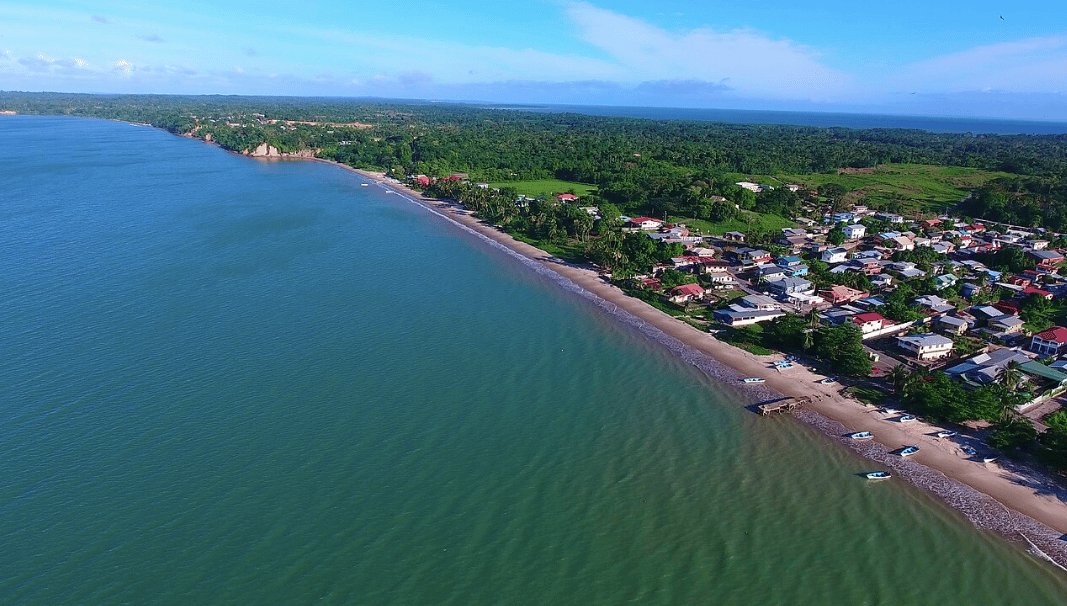
The May 1 Oil Spill — What Happened at Heritage's Main Field
Heritage Petroleum Company Limited first picked up signs of trouble at its offshore Main Field operation in the Gulf of Paria around 7:25 a.m. on May 1. The company immediately reached out to Trinidad and Tobago's Ministry of Energy and Energy Industries, the Coast Guard, and the Environmental Management Authority to report what had occurred. This swift chain of notifications followed standard procedure for offshore incidents in our waters, yet the timing would later draw sharp scrutiny from across the border.
Officials in Port of Spain estimated that roughly 10 barrels had escaped before the leak was brought under control the same day. Repairs were completed and the facility returned to service on May 2, according to company statements. For communities along the western peninsula who have long lived alongside the energy industry, such events stir quiet concern even when volumes appear small, because the Gulf of Paria connects directly to daily livelihoods and shared marine spaces.
The detection came amid routine monitoring, but questions soon arose about how long any hydrocarbons might have been present before the official alert. Trinidad and Tobago's own records placed the start of visible response on May 1, yet later satellite evidence would challenge that timeline. In a region where fishing boats and energy platforms share the same horizon, every hour of delay carries weight for families who depend on clean waters.
Trinidad and Tobago's Containment Response
Trinidad and Tobago's spill trajectory modelling indicated that untreated hydrocarbons could have drifted toward Venezuelan waters, prompting authorities to release chemical dispersants roughly six to eight nautical miles from the shared maritime boundary. This precautionary step aimed to break up the slick before it crossed the line, reflecting the delicate geography of the Gulf of Paria where currents do not respect national borders.
Follow-up checks by drone and vessel confirmed no visible hydrocarbons remained on the surface after the dispersants took effect. Officials described the operation as contained and effective, with the small estimated volume supporting their view that environmental harm stayed minimal. For those of us who remember past incidents in these waters, the quick mechanical response offered some reassurance, though the cross-border modelling highlighted how interconnected our marine environment truly is.
The decision to deploy dispersants proactively showed an awareness of the potential for wider movement, yet the lack of immediate public updates left many wondering about the full picture. Energy workers and coastal residents alike understand that even limited spills can affect water quality and marine life over time, especially in an area vital to both nations' fishing grounds and energy production.
Venezuela Goes Public — Diplomatic Fallout in the Gulf of Paria
Venezuela raised the alarm on May 12 after its satellite imagery, including pictures from April 28, revealed a slick that appeared to originate from Trinidad days before the official May 1 detection. Foreign Minister Yván Gil went public with demands for information and compensation, warning of possible effects across 1,625 square kilometres that touch 12 strategic wetland systems, four national parks, and the livelihoods of more than 500 fishermen in Sucre and Delta Amacuro states.
Acting President Delcy Rodríguez directed a multidisciplinary team of environmental specialists, biologists, and naval personnel to assess the affected Venezuelan areas. The move underscored Caracas's view that the incident carried serious cross-border risks, transforming what Port of Spain had treated as a contained local matter into an international concern. In Caribbean diplomacy, such moments remind us how closely our shared waters bind neighbouring states.
The public disclosure shifted the narrative from routine offshore maintenance to a test of regional transparency. Venezuelan authorities emphasised the scale of potential damage to sensitive ecosystems and coastal communities, while Trinidad and Tobago maintained its initial assessment. This divergence in accounts has left fishing families on both sides watching the sea with renewed caution.
What Venezuela Is Demanding Under International Law
Venezuela maintains that Trinidad and Tobago breached obligations under international conventions by failing to notify its neighbour promptly, insisting the spill caused or risked serious damage to wetlands, national parks, and fishing communities in two states. The formal compensation claim follows directly from this position, with Caracas arguing that early satellite evidence should have triggered earlier cross-border communication.
The 1,625 square kilometre zone cited by Venezuelan officials encompasses critical habitats that support both biodiversity and human activity. More than 500 fishermen in Sucre and Delta Amacuro stand to feel any lasting effects on their catches and daily income, a reality that resonates with coastal communities in Trinidad who face similar pressures from marine incidents.
By highlighting the four national parks and 12 wetland systems at risk, Venezuela framed the event as more than a minor operational issue. The demand for accountability reflects broader Caribbean concerns about how energy activities in shared waters can ripple outward, affecting food security and traditional livelihoods across borders.
Port of Spain's Response — Minor Spill or Major Cover-Up?
Trinidad and Tobago continues to describe the incident as a minor event involving an estimated 10 barrels that was stopped on May 1 and repaired the following day. Officials stress that chemical dispersants were deployed proactively and that inspections found no significant environmental impact remaining on the surface. This position frames the response as timely and proportionate within the context of routine offshore operations.
The government's insistence that no cross-border contamination occurred rests on the modelling and inspection results. Yet the delay in public disclosure until Venezuela spoke out has fuelled debate about whether greater openness from the start might have eased tensions. In energy-producing nations like ours, balancing operational confidentiality with public and neighbourly trust remains an ongoing challenge.
Port of Spain's account emphasises containment success and limited volume, contrasting sharply with Venezuelan concerns over wider risks. For everyday citizens who rely on both the energy sector for jobs and the sea for sustenance, these differing narratives highlight the need for clearer communication when incidents touch shared resources.
Stuart Young and the Opposition Demand Answers
Former Energy Minister Stuart Young has accused authorities of keeping the public and Venezuela in the dark about the May 1 spill until international pressure forced disclosure, labelling it a deliberate cover-up of a major offshore environmental event. He has called for a formal investigation into who suppressed the information and why the details emerged only after Venezuelan satellite imagery surfaced.
The opposition's stance centres on accountability and the erosion of public confidence in energy governance. In a country where the petroleum industry underpins much of the economy, questions about transparency can quickly affect how communities view both regulators and operators. Young's demands reflect wider calls for stronger oversight mechanisms that protect both workers and the marine environment.
By pushing for an inquiry, the opposition seeks to clarify decision-making processes around notification and reporting. Such scrutiny matters deeply in Trinidad, where families balance pride in the energy sector with legitimate worries about long-term ecological health in the Gulf of Paria.
Regional Implications — What This Means for CARICOM and Caribbean Energy
The episode underscores the importance of robust cross-border notification frameworks whenever offshore incidents occur near maritime boundaries. CARICOM member states share similar energy interests and marine spaces, making coordinated response protocols essential to prevent small events from escalating into diplomatic disputes that strain regional cooperation.
Lessons from the Gulf of Paria spill point toward the value of joint modelling exercises and shared satellite monitoring among neighbours. When one country's detection timeline differs from another's imagery, trust can fray quickly, affecting everything from fishing rights to future energy projects that depend on stable relations.
Caribbean nations continue to navigate the dual pressures of economic reliance on hydrocarbons and the need to safeguard coastal ecosystems. This incident serves as a reminder that transparent communication remains the foundation for managing shared resources responsibly across the region.
On the Ground in Trinidad — Fishing Communities, Energy Workers, and Everyday Citizens
Along Trinidad's western coast, from Icacos and Cedros through La Brea to Point Fortin, fishing communities watch developments in the Gulf of Paria with particular interest. Families who have harvested these waters for generations understand that even limited spills can influence fish stocks and the cost of putting food on the table, adding to existing pressures from rising living expenses.
Energy sector workers in the same areas often hold jobs tied directly to offshore platforms like the Main Field, creating a complex reality where households depend on petroleum revenue while fearing its environmental footprint. The May 1 incident, though described as small by officials, touched this delicate balance between economic necessity and ecological caution.
Everyday citizens across Trinidad follow such news closely because the Gulf of Paria forms part of our collective backyard. When neighbours raise alarms about wetlands and fishing livelihoods on the other side, it prompts reflection on how we manage our shared marine heritage and the importance of keeping communities informed from the outset.
By Sharon Sahatoo, Staff WriterThis article was produced with AI-assisted research and editorial support. Reporting is based on sources cited in the article.
What's Your Reaction?
 Like
0
Like
0
 Dislike
0
Dislike
0
 Love
0
Love
0
 Funny
0
Funny
0
 Wow
0
Wow
0
 Sad
0
Sad
0
 Angry
0
Angry
0

Caribbean Correspondent at Global1.News. Based in Port of Spain, Trinidad, covering Caribbean politics, economy, energy, climate, and culture. Amplifying the voices and stories of the Caribbean region.











Comments (0)