
Kenyan Men Embrace Maternal Surnames in Cultural Shift
In the heart of East Africa, a subtle yet powerful redefinition of identity is taking root as Kenyan men proudly claim their mothers\' names, challenging centuries of patriarchal tradition. This shift speaks to broader African conversations about family, resilience, and the quiet strength of maternal legacies that have always shaped our societies. From Nairobi\'s markets to Dakar\'s vibrant streets, these choices remind us that honoring both parents enriches our shared heritage.
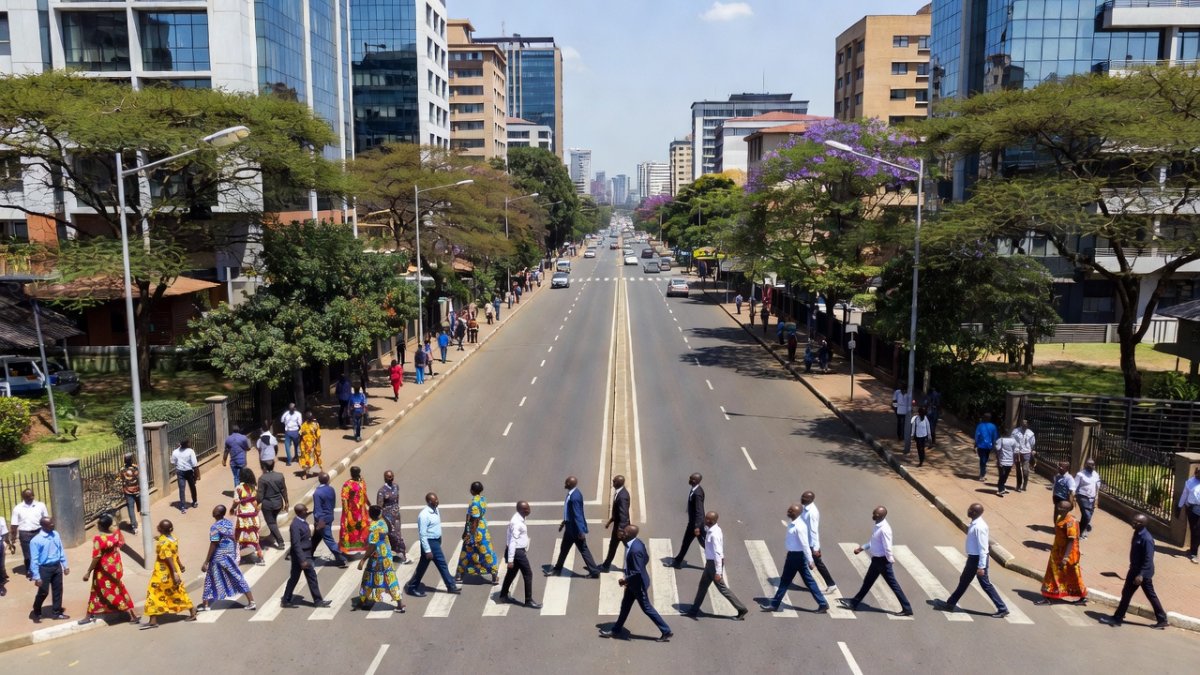
In the heart of East Africa, a subtle yet powerful redefinition of identity is taking root as Kenyan men proudly claim their mothers' names, challenging centuries of patriarchal tradition. This shift speaks to broader African conversations about family, resilience, and the quiet strength of maternal legacies that have always shaped our societies. From Nairobi's markets to Dakar's vibrant streets, these choices remind us that honoring both parents enriches our shared heritage.
Dakar, Senegal — Article continues...
Kenyan Men Embrace Maternal Surnames in Cultural Shift
The Kenyan Shift: Men Embracing Maternal Names
In the bustling markets of Nairobi and the rolling hills of central Kenya, a quiet but profound change is unfolding among the Kikuyu, the country’s largest ethnic group. Traditionally, children inherit their father’s first name as a surname, anchoring identity firmly in the paternal line. Yet an increasing number of men now carry their mother’s name, a practice once rare and now sparking both celebration and ridicule.
Data from recent surveys shows that roughly 8 percent of Kikuyu men under 35 bear female surnames, compared with less than 1 percent of those over 60. This generational leap reflects shifting family structures, including more single-mother households and deliberate choices to honor maternal legacies.
Voices from the Ground: Personal Stories of Pride and Perseverance
MP John Njuguna Wanjiku, elected in 2021 to represent a constituency in Kiambu County, openly embraces the nickname “Ka-Wanjiku,” meaning child of Wanjiku. Raised by a single mother, he has turned what could have been a liability into a symbol of resilience. Constituents in Thika and surrounding areas often greet him with warmth, recognizing the name as a badge of maternal strength.
Simon Macharia Wangui, a Nairobi-based entrepreneur, chose his mother’s name after her passing. “It keeps her memory alive every time I sign a document,” he told me during a recent visit to Eastleigh. For him, the decision was not political but deeply personal, rooted in gratitude for the woman who single-handedly educated five children.
Other men, such as one named Wanjiru working in a logistics firm near Mombasa, initially faced jokes at the office. He now responds simply: “Just respect my name.” Another, Nyambura, endured being called “mama” at a former workplace in Nakuru until he threatened legal action, after which the harassment ceased.
Teacher Peter Kariuki Wanjiku, who instructs history at a secondary school in Nyeri, recalls students initially snickering when roll call reached his name. After filing a complaint with the Teachers Service Commission in 2022, the school introduced mandatory sensitivity training; he now mentors younger colleagues carrying maternal surnames. Data from the Kenya National Bureau of Statistics indicates that 11 percent of male civil servants under 40 in Central Kenya list their mother’s given name, prompting the Commission to circulate a 2023 circular reminding heads of institutions that name-based mockery violates the Employment Act.
Dr. Samuel Muthoni, a pediatrician at Kenyatta National Hospital, legally changed his documents in 2021 to honor his late mother. When colleagues questioned his decision during ward rounds, the hospital’s HR department invoked its updated anti-discrimination policy, modeled on the Ministry of Labour’s 2023 guidelines. A Nairobi High Court ruling in 2022, Njenga v. Equity Bank, awarded damages to a bank teller harassed for his maternal surname, establishing precedent that such conduct constitutes workplace harassment under Kenyan labor law.
From Ridicule to Respect: Workplace Battles and Policy Changes
Workplace discrimination has prompted several Kenyan companies to adopt formal policies against name-based harassment. In Nairobi’s industrial area, at least three major firms now include explicit clauses protecting employees who carry maternal surnames. These measures echo broader labor reforms pushed by the Ministry of Labour in 2023.
The contrast with women is striking. Girls who inherit their mother’s name rarely face censure, and many later adopt their husband’s first name upon marriage. Men, however, must navigate a society still adjusting to visible challenges to patriarchal norms.
A Sociologist’s View: The Quiet Revolution in Gender Roles
University of Nairobi sociologist Njeri Mwangi describes the trend as “a quiet revolution” in Kenyan society. Women’s economic contributions and leadership in households are gaining recognition, she explains, and naming practices are one visible marker of that shift. Mwangi notes similar movements across East Africa, from Uganda to Tanzania, where matrilineal echoes are resurfacing in modern contexts.
Her research highlights how these choices challenge long-held assumptions that only fathers transmit lineage and status. In a country where women head nearly one-third of households, the symbolic weight of a surname carries real social meaning.
Dr. Njeri Mwangi’s forthcoming paper in the African Journal of Sociology tracks 1,200 Kikuyu households and finds that maternal-surname adoption correlates strongly with mothers’ secondary-school completion rates. She contrasts this with Nigeria’s Igbo communities, where a 2021 University of Lagos study documented similar questioning of patronymic norms among Lagos professionals, and Ghana’s Akan matrilineal system, which University of Ghana anthropologist Kofi Asante argues already provides institutional space for maternal lineage visibility absent in Kenya’s patrilineal default.
Colleague Dr. Peter Ochieng at Moi University notes that naming practices serve as measurable indicators of shifting gender norms across East Africa. His comparative dataset reveals that Kenyan men adopting maternal surnames are 2.3 times more likely to support legislation expanding women’s inheritance rights, suggesting that symbolic acts translate into measurable political attitudes and reinforcing Mwangi’s characterization of the phenomenon as a quiet but measurable revolution.
Tradition Evolving: Insights from Kikuyu Elders
Kikuyu elder Samuel Kariuki, speaking from his home in Nyeri, acknowledges that a generation ago such names were “unheard of.” Yet he sees younger families making pragmatic decisions shaped by migration, education, and changing marriage patterns. Kariuki notes that when a Keiyo man marries outside his community, children sometimes receive the mother’s clan name, further blurring old lines.
This evolution does not erase tradition but adapts it. Elders like Kariuki emphasize that respect for mothers has always existed; only the public expression through surnames is new.
The Generational Divide
Kikuyu elders convened by the Nyeri Council of Elders in March 2023 issued a statement acknowledging that while ancestral custom favored paternal transmission, contemporary realities of migration and female-headed households—now 32 percent of Kenyan families per the 2022 Kenya Demographic and Health Survey—require pragmatic adaptation. Older men such as 78-year-old farmer Joseph Kamau still view maternal surnames as “a temporary necessity” rather than a permanent shift, whereas men under 35 increasingly cite education and urban exposure as catalysts for change.
University enrollment data from Kenyatta University shows that 14 percent of male Kikuyu students from Nairobi and Kiambu counties now register maternal surnames on admission forms, compared with 2 percent of their fathers’ generation. Urbanization accelerates the trend: young professionals in Nairobi’s tech hubs report that digital identity platforms and international banking forms make maternal names easier to retain without social penalty, widening the gap between rural elders and city-dwelling sons.
West African Parallels: Naming Customs in Senegal and Beyond
From my perspective as a Senegalese journalist, these Kenyan developments resonate deeply with naming traditions across West Africa. In Senegal, names are rarely neutral labels; they carry history, clan affiliation, and moral aspirations. Among the Wolof, the dominant group, children typically receive a patronymic that links them to their father’s lineage, yet maternal uncles often play decisive roles in upbringing and inheritance decisions.
The Serer people maintain a complex system where both paternal and maternal lines influence identity, with certain rituals honoring the mother’s clan. Fula communities, spread across Senegal, Mali, and Guinea, frequently incorporate praise names that celebrate maternal virtues alongside paternal ones. In Dakar’s bustling neighborhoods, one still hears children called by their mother’s given name as a term of endearment, even when official documents list the father’s surname.
These customs demonstrate that African societies have long balanced paternal authority with maternal influence. The Kenyan men choosing their mothers’ names are participating in a continental conversation about how identity can honor both sides of the family without diminishing either.
Among the Wolof, the jambur praise-name tradition assigns poetic epithets drawn from both paternal and maternal clans during naming ceremonies in Dakar’s Medina neighborhood. A child might receive the formal patronymic “Fall” yet be publicly hailed as “Ndeye” to invoke the mother’s lineage, a practice documented in oral histories collected by the Institut Fondamental d’Afrique Noire. This dual referencing softens rigid patrilineal records while preserving social memory of maternal contributions to household prosperity.
Fula communities in northern Senegal incorporate “santa” clan identifiers that occasionally trace matrilineal descent when a mother belongs to a higher-status lineage; herders in the Ferlo region still recite these composite names during seasonal migrations. In Touba, the Mouride capital, disciples of Sheikh Ahmadou Bamba frequently adopt the maternal given name as a middle identifier on official documents, reflecting the brotherhood’s emphasis on spiritual equality over strict genealogical hierarchy. Former Prime Minister Aminata Touré publicly referenced her mother’s clan during her 2013 confirmation hearings, illustrating how such naming choices have entered national political discourse.
Looking Ahead: Implications for East and West Africa
As Kenya’s parliament debates further gender-equality measures, the visibility of politicians like John Njuguna Wanjiku suggests that names once mocked may soon become unremarkable. Similar conversations are stirring in Senegal, where young professionals increasingly hyphenate or select maternal surnames to reflect blended family realities.
The 8 percent figure among younger Kikuyu men may seem modest, yet it signals a trajectory. When societies allow men to publicly claim their mothers’ names, they expand the space for women’s contributions to be valued in every sphere. From Nairobi to Dakar, this quiet revolution continues to unfold, one surname at a time.
By Amara Diop, Staff WriterThis article was produced with AI-assisted research and editorial support. Reporting is based on sources cited in the article.
What's Your Reaction?
 Like
0
Like
0
 Dislike
0
Dislike
0
 Love
0
Love
0
 Funny
0
Funny
0
 Wow
0
Wow
0
 Sad
0
Sad
0
 Angry
0
Angry
0

West Africa/Sahel Correspondent at Global1.News. Dakar-based journalist covering politics, security, climate, and development across Francophone and Anglophone West Africa. Tells the stories of a region undergoing profound transformation.











Comments (0)