
Iran Attacks Gulf Allies as US Strikes Enter Seventh Night
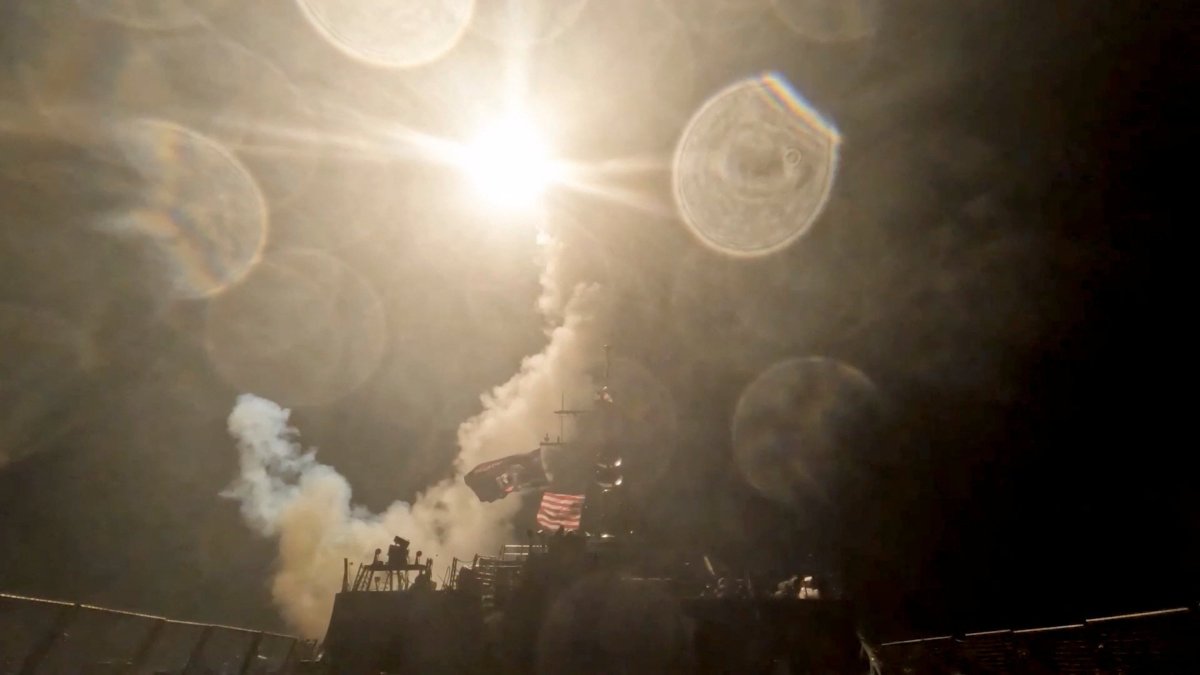
Iran Escalates Attacks on Gulf Allies After Seventh Night of US Strikes The Escalation and Current Military Situation Iran launched fresh attacks on U.S. Gulf allies on Saturday after a seventh consecutive night of U.S. strikes on Iranian military targets, including logistics infrastructure. This further escalates the conflict a week after a fragile ceasefire collapsed. The Revolutionary Guard described the latest actions as the 18th wave of Operation Nasr-2, targeting U.S.
The Escalation and Current Military Situation
Iran launched fresh attacks on U.S. Gulf allies on Saturday after a seventh consecutive night of U.S. strikes on Iranian military targets, including logistics infrastructure. This further escalates the conflict a week after a fragile ceasefire collapsed. The Revolutionary Guard described the latest actions as the 18th wave of Operation Nasr-2, targeting U.S. facilities with missiles and drones. US strikes have shifted deeper into Iran's interior, hitting bridges, airports, and water infrastructure, leaving 10,000 Iranians without water. US officials have not ruled out a ground assault on Iran's coast or islands. Jordan's army reported shooting down 10 Iranian missiles with no casualties or damage reported.
Analysts at the International Crisis Group have drawn parallels to the 1980-88 Iran-Iraq War, when Baghdad’s initial air superiority gave way to prolonged missile exchanges that devastated civilian infrastructure on both sides. The current U.S. campaign, which began after the July 8 collapse of the April ceasefire, mirrors the 2003 “shock and awe” phase yet incorporates precision strikes on water and transport nodes previously spared under the 2015 JCPOA verification regime.
Chatham House researcher Sanam Vakil notes that Iran’s decision to strike Camp Arifjan and Ali Al Salem directly tests NATO’s southern flank commitments, potentially forcing Turkey to recalibrate its own air-defense posture along the Iraqi border. A secondary effect could be accelerated Russian-Iranian coordination on S-400 deployments, already discussed in Moscow last month.
Scenario modeling by Carnegie Middle East Center suggests three pathways: a limited U.S. ground raid on Iranian islands that triggers wider Houthi attacks on LNG carriers; a negotiated maritime de-escalation brokered by Oman that restores partial Hormuz traffic within 30 days; or a prolonged war of attrition that pushes Brent above $120 if Red Sea chokepoints remain closed beyond September.
Specific Attacks on Kuwait
Kuwait faced sustained missile and drone attacks that struck a desalination plant and forced the suspension of operations at Kuwait International Airport. Iran's Revolutionary Guard said it hit a U.S. military support center at Camp Arifjan and destroyed a radar facility at Ali Al Salem Air Base in Kuwait. Kuwait reported a second water desalination plant hit, with Kuwait Petroleum Corporation reporting damage and injuries. Kuwait Airways rescheduled most flights after the airport suspension. These strikes directly affect critical civilian infrastructure in the small Gulf state that hosts significant US military presence.
The attacks revive memories of the 1990 Iraqi invasion, when Kuwait’s desalination capacity was deliberately targeted; today’s 40 % production drop has already prompted emergency water shipments from Saudi Arabia under a 2019 GCC mutual-aid protocol. Kuwait Petroleum Corporation’s preliminary estimate places repair costs at $180 million, comparable to losses sustained during the 2019 Abqaiq drone strike.
Second-order effects include potential Turkish mediation offers, given Ankara’s growing LNG export interests, and renewed Chinese diplomatic engagement to protect its 500,000 barrels-per-day crude import corridor through the Gulf. NATO’s southern command has quietly raised alert levels at Incirlik, fearing spillover into Turkish airspace.
Under a high-escalation scenario, Kuwait could host additional U.S. Patriot batteries within ten days; a de-escalation track would see the emirate push for renewed U.S.-Iran talks modeled on the 2021 Vienna format, with Qatar acting as host.
Regional Impact on Bahrain and Other Gulf States
Iranian state media also reported that the Revolutionary Guard targeted a site housing U.S. combat aircraft at Sheikh Isa Air Base in Bahrain, along with an intelligence data center. Reuters could not independently verify the report. US Secretary of State Rubio toured Gulf states including the UAE, Kuwait, and Bahrain to reassure allies amid the ongoing exchanges. The involvement of multiple Gulf nations hosting US forces highlights the widening scope of the conflict beyond direct US-Iran exchanges.
Bahrain’s role echoes the 2011 Peninsula Shield intervention, when GCC forces suppressed domestic unrest; today the kingdom’s Shiite-majority population faces renewed economic pressure as port activity contracts 25 % since the Hormuz closure. Secretary Rubio’s itinerary mirrors the 2019 “maximum pressure” tour but now includes explicit security guarantees under the 2023 U.S.-GCC defense pact.
Turkey has signaled willingness to facilitate back-channel talks, leveraging its recent energy deals with Qatar, while Russia seeks to position itself as an alternative security guarantor through expanded Caspian naval cooperation with Iran. China’s energy diplomacy has intensified, with Beijing urging both sides to protect the 2021 Iran-China 25-year cooperation agreement’s oil supply clauses.
Analysts at the International Crisis Group project that sustained Bahraini infrastructure damage could accelerate normalization fatigue among Abraham Accords signatories, potentially stalling planned Israeli-Emirati joint naval exercises scheduled for late August.
The Broken Ceasefire Timeline
The war began February 28, 2026. A ceasefire was brokered in April but declared over by Trump on July 8 after the Strait of Hormuz tanker attack. This collapse triggered the current round of US strikes that have now entered their seventh night. The sequence shows how quickly the April agreement unraveled once shipping through the vital waterway faced direct threats, drawing in broader regional actors and proxy elements.
The April deal referenced the 2019 tanker-tracking mechanism established after the Fujairah attacks and built upon Oman’s 2023 maritime deconfliction corridor. Its breakdown follows the pattern of the 2018 JCPOA withdrawal, when U.S. sanctions snapback led to Iranian retaliation against shipping within nine months.
Second-order consequences include Russia’s accelerated delivery of advanced anti-ship missiles to Iran under a 2024 bilateral protocol, and China’s quiet suspension of new Belt and Road port investments in Oman and the UAE pending clearer maritime security guarantees.
Carnegie Middle East Center scenarios indicate that if Hormuz traffic remains below 30 % of normal capacity past mid-August, European NATO members will press Washington for a limited maritime protection force modeled on 1987’s Operation Earnest Will.
Energy Market Implications
Oil prices jumped to one-month highs as Strait of Hormuz shipping halted. Iran's Houthi allies in Yemen continue disrupting Red Sea shipping, compounding pressure on global energy routes. The combination of halted tanker traffic through the Strait and ongoing Red Sea interference has tightened supply lines that connect Gulf producers to international markets. These developments directly tie military actions to energy security concerns across Asia and Europe.
Brent crude’s 12 % surge since July 8 echoes the 2019 Abqaiq attack spike but exceeds the 2022 Russia-Ukraine initial reaction, reflecting the combined Hormuz-Red Sea dual choke-point risk. Asian buyers, particularly Japan and South Korea, have activated 45-day strategic stockpiles under IEA obligations last triggered in 2020.
Turkey has floated a Black Sea-to-Mediterranean bypass pipeline proposal, while China accelerates talks on a Pakistan-Iran overland crude corridor that could reroute 800,000 barrels daily within 18 months. NATO’s southern flank states are reassessing LNG import diversification timelines originally set for 2030.
Scenario analysis from Chatham House shows that a negotiated Hormuz reopening within three weeks would cap Brent at $95; prolonged closure beyond 60 days pushes prices toward $130 and forces coordinated SPR releases by the U.S., Japan, and India.
Strategic Calculus for Each Side
Iran's Revolutionary Guard has framed Operation Nasr-2 as a response to US strikes, aiming to impose costs on US forward positions in Kuwait and Bahrain while signaling resolve to regional partners. The US approach has focused on degrading Iranian military targets and logistics, with strikes extending deeper into Iranian territory. Total US MQ-9 Reaper drones lost in the war stands at 16, reflecting the intensity of air operations. Each side appears focused on demonstrating capability without immediate full-scale commitment, though the risk of further expansion remains present through Iran's proxy network and US force posture adjustments.
Tehran’s calculus references the 1988 “Tanker War” endgame, when sustained pressure on Gulf shipping forced U.S. diplomatic concessions; Washington’s current posture recalls the 2003 Iraq campaign’s initial decapitation focus but with tighter constraints on ground-force commitment.
Russia-Iran military ties have deepened since the 2022 Ukraine invasion, with Tehran now supplying drones in exchange for advanced air-defense components. China continues to purchase discounted Iranian crude, shielding Tehran from full sanctions bite while quietly urging restraint to protect Belt and Road energy corridors.
ICG scenario planning outlines a narrow window for Oman-mediated talks if both sides demonstrate “demonstrable de-escalation” within ten days; otherwise, proxy escalation across Iraq and Syria becomes the most probable trajectory.
Regional Implications for Gulf Security and Stability
The pattern of attacks and counter-strikes underscores vulnerabilities in Gulf security arrangements that rely on US military support. Iran's use of missiles and drones against bases in Kuwait and Bahrain tests the limits of allied defenses while affecting civilian infrastructure such as desalination plants. Arab-Israeli dynamics add another layer, as the conflict intersects with broader regional alignments. Continued Houthi actions in the Red Sea further strain maritime stability. The situation leaves Gulf states balancing immediate defense needs with longer-term questions about energy market reliability and alliance commitments in a volatile environment.
Historical precedent from the 1991 Gulf War shows how external shocks accelerated GCC security integration; today’s events may revive long-stalled proposals for a joint missile-defense architecture first discussed after the 2019 Abqaiq attack.
Second-order effects include heightened Turkish-Qatari coordination on LNG exports and potential NATO requests for Spanish and Italian naval assets to patrol the eastern Mediterranean as a southern-flank hedge.
Carnegie Middle East Center warns that without rapid diplomatic off-ramps, the conflict risks entrenching a permanent U.S. naval presence in the Gulf exceeding levels seen since the 2003 Iraq invasion, fundamentally altering regional power balances for the next decade.
By Malik Hassan, Staff WriterThis article was produced with AI-assisted research and editorial support. Reporting is based on sources cited in the article.
What's Your Reaction?
 Like
0
Like
0
 Dislike
0
Dislike
0
 Love
0
Love
0
 Funny
0
Funny
0
 Wow
0
Wow
0
 Sad
0
Sad
0
 Angry
0
Angry
0

Middle East Correspondent at Global1.News. Based in Beirut, covering politics, conflict, energy, and society across the Middle East. Brings context and depth to a region often reduced to headlines.













Comments (0)