
Claude Lemieux Dead at 60: NHL Legend's Suicide and CTE Legacy
The News Claude Lemieux, the four-time Stanley Cup champion and one of the most feared playoff performers in NHL history, died at age 60 on May 28, 2026. TMZ confirmed that Lemieux died by suicide at his home in Florida. The Montreal Canadiens, the team where his legend began, confirmed his passing in an official statement. Just days before his death, Lemieux had carried the to
The News
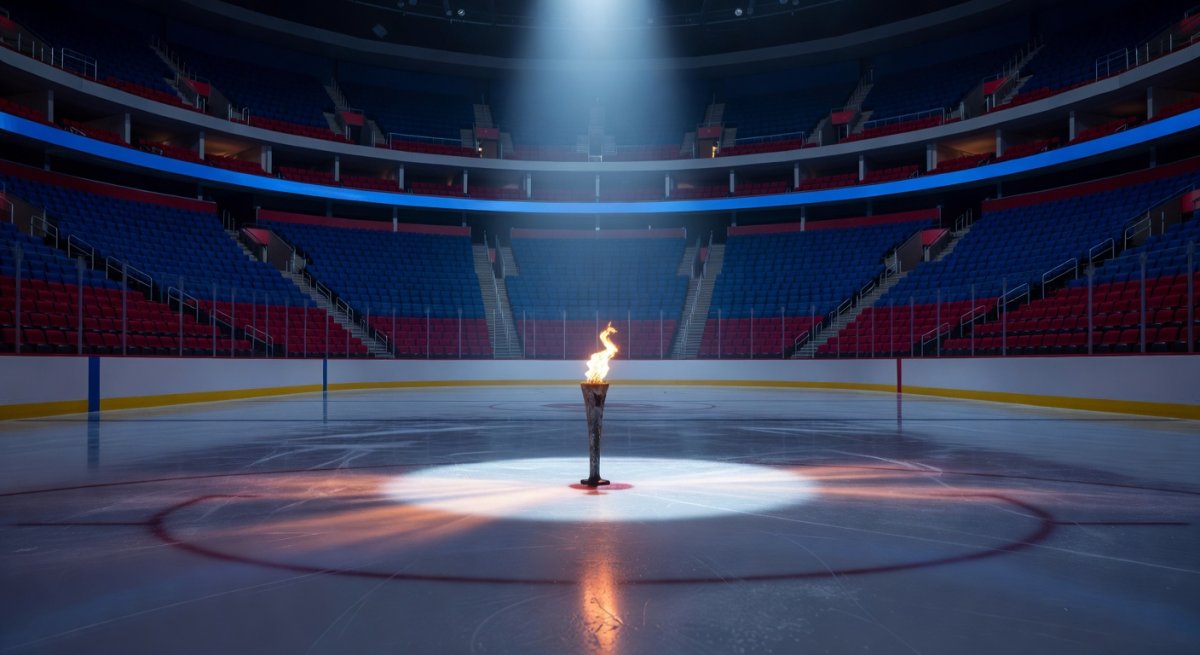
Claude Lemieux, the four-time Stanley Cup champion and one of the most feared playoff performers in NHL history, died at age 60 on May 28, 2026. TMZ confirmed that Lemieux died by suicide at his home in Florida. The Montreal Canadiens, the team where his legend began, confirmed his passing in an official statement. Just days before his death, Lemieux had carried the torch onto the ice before Game 6 of the Canadiens-Panthers Eastern Conference finals series — a moment that now carries a devastating weight in retrospect.
President Donald Trump publicly honored Lemieux, calling him "fierce" — a fitting description for a player who built his entire career on a relentless, never-back-down mentality. But this story is not just about the loss of a hockey legend. It is about what happens after the final whistle blows, and what a sport owes the players who gave everything they had.
Who Was Claude Lemieux?
Claude Lemieux's NHL career spanned 1,215 regular-season games with the Montreal Canadiens, New Jersey Devils, Colorado Avalanche, and Phoenix Coyotes. He scored 379 goals and 786 points in the regular season. But Lemieux was built for the playoffs. In 247 postseason games, he scored 80 goals and 134 points — numbers that rank him among the most productive playoff performers in league history.
He won the Stanley Cup four times: 1986 and 1993 with the Canadiens, 1996 with the Avalanche, and 2000 with the Devils. He won the Conn Smythe Trophy as playoff MVP in 1995. His style of play was defined by physicality, grit, and an unwillingness to back down from anyone. Opponents feared him. Teammates revered him. His 1996 trade from Montreal to Colorado sparked one of the most intense rivalries in NHL history, and he was often public enemy number one in Montreal — a testament to how much fire he brought to every shift.
The Final Days
On May 24, just four days before his death, Lemieux carried the torch at the Bell Centre in Montreal during the Eastern Conference finals. The crowd cheered. He smiled and waved. It looked like a triumphant return for a man who had helped define the franchise's identity. The NHL and Canadiens were honoring him in the midst of what would be the team's deepest playoff run in years.
TMZ reported that Lemieux's body was found at his Florida home on the morning of May 28. Law enforcement sources confirmed the cause of death as suicide. The news sent shockwaves through the hockey community, from Montreal to Denver to Newark to every town where kids grew up dreaming of being him.
In the days that followed, his family announced they would donate his brain to the Boston University CTE Center for research. That decision — a deeply personal one made in the midst of unimaginable grief — speaks volumes. It suggests the family suspected, as many in the hockey world do, that the cumulative toll of a brutal career may have played a role in what happened.
The Deeper Story: CTE and Mental Health
The Boston University CTE Center is the leading research institution studying chronic traumatic encephalopathy in athletes. The condition, caused by repeated head trauma, has been found in the brains of dozens of former NFL and NHL players after their deaths. Symptoms include depression, impulsivity, memory loss, and behavioral changes — all of which can go undiagnosed for years.
Lemieux's donation places him alongside a growing list of athletes whose families have chosen to contribute to the science of brain health, even in their darkest moments. The NHL has faced increasing pressure over the past decade to address the long-term effects of head trauma. Rule changes have been incremental. The league has historically resisted linking on-ice play to CTE in the way the NFL eventually did. But cases like Lemieux's — a 60-year-old in seemingly reasonable health who dies suddenly — make that position harder to defend.
The mental health angle is inseparable from the CTE question. Hockey culture has long celebrated toughness, playing through injury, and never showing weakness. That ethos created legends. It also left generations of players without the tools or the language to ask for help when they needed it most. Lemieux's death is the latest and most high-profile reminder that the game's toughest players are not immune to the battles that happen off the ice.
The Hockey World Reacts
The reaction across the hockey world was immediate and visceral. The Montreal Canadiens issued a statement expressing deep sadness. The New Jersey Devils and Colorado Avalanche — the other two teams where Lemieux won Cups — released tributes. Teammates from across his career shared their shock on social media. Current players who never shared the ice with him spoke out about the emotional weight of the news.
The NHL honored Lemieux ahead of Game 1 of the 2026 Stanley Cup Finals, a moment that brought the crowd to its feet and reminded everyone that hockey is a family — even when that family is hurting. President Trump's tribute added a layer of national recognition that underscored just how far Lemieux's reputation extended beyond the rink.
But alongside the tributes came harder conversations. Former players began speaking more openly about the mental health struggles they faced after retirement. Analysts questioned whether the NHL was doing enough. Fans shared stories of other players lost too young. The hockey community was not just mourning — it was wrestling with the same questions that keep coming back every time another legend leaves us too soon.
What This Means for the Game
Lemieux's death is not an isolated tragedy. It is part of a pattern that the NHL can no longer afford to ignore. Every time a former player dies young — by suicide, by overdose, by circumstances tied to years of physical punishment — the same questions surface. The league needs to move past statements of condolence and into structural action.
That means mandatory mental health resources for all former players, not just those still under contract. It means fully funding independent CTE research and acting on the findings. It means changing the culture at the youth level so that the next generation grows up understanding that toughness includes knowing when to ask for help. It means the NHL Players' Association and the league working together to ensure that the men who built the game are not abandoned when their playing days end.
The 2026 Stanley Cup Finals are ongoing. The NHL is honoring Lemieux. But the real test will be whether this moment produces lasting change, or whether it becomes another footnote in a long history of heartbreak.
What You Can Do
Call the NHL Players' Association at (416) 798-0835 and ask what mental health resources are available for retired players. Support the Boston University CTE Center at bu.edu/cte. If you coach youth hockey, commit to teaching players that head injuries are not something to shrug off. Check on the former athletes in your life — a simple phone call can make a difference. And if you or someone you know is struggling, call the National Suicide Prevention Lifeline at 988. The strongest thing any of us can do is ask for help. Claude Lemieux's legacy should not just be about what he did on the ice — it should also be about what we learn from losing him.
By Jessica Ali, Staff Writer
This article was produced with AI-assisted research and editorial support. Reporting is based on sources cited in the article.
What's Your Reaction?
 Like
0
Like
0
 Dislike
0
Dislike
0
 Love
0
Love
0
 Funny
0
Funny
0
 Wow
0
Wow
0
 Sad
0
Sad
0
 Angry
0
Angry
0

Editor-in-Chief at Global1.News. Atlanta-based journalist who cuts through the BS and tells it like it is. Lead anchor, host, and the voice you hear when the spin stops and the truth starts.













Comments (0)