
Gordie Howe Bridge Revenue Sharing Sparks Committee Scrutiny
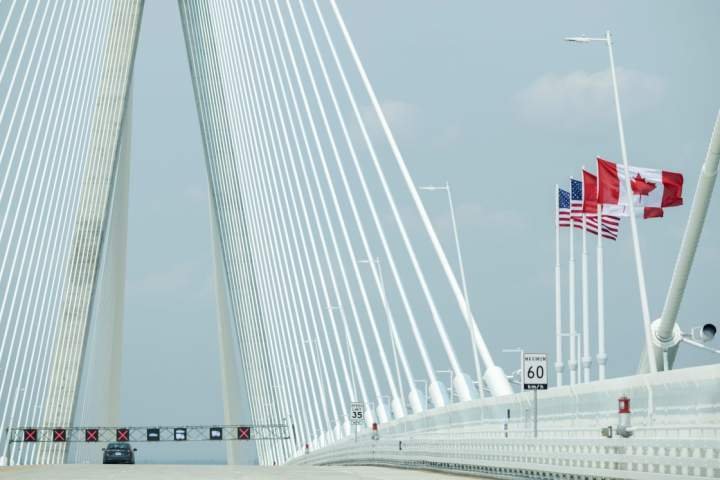
The opening of the Gordie Howe International Bridge on July 27, 2026, marks a major step forward in cross-border connectivity between Windsor, Ontario, and Detroit, yet the federal decision to share half of net toll revenues with the United States for 15 years has already triggered sharp parliamentary scrutiny over fiscal accountability.
Special House Committee Meeting Convened
A House of Commons committee is holding a special meeting on July 29, 2026, to examine the Gordie Howe International Bridge revenue-sharing agreement. Conservative MP Kelly McCauley convened the session, which focuses on the Liberal government's decision to share half of net toll revenues with the United States for the next 15 years. Committee members are expected to review the terms against earlier federal commitments on cost recovery for the $5.7 billion CAD project.
The timing of this meeting underscores growing concerns among opposition members about how the revenue split aligns with broader federal budgeting practices for major infrastructure initiatives.
Revenue-Sharing Terms Under Examination
The agreement provides that Canada will share half of net toll revenues with the United States for 15 years following the bridge opening. This arrangement applies regardless of the timeline for recovering construction costs. Housing minister statements indicate that Canada is projected to recover the full bridge cost over 50 years, a longer horizon than previously suggested in some federal planning documents. The 15-year split therefore represents a distinct fiscal commitment separate from full debt retirement.
Comparisons to earlier Canada-United States infrastructure pacts reveal notable differences. The 1991 Columbia River Treaty, for instance, established long-term revenue-sharing formulas tied to power generation benefits rather than fixed time periods, allowing adjustments based on actual returns. Similarly, the St. Lawrence Seaway agreements from the 1950s allocated costs and revenues through joint commissions with provisions for periodic review. The Gordie Howe arrangement lacks such flexibility, locking in the 50-50 split irrespective of traffic volumes or economic conditions.
The legal mechanism relies on a bilateral memorandum of understanding incorporated into the project's federal funding legislation, enabling direct transfers through the Canada Border Services Agency without annual parliamentary votes. This approach sets a precedent for future border projects, such as potential rail or highway expansions near Niagara or Sarnia, where American partners may seek comparable revenue participation even when Canadian taxpayers bear the majority of upfront capital costs estimated at $5.7 billion CAD.
These terms highlight the need for clearer safeguards in future negotiations to protect Canadian interests amid shifting economic conditions along the border.
Prime Minister Carney's Earlier Statements
Prime Minister Mark Carney had previously indicated that toll revenues would not be shared until Canada's construction debt was paid off. Last week in Charlottetown, the Prime Minister acknowledged he "wasn't as clear as he could have been" regarding the timing of any revenue division. The clarification has prompted questions about how the final agreement aligns with prior public descriptions of the project's financial structure.
This shift raises questions about fiscal credibility within the Liberal government's broader infrastructure agenda. Past commitments on projects such as the Trans Mountain pipeline expansion and high-speed rail studies emphasised full cost recovery before revenue sharing, yet final agreements frequently incorporated earlier concessions to international partners. The discrepancy risks reinforcing perceptions that federal planning documents understate long-term obligations, particularly when debt recovery stretches to 50 years amid fluctuating interest rates and construction inflation.
Politically, the mismatch may erode support among moderate voters who prioritise transparent budgeting. Opposition parties can now cite the bridge as evidence that Liberal infrastructure policy favours expedited international deals over domestic fiscal safeguards, potentially complicating future approvals for similar cross-border initiatives in the House of Commons.
Conservative Pushback in Parliament
Opposition members, led by figures such as Kelly McCauley, have used the committee meeting to press for detailed explanations of the revenue split and its implications for federal infrastructure accounts. The session provides an opportunity to examine whether the 15-year sharing period affects overall returns to Canadian taxpayers and how it fits within broader federal budget planning for major border projects.
Conservative criticism of infrastructure spending has historically centred on cost overruns and insufficient parliamentary oversight, as seen during debates over the $1.5 billion CAD federal contribution to the Detroit-Windsor Tunnel rehabilitation. Opposition MPs are framing the current revenue-sharing terms as a transparency shortfall, arguing that earlier public statements created expectations of delayed sharing that the final agreement does not honour.
The committee investigation could produce recommendations for enhanced disclosure requirements on future international projects. Potential outcomes include calls for independent audits of projected toll revenues and stricter alignment between ministerial statements and signed agreements, influencing how subsequent border infrastructure proposals are presented to Parliament.
Trade Tensions and Project Delays
The bridge opening occurred after delays linked to trade tensions between Canada and the United States during the Trump administration. These frictions affected cross-border infrastructure timelines and added complexity to final negotiations. The completed link now forms part of ongoing federal efforts to maintain reliable trade corridors, even as revenue arrangements continue to be debated in Ottawa.
Despite these challenges, the bridge strengthens long-term economic ties while highlighting the importance of stable bilateral relations for future projects.
Economic Implications for Canadian Motorists
Canadian users of the new crossing will encounter tolls whose net revenues are subject to the 15-year sharing formula. The arrangement means that a portion of collections will flow to the United States partner during this period, while the overall cost recovery for the $5.7 billion CAD investment is projected over 50 years.
Toll pricing is expected to align closely with current Ambassador Bridge rates, approximately $5.50 CAD for passenger vehicles and $25 CAD for commercial trucks one way, though exact figures remain under negotiation with the Windsor-Detroit Bridge Authority. Commercial traffic along the corridor, which handles roughly 25 percent of Canada-United States trade by value, may face added costs that trucking associations such as the Canadian Trucking Alliance warn could reduce competitiveness for Ontario exporters.
Business groups in Windsor and Essex County have expressed concern that the revenue split may limit funds available for local road improvements tied to the bridge. Compared with the privately operated Ambassador Bridge, which retains full toll income, the public Gordie Howe crossing's structure could shift a measurable share of collections southward, affecting long-term maintenance budgets and regional economic development plans.
Broader Federal Infrastructure Context
The Gordie Howe International Bridge sits within a wider portfolio of Canadian federal investments in border infrastructure and trade facilitation. Parliamentary examination of the revenue terms reflects standard oversight processes for projects involving international partners and multi-decade cost recovery. As the committee continues its work, attention remains on how the 15-year sharing period interacts with stated federal objectives for transparent infrastructure financing.
Overall, these developments illustrate the delicate balance between international cooperation and domestic accountability in Canada's infrastructure strategy.
By Alex Thompson, Staff WriterThis article was produced with AI-assisted research and editorial support. Reporting is based on sources cited in the article.
What's Your Reaction?
 Like
0
Like
0
 Dislike
0
Dislike
0
 Love
0
Love
0
 Funny
0
Funny
0
 Wow
0
Wow
0
 Sad
0
Sad
0
 Angry
0
Angry
0

Canada Correspondent at Global1.News. Based in Toronto, covering Canadian politics, energy, trade, and US-Canada relations. Provides the Canadian perspective on North American and global affairs.














Comments (0)