
China’s Ongoing Oversight of Unregistered Protestant Groups: The Jiangyou Incident and Its Wider Ramifications
The Raid on Early Rain Covenant Church Armed police entered a hotel ballroom in Jiangyou during a Sunday service on 15 June, detaining two leaders of the Early Rain Covenant Church and questioning more than thirty congregants. The church, which traces its origins to Chengdu in 2008, reported that officers in SWAT uniforms and plain clothes separated Yan Hong and Wu Wuqing for f
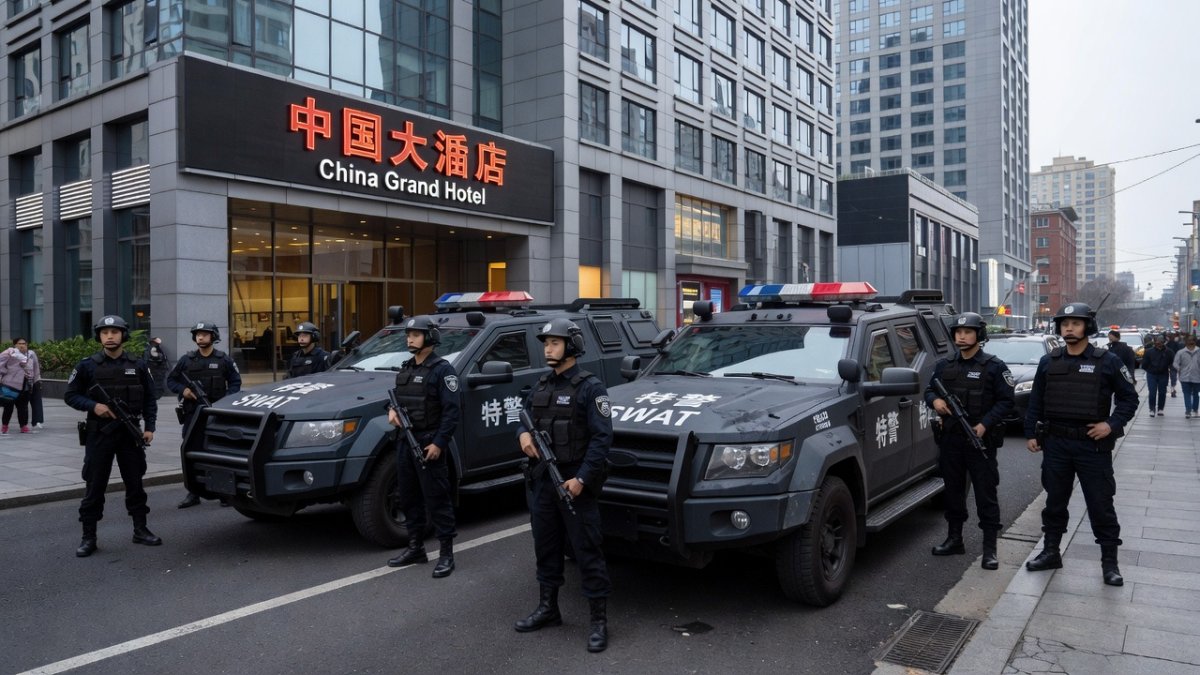
The Raid on Early Rain Covenant Church
Armed police entered a hotel ballroom in Jiangyou during a Sunday service on 15 June, detaining two leaders of the Early Rain Covenant Church and questioning more than thirty congregants. The church, which traces its origins to Chengdu in 2008, reported that officers in SWAT uniforms and plain clothes separated Yan Hong and Wu Wuqing for further interrogation while the remaining worshippers, including children and elderly members, remained under identity checks until evening. Video footage circulated by the church shows participants continuing to sing hymns despite instructions to stop, and several members declined to sign documents presented by authorities before their release between 21:00 and 23:00.
Established Patterns in the Regulation of House Churches
Early Rain Covenant has operated outside the state-approved Three-Self Patriotic Movement structure since its founding. Its senior pastor Wang Yi received a nine-year sentence in 2019 on charges of inciting subversion of state power and illegal business operations following a similar large-scale operation in December 2018. The most recent detentions of Yan Hong and Wu Wuqing follow their brief summons in January on allegations of picking quarrels and provoking trouble. Official figures from 2018 placed the number of Christians at approximately 44 million, yet the government continues to channel religious activity through registered venues led by approved clergy.
Alignment with National Religious Governance Objectives
China’s approach to Protestant groups reflects a consistent priority on preventing autonomous ideological networks that could intersect with foreign funding or political mobilisation. Successive policy documents emphasise the sinicisation of religion and the requirement that all religious organisations accept leadership by the Chinese Communist Party. Unregistered congregations are viewed through the lens of social management rather than solely theological concern, consistent with broader efforts to align civil society organisations with state-defined stability goals under the current Five-Year Plan framework.
Domestic Political Calculus and Social Control
From Beijing’s perspective, tolerating independent worship risks creating parallel authority structures capable of organising beyond official channels. The presence of families and minors during the Jiangyou operation underscores the authorities’ willingness to apply administrative measures across entire congregations when leadership is deemed non-compliant. Such actions serve both deterrent and signalling functions within the domestic system, reinforcing that religious expression must remain subordinate to party oversight.
Repercussions for US-China Bilateral Relations
Incidents involving unregistered churches frequently surface in congressional hearings and State Department reports on religious freedom, providing concrete examples that US officials can cite when calibrating sanctions or visa restrictions on Chinese security personnel. Beijing, in turn, frames external commentary as interference in internal affairs and responds by tightening scrutiny of foreign-linked religious networks. The resulting dynamic adds friction to already strained dialogues on trade, technology, and regional security, as each side leverages human-rights narratives to justify broader strategic positioning.
Effects on China’s Global Image and Multilateral Standing
Publicised raids complicate China’s efforts to present itself as a defender of cultural sovereignty and non-interference in international forums. Advocacy organisations such as ChinaAid highlight these cases to influence policy in Washington and European capitals, while Beijing counters by pointing to the existence of millions of registered believers and state-supported religious infrastructure. For ASEAN and Global South partners, the issue registers as secondary to economic cooperation, yet repeated reports of detentions can incrementally erode the appeal of China’s governance model among audiences that value religious pluralism.
Strategic Outlook and Second-Order Consequences
The Jiangyou operation illustrates the limited immediate leverage available to external actors seeking to alter China’s domestic religious administration. Short-term releases of most congregants suggest calibrated enforcement rather than wholesale suppression, yet the continued custody of key figures maintains pressure on the network. Over time, such measures may accelerate the fragmentation of house-church communities or push remaining groups toward stricter operational security, with limited spillover into formal diplomatic negotiations unless tied to wider human-rights packages under consideration by the United States and its allies. By Prof. Marcus Chen, Staff Writer
This article was produced with AI-assisted research and editorial support. Reporting is based on sources cited in the article.
What's Your Reaction?
 Like
0
Like
0
 Dislike
0
Dislike
0
 Love
0
Love
0
 Funny
0
Funny
0
 Wow
0
Wow
0
 Sad
0
Sad
0
 Angry
0
Angry
0

World Politics Analyst at Global1.News. Based in Beijing, covering US-China relations, global trade, and geopolitical strategy. Brings deep analytical perspective to the power dynamics shaping international affairs.















Comments (0)