
Iran Strikes US Bases, Rejects Hormuz Deal as Tensions Explode After Five-Day Pause
Iran launched ballistic missiles at US bases in Jordan on July 28, all intercepted, as CENTCOM called it an attempted surprise attack. Tehran rejected Oman's Hormuz management plan. US-Saudi strikes killed 20 PMF members in Iraq. Oil spiked above $82 as the five-day pause in fighting collapsed.
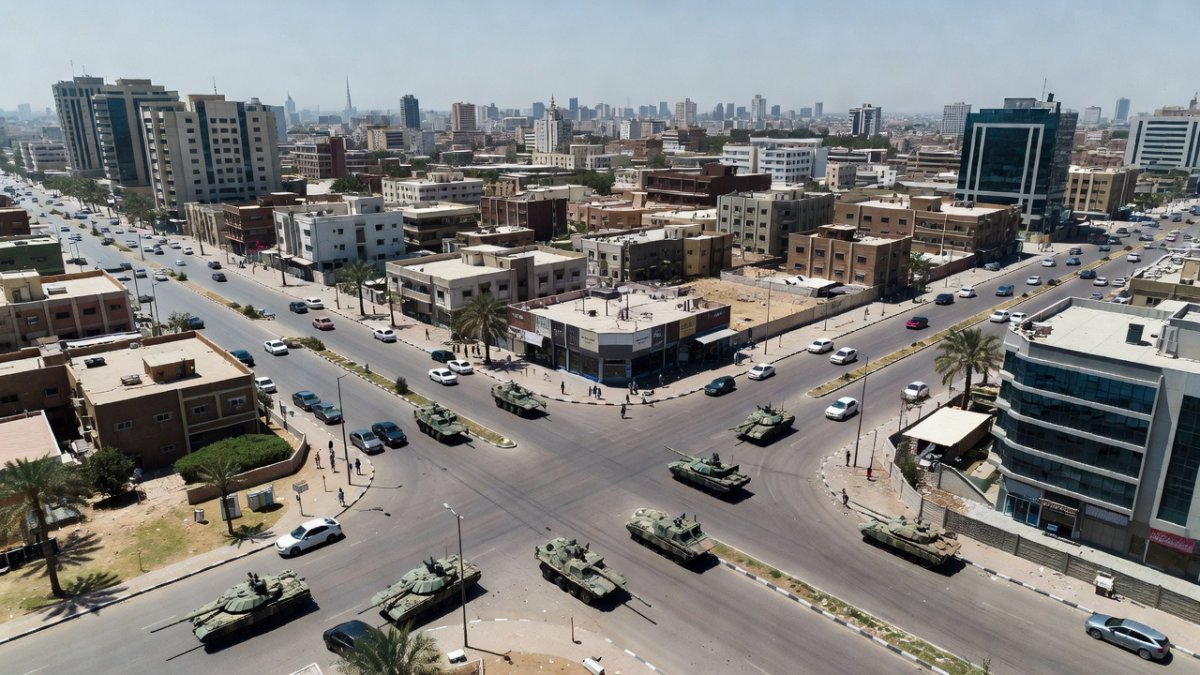
Ballistic Assault Unfolds at Dusk
US Central Command reported that Iran's Islamic Revolutionary Guard Corps launched multiple ballistic missiles at 5:45 PM ET on July 28 in an attempted surprise attack on US forces based in the Middle East. The strikes targeted a US airbase and a CENTCOM command center in Jordan, according to an IRGC statement. This action ended a five-day pause in US strikes on Iran that had begun on July 25.
The timing coincided with a White House meeting between President Trump and Israeli Prime Minister Netanyahu. Analysts from Al Jazeera described the move as a pre-emptive action rather than a direct response to prior events. All launches originated from IRGC air force units.
Five interceptions occurred over Jordanian airspace, with US forces confirming no successful impacts on the intended targets. The episode highlighted ongoing friction following the suspension of intensive bombing campaigns.
The missile barrage unfolded precisely as President Trump hosted Israeli Prime Minister Netanyahu at the White House, a scheduling choice that analysts interpret as Tehran's deliberate bid to fracture the emerging US-Israel alignment on sanctions enforcement. Coming after a five-day lull that had raised cautious hopes for backchannel progress, the strikes underscored Iran's pattern of exploiting diplomatic windows to reassert leverage, much like its 2019 attacks on Saudi oil facilities during similar negotiation pauses.
Regional powers viewed the timing as a calculated escalation rather than mere retaliation, with Gulf states privately warning that any repeat during high-level US visits could trigger accelerated arms transfers to Israel. The IRGC's decision to launch from multiple sites further signaled an intent to test American resolve at a moment when Trump's focus appeared divided between domestic politics and Middle East strategy.
Historical precedents suggest such dusk operations often precede broader campaigns, raising concerns that the five-day pause served mainly as a tactical reset for Iranian forces rather than a genuine de-escalation signal.
Interception Success Prevents Casualties
US defenses intercepted every missile fired during the July 28 operation, resulting in zero reported casualties or damage at the Jordanian sites. CENTCOM detailed the sequence of five successful interceptions that neutralized the incoming threats. This outcome demonstrated the effectiveness of existing protective measures in the region.
Officials noted the missiles were part of a coordinated effort aimed at specific military installations. The absence of ground impacts allowed operations to continue without disruption at the affected bases. Such results align with prior patterns of defensive responses to similar launches.
Regional monitoring confirmed the full neutralization within minutes of detection. This event marked the first major test of those systems since the recent pause in hostilities.
IRGC Issues Stark Warning on Continued Operations
The IRGC released a statement asserting that resistance would persist as long as threats against Iran continue and illegal actions by American forces target Iranian interests. The message framed the missile launches as a direct reply to perceived provocations. Deputy-level communications emphasized ongoing readiness.
Officials tied the action to broader resistance efforts without specifying additional timelines. The statement avoided references to immediate follow-on steps but signaled sustained vigilance. This position emerged amid reports of expected deliveries of up to 400 Chinese shoulder-fired anti-aircraft missiles to Iranian forces.
Netanyahu has advocated for further pressure on facilities such as the Pickaxe Mountain nuclear site. The IRGC remarks underscored Tehran's stance against external interference in its strategic assets.
Joint Strikes Eliminate Militia Threats in Iraq
US and Saudi forces conducted joint air strikes in eastern Iraq on July 28-29, killing at least 20 members of Iran-backed Popular Mobilisation Forces units and wounding 32 others. The targets included militias linked to prior attacks on US troops and Saudi energy infrastructure. Iraqi presidency officials condemned the operations as unacceptable violations of national territory.
These actions formed part of efforts to disrupt networks responsible for cross-border incidents. The strikes occurred during the same window as the Iranian missile launches, intensifying the regional dynamic. No additional details on specific strike locations were released by participating forces.
Baghdad's response highlighted concerns over sovereignty amid the expanding conflict. The operations reflected coordinated approaches between Washington and Riyadh on shared security priorities.
Oman Proposal Dismissed in Hormuz Dispute
Iran rejected Oman's July 28-29 proposal for joint management of the Strait of Hormuz, which included a Gulf-backed mechanism modeled on the Strait of Malacca with voluntary fees for vessels. Tehran instead advanced its own plan granting greater control to Iranian authorities over the waterway. Deputy Foreign Minister Kazem Gharibabadi stated that the strait would remain closed if the Iranian proposal faces rejection.
The counteroffer emphasized Tehran's exclusive role in monitoring and operations. No third country would be permitted to conduct de-mining activities under the Iranian framework. This stance followed Iran's decision to no longer recognize the existing Traffic Separation Scheme.
Oman's initiative sought regional cooperation to stabilize transit through the critical passage. Iran's response indicated a preference for unilateral oversight arrangements.
The Omani model drew explicit parallels to the Strait of Malacca's cooperative framework, where littoral states collect voluntary transit fees and coordinate anti-piracy patrols, a system credited with keeping insurance costs manageable for the 80,000 vessels that transit annually. Iran's outright rejection signals its unwillingness to accept any revenue-sharing arrangement that dilutes sovereign control over what it regards as a strategic chokepoint.
International shipping lines have already begun modeling worst-case rerouting scenarios around the Cape of Good Hope, a detour that adds 12 to 15 days and roughly $1.2 million in extra fuel and charter costs per very large crude carrier. Insurers have quietly circulated draft clauses that would triple war-risk premiums should Tehran follow through on its closure threat, echoing the market shock that followed the 1980s Tanker War.
European and Asian energy importers, heavily dependent on Hormuz LNG cargoes, are accelerating charter negotiations for alternative Atlantic basin supplies, underscoring how quickly a single diplomatic impasse can reshape global trade lanes.
Tehran Demands Greater Control Over Key Waterway
Iran argued that the Traffic Separation Scheme lies mostly in Omani waters and conflicts with its requirements for vessel monitoring after a February attack. Officials maintained that only their proposed structure would address security needs adequately. Gharibabadi reiterated that external involvement in de-mining would not be tolerated.
The position ties directly to Iran's insistence on enhanced authority in the strait, which handles about 20 percent of global oil and LNG trade under pre-war conditions. Rejection of the Omani plan leaves the diplomatic channel unresolved as of July 29.
Regional actors continue to assess the implications for maritime traffic. Iran's counterproposal focuses on centralized Tehran-led administration without shared mechanisms.
Energy Markets React Sharply to Escalation
US oil futures rose more than 4 percent to exceed $82 per barrel following the July 28-29 developments. Brent crude climbed above $88 per barrel amid concerns over potential disruptions. These movements reflect immediate trader responses to the combined missile and diplomatic tensions.
The Strait of Hormuz remains central to supply calculations, with its 20 percent share of worldwide oil and LNG flows underscoring vulnerability. Market participants monitored statements from both Iranian and Omani sides for further signals.
Price volatility emerged quickly after confirmation of the missile interceptions and the Hormuz rejection. No immediate changes to shipping protocols were announced by involved parties.
Oil traders are comparing the current spike to the 2019 Hormuz tensions, when Brent briefly touched $75 before retreating once Saudi output recovered; this time, however, the presence of active missile exchanges has kept the risk premium elevated above historical averages. LNG futures in Asia have jumped nearly 18 percent since July 25, reflecting fears that any sustained closure would strand Qatari and Emirati cargoes and force Japan and South Korea into costly spot-market bidding wars.
Previous near-closures, such as Iran's 1984 threats during the Iran-Iraq War, triggered a 12 percent sustained increase in global oil prices that lasted four months and contributed to recessionary pressures in import-dependent economies. Market models now price in a 30 percent probability of at least a partial Hormuz disruption lasting beyond August, a level not seen since the 2008 financial crisis volatility.
These dynamics have prompted hedge funds to rotate heavily into energy equities while simultaneously shorting shipping stocks exposed to the Gulf, illustrating how quickly geopolitical friction translates into cross-asset repricing.
Broader Context of Paused Negotiations
The events ended a five-day suspension of US strikes that began July 25, when officials cited good talks and noted Iran was getting more serious about negotiations. Trump had expressed optimism about progress before the missile launches altered the trajectory. Netanyahu's presence in Washington added another layer to the diplomatic backdrop.
Anticipated arrivals of Chinese anti-aircraft systems and calls for action on nuclear sites further complicated the environment. Iraqi condemnations of the eastern strikes illustrated spillover effects on neighboring states.
These developments collectively point to renewed friction after the brief interval of reduced intensity. Officials across agencies continue to track both military and maritime dimensions.
By Jessica Ali, Staff Writer
The anticipated delivery of up to 400 Chinese shoulder-fired anti-aircraft missiles adds a new layer of complexity, potentially enabling Iranian proxies to contest low-altitude US and Israeli air operations in ways that current Patriot and Iron Dome systems are less optimized to counter. Beijing's quiet support for Tehran's defensive posture signals a broader strategic alignment aimed at diluting American influence across the Persian Gulf.
Looking ahead, the collapse of the five-day pause suggests that any renewed talks will require verifiable Iranian concessions on both missile testing and Hormuz access before Washington considers extending the current ceasefire. Netanyahu's insistence on targeting the Pickaxe Mountain site further narrows the window for compromise, raising the prospect of coordinated US-Israeli strikes should diplomatic channels remain frozen.
Regional capitals are now bracing for a cycle of tit-for-tat actions that could draw in additional actors, with Iraq's sovereignty concerns serving as an early indicator of how spillover effects may reshape alliances well beyond the initial missile exchange.
Iran launched ballistic missiles at US bases in Jordan on July 28, all intercepted, as CENTCOM called it an attempted surprise attack. Tehran rejected Oman's Hormuz management plan. US-Saudi strikes killed 20 PMF members in Iraq. Oil spiked above $82 as the five-day pause in fighting collapsed.This article was produced with AI-assisted research and editorial support. Reporting is based on sources cited in the article.
What's Your Reaction?
 Like
0
Like
0
 Dislike
0
Dislike
0
 Love
0
Love
0
 Funny
0
Funny
0
 Wow
0
Wow
0
 Sad
0
Sad
0
 Angry
0
Angry
0

Editor-in-Chief at Global1.News. Atlanta-based journalist who cuts through the BS and tells it like it is. Lead anchor, host, and the voice you hear when the spin stops and the truth starts.













Comments (0)