
FSB Issues Arrest Warrant for Pavel Durov for Aiding Terrorism
Russia's Federal Security Service has issued an arrest warrant for Telegram founder Pavel Durov, accusing the platform of enabling terrorist coordination and other illicit activities. This escalation marks a sharp intensification of Moscow's campaign against independent encrypted messaging services, threatening Durov with up to 15 years in prison and placing him on an international wanted list.
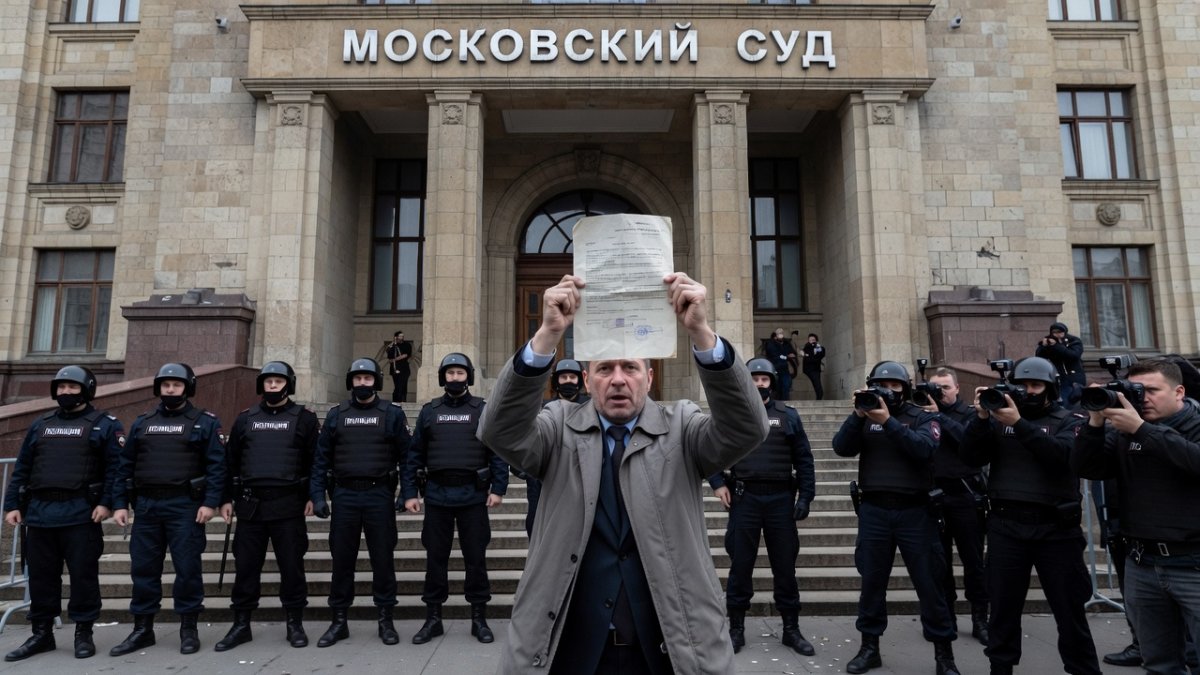
Moscow, Russia — Russia's FSB security service has escalated its confrontation with Telegram by issuing an arrest warrant for founder Pavel Durov this week, accusing the platform of enabling terrorist coordination and other illicit activities amid ongoing restrictions on digital communications inside the country.
FSB Announcement and Warrant Details
The FSB security service announced on Wednesday that it had issued a warrant for the arrest of Telegram founder Pavel Durov on charges of facilitating terrorist activities. According to the FSB, the charges stemmed from Telegram's alleged failure to remove content used by Ukrainian intelligence services and extremist groups to coordinate sabotage, cyber fraud and armed attacks inside Russia. The FSB added that Durov is being placed on an international wanted list under Part 1.1 of Article 205.1 of Russia's Criminal Code.
This development reflects the central role of the FSB within Kremlin power structures, where security services maintain oversight of information flows that could challenge state authority. The charge of aiding terrorist activities carries a maximum prison sentence of 15 years, underscoring the gravity with which Russian authorities view non-compliance by foreign-based platforms.
The FSB's invocation of Part 1.1 of Article 205.1 of the Russian Criminal Code, which criminalizes the provision of material or technical assistance to terrorist activities, represents a deliberate escalation in legal tactics against foreign technology platforms. This provision, originally designed to target direct logistical support for extremist groups, has been repurposed to encompass encrypted messaging services that refuse to install backdoors or hand over user data. By framing Telegram's non-compliance as facilitation of Ukrainian intelligence operations and domestic extremism, Russian authorities transform a regulatory dispute into a national security imperative carrying up to 15 years imprisonment, thereby justifying extraterritorial pursuit of Durov despite his foreign citizenship and residence in Dubai.
The FSB's practice of issuing charges against individuals based abroad follows an established pattern seen in cases involving other tech executives and journalists, where the goal is not immediate extradition but the creation of perpetual legal jeopardy. Placement on Russia's international wanted list functions as a hybrid tool: it signals to allied states and Interpol partners the Kremlin's intent to pursue enforcement while simultaneously restricting Durov's travel and financial movements through secondary sanctions-like effects. Analysts note that such charges against foreign-based entities rarely result in swift arrests but serve to isolate targets diplomatically and commercially. The warrant's timing, amid intensified domestic controls, reveals the FSB's central role in shaping information policy, where encrypted platforms are viewed as existential threats to state monopoly over narratives during conflict.
Official Allegations of Platform Misuse
The FSB said Telegram failed to take down channels, chats and bots used by Ukrainian special services and by terrorist and extremist organisations to prepare and coordinate attacks. Those attacks included acts of sabotage and terrorism, mass killings, and cyber-fraud operations, according to the FSB. These claims position Telegram as a conduit for threats originating outside Russia's borders.
Analysts suggest this signals a broader effort by security services to assert control over encrypted messaging services that operate beyond direct state supervision. The FSB's statements frame the issue as a matter of national security rather than routine regulatory enforcement.
Telegram's Public Response
Telegram's official account on X responded to Russia's arrest warrant for Durov by posting a photo of the Telegram founder giving the middle finger. This direct visual reply from the company highlights its refusal to engage through conventional diplomatic or legal channels with Russian authorities.
The response aligns with Telegram's established pattern of resisting demands for content removal or data access that conflict with its operational principles. No further official statements from Telegram executives accompanied the image at this stage.
Durov's Accusations of Fabricated Pretexts
Durov, who lives in Dubai and also holds French and UAE citizenship, previously responded to reports that the FSB was investigating him by accusing the Russian authorities of trying to fabricate pretexts for a total ban on Telegram. In a statement issued recently, Durov wrote that each day the authorities fabricate new pretexts to restrict Russians' access to Telegram as they seek to suppress the right to privacy and free speech.
He described the situation as a sad spectacle of a state afraid of its own people. These remarks from Durov emphasize his view that the legal actions serve political ends rather than addressing genuine security concerns.
Historical Context of Durov's Relations with Russia
In 2014, Durov left Russia after refusing to comply with demands to remove pages of opposition groups on VKontakte, the social network he founded. This earlier episode established a pattern of conflict between Durov and Russian regulators over content moderation and user data.
The current warrant builds on that history, illustrating how disputes originating in the social media sector have extended into encrypted messaging platforms. Durov's departure marked the beginning of his relocation to jurisdictions outside direct Russian legal reach.
Operational Restrictions Imposed by Roskomnadzor
Telegram has around 90 million users in Russia. The app has become difficult to use without a VPN as the state media regulator Roskomnadzor slows download speeds and blocks video and voice calls. Russia began restricting Telegram in summer 2025, with these measures intensifying in recent months.
Roskomnadzor's actions demonstrate the technical tools available to Russian regulators when platforms decline cooperation. Users must navigate additional barriers to maintain access, reflecting the state's capacity to degrade service quality without a full prohibition.
Russia's 2019 sovereign internet law, formally titled the "sustainable Runet" legislation, established the technical and legal architecture for isolating the country's digital infrastructure from global networks during crises. This framework empowers Roskomnadzor to implement deep packet inspection (DPI) systems that throttle specific protocols and services without a complete shutdown, allowing authorities to degrade Telegram's functionality selectively. Unlike the failed 2018 attempt to block Telegram entirely, which caused widespread collateral damage to unrelated services and was abandoned after weeks of public frustration, current measures focus on targeted slowdowns of downloads, video calls, and voice features, forcing approximately 90 million Russian users to rely on VPNs for reliable access.
The DPI-based throttling disrupts daily routines for ordinary citizens, from small businesses dependent on Telegram channels for customer communication to families coordinating amid wartime restrictions. Users report inconsistent connectivity that varies by region and time, creating an uneven landscape where urban centers experience more aggressive filtering while rural areas face basic unreliability. By combining these restrictions with promotion of state alternatives, authorities aim to normalize degraded access to foreign services, gradually steering users toward monitored domestic options. The impact extends beyond inconvenience, as millions navigate additional costs for VPN subscriptions and lost productivity in an environment where Telegram remains a primary source of real-time information.
Promotion of State-Backed Alternatives
Moscow is promoting its own state-backed MAX messenger service, which openly declares it will share user data with authorities and does not use end-to-end encryption. This initiative offers an official channel that aligns with security service requirements for access and monitoring.
Russia has also blocked Twitter, Facebook, and Instagram while ramping up restrictions on YouTube. These parallel measures create an environment where domestic alternatives gain preference through the limitation of foreign platforms.
Kremlin Statements and Ongoing Contacts
On July 27, Kremlin spokesman Dmitry Peskov said contacts with Telegram about restoring its operation exist, but the app's representatives have not been very active. This comment from Peskov indicates that dialogue channels remain open even as enforcement actions proceed.
The statement provides insight into the Kremlin's approach of combining public pressure with selective engagement. It suggests authorities continue to seek some form of accommodation while advancing legal measures against Durov.
French Investigation and International Dimensions
French authorities are currently investigating him. He was arrested in France in August 2024 and indicted, though released last year. The parallel proceedings in France add an international layer to Durov's legal challenges, involving jurisdictions where he holds citizenship.
These developments occur against a backdrop of differing regulatory expectations across countries. Durov's position in Dubai further complicates enforcement of any Russian warrant, as extradition would depend on bilateral agreements not detailed in current statements.
French authorities arrested Pavel Durov at Le Bourget airport in August 2024 on charges including facilitating illegal transactions, money laundering, and failures to address child exploitation material on Telegram. The indictment highlighted the platform's alleged refusal to cooperate with European law enforcement on content moderation and data requests, positioning Durov as personally liable for systemic shortcomings in user safety protocols. These proceedings, which resulted in his release under judicial supervision last year, run parallel to Russian actions and create a coordinated legal squeeze from opposing geopolitical poles.
This pincer movement—Russian terrorism charges from the East and French criminal indictments from the West—exposes tech executives to simultaneous prosecution risks across jurisdictions where they hold citizenship or conduct business. Durov's French and UAE passports offer limited protection, as both nations maintain extradition frameworks that could be activated depending on diplomatic alignments. Implications for the broader technology sector are profound, as executives now confront the reality that non-compliance with any major power's demands can trigger cascading legal consequences. This environment discourages the development of truly independent encrypted services and incentivizes preemptive concessions to regulatory authorities in multiple countries simultaneously.
Analysis and Implications
The FSB warrant against Durov accelerates Russia's trajectory toward a fully sovereign digital ecosystem where encrypted communications operate only under state oversight. Kremlin strategists envision the Runet as a self-contained space insulated from external influence, with Telegram's marginalization serving as a test case for eliminating platforms that enable uncensored wartime discourse. This vision prioritizes national security narratives over individual privacy, compelling Russian citizens to choose between monitored state messengers or increasingly unreliable foreign alternatives during active conflict.
Access to uncensored information has become a critical battleground, as Telegram channels remain primary conduits for opposition voices, independent war reporting, and real-time updates that contradict official media. Intensified throttling and the threat of total prohibition directly constrain citizens' ability to verify events or organize dissent, reinforcing information asymmetry that benefits the state. The broader crackdown on independent media and opposition Telegram channels, including mass blocking of accounts critical of military operations, illustrates how these measures extend beyond one platform to reshape the entire information landscape.
Ultimately, these developments signal that encrypted communications in Russia will face progressive domestication, with foreign services either submitting to backdoor requirements or facing exclusion. For ordinary users, this translates to diminished avenues for private expression and heightened surveillance risks at a time when access to diverse perspectives is most vital. Looking ahead, the precedent set by Durov's case may embolden other authoritarian regimes to pursue similar extraterritorial tactics against tech founders, further fragmenting the global internet into regulated national silos and complicating cross-border data flows for years to come.
By Irina Volkov, Staff WriterThis article was produced with AI-assisted research and editorial support. Reporting is based on sources cited in the article.
What's Your Reaction?
 Like
1
Like
1
 Dislike
0
Dislike
0
 Love
0
Love
0
 Funny
0
Funny
0
 Wow
0
Wow
0
 Sad
0
Sad
0
 Angry
0
Angry
0
Russia/Eastern Europe Correspondent at Global1.News. Covering Russian politics, energy, security, and the shifting dynamics of the post-Soviet space. Provides clear-eyed analysis on one of the world's most opaque regions.











Comments (0)