
China Detains Underground Church Leaders Amid Crackdown
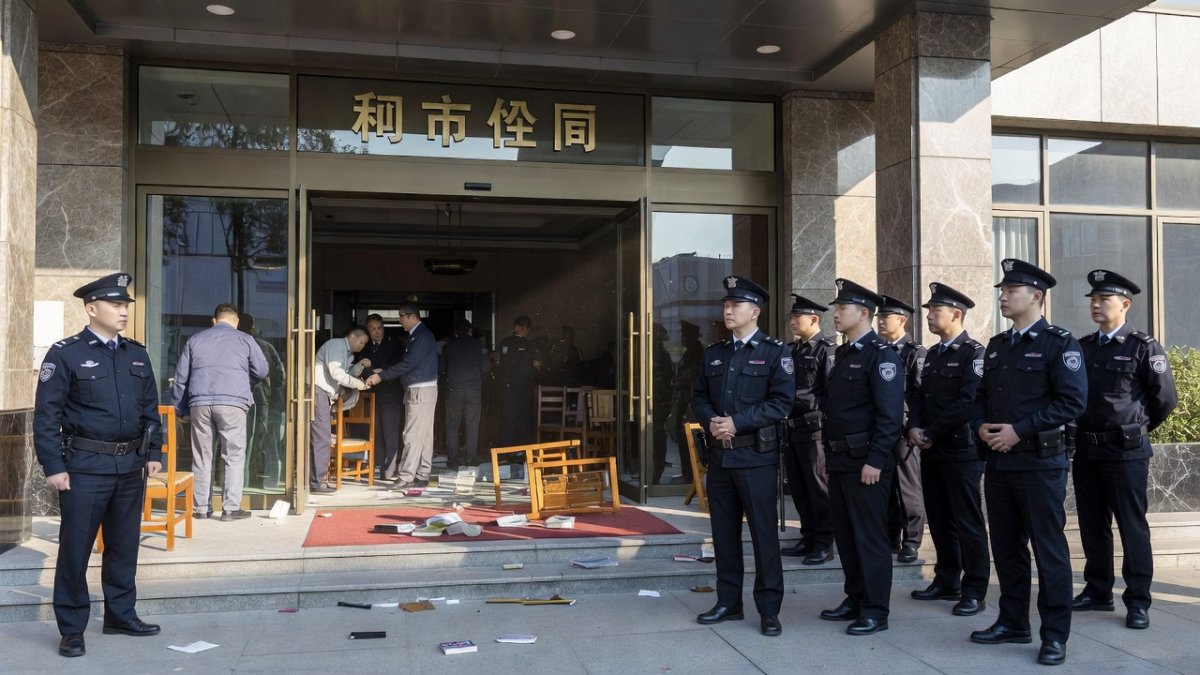
China Detains Underground Church Leaders as Religious Crackdown Intensifies The detention of two leaders from an influential Protestant house church in south-western China underscores the persistent tensions between unregistered religious communities and state oversight mechanisms. Early Rain Covenant Church reported that armed police interrupted its Sunday service in Jiangyou,
(Global 1 News)
Historical Context of House Churches and Religious Control
House churches in China emerged as alternatives to state-sanctioned religious bodies after the reform era began in the late 1970s. Many believers preferred independent congregations to avoid direct government supervision of doctrine and leadership selection. The Early Rain Covenant Church, founded in 2008 in Chengdu, exemplifies this pattern of growth outside official structures.
The Communist Party has long maintained that religious activity must align with national laws and socialist values. This approach dates to policies requiring registration with approved patriotic associations. Unregistered groups face periodic interventions when authorities determine that their activities challenge social stability or political authority. Founding pastor Wang Yi of Early Rain Covenant Church was detained in December 2018 and later sentenced to nine years in prison on charges of inciting subversion of state power and illegal business operations.
Official figures from 2018 placed the number of Christians at 44 million, though this count excludes many participants in underground congregations. The distinction between registered and unregistered churches remains central to enforcement practices, with the latter viewed as potential sites of independent social organization.
Specific Details of the Jiangyou Raid
Police officers entered the venue in Jiangyou during the Sunday service and separated more than 30 members and leaders for transport to a detention centre. Estimates from participants indicated at least 50 officers were present, including SWAT personnel who surrounded those seated in the hotel ballroom. Photographs and videos circulated by the church showed officers in plain clothes directing congregants while some continued to sing hymns.
Yan Hong and Wu Wuqing were among those taken for further interrogation. The remaining attendees, including elderly individuals and children, underwent identity checks before release at 18:00. Those questioned at the detention centre were freed between 21:00 and 23:00. The two preachers had faced prior detention in January on allegations of picking quarrels and provoking trouble.
Authorities presented an affidavit for signature in exchange for release, though the document's contents were not disclosed. Church members declined to sign. Chinese authorities have not issued any public response to the incident or the church's Telegram statement.
Broader Pattern of Intensified Enforcement
The Jiangyou operation follows a similar action in October against Zion Church, when 30 leaders were detained across seven cities. Its founder Ezra Jin remains in custody. Such coordinated round-ups indicate a sustained focus on prominent unregistered Protestant networks rather than isolated local incidents.
Both Early Rain Covenant Church and Zion Church have histories of attracting large congregations and maintaining public profiles through statements and documentation of encounters with security forces. The repetition of raids on these groups suggests authorities are applying consistent pressure on organizations that operate without official registration and leadership vetting.
Christian groups monitoring developments report that arrests have become more frequent in recent years. This trend aligns with the requirement that believers join only state-approved churches led by government-vetted pastors, limiting space for independent theological or organizational expression.
International Dimension and Implications for US-China Relations
Statements from organizations such as ChinaAid, which tracks religious persecution cases, frame these detentions as evidence of systematic restrictions on peaceful worship. Such commentary often circulates in policy discussions in Washington and among advocacy networks in Europe and North America.
Religious freedom concerns have featured in past bilateral dialogues between the United States and China. Continued enforcement actions against house churches can reinforce existing legislative and executive measures in the US that link human rights conditions to trade, technology, and diplomatic engagement. Beijing, in turn, treats external commentary on domestic religious policy as interference in internal affairs.
These episodes add another layer to the broader strategic competition, where differing governance models extend to questions of social organization and ideological conformity. ASEAN and European partners observe how such cases influence the tone of multilateral human rights mechanisms without directly altering core economic or security calculations.
Strategic Implications for Beijing's Domestic Control Priorities
The handling of Early Rain Covenant Church illustrates Beijing's emphasis on preventing autonomous social networks from developing parallel authority structures. Religious communities that attract educated urban professionals and maintain international contacts are viewed through the lens of potential challenges to centralized political direction.
By detaining leaders while releasing most participants after identity verification and attempted documentation, authorities signal both resolve and calibrated restraint. This approach aims to disrupt organizational continuity without generating large-scale public confrontation that could attract wider attention.
The episode reinforces the priority placed on ideological security alongside economic and technological objectives. Control over religious expression supports the broader goal of maintaining social stability during periods of economic transition and external pressure, ensuring that no independent institution competes with party leadership in shaping public values or collective identity.
By Prof. Marcus Chen, Staff WriterThis article was produced with AI-assisted research and editorial support. Reporting is based on sources cited in the article.
What's Your Reaction?
 Like
0
Like
0
 Dislike
0
Dislike
0
 Love
0
Love
0
 Funny
0
Funny
0
 Wow
0
Wow
0
 Sad
0
Sad
0
 Angry
0
Angry
0

World Politics Analyst at Global1.News. Based in Beijing, covering US-China relations, global trade, and geopolitical strategy. Brings deep analytical perspective to the power dynamics shaping international affairs.










Comments (0)