
Powerful Earthquake Rocks Kumamoto, Trapping Dozens in Mall Rubble
A 6.8 magnitude quake struck Kumamoto Prefecture on July 28 2026 at 16:27 JST, killing three, injuring over 50, collapsing part of Aeon Mall Kashima, damaging Kumamoto Castle, derailing a train, and cutting power to thousands. Tsunami advisory lifted after two hours.
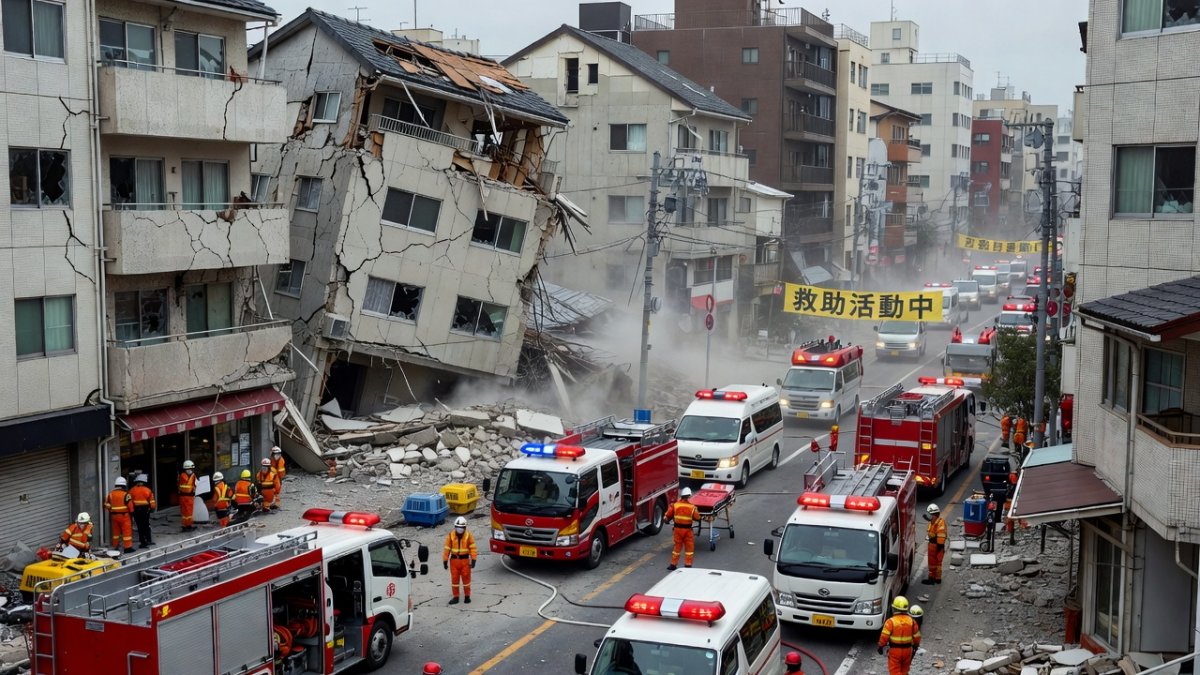
A devastating 6.8-magnitude earthquake has struck Kumamoto Prefecture, trapping dozens in the rubble of a collapsed shopping mall and damaging the historic Kumamoto Castle once again. This latest seismic event tests Japan's preparedness measures implemented after the deadly 2016 quakes, revealing both strengths and lingering vulnerabilities in infrastructure. Residents and responders now face a race against time amid aftershocks and power outages.
Kumamoto Quake Traps Mall Shoppers as Castle Walls Crumble
Kumamoto, Japan — Article continues...
Seismic Details Emerge from the July 28 Strike
The earthquake hit at precisely 16:27:15 JST on July 28, 2026, registering 6.8 on the moment magnitude scale and 7.1 on the Japanese scale. Its shallow 10-kilometer depth amplified ground shaking across Kumamoto Prefecture on Kyushu Island. Japan Meteorological Agency instruments recorded maximum intensity 7 in the hardest-hit zones, the highest level on the national scale.
Residents described the initial jolt as sudden and violent, with one 44-year-old hair salon owner telling Kyodo News he heard a noise like a large vehicle colliding with something. An aftershock of 6.1 magnitude followed within the hour, further rattling already damaged structures. JMA teams continue monitoring for additional events while issuing updates through official channels.
Early reports confirm at least three deaths and more than 50 injuries. These figures come from coordinated tallies by local authorities and align with initial dispatches from CNN, AP, Reuters, Al Jazeera, Japan Times, NHK, and Kyodo News. The event echoes the destructive 2016 sequence that killed 275 people and injured 2,739, though current casualty counts remain far lower so far.
Collapse at Aeon Mall Kashima Traps Survivors
An explosion rocked the Aeon Mall in Kashima Town shortly after the main shock, causing the second floor to give way. Multiple people remain trapped inside the debris, prompting urgent rescue operations by the local fire department. Approximately 200 individuals were safely evacuated from the structure in the immediate aftermath.
Firefighters work methodically through unstable sections, prioritizing locations where voices or phone signals indicate survivors. The mall's partial failure highlights vulnerabilities in commercial buildings even when constructed to modern standards. Officials have not yet released a full structural assessment of the site.
Video from the scene shows twisted steel and scattered merchandise amid the rubble. Rescue teams coordinate with medical personnel to treat minor injuries on site before transport. The operation continues into the evening hours as daylight fades.
Rescue operations at the Aeon Mall site mobilized over 150 firefighters from Kumamoto City and neighboring areas, supported by heavy hydraulic equipment, thermal imaging cameras, and three K-9 search teams trained for urban rubble. Structural engineers from the prefectural government arrived within two hours to assess load-bearing risks, halting work temporarily when aftershocks threatened further collapse. The methodical approach prioritized voice contact and mobile signal triangulation to locate the remaining trapped individuals amid twisted steel beams and fallen concrete slabs.
Evacuated shoppers and staff described scenes of sudden chaos, with one 32-year-old retail worker recounting how the floor buckled beneath her register just as the lights failed, forcing her to crawl toward emergency exits amid falling merchandise. Another eyewitness, a 19-year-old student, told local reporters she helped guide elderly customers down stairwells before the second-floor failure trapped others near the food court. These accounts underscore the narrow margin between survival and entrapment in the initial seconds after the 6.8-magnitude strike.
Medical teams established a forward triage station in the mall parking lot, where paramedics treated crush injuries and lacerations before transferring critical patients to Kumamoto University Hospital and Saiseikai Kumamoto Hospital. At least 12 individuals received on-site stabilization for suspected fractures and internal trauma. The incident has renewed scrutiny of commercial building codes in seismic zones, where even post-2016 reinforcements proved insufficient against shallow, high-intensity shaking that exceeded design thresholds in localized areas.
Kumamoto Castle Suffers Fresh Structural Losses
Stone walls at the 400-year-old Kumamoto Castle collapsed in several sections during the shaking. The historic landmark was already undergoing repairs from damage sustained in the 2016 earthquakes. Engineers had reinforced portions of the site, yet the new tremors exceeded those protections in localized areas.
Castle grounds remain closed to visitors while crews evaluate further risks. The repeated hits to this cultural icon underscore the long-term challenge of preserving heritage structures in a seismically active region. Local officials note that restoration timelines will likely extend beyond previous projections.
Photographs released by NHK show piles of displaced stones at the base of key towers. Preservation experts from the prefecture are on site to document the extent of new damage. Public access restrictions will stay in place until safety is assured.
Transportation Networks Face Widespread Disruption
A train derailed at Yatsushiro Station, halting service on affected lines. Partial collapses of roads and bridges in the Yatsushiro area compound the mobility crisis for residents and emergency responders. These infrastructure failures isolate neighborhoods already dealing with power loss.
Transportation authorities prioritize clearing rail debris and inspecting bridge integrity. Alternative routes are being identified, though many remain congested. The combination of rail and road damage slows the movement of heavy rescue equipment to the mall site.
Passengers from the derailed train were evacuated without reported fatalities. Rail operators conduct thorough checks on remaining lines before resuming limited service. Full restoration of the network is expected to take days rather than hours.
Power Failures and Scattered Fires Add Pressure
Thousands of homes across Kumamoto Prefecture lost electricity following the quake. Utility crews work to restore service while contending with damaged transmission lines. The outages affect both residential areas and critical facilities such as hospitals and evacuation centers.
Fires broke out in multiple locations, likely triggered by ruptured gas lines or electrical shorts. Fire departments balance these incidents against the ongoing mall rescue, stretching resources thin. No large-scale blazes have been reported, but small fires continue to demand attention.
Residents are urged to conserve remaining power and avoid using open flames. Utility companies provide regular updates on restoration progress through local media. The combination of darkness and aftershocks heightens risks for those sheltering in damaged homes.
Tsunami Advisory Lifted After Brief Window
A tsunami advisory was issued for the Ariake Sea and Yatsushiro Sea coasts immediately after the main shock. The warning prompted evacuations from low-lying coastal zones. It was lifted within approximately two hours once sea-level data confirmed no significant wave activity.
Coastal residents returned to homes once the all-clear sounded. The short duration of the advisory reflects improved detection systems compared with past events. No damage from wave action has been recorded along the affected shores.
Maritime traffic resumed normal operations following the lift. Fishermen and port workers received direct notifications through established alert networks. The episode serves as a reminder of the multi-hazard nature of earthquakes in this region.
Rescue Coordination and Public Response Unfold
Fire department teams lead the search at the Aeon Mall while additional support arrives from neighboring prefectures. Medical teams set up triage points near the site to handle incoming casualties. Coordination between agencies appears methodical despite the chaos of aftershocks.
Evacuation centers fill with residents displaced by power loss and structural damage. Supplies of water and food are being distributed, though demand remains high. Community volunteers assist with registration and basic needs at these facilities.
Public messaging from JMA and local governments emphasizes staying away from damaged buildings. Social media channels carry real-time updates alongside traditional broadcasts. The response draws on lessons from the 2016 sequence to improve speed and coverage.
Japan's Self-Defense Forces deployed 300 personnel from the 8th Division based in Kumamoto, bringing specialized heavy-lift vehicles and temporary bridging equipment to support local responders at damaged infrastructure sites. Their arrival accelerated the movement of supplies to isolated neighborhoods while fire teams focused on the mall collapse. Coordination centers integrated SDF logistics with prefectural command to avoid duplication of effort amid ongoing aftershocks.
More than 40 evacuation centers opened across the prefecture, sheltering an estimated 8,500 displaced residents by evening, with supplies of water, blankets, and ready-to-eat meals distributed through municipal stockpiles. Facilities at Kumamoto City Hall and several schools reported overcrowding as families sought refuge from power outages and structural concerns. Government emergency declarations activated the national disaster response framework, releasing funds for immediate relief and directing utility crews to prioritize hospitals and shelters.
Social media platforms and the national J-Alert system proved critical for real-time coordination, with official accounts posting updated road closures and shelter locations that reached millions within minutes. Mobile alerts warned residents of aftershock risks and directed them away from damaged zones, reducing secondary injuries. This digital layer complemented traditional broadcasts, demonstrating how lessons from 2016 have streamlined information flow during the critical first hours.
Long-Term Implications for Regional Preparedness
The 2026 event tests improvements made since the deadly 2016 earthquakes. While casualty numbers are lower, infrastructure failures at the mall, castle, and transport links reveal persistent gaps. Officials will likely review building codes and emergency protocols in the coming weeks.
International media outlets including CNN maintain live coverage with dedicated reporters on the ground. Video feeds show both the scale of destruction and the pace of rescue work. Public attention remains focused on the trapped individuals at the mall.
Recovery will require sustained investment in resilient infrastructure. The repeated seismic stress on Kumamoto Prefecture demonstrates that preparedness is an ongoing process rather than a one-time achievement. Residents and authorities alike face difficult decisions in the weeks ahead.
The 2026 quake invites direct comparison to the 2016 Kumamoto sequence, which began with a 6.5 foreshock and escalated to a 7.3 mainshock that killed 275 people. While current casualties remain far lower, the partial mall collapse and repeated damage to Kumamoto Castle reveal that infrastructure upgrades have not fully mitigated risks from shallow events. Analysts note that the 2016 disaster prompted widespread retrofitting, yet commercial structures like the Aeon Mall still experienced localized failures under intensity-7 shaking.
Kumamoto sits squarely on the Pacific Ring of Fire, where tectonic pressures produce frequent large quakes across Japan, the Philippines, and the western Americas. This latest event reinforces the need for continuous vigilance rather than episodic improvements. Economic impact estimates already project losses exceeding 200 billion yen from disrupted commerce, damaged transport links, and tourism declines at heritage sites, with ripple effects expected to last months in a region still recovering from prior seismic events.
Building codes revised after 2016 emphasized base isolation and ductile framing for new construction, yet the mall incident tests whether those standards adequately address older commercial stock under extreme vertical acceleration. Officials will likely mandate accelerated inspections and targeted reinforcements in the coming weeks, acknowledging that preparedness remains an iterative process in one of the world's most seismically active zones.
By Jessica Ali, Staff WriterThis article was produced with AI-assisted research and editorial support. Reporting is based on sources cited in the article.
What's Your Reaction?
 Like
0
Like
0
 Dislike
0
Dislike
0
 Love
0
Love
0
 Funny
0
Funny
0
 Wow
0
Wow
0
 Sad
0
Sad
0
 Angry
0
Angry
0

Editor-in-Chief at Global1.News. Atlanta-based journalist who cuts through the BS and tells it like it is. Lead anchor, host, and the voice you hear when the spin stops and the truth starts.














Comments (0)