
Cambodia Appoints International Law Experts to UNCLOS Panel as Maritime Dispute with Thailand Intensifies
Cambodia Selects Legal Experts for UNCLOS Commission Cambodia has appointed Peter Taksøe-Jensen and Jean-Marc Thouvenin to the compulsory conciliation commission under the United Nations Convention on the Law of the Sea. Peter Taksøe-Jensen chaired the UNCLOS conciliation commission that resolved the maritime dispute between Australia and Timor-Leste from 2016 to 2018. Jean-Mar
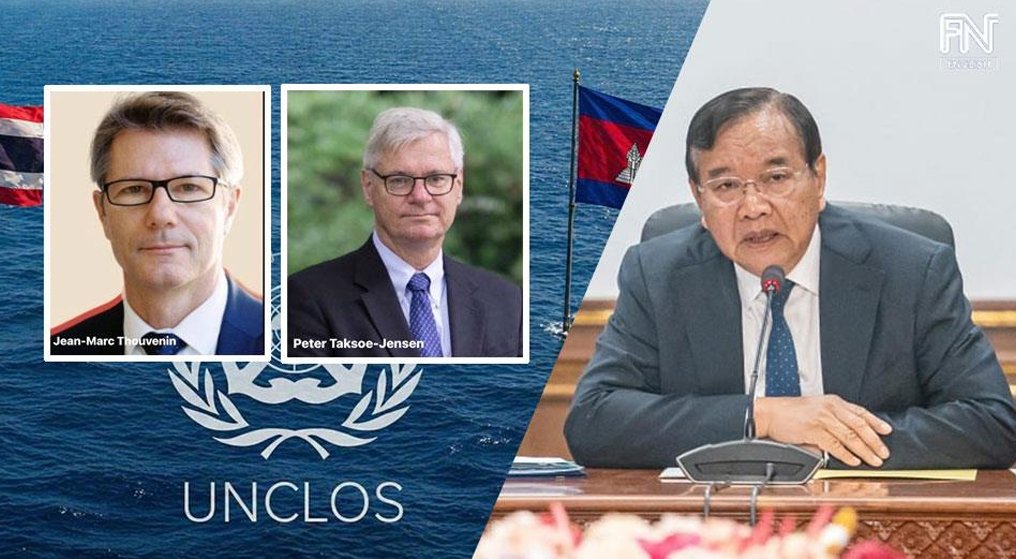
Cambodia Selects Legal Experts for UNCLOS Commission
Cambodia has appointed Peter Taksøe-Jensen and Jean-Marc Thouvenin to the compulsory conciliation commission under the United Nations Convention on the Law of the Sea. Peter Taksøe-Jensen chaired the UNCLOS conciliation commission that resolved the maritime dispute between Australia and Timor-Leste from 2016 to 2018. Jean-Marc Thouvenin has appeared in multiple cases before the International Court of Justice.
These appointments form part of Cambodia's formal effort to address overlapping maritime claims with Thailand in the Gulf of Thailand. Cambodian Foreign Ministry spokesman Chan Ratana stated that Thailand now has 21 days to name its own representatives to the commission.
Thailand Faces 21-Day Deadline from Phnom Penh
Cambodia notified Thailand and the UN Secretary-General on 2 June that it was launching compulsory conciliation proceedings under UNCLOS. If Thailand does not appoint its members within the 21-day period, the United Nations will select the remaining commissioners through its established mechanism.
The Thai Ministry of Foreign Affairs in Bangkok will coordinate the Kingdom's response. Officials in the capital must weigh how to engage with the international process while maintaining direct bilateral channels with Phnom Penh.
Background of the 2001 Memorandum of Understanding
Cambodia turned to the UNCLOS mechanism after Thailand unilaterally withdrew from the 2001 Memorandum of Understanding that previously guided bilateral maritime talks. The 2001 MOU had provided a framework for negotiations between the two countries on their overlapping claims.
Communities along Thailand's eastern seaboard, including fishing villages near Trat province, have followed these developments closely because the maritime boundary affects daily livelihoods in the shared waters of the Gulf of Thailand.
Cambodian Deputy Prime Minister Briefs 47 Missions
Cambodia's Deputy Prime Minister and Foreign Minister Prak Sokhonn briefed representatives from 47 diplomatic missions and international organisations in Phnom Penh about the conciliation initiative. The briefing presented the UNCLOS process as a structured international framework rather than an end to talks.
Cambodian Prime Minister Hun Manet has stated that the move to compulsory conciliation does not mean Cambodia is abandoning negotiations with Thailand. Instead, the process places discussions inside a recognised legal structure under the United Nations Convention on the Law of the Sea.
Implications for Thailand's Diplomatic Approach
The Thai Ministry of Foreign Affairs must now decide whether to participate fully in the conciliation commission or explore other diplomatic avenues from Bangkok. The 21-day deadline creates a clear timeline for internal coordination among Thai agencies responsible for maritime affairs.
Thai diplomats have long preferred bilateral mechanisms when addressing issues with neighbouring countries. The shift to a UN-backed commission introduces new external actors into a matter that previously stayed within the two capitals.
Regional Stability and ASEAN Relations
Maritime boundary questions in Southeast Asia carry direct consequences for ASEAN cohesion. Neighbouring states watch how Thailand and Cambodia manage this process because similar overlapping claims exist elsewhere in the region.
Stable resolution of the Gulf of Thailand dispute would support continued growth in cross-border trade and tourism between the two countries. Disruptions in maritime cooperation can affect shipping routes that serve ports in both Thailand and Cambodia.
Shared Waters and Community Connections
Thai and Cambodian fishing communities have long operated in the same waters of the Gulf of Thailand. The conciliation commission will eventually guide talks that could clarify boundaries and reduce uncertainty for these coastal populations.
Buddhist communities on both sides of the border often emphasise peaceful dialogue and mutual respect. The appointment of experienced international experts offers one structured path toward that goal while keeping channels open for continued bilateral contact.
By Ann Srisawat, Staff WriterThis article was produced with AI-assisted research and editorial support. Reporting is based on sources cited in the article.
What's Your Reaction?
 Like
0
Like
0
 Dislike
0
Dislike
0
 Love
0
Love
0
 Funny
0
Funny
0
 Wow
0
Wow
0
 Sad
0
Sad
0
 Angry
0
Angry
0

Southeast Asia Correspondent at Global1.News. Based in Bangkok, covering Thai and Southeast Asian politics, economy, technology, and culture. Deep regional perspective on one of the world's most dynamic regions.













Comments (0)