
Ivorian Entrepreneurs Take on Global Giants: How Three Local Firms Are Rewriting the Rules of African Business
Three Ivorian firms — Petro Ivoire, Djamo, and Kaira Holding — are challenging multinational dominance in fuel, digital banking and cosmetics, proving that African businesses can compete at global scale through local expertise, fast decision-making and vertical integration.
Ivorian Entrepreneurs Take on Global Giants: How Three Local Firms Are Rewriting the Rules of African Business
Abidjan, Ivory Coast — For generations, the narrative of African consumer markets has been written by multinational corporations — global brands with deep pockets, established supply chains, and decades of market dominance. But across Ivory Coast, a quiet revolution is underway. Three homegrown companies are proving that African businesses can not only compete with the world's biggest names but win on their own terms.
From the petroleum sector to digital banking and cosmetics manufacturing, Ivorian firms Petro Ivoire, Djamo, and Kaira Holding are carving out space in industries long dominated by foreign players. Their stories offer a window into a broader transformation taking shape across the continent — where local entrepreneurship, technological innovation, and a deep understanding of African consumers are creating new pathways to growth.
The Fuel Challenge: Petro Ivoire Takes on Big Oil
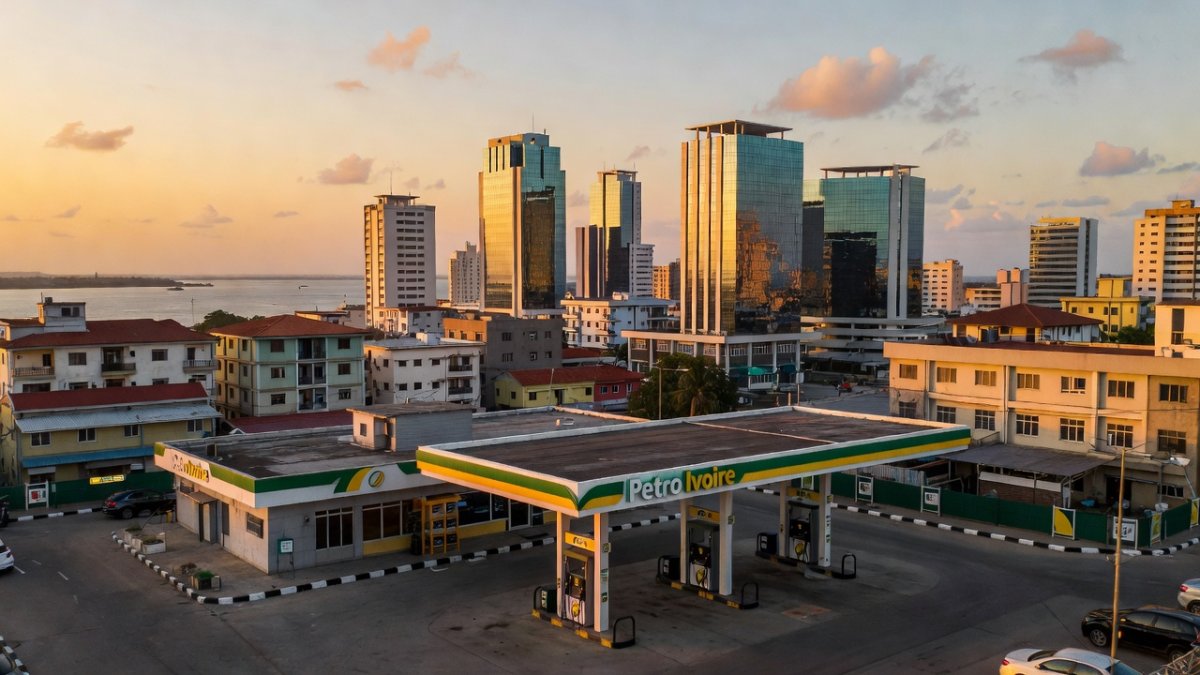
When Petro Ivoire entered Ivory Coast's petroleum sector in 1994, the market was a fortress of international oil companies. Multinational giants controlled the flow of fuel from refinery to filling station, leaving little room for local players. But the company's founders saw something the foreign firms had missed: an opportunity to combine global standards with local expertise.
Three decades later, that bet has paid off. Petro Ivoire is now the largest domestically owned fuel distributor in Ivory Coast and ranks third overall, trailing only TotalEnergies and Shell. The company commands an estimated 15 percent of the country's fuel market — a remarkable feat in an industry where capital barriers and regulatory complexity typically favour established multinationals.
Sebastien Kadio-Morokro, Petro Ivoire's chief executive, credits the company's success to its ability to move faster than its international rivals.
"When a strategic decision needs to be made, we can convene our board immediately and move forward," Kadio-Morokro told Al Jazeera. "We don't have to navigate a long chain of decision-making through headquarters overseas."
That agility has allowed Petro Ivoire to expand beyond fuel distribution. In 2007, the company entered the butane gas market, a sector it now leads. More recently, it has begun investing in electric vehicle charging infrastructure, positioning itself for the energy transition that is slowly taking shape across West Africa.
Digital Banking Revolution: Djamo's Mobile-First Gambit
In Ivory Coast's financial sector, a different kind of disruption is unfolding. Djamo, a digital banking platform launched in 2020, has grown to serve more than two million customers and 10,000 small and medium-sized enterprises in just six years. The company offers accounts, savings products, and investment opportunities through a mobile application designed specifically for francophone West Africa.
For co-founder Hassan Bourgi, the biggest challenge was not technology or regulation — it was convincing global investors that francophone West Africa could produce a tech company worth backing.
"The biggest hurdle we encountered was that our region was completely off the radar for global venture capital investors," Bourgi told Al Jazeera. "Historically, tech investment flowed almost exclusively into four main hubs: Nigeria, Kenya, South Africa and Egypt."
Djamo broke through that bias by focusing on the stability of Ivory Coast's economy and the CFA franc, which provided a reliable currency framework for building a financial technology business. The company also targeted Generation Z consumers, designing a platform that matched the experience younger users had come to expect from international digital services.
"Generation Z was the cornerstone upon which we built our product," Bourgi said. "We wanted to provide an experience that matched what people encountered every day on international platforms."
Djamo's success has broader implications for Africa's digital economy. By proving that a fintech company from francophone West Africa can scale to millions of users, the company has opened the door for other startups from the region to attract international investment.
From a Two-Room Apartment to 32 Countries: The Kaira Holding Story
Few stories capture the ambition of Africa's new entrepreneurial class more vividly than Kaira Holding. In 2009, Fode Kaira Yatabare launched his cosmetics company from a two-room apartment in Abidjan that doubled as both home and office. Each night, he slept on a folding military cot that had to be packed away each morning to make space for production.
Today, Kaira Holding exports beauty and personal care products to 32 countries across Africa, Europe, and the Middle East. The company's journey from a cramped apartment with just $7,000 in startup capital to an international exporter is a testament to what determined African entrepreneurship can achieve.
"I belong to a new generation of African entrepreneurs who passionately believe in local manufacturing and value addition," Yatabare told Al Jazeera.
The company's competitive edge lies in vertical integration. Kaira Holding has invested in its own packaging, printing, and manufacturing processes, reducing its dependence on imported inputs and lowering production costs. Yatabare argues that this approach gives African manufacturers an advantage that is often overlooked.
"Many people fail to realise that manufacturing costs in Africa can actually be lower than in China if you fully integrate your value chain," he said. "This vertical integration has made us more competitive."
Kaira Holding is now expanding its research capacity and preparing to enter new markets, including China — a move that would mark a symbolic reversal of the traditional trade dynamic between Africa and Asia.
A Changing Mindset: The New Wave of African Entrepreneurship
What connects Petro Ivoire, Djamo, and Kaira Holding is more than just their Ivorian roots. Each company was founded by entrepreneurs who refused to accept the premise that African businesses should limit their ambitions to local markets. That shift in mindset — from survival to expansion, from imitation to innovation — is perhaps the most significant development in West Africa's business landscape today.
Across the continent, a new generation of founders is challenging old assumptions about what African companies can achieve. They are building brands that consumers trust, developing products tailored to local needs, and proving that world-class operations are possible outside the traditional hubs of Lagos, Nairobi, and Johannesburg.
For Kadio-Morokro, this confidence is essential. "Africans must trust their countries, themselves and their continent," he said. "There is no reason why we cannot succeed at home." That sentiment is echoed in boardrooms from Abidjan to Accra, as entrepreneurs increasingly see themselves not as underdogs but as equals in the global marketplace.
Institutional Support: The Role of IFC and CGECI
The rise of companies like Petro Ivoire, Djamo, and Kaira Holding is not happening in a vacuum. The International Finance Corporation (IFC) and Ivory Coast's employers' association, CGECI, have launched programmes aimed at helping promising Ivorian companies improve access to finance, strengthen management practices, and prepare for regional expansion.
These initiatives recognise a critical challenge facing African businesses: the gap between surviving at home and competing across borders. While many local enterprises have strong customer bases and deep market knowledge, they often lack the capital, management systems, and international connections needed to scale beyond their home markets.
The IFC-CGECI partnership is designed to bridge that gap, providing mentorship, training, and access to networks that can help Ivorian companies make the leap from national to regional players. For entrepreneurs like Yatabare and Bourgi, this kind of institutional support has been crucial in navigating the complexities of cross-border expansion.
What This Means: A New Chapter for African Business
The experiences of Petro Ivoire, Djamo, and Kaira Holding do not signal the end of multinational influence in Ivory Coast. International companies remain dominant across most sectors, with advantages in scale, brand recognition, and access to capital that local firms cannot yet match. But the direction of travel is unmistakable.
These three companies demonstrate that African businesses can compete when they combine local knowledge with international standards, move faster than their global rivals, and invest in their own productive capacity. They also highlight a shift in mindset that is rippling across the continent — a growing confidence among African entrepreneurs that success is not only possible but expected.
For Ivory Coast, which has positioned itself as one of West Africa's fastest-growing economies, the emergence of a strong domestic private sector is both an economic opportunity and a strategic imperative. As global supply chains diversify and investors look for new growth markets, countries that can produce competitive local companies will be better positioned to capture the benefits.
The broader lesson for Africa is clear: the continent's entrepreneurs are no longer content to be spectators in their own economies. From petroleum to fintech to manufacturing, a new generation of business leaders is building companies that can stand shoulder to shoulder with the world's best — and they are only getting started.
As Yatabare put it: "Africa has changed. We are moving forward guided by a singular ambition: from Cote d'Ivoire to the world."
By Sarah Okafor, Staff Writer
Meta Title: Ivorian entrepreneurs challenge global giants in fuel, banking and cosmetics
Meta Description: Three Ivorian companies — Petro Ivoire, Djamo and Kaira Holding — are proving African businesses can compete with multinationals in fuel, digital banking and cosmetics manufacturing.
Keywords: Ivory Coast, African business, Petro Ivoire, Djamo, Kaira Holding, entrepreneurship, multinational corporations, digital banking, cosmetics manufacturing, West Africa economy, IFC, CGECI
This article was produced with AI-assisted research and editorial support. Reporting is based on sources cited in the article.
What's Your Reaction?
 Like
0
Like
0
 Dislike
0
Dislike
0
 Love
0
Love
0
 Funny
0
Funny
0
 Wow
0
Wow
0
 Sad
0
Sad
0
 Angry
0
Angry
0

Africa Correspondent at Global1.News. Based in Lagos, covering politics, business, technology, and culture across the continent. Focused on telling African stories beyond the headlines — the innovation, entrepreneurs, and communities shaping the region's future.













Comments (0)