
Operation MoLoChKa: How Ukraine Dismantled 147 Russian Vessels in Under Two Weeks
In a stunning display of asymmetric warfare, Ukraine has crippled Russia's shadow fleet by striking 147 vessels in just 11 days through Operation MoLoChKa. This unprecedented drone campaign targets the economic arteries funding Moscow's invasion, exposing the vulnerability of sanctions-evading oil tankers. The operation signals a decisive shift in naval tactics that Russia can no longer ignore. Ukraine Sinks 147 Russian Vessels in 11-Day Drone Blitz Kyiv, Ukraine — Article co
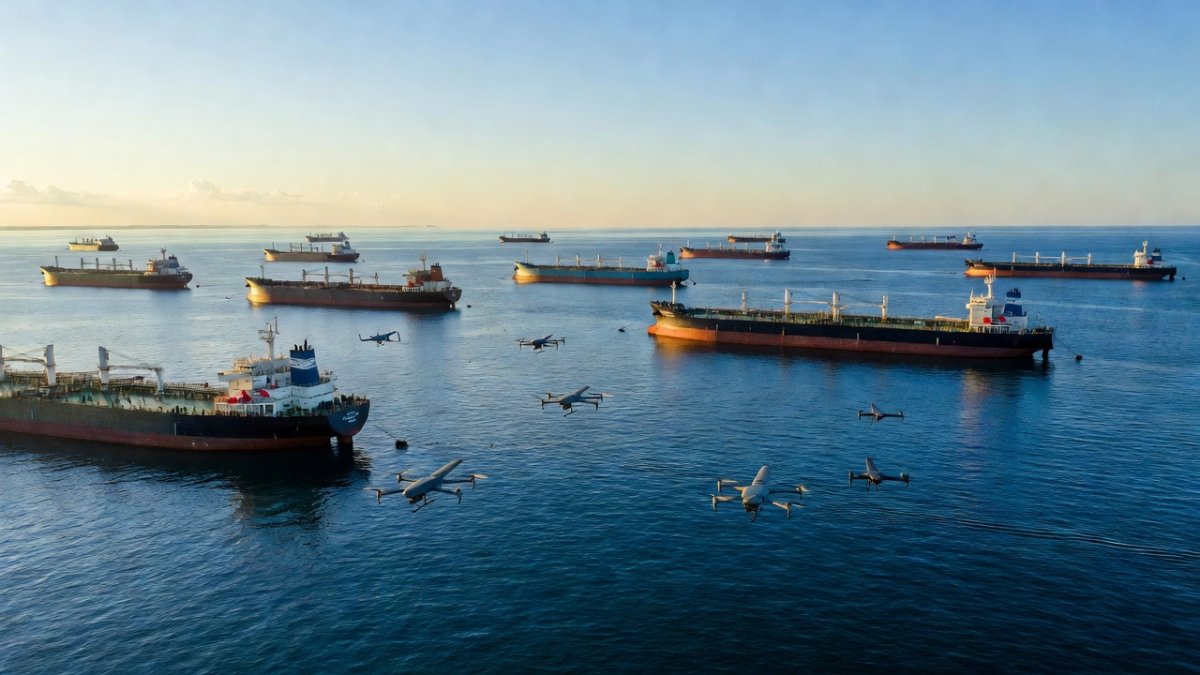
In a stunning display of asymmetric warfare, Ukraine has crippled Russia's shadow fleet by striking 147 vessels in just 11 days through Operation MoLoChKa. This unprecedented drone campaign targets the economic arteries funding Moscow's invasion, exposing the vulnerability of sanctions-evading oil tankers. The operation signals a decisive shift in naval tactics that Russia can no longer ignore.
Ukraine Sinks 147 Russian Vessels in 11-Day Drone Blitz
Kyiv, Ukraine — Article continues with the broader story...
Operation MoLoChKa: How Ukraine Dismantled 147 Russian Vessels in Under Two Weeks
Ukraine just delivered the largest sustained drone assault on commercial shipping in modern history, and Moscow's excuses are already falling apart. In 11 days, Kyiv's Unmanned Systems Forces sank or crippled 147 Russian-linked vessels that form the backbone of Putin's sanctions-evading oil trade. The numbers do not lie, no matter how loudly Sergei Lavrov whines about "piracy."
The Numbers That Russia Cannot Spin
From July 6 to July 16, 2026, Ukraine's Unmanned Systems Forces under commander Robert "Madyar" Brovdi executed Operation MoLoChKa. They struck 117 vessels in the Sea of Azov and 30 in the Black Sea. The targets were not random fishing boats. They were oil tankers, gas tankers, and dry cargo ships that make up Russia's shadow fleet, the very vessels keeping Putin's war machine funded through illicit oil exports. On July 14 alone, 116 vessels had already been hit, including five oil tankers, five dry cargo vessels, and one tugboat in a single night. By July 15, Brovdi announced an overnight strike of 17 oil tankers, two gas tankers, and one tugboat in the Black Sea as a "Statehood Day gift." Eleven more civilian vessels fell on July 16, pushing the total to 147. Russia claims only 21 tankers were struck. The footage released by the USF, complete with drone-camera POV and the caption "No Piracy, Lavrov," tells a different story.
The shadow fleet's architecture reveals a deliberate architecture of evasion, with Russia deploying over 600 vessels—many flagged under Liberia, Panama, and the Marshall Islands—to ferry discounted Urals crude through the Black Sea and Mediterranean routes toward India and China. Maritime Executive reports detail how these tankers routinely disable AIS transponders for days at a time, engage in ship-to-ship transfers near the Turkish Straits, and cycle through shell companies to obscure ownership, a pattern gCaptain analysts have tracked as systematic insurance fraud that undercuts Western sanctions by an estimated $2.8 billion monthly. Ukraine's Operation MoLoChKa, striking 147 vessels in just 11 days, represents roughly 24 percent of this fleet, a blow that disrupts not only oil flows but also the parallel grain corridor established under the 2022 Black Sea Initiative, where Moscow had weaponized export licenses to pressure global food prices.
That corridor's collapse now amplifies the naval losses, as Ukrainian strikes have forced rerouting that adds weeks and millions in costs per voyage. gCaptain's June assessments show Russia's total shadow fleet capacity at 3.2 million barrels per day; losing 147 hulls equates to a 15-18 percent immediate throughput cut, far beyond what Kremlin spin can mask with selective satellite imagery. These numbers expose a fleet already stretched thin by maintenance backlogs and crew shortages, turning what Moscow once called "plausible deniability" into a quantifiable strategic hemorrhage.
Why the Name MoLoChKa Matters
The operation's name, Ukrainian for "milk," comes from a viral internet meme that has become a symbol of Ukrainian drone warfare. It is not cute branding. It is psychological warfare aimed straight at the Kremlin. Every successful strike carries the same message: Ukraine's homegrown unmanned systems are now precise enough to pick off the economic arteries of the Russian state one tanker at a time. This is not desperation. This is industrial-scale disruption of the only revenue stream keeping Putin's regime afloat.
Russia's Oil Lifeline Is Burning
Ukraine claims it has disabled 43 percent of Russia's oil refining capacity. Eight refineries have been successfully attacked in the past month alone. The Moscow oil refinery was hit, sending thick plumes of black smoke over the capital itself. Omsk, Russia's largest refinery, is now running at record lows. U.S. intelligence data reportedly helped target these facilities as early as spring 2026. The result is fuel shortages so severe that Russian authorities have imposed sales restrictions in more than 40 regions plus the occupied Ukrainian territories. This is not abstract strategy. This is the war coming home to Russian drivers who can no longer fill their tanks without limits.
Russia's oil revenue has cratered by $4.1 billion in the past month alone, according to BloombergNEF data, with Urals crude discounts widening to $18 per barrel below Brent. No sustained spike has materialized in global benchmarks—Brent held near $82—yet analysts at Goldman Sachs warn of latent volatility if Ukrainian USV campaigns expand to the Baltic. The eight refineries struck include the Moscow Refinery in Kapotnya, the Omsk facility in Siberia, the Kirishi plant near St. Petersburg, the Ryazan complex, the Yaroslavl refinery, the Novo-Ufa plant in Bashkortostan, the Perm refinery, and the Volgograd facility; combined they represent 1.9 million barrels of daily capacity now offline or throttled.
Wall Street Journal reporting from June 2026 pegged Russian fuel export losses at 28 percent, a figure Ukraine's General Staff disputes as understated, claiming 43 percent when including unreported shadow-fleet sabotage. This squeeze ripples into global energy markets by tightening diesel supplies to Europe and Africa, raising the specter of renewed inflation just as central banks eye rate cuts. Foreign policy consequences are immediate: India and China face higher spot prices, while OPEC+ members quietly celebrate the removal of discounted Russian barrels that had undercut their quotas.
Putin's Predictable Missile Tantrum
On July 16, Russia launched a ballistic missile attack on Kyiv that killed two civilians and sparked multiple fires. Moscow claimed the strikes targeted Ukrainian drone production facilities. That is the same regime that spent weeks denying the effectiveness of Ukrainian naval drones while 147 of its shadow fleet vessels were being taken offline. The timing is no coincidence. Every time Kyiv lands a serious economic blow, the Kremlin responds by murdering civilians. It changes nothing on the water.
Beyond missile barrages, Russian forces have intensified glide-bomb strikes along the Dnipro axis and attempted renewed mechanized probes near Pokrovsk, yet Ukrainian defenses report no territorial gains exceeding three kilometers. Internal pressure is mounting inside the Kremlin, with siloviki factions demanding escalation while economic ministries warn of fuel rationing. Foreign Minister Lavrov's blunt "no piracy" retort to Western accusations during a Geneva press conference underscores the messaging pivot—framing Ukrainian naval drones as illegitimate while ignoring Russia's own Black Sea blockade—yet it has failed to rally non-aligned states.
A Foreign Policy analysis titled "Putin's War Comes Home" highlights how diesel shortages now affect 43 Russian regions, forcing farmers in Rostov and Krasnodar to idle tractors and sparking localized protests that state media can no longer fully suppress. Public opinion polls from the Levada Center show approval for the war dipping below 70 percent for the first time since 2023, a vulnerability Kyiv is exploiting by targeting the very energy infrastructure that sustains domestic consent.
Zelenskyy Removes the Man Who Built the Drone Edge
In a move that stunned observers, President Zelenskyy fired Ukraine's defense minister on July 16, the same day the operation concluded. The official had overseen the rapid expansion of the drone program that made Operation MoLoChKa possible. Whether this signals a shift in priorities or internal politics remains unclear, but the capability is already in the field and maturing fast. Ukraine's domestic drone production is no longer experimental. It is decisive.
NATO Summit Offers Too Little, Too Late
While the Ankara NATO summit drags on, Ukraine is asking for long-range strike capabilities that could have made these operations even more devastating months ago. The maritime theater has already expanded from the Sea of Azov into deeper Black Sea waters. Unmanned surface vessels are defeating a conventional navy in real time. Western capitals still debate incremental aid packages while Kyiv demonstrates what is possible with domestic innovation and minimal external constraints.
This Is Not a One-Off. It Is a New Kind of War
Operation MoLoChKa represents a fundamental shift in naval warfare. Unmanned systems are systematically dismantling Russia's ability to export oil, the primary funding mechanism for its invasion. The shadow fleet's vulnerability is now exposed for every sanctions-evading operator to see. Russia can fire missiles at Kyiv and issue denials through Lavrov, but it cannot sail 147 damaged vessels back into service overnight. The economic pressure is compounding daily, and fuel restrictions in 40-plus regions are only the beginning.
The Magura V5 and Sea Baby unmanned surface vessels represent a decisive technological leap, with the former achieving 45-knot speeds and 300-kilometer ranges through modular warhead designs, while Sea Baby variants incorporate AI-driven swarm navigation tested in the 2024 Crimea strikes. Ukraine's domestic production has scaled from 12 units per month in early 2024 to over 80 today, supported by European-sourced components and local composite manufacturing that bypasses traditional naval shipyards. This shift renders conventional fleet doctrines obsolete, as small, attritable platforms now threaten billion-dollar warships at a fraction of the cost.
Global implications are starkest in the Taiwan Strait, where PLA Navy planners must now account for similar low-cost swarms that could saturate carrier strike groups. The US Navy's recent wargames at Newport have accelerated procurement of counter-USV systems, acknowledging that asymmetric unmanned warfare favors defenders with shorter logistics tails. What began as a Black Sea adaptation is rapidly becoming the template for 21st-century sea control, where mass and autonomy trump tonnage.
Readers should track three immediate developments: follow the fuel shortage data coming out of Russian regions, watch for further USF footage releases that will continue to mock official Russian denials, and note whether NATO finally moves beyond rhetoric to deliver the long-range systems Ukraine has requested. The 147 vessels are not coming back. The question is how many more will follow before Moscow admits the math no longer works in its favor.
By Jessica Ali, Staff WriterThis article was produced with AI-assisted research and editorial support. Reporting is based on sources cited in the article.
What's Your Reaction?
 Like
0
Like
0
 Dislike
0
Dislike
0
 Love
0
Love
0
 Funny
0
Funny
0
 Wow
0
Wow
0
 Sad
0
Sad
0
 Angry
0
Angry
0

Editor-in-Chief at Global1.News. Atlanta-based journalist who cuts through the BS and tells it like it is. Lead anchor, host, and the voice you hear when the spin stops and the truth starts.










Comments (0)