
Ontario Wildfires: Bush Pilots and First Nations Communities Fight for Survival as Fires Devastate the North
In a recent CBC News report, bush pilots are seen navigating thick smoke to evacuate residents from remote Ontario communities as wildfires continue to rage across the province. The video captures the extraordinary efforts of volunteer aviators and lodge operators who have shifted from welcoming tourists to helping with emergency evacuations.
In a recent CBC News report, bush pilots are seen navigating thick smoke to evacuate residents from remote Ontario communities as wildfires continue to rage across the province. The video captures the extraordinary efforts of volunteer aviators and lodge operators who have shifted from welcoming tourists to helping with emergency evacuations.
Ontario Wildfires: Bush Pilots and First Nations Communities Fight for Survival as Fires Devastate the North
Thunder Bay, Ontario — The CBC News video captures bush pilots navigating thick smoke to evacuate residents from remote Ontario communities amid raging wildfires on July 17, 2026.
The Crisis in Northern Ontario
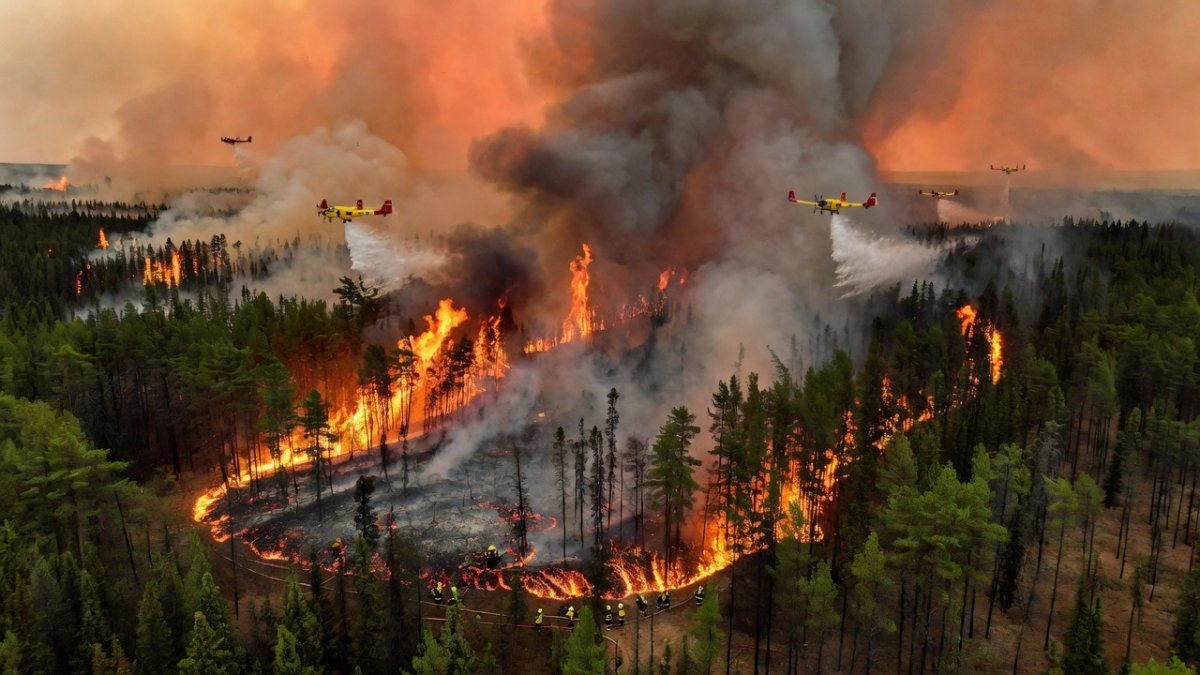
Over 175 wildfires burn across Ontario as of July 17, 2026, with the crisis concentrated in northwestern Ontario around Thunder Bay, Armstrong, Fort Frances, Dryden, Nipigon and Sioux Lookout. The Ontario Ministry of Natural Resources and Forestry reports active fronts exceeding 350,000 hectares in several zones. At least 15 communities have issued evacuation orders, displacing more than 1,500 residents. Thunder Bay city officials confirm reception centres are nearing capacity as evacuees arrive by road and air.
Indigenous Services Canada states that 1,600 individuals from First Nations communities have been evacuated province-wide this fire season. The Canadian Red Cross has deployed teams to Thunder Bay and Dryden to coordinate shelter and supplies. Nova Scotia's Eastern Shore faces a separate out-of-control wildfire that has triggered additional evacuations, stretching national firefighting resources.
A Community Destroyed
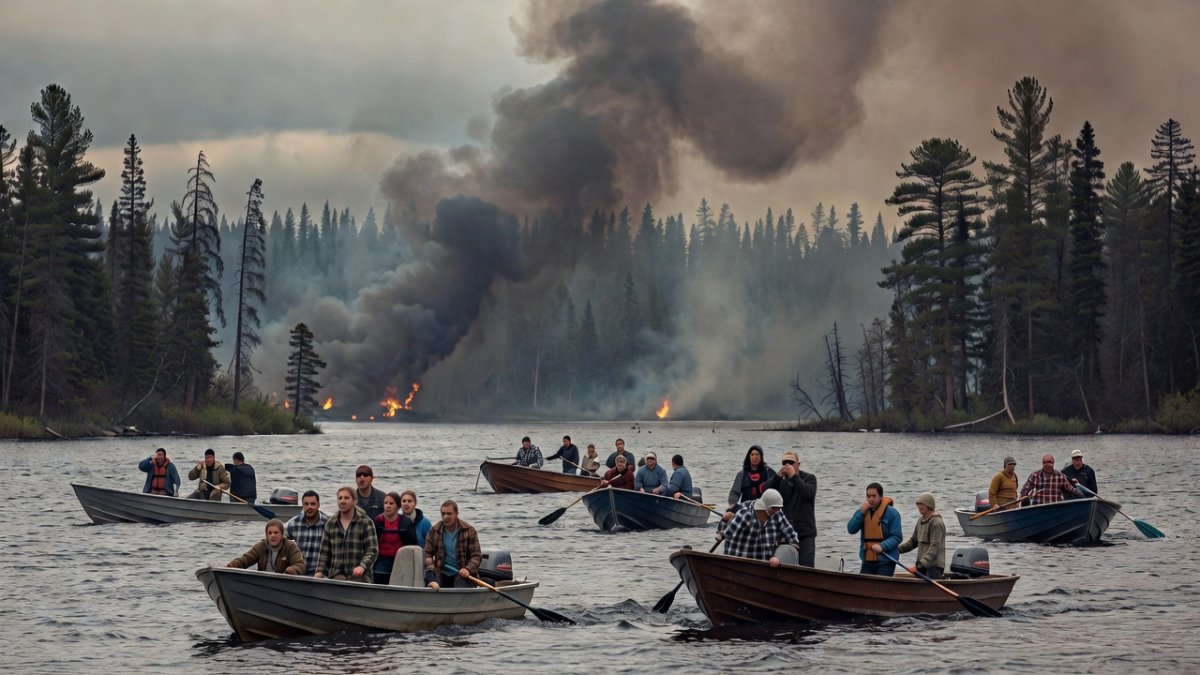
Namaygoosisagagun First Nation, also known as Collins First Nation, was completely destroyed by wildfire on July 17, 2026. The community of just over two dozen people lost all homes within less than one hour. Chief Helen Paavola, attending the Assembly of First Nations Annual General Assembly in Ottawa, stated that her members escaped by boat as flames advanced. Scott Frank and Lyndon Paavola went door to door to alert residents before assisting with boat evacuations. Fifteen-year-old Miiyah Paavola grabbed her two chihuahuas and gathered friends before fleeing the settlement.
The geography of Namaygoosisagagagun First Nation places it in a particularly vulnerable position west of Armstrong and roughly 250 kilometres north of Thunder Bay, where dense boreal forest and limited road access heighten risks during wildfire season. With only 130 registered members, the community relies heavily on boat travel for daily movement, a reality that turned critical when Scott Frank and Lyndon Paavola went door to door urging residents to evacuate. Families boarded boats already stuffed with people and pets before racing across the water to Highway 527 as flames advanced directly behind them, underscoring how remote northern locations strain both local response capacity and federal-provincial coordination on emergency preparedness.
Chief Paavola captured the narrow margin of survival when she stated that it was a miracle his members remained alive, highlighting the human cost of delayed infrastructure investment in Indigenous communities. The ongoing process of official recognition as a First Nation further complicates matters, as it restricts direct access to certain federal funding streams and provincial support mechanisms that recognised bands receive automatically. This situation reflects broader tensions in Canadian federal-Indigenous relations, where bureaucratic hurdles can delay aid even as Ottawa and Queen's Park negotiate shared responsibilities for northern emergency management and long-term community resilience.
These challenges intersect with wider Canadian realities around healthcare access and economic stability for small northern populations, where evacuation disrupts not only daily life but also ongoing treaty negotiations and resource development projects that could otherwise bolster local economies. The reliance on informal networks during the boat evacuation demonstrates both community strength and the gaps left by incomplete recognition status, prompting renewed calls for streamlined federal support that bypasses such administrative barriers.
Bush Pilots and Lodges Step Up
Bush pilots and remote fishing lodges have shifted operations from tourism to evacuation support. Rylie Isaacs, owner of Lac Des Mille Lodge, redirected aircraft to transport residents from isolated areas around Armstrong and Sioux Lookout. Pilots fly through dense smoke to reach communities with limited road access. These operators use float planes suited for northern lakes and rivers.
The Canadian Owners and Pilots Association notes that private aviation has supplemented official response in far northern zones. Lodges provide temporary landing sites and fuel stops for evacuation flights. This effort has moved dozens of residents to safety in recent days.
Federal-Provincial Response
Ontario has issued a formal Request for Assistance to the federal government for possible Canadian Armed Forces deployments. Jill Dunlop, Ontario's minister of emergency preparedness and response, confirmed the request on July 17, 2026. Prime Minister Mark Carney stated that Ottawa stands ready to provide any additional support as needed. The Globe and Mail reported the military assistance request earlier this week.
Ontario's formal Request for Assistance to the federal government has activated established protocols for intergovernmental cooperation, allowing Ottawa to assess needs ranging from aerial firefighting resources to logistical support. Minister Jill Dunlop indicated that deployments of Canadian Armed Forces personnel remain under active consideration, reflecting the scale of the crisis and the limits of provincial firefighting capacity alone. Prime Minister Carney emphasised that Ottawa stands ready to provide any additional support required, a statement that aligns with longstanding federal commitments to assist provinces during natural disasters while respecting jurisdictional boundaries in federal-provincial relations.
Premier Doug Ford defended the province's emergency firefighting budget during a recent press conference, pointing to increased allocations for equipment and personnel as evidence of proactive planning amid rising climate pressures. Indigenous Services Canada has simultaneously begun tracking evacuees across multiple sites, ensuring that health and social services remain available even as families relocate. These coordinated efforts illustrate how federal-provincial dynamics shape responses to wildfires, particularly when Indigenous communities are involved and require culturally appropriate assistance alongside standard emergency measures.
The involvement of multiple agencies also highlights economic implications, as prolonged firefighting operations draw on national resources that could otherwise support healthcare infrastructure or economic development initiatives in northern Ontario. Effective tracking of evacuees by federal departments helps mitigate disruptions to medical care and income support programs, reinforcing the interconnected nature of emergency management and broader Canadian social policy frameworks.
Premier Doug Ford defended the province's emergency firefighting budget during a press conference in Toronto. The federal government has already activated additional resources through Public Safety Canada. Coordination meetings continue between Ontario Emergency Management and federal officials in Ottawa.
Impact on Air Quality and Daily Life
Wildfire smoke has caused Toronto's air quality to rank among the worst in the world on July 17, 2026. Plumes have reached Quebec and extended into the U.S. Midwest and Northeast. NASA satellite images show the smoke plume stretching far east across Canada and into the United States. Environment Canada issued special air quality statements for southern Ontario and parts of Quebec.
Toronto's recent ranking among the worst air quality cities globally has brought the wildfire smoke crisis directly into urban daily routines, with residents advised to limit outdoor activities and monitor symptoms linked to respiratory strain. NASA satellite imagery has documented the smoke plume moving steadily eastward, confirming the transboundary reach of emissions from northern Ontario fires and prompting Environment Canada to issue updated air quality statements for affected regions. These developments carry measurable economic consequences, as reduced productivity among outdoor workers and school schedule adjustments ripple through the provincial economy.
A viral video from a CN train cab has amplified union demands for enhanced worker protections, including better filtration systems and shift modifications to shield employees from prolonged smoke exposure. CP24 reporting indicates that outdoor labourers have been instructed either to remain indoors or to use appropriate masks, measures that intersect with occupational health standards enforced across Canada. Schools have responded by shortening recess periods and relocating physical education indoors, adjustments that protect children while illustrating how environmental crises affect education delivery and family schedules province-wide.
The air quality deterioration also strains healthcare systems already managing seasonal demands, as increased visits for asthma and related conditions test capacity in both urban centres and smaller communities. These impacts underscore connections between northern resource management, federal environmental policy, and the daily realities faced by Canadians from Thunder Bay to Toronto, where smoke serves as a visible reminder of shared vulnerabilities in a changing climate.
Residents in Toronto and Ottawa report reduced outdoor activities and increased use of air filtration systems. Schools in affected areas have adjusted recess schedules. CN rail workers escaped a train cab surrounded by flames in a widely shared video, prompting the union to call for enhanced worker protection protocols.
Concerns for Remote and Indigenous Communities
Alvin Fiddler, grand chief of Nishnawbe Aski Nation, raised concerns about limited infrastructure in the far north for firefighting and large-scale evacuations. Many airports in the region cannot accommodate larger aircraft needed to move high numbers of people quickly. This limitation affects communities around Fort Frances and Nipigon.
Alvin Fiddler has drawn attention to limited airport infrastructure in remote areas that restricts the landing of larger aircraft needed for rapid evacuations and supply deliveries, a constraint that compounds challenges for NAN communities already facing highway closures. Telecommunication breakdowns have further isolated residents, interrupting access to telehealth services and emergency medical coordination at a time when reliable connectivity is essential for healthcare delivery in northern Ontario. These infrastructure gaps reflect longstanding disparities in federal and provincial investment that affect Indigenous populations disproportionately.
The Anishinabek Nation has organised support networks for Namaygoosisagagagun members now in Thunder Bay, providing temporary housing assistance and cultural resources amid the displacement. Chief Paavola expressed frustration that the community's lack of official recognition should not prevent timely help, a point that resonates with ongoing national discussions about equitable treatment for all First Nations regardless of formal status. Such barriers can delay integration into provincial healthcare and social programs, placing additional pressure on urban centres like Thunder Bay that absorb evacuees.
These issues tie directly into Canadian priorities around Indigenous relations and economic reconciliation, as improved infrastructure and recognition processes could enhance both emergency response and long-term community development. Highway closures and telecom failures also disrupt supply chains that support northern economies, illustrating how remote crises generate ripple effects felt across federal-provincial jurisdictions and underscoring the need for sustained investment in resilient systems.
Indigenous Services Canada continues to track evacuations from First Nations reserves. Grand Chief Fiddler emphasised the need for improved landing strips and emergency supply caches. These gaps have complicated responses in areas with populations under 100.
What Happens Next
Ontario officials expect further evacuations as wind patterns shift in northwestern Ontario. The Canadian Armed Forces await formal deployment orders following the provincial request. Thunder Bay continues to expand shelter capacity with support from the Canadian Red Cross.
Fire crews from across Canada remain on standby for interprovincial deployment. Chief Helen Paavola plans to return to the region once safe access is restored. Long-term recovery discussions have begun among federal, provincial and First Nations leaders in Ottawa.
By Alex Thompson, Staff WriterThis article was produced with AI-assisted research and editorial support. Reporting is based on sources cited in the article.
What's Your Reaction?
 Like
0
Like
0
 Dislike
0
Dislike
0
 Love
0
Love
0
 Funny
0
Funny
0
 Wow
0
Wow
0
 Sad
0
Sad
0
 Angry
0
Angry
0

Canada Correspondent at Global1.News. Based in Toronto, covering Canadian politics, energy, trade, and US-Canada relations. Provides the Canadian perspective on North American and global affairs.














Comments (0)