
This doctor is giving life back to female Yazidi victims of Islamic State
The Abduction and Captivity of Yazidi Women The events of August 3, 2014, marked a turning point in the lives of countless Yazidi families in Sinjar, as IS militants launched coordinated attacks that shattered communities and tore apart homes. Young women like Shireen, who was preparing for her high school examinations, found their futures abruptly stolen when armed fighters bu
The Abduction and Captivity of Yazidi Women
The events of August 3, 2014, marked a turning point in the lives of countless Yazidi families in Sinjar, as IS militants launched coordinated attacks that shattered communities and tore apart homes. Young women like Shireen, who was preparing for her high school examinations, found their futures abruptly stolen when armed fighters burst into their residences. These abductions were not random acts of violence but part of a systematic campaign targeting Yazidi women and girls, who were viewed through the lens of extremist ideology as property to be seized and exploited. The human rights implications of such targeted kidnappings underscore the vulnerability of minority communities in conflict zones, where cultural and religious identities become weapons of war.
Once captured, these women endured immediate separation from their families and were transported to various locations under IS control. Shireen, at just nineteen years old, was sold as a sex slave to a fighter in Tal Afar before being transferred again to Mosul. This cycle of sale and resale exposed the commodification of human lives, reducing individuals to objects of control and abuse. The trauma inflicted during these initial stages of captivity extended far beyond physical harm, embedding deep psychological wounds that would require years of specialized care to begin addressing. International observers have documented how such practices violated fundamental principles of dignity and freedom, highlighting the urgent need for global accountability mechanisms.
Yazidi beliefs, centered on reverence for Yasdan and Melek Tawwus, faced direct assault as captors imposed forced conversions. This religious persecution compounded the physical violations, stripping survivors of their spiritual anchors at a time when faith might have offered solace. The abduction of girls as young as six and ten, later brought into households alongside older captives, illustrated the breadth of IS targeting across age groups. These patterns reveal a deliberate strategy to erase cultural continuity, leaving survivors to navigate not only personal loss but also the erosion of communal identity in the aftermath of such atrocities.
Life Under Occupation: Two Years in Mosul
Under the oppressive regime in Mosul, survivors like Shireen faced relentless daily violations that defined their existence for two full years. Confined indoors and forbidden from stepping outside, these women lived in a state of perpetual isolation, their movements dictated by captors who wielded absolute power. Shireen was forced into the role of third wife to Abu Omar, enduring repeated rapes that her abuser attempted to mask with false declarations of affection. Such contradictions between words and actions laid bare the hypocrisy of the occupiers, who used violence to assert dominance while claiming emotional bonds. The presence of other wives who participated in beatings further isolated the captives, creating an environment where solidarity among victims was systematically undermined.
The arrival of younger girls aged six and ten into the household intensified the atmosphere of fear and control. These children, too, became part of the same cycle of exploitation, their innocence shattered alongside that of adult survivors. Forced conversions to the occupiers' ideology represented another layer of psychological warfare, aimed at breaking the spirit of those who held fast to Yazidi traditions. The human rights violations documented in these settings, including prolonged sexual slavery and physical abuse, stand as stark reminders of how conflict disproportionately burdens women and girls. Survivors carried these experiences into their eventual freedom, where the echoes of captivity manifested in profound mental health challenges.
Family separations added to the burden, with relatives killed or reported missing, leaving survivors to grapple with unresolved grief amid their own suffering. Shireen's account of her uncle and friends being killed, alongside the disappearance of her father and sister since 2014, illustrates the ripple effects of these occupations on entire kinship networks. The two years in Mosul thus represented not merely personal ordeal but a microcosm of broader communal devastation, where individual resilience was tested against overwhelming systemic cruelty. Such narratives demand sustained attention from the international community to prevent recurrence and support long-term recovery efforts.
Release and the Long Road Back
The liberation of survivors during the 2016 Mosul campaign offered a fragile glimmer of hope amid ongoing conflict, yet the transition to freedom proved fraught with new obstacles. Shireen, freed after two years of captivity, returned to a world forever altered by loss and trauma. Depression and recurring nightmares became constant companions, reflecting the deep scars left by prolonged abuse and separation from loved ones. The absence of her father and sister, missing since the initial attacks, compounded feelings of uncertainty and sorrow, as survivors navigated a landscape where closure remained elusive. This phase of release highlighted the gap between physical freedom and emotional restoration, underscoring the necessity of targeted support systems.
Upon her return, Shireen sought assistance from Dr. Nagham Nawzat, a Yazidi gynaecologist based in Duhok. The doctor's compassionate engagement provided an immediate anchor, with Shireen later reflecting that without such help, she might not have survived the aftermath. These initial encounters emphasized the critical role of culturally sensitive care in rebuilding shattered lives. The long road back involved confronting not only personal memories but also societal stigmas surrounding survivors of sexual violence, which often compound isolation. Human rights advocates stress that true recovery requires addressing both individual needs and collective wounds inflicted on the Yazidi community.
Reintegration into society demanded patience and specialized interventions, as survivors processed the destruction of their previous realities. The loss of educational opportunities, such as Shireen's interrupted studies, symbolized broader disruptions to personal development caused by the conflict. Yet stories of resilience emerged, with many women drawing strength from shared experiences and professional guidance. The journey from captivity to tentative stability illustrates the enduring impact of genocide on survivors, calling for sustained international commitment to justice and healing initiatives that honor their courage.
Dr Nagham Nawzat: A Doctor Driven by Purpose
Dr. Nagham Nawzat, born in 1976 in Mosul to a Yazidi family, pursued medical training with a clear vision of advancing women's health. Graduating from Mosul's Medical College in 2002 with a specialization in gynaecology, she sought to empower women through education on healthcare and direct support during vulnerable periods. Her early motivations reflected a deep commitment to addressing gender-specific challenges in a region marked by conflict and inequality. By 2015, this dedication led her to join the Duhok Survivors' Centre, where she could apply her expertise to the urgent needs of Yazidi survivors emerging from IS captivity.
Over the years, Dr. Nawzat has assisted an estimated 1,200 Yazidi women, contributing to a broader effort that saw 2,023 women liberated by July 2018 according to regional authorities. Her receipt of the International Women of Courage Award in March 2016 from then-U.S. Secretary of State John Kerry recognized her pivotal role in these recovery processes. At forty-two years old, she embodies a blend of professional skill and personal empathy rooted in shared cultural heritage. This background enables her to connect authentically with survivors, fostering trust essential for effective intervention in cases of profound trauma.
Dr. Nawzat's approach extends beyond clinical duties, positioning her as a steadfast advocate for human rights within the medical field. Her work highlights the intersection of healthcare and justice, where treating physical and emotional wounds serves as a form of resistance against erasure. Survivors frequently express profound gratitude, with one noting that the doctor helped all of them and affirmed their bravery in ways that facilitated survival. Such testimonials underscore the transformative potential of dedicated practitioners who prioritize compassion alongside expertise in post-conflict settings.
The Duhok Survivors' Centre: A Unique Facility
Established as the sole facility in Iraq dedicated to addressing gender-based violence, the Duhok Survivors' Centre fills a critical gap in support services for women emerging from conflict. Funded by the United Nations Population Fund, the centre provides a safe space where survivors can access specialized care tailored to their experiences of captivity and exploitation. Dr. Nawzat's integration into this environment in 2015 marked a significant expansion of its capacity to handle the influx of Yazidi women liberated from IS control. The centre's unique focus distinguishes it from general medical institutions, emphasizing holistic responses to trauma that integrate medical, psychological, and social dimensions.
Within its walls, survivors encounter an atmosphere designed to restore dignity and agency after years of dehumanization. The facility's emphasis on gender-based violence reflects an understanding that such harms require targeted strategies beyond standard healthcare protocols. By concentrating resources in Duhok, within Iraqi Kurdistan, the centre serves as a beacon for those displaced from Sinjar and other affected areas. Its role in facilitating recoveries like Shireen's demonstrates how institutional support can mitigate the long-term effects of systematic abuse on individuals and communities alike.
The centre's operations also contribute to broader documentation efforts, aiding in the recognition of atrocities as ongoing genocide by international bodies. This dual function of healing and advocacy positions it as an essential component of transitional justice mechanisms. Survivors benefit from an environment where their stories are heard without judgment, fostering a sense of belonging that counters the isolation imposed during captivity. As the only such specialized resource in the country, its continued operation remains vital for addressing the scale of needs arising from the Yazidi crisis.
The Healing Approach: Beyond Medical Treatment
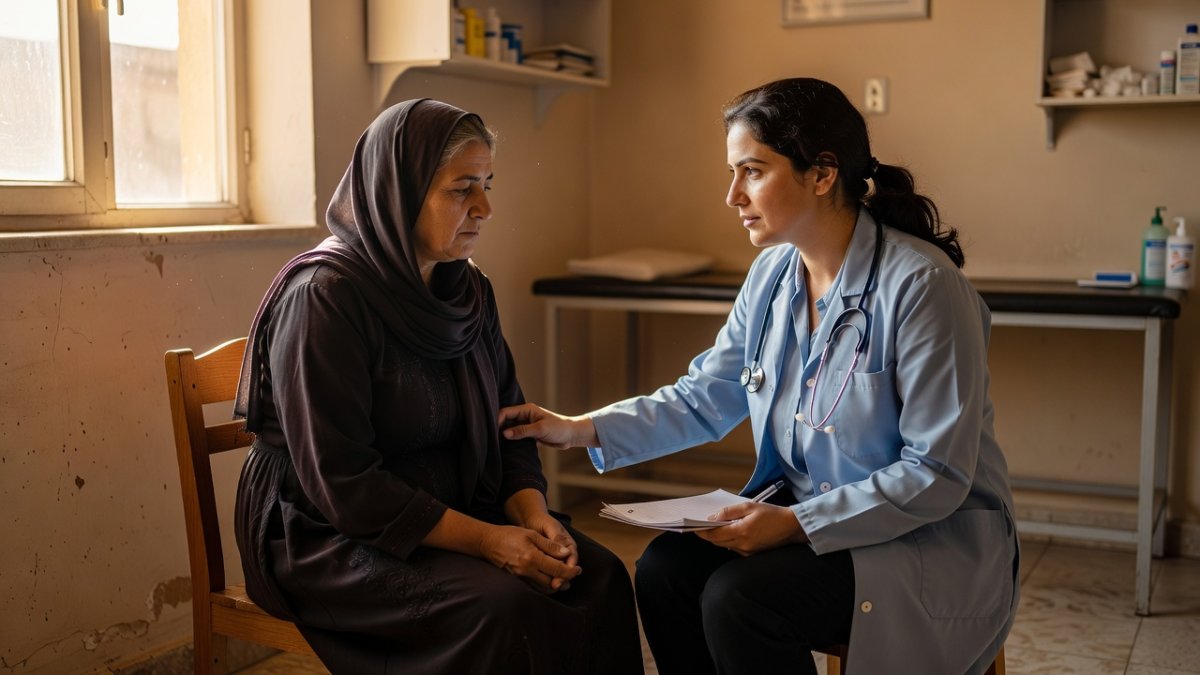
Dr. Nawzat employs a post-traumatic medical approach that prioritizes attentive listening and emotional connection alongside physical examinations. She initiates interactions with simple, non-intrusive questions, creating space for survivors to share at their own pace. This method, described as treating individuals like a big sister in whom they can confide, builds rapport essential for addressing the layered impacts of sexual violence and forced confinement. By smiling and behaving normally, she counters the dehumanizing experiences survivors endured, reaffirming their humanity in tangible ways. Such techniques have led women to express that she gave birth to them a second time, symbolizing profound renewal.
The integration of psychological support within gynaecological care acknowledges the interconnected nature of bodily and mental health in trauma recovery. Check-ups serve as entry points for deeper conversations, allowing Dr. Nawzat to identify needs that extend beyond immediate medical concerns. This comprehensive strategy aligns with human rights principles that advocate for survivor-centered responses to gender-based violence. In practice, it transforms clinical encounters into opportunities for empowerment, helping women reclaim narratives disrupted by captivity.
Survivors' testimonials reveal the effectiveness of this relational model, where empathy facilitates breakthroughs that clinical interventions alone might not achieve. Dr. Nawzat's ability to normalize interactions amid extraordinary suffering provides a foundation for rebuilding self-worth. The approach underscores the importance of cultural competence in care delivery, particularly for communities like the Yazidis facing targeted persecution. Through consistent dedication, she models a form of healing that honors resilience while confronting the legacies of atrocity with sensitivity and respect.
Death Threats and Unwavering Commitment
Despite facing death threats from individuals who accuse her of encouraging women to leave their husbands, Dr. Nawzat maintains her resolve to support survivors. These threats arise from resistance to efforts that challenge entrenched social norms surrounding marriage and family in the aftermath of captivity. Yet she dismisses such opposition, emphasizing that the well-being of the women under her care outweighs external criticisms. Her stance reflects a profound ethical commitment rooted in human rights advocacy, where professional duty intersects with personal courage in the face of intimidation.
The persistence of these threats highlights the societal barriers that complicate recovery for survivors of sexual violence. Accusations leveled against Dr. Nawzat reveal tensions between traditional expectations and the imperative to prioritize individual autonomy and healing. By continuing her work undeterred, she exemplifies the resilience required of advocates operating in contested environments. Her focus remains fixed on the tangible outcomes of her interventions, particularly the moments when survivors begin to smile again after prolonged suffering.
This unwavering dedication serves as an inspiration to colleagues and survivors alike, reinforcing the value of sustained engagement despite personal risks. Dr. Nawzat's response to adversity underscores a broader principle that protecting vulnerable populations demands steadfastness against backlash. In prioritizing the smiles and recoveries of those she assists, she affirms that meaningful impact transcends temporary obstacles. Such commitment ensures that the centre's mission endures, offering hope amid ongoing challenges to justice and equality.
The Yazidi Genocide and the Work That Remains
The seizure of nearly a third of Iraq by IS in 2014 precipitated the deaths or kidnappings of at least 12,000 Yazidis, an assault the United Nations has characterized as an ongoing genocide. This systematic campaign targeted the community's cultural and religious foundations, with women bearing the brunt of sexual enslavement and forced conversions. Dr. Nawzat's efforts at the Duhok Survivors' Centre represent a vital counterforce, aiding in the reclamation of lives disrupted by these atrocities. The scale of liberation, reaching over 2,000 women by mid-2018, indicates both progress and the enormity of unfinished tasks ahead.
Survivors' accounts, including Shireen's journey from abduction to tentative recovery, illuminate the human cost of genocide and the necessity of specialized interventions. The centre's model, combining medical expertise with empathetic support, offers a blueprint for addressing gender-based violence in post-conflict settings. Yet the persistence of missing family members and unresolved traumas signals that healing extends beyond individual cases to encompass communal restoration. International recognition through awards like Dr. Nawzat's highlights global awareness, but sustained funding and policy support remain essential.
As the work continues, the focus must remain on empowering survivors to rebuild while advocating for accountability. The Yazidi experience serves as a reminder of minority vulnerabilities in conflict, demanding vigilance against future threats. Dr. Nawzat's dedication, even amid personal dangers, embodies the compassion required to navigate these complexities. Through such efforts, pathways emerge for justice that honor the dignity of those affected, fostering resilience in the face of profound loss.
By Fatima Al-Rashid, Staff WriterThis article was produced with AI-assisted research and editorial support. Reporting is based on sources cited in the article.
What's Your Reaction?
 Like
0
Like
0
 Dislike
0
Dislike
0
 Love
0
Love
0
 Funny
0
Funny
0
 Wow
0
Wow
0
 Sad
0
Sad
0
 Angry
0
Angry
0
Gulf/MENA Correspondent at Global1.News. Based in Doha, covering Gulf politics, energy markets, diplomacy, and development across the Middle East and North Africa. Tracks the economic transformation of the Gulf states.










Comments (0)