
MHA Issues Fresh Guidelines on National Anthem and National Song Pronunciation and Sequence
The Ministry of Home Affairs issued binding directives on July 9, 2026, requiring every state government, Union Territory administration, and central ministry to enforce precise pronunciation, script fidelity, and performance sequence for Jana Gana Mana and Vande Mataram. The order reached chief secretaries and secretaries across 28 states and 8 UTs, mandating that the National
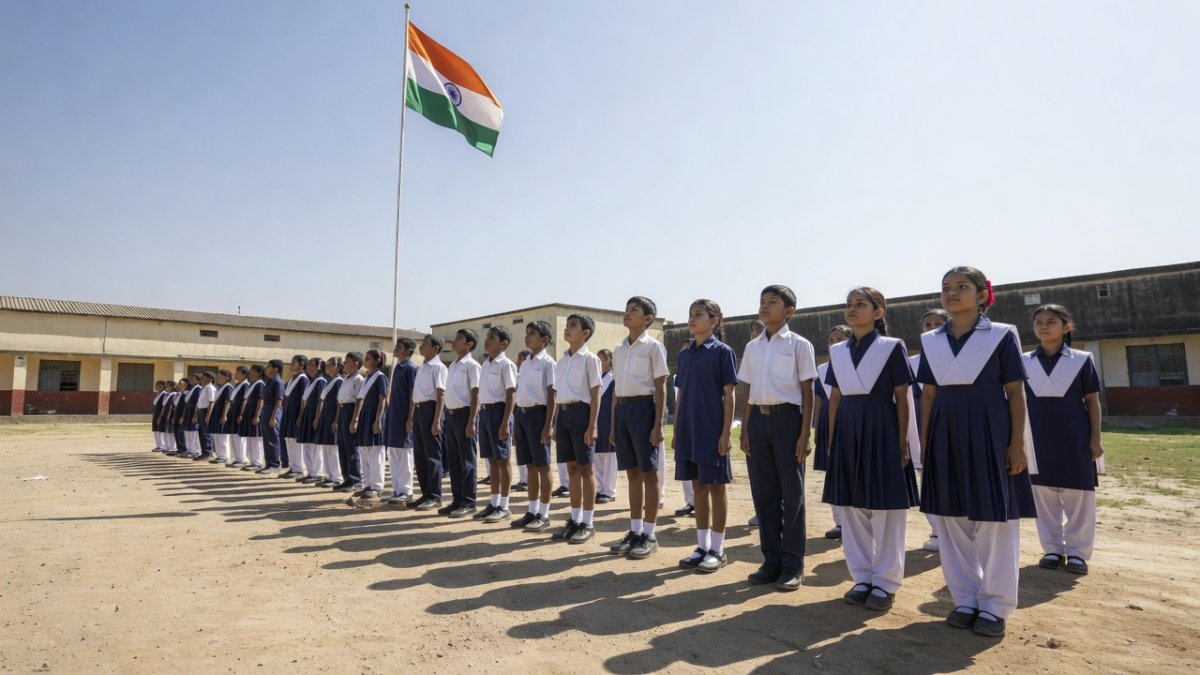
The Ministry of Home Affairs issued binding directives on July 9, 2026, requiring every state government, Union Territory administration, and central ministry to enforce precise pronunciation, script fidelity, and performance sequence for Jana Gana Mana and Vande Mataram. The order reached chief secretaries and secretaries across 28 states and 8 UTs, mandating that the National Song always precede the National Anthem when both are rendered, with state songs placed first where applicable. This protocol directly shapes daily rituals in schools, hospitals, and public institutions nationwide.
MHA Issues Fresh Guidelines on National Anthem and National Song Pronunciation and Sequence
New Delhi, Delhi – July 10, 2026 — The Ministry of Home Affairs has transmitted fresh operational instructions to all chief secretaries, UT administrators, and secretaries of central ministries, requiring verbatim adherence to the authorised texts and diction of both Jana Gana Mana and Vande Mataram. The communication, dated July 9, explicitly lists the President’s Secretariat, PMO, Election Commission of India, Supreme Court, and NITI Aayog among the recipients. When performed together, Vande Mataram must precede Jana Gana Mana; in states maintaining a state song, the sequence becomes state song followed by Vande Mataram and then the National Anthem. Authentic pronunciation guides remain accessible on the MHA portal for immediate institutional adoption.
Directive Specifics and Timeline
The July 9 circular builds on the January 2026 protocol that first codified Vande Mataram’s six-stanza rendering at approximately three minutes and ten seconds. MHA has now clarified that Article 51A(a) constitutional protection applies exclusively to the National Anthem, while Vande Mataram receives no equivalent statutory penalty framework. Chief secretaries in Uttar Pradesh, Maharashtra, Tamil Nadu, and Karnataka have already circulated internal orders to district collectors and municipal bodies. Educational institutions under the Kendriya Vidyalaya Sangathan and Navodaya Vidyalaya Samiti received parallel instructions through the Ministry of Education on the same day.
State song protocols vary: West Bengal’s “Banglar Mati Banglar Jol” and Tamil Nadu’s “Tamil Thai Valthu” must now open any tripartite sequence. The directive further requires that all public address systems in AIIMS hospitals, railway stations, and airports maintain the prescribed order during ceremonial events. MHA has directed quarterly compliance audits beginning October 2026.
Legal and Constitutional Framework
Article 51A(a) of the Constitution lists respect for the National Anthem as a fundamental duty, enforceable through the Prevention of Insults to National Honour Act, 1971. Vande Mataram, although declared the National Song in 1950, lacks parallel statutory backing. The current circular stops short of recommending penalties for disrespect to Vande Mataram, though MHA has noted ongoing inter-ministerial consultations on this point. Copies marked to the Supreme Court and all High Courts signal potential future judicial reference.
Legal experts at the National Law School of India University in Bengaluru observe that the sequence rule now carries administrative force across all central and state institutions. Non-compliance by government employees could trigger departmental proceedings under existing conduct rules, even without new legislation.
Analytical Examination of Implementation
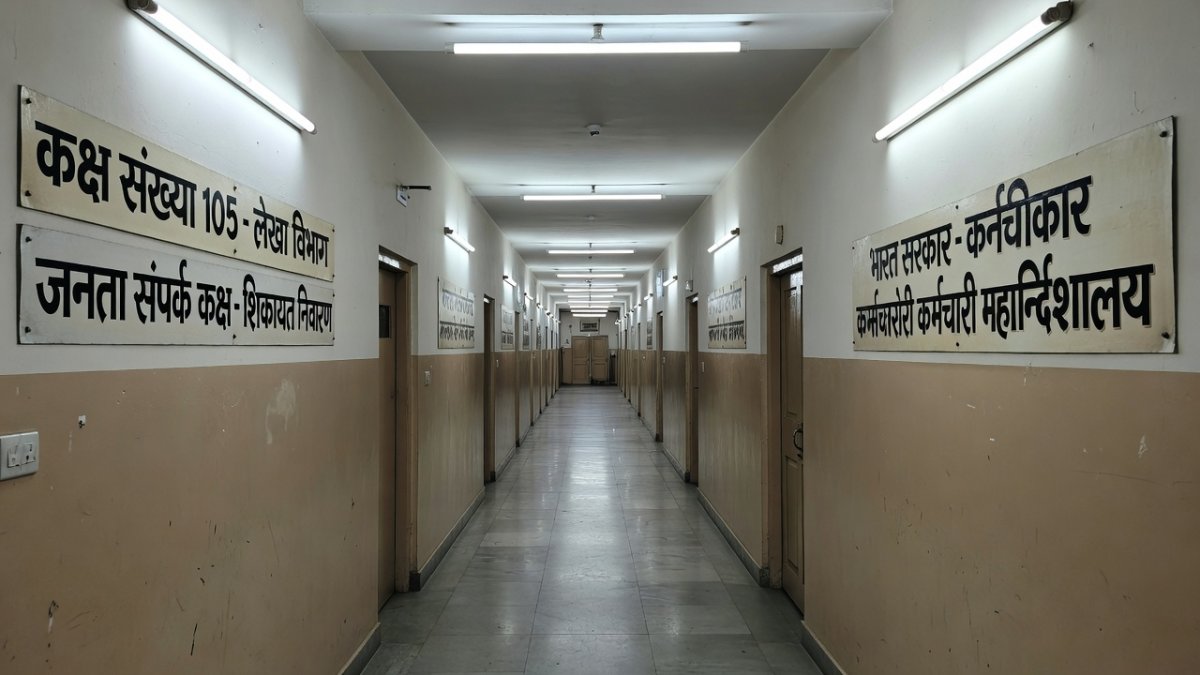
Implementation will first affect 1.5 million schools affiliated with CBSE and state boards, where morning assemblies occur daily. The National Council of Educational Research and Training has been asked to update audio-visual modules by December 2026. In healthcare settings, AIIMS Delhi and PGIMER Chandigarh already schedule weekly flag ceremonies; these institutions must now revise playlists and train announcers on diction within 90 days. The economic cost of reprinting song sheets and retraining staff across 1.2 lakh government hospitals and 8,000 railway stations is estimated at ₹180 crore by the Ministry of Finance.
Political implications extend to federal relations. Tamil Nadu and Kerala governments have historically maintained distinct linguistic preferences; the new order tests centre-state coordination mechanisms established under NITI Aayog. Election Commission observers may monitor compliance during upcoming assembly elections in five states scheduled for late 2026.
What This Means for India
Indian students will encounter standardised cultural instruction from Class I onward, reinforcing national identity within the National Education Policy 2020 framework. Patients in government hospitals may experience altered morning routines, potentially affecting psychological comfort in high-stress environments. Taxpayers bear the direct cost of retraining programmes and updated public-address infrastructure. Broader policy trends indicate a shift toward measurable cultural metrics in education and public administration, aligning with the government’s emphasis on “Ek Bharat Shreshtha Bharat” initiatives.
Citizens in border districts of Arunachal Pradesh and Rajasthan will see identical protocols applied in remote primary health centres, reducing regional variation. The move also intersects with linguistic preservation efforts in the Eighth Schedule languages, as accurate pronunciation guides now carry official MHA endorsement.
The Bottom Line
The July 9, 2026 directive establishes a uniform national sequence and pronunciation standard that will reshape daily civic rituals across education, healthcare, and transport sectors. By linking constitutional duties with administrative enforcement, MHA has created a measurable compliance regime whose effects will appear first in school assemblies and hospital courtyards by the end of 2026. For Indian citizens, the change underscores the continuing evolution of cultural policy within the larger architecture of nation-building and public institutional discipline.
— By Dr. Raj Patel, Staff Writer
This article was produced with AI-assisted research and editorial support. Reporting is based on sources cited in the article.
What's Your Reaction?
 Like
0
Like
0
 Dislike
0
Dislike
0
 Love
0
Love
0
 Funny
0
Funny
0
 Wow
0
Wow
0
 Sad
0
Sad
0
 Angry
0
Angry
0

Caribbean Correspondent at Global1.News. Based in Port of Spain, Trinidad, covering Caribbean politics, economy, energy, climate, and culture. Amplifying the voices and stories of the Caribbean region.













Comments (0)