
Senate Clarifies Impeachment Trial for Everyday Filipinos
Senate Leaders Seek to Clarify Impeachment Proceedings for Everyday Filipinos The Senate impeachment court is exploring methods to help the public better follow the trial of Vice President Sara Duterte while preserving all legal requirements. Senate President Sherwin Gatchalian noted that the first week has served as an adjustment period for everyone involved. Senator-judges, p
Senate Leaders Seek to Clarify Impeachment Proceedings for Everyday Filipinos
The Senate impeachment court is exploring methods to help the public better follow the trial of Vice President Sara Duterte while preserving all legal requirements. Senate President Sherwin Gatchalian noted that the first week has served as an adjustment period for everyone involved. Senator-judges, prosecutors, and the defense team are all adapting to the unique demands of the process. This effort matters deeply to Filipino families who rely on clear information to understand how their government holds leaders accountable.
Ordinary citizens in barangays across the country often discuss national events at sari-sari stores or during community gatherings. When proceedings feel overly technical, many feel left out of conversations that affect their future. Gatchalian emphasized that the court must balance legal rules with the need to explain developments simply. Such steps could help jeepney drivers, farmers, and OFWs stay informed without needing legal training.
Recognizing the One-of-a-Kind Character of Impeachment Trials
The impeachment court operates as a sui generis body, meaning it follows its own distinct path unlike regular court cases or congressional hearings. Gatchalian pointed out that participants must find ways to communicate clearly while meeting every legal standard. This special status connects directly to Philippine traditions of bayanihan, where communities work together to solve complex problems.
Filipino students and workers watch these events unfold and wonder how decisions will shape education funding or public services. The adjustment period in the first week shows that even experienced senator-judges need time to settle into their roles. By drawing on past experiences like the Corona trial, the court aims to maintain fairness while serving the public interest.
Local government units and barangay captains often explain national news to residents during fiestas or neighborhood meetings. Clearer proceedings would support these grassroots leaders in sharing accurate details with kapitbahay. The focus remains on protecting due process for all sides involved.
Defending Senator-Judges Right to Seek Information
Gatchalian defended the wide latitude given to senator-judges under Senate impeachment rules. He recalled how former Senate President Juan Ponce Enrile allowed considerable room for questions during the Corona trial. This approach lets senator-judges gather necessary details without violating established guidelines.
Such flexibility affects how ordinary Filipinos perceive justice in their political system. Families in provinces hope that thorough questioning will lead to decisions that reflect community values. The rules ensure that information-seeking stays consistent with past practices while adapting to current needs.
Public servants and students following the trial see this as part of the checks and balances that define Philippine democracy. By allowing questions, the court helps build a record that communities can reference when discussing leadership accountability during Pasko gatherings or local assemblies.
Possibility of Trial Continuing Even After Potential Resignation
Impeachment court spokesman Regie Tongol explained that proceedings could move forward even if Vice President Duterte resigns. A conviction carries the additional possible penalty of perpetual disqualification from office. This detail draws from practices in the United States, where similar trials have continued after an official steps down.
The information reaches Filipino households through news reports that influence how parents discuss government stability with their children. Duterte has shown no sign of resigning and stated she would remain bloodied but unbowed amid the process. Her words resonate with many who value resilience in the face of challenges.
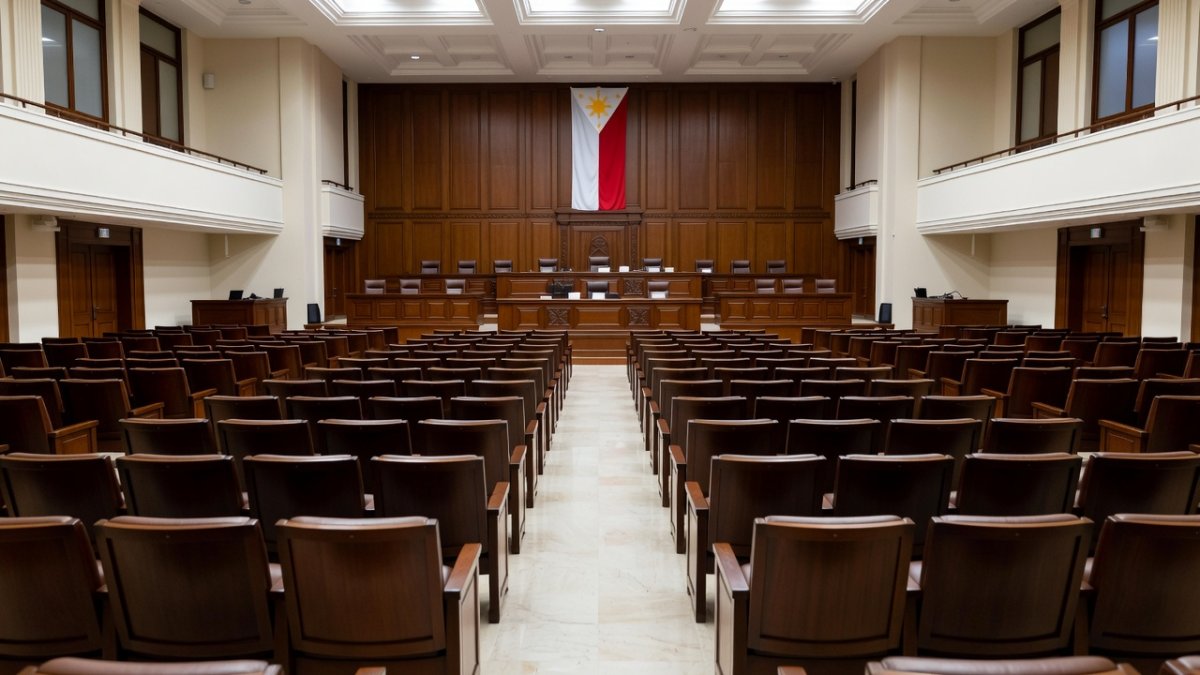
Communities of OFWs and local workers consider how leadership changes might affect policies on remittances or domestic programs. The Senate has prepared a holding room for the Vice President out of respect for her office, keeping it ready whether she attends or not. If she appears, she would sit in the VIP gallery of the session hall.
Addressing Public Concerns Over Online Discourse and Prosecutor Treatment
House Deputy Speaker Janette Garin spoke against online bullying and personal attacks directed at prosecutors. Some social media posts ridiculed lead prosecutor Batangas Representative Gerville Luistro over visible saliva during the opening statement and prosecution counsel Amando Virgil Ligutan over a runny nose. Garin rejected claims that colds or sipon indicate dishonesty, noting that medical history shows no such connection.
These attacks distract from the evidence presented and lower the level of public discussion. Garin urged focus on the merits of the case instead of appearance-based ridicule. Such behavior affects how young Filipinos learn to engage in civic debates within their schools and barangays.
House prosecutor Manila Representative Joel Chua described the physical demands of appearing before the court. Prosecutors initially could not bring drinking water into the session hall, highlighting the intensity of the setting. Communities value the constitutional duty these public servants perform on behalf of the people.
Rules Limiting Public Discussion of Case Merits
Tongol reminded participants that Rule 18 of the Senate Impeachment Rules bars senator-judges, House prosecutors, defense counsel, and private counsel from speaking about the merits of the complaint. This followed a social media post by Senator Robinhood Padilla regarding evidence presented. Any concerns about possible violations would need to come from senator-judges themselves for the court to address.
The sub judice principle protects the rights of both parties in this judicial process. Filipino families appreciate measures that keep discussions fair and focused on facts rather than speculation. The court must follow rules of evidence, the Rules of Court, and Senate impeachment rules to ensure due process.
By maintaining these boundaries, the proceedings honor the solemn responsibility of impeachment while allowing space for public understanding. This balance supports the broader goal of transparent governance that touches every household from urban centers to rural barangays.
By Bella Reyes, Staff WriterThis article was produced with AI-assisted research and editorial support. Reporting is based on sources cited in the article.
What's Your Reaction?
 Like
0
Like
0
 Dislike
0
Dislike
0
 Love
0
Love
0
 Funny
0
Funny
0
 Wow
0
Wow
0
 Sad
0
Sad
0
 Angry
0
Angry
0

Philippines/Southeast Asia Correspondent at Global1.News. Manila-based journalist covering Philippine politics, environment, maritime security, and social issues. Passionate about marine conservation and the communities protecting the Philippines' natural heritage.















Comments (0)