
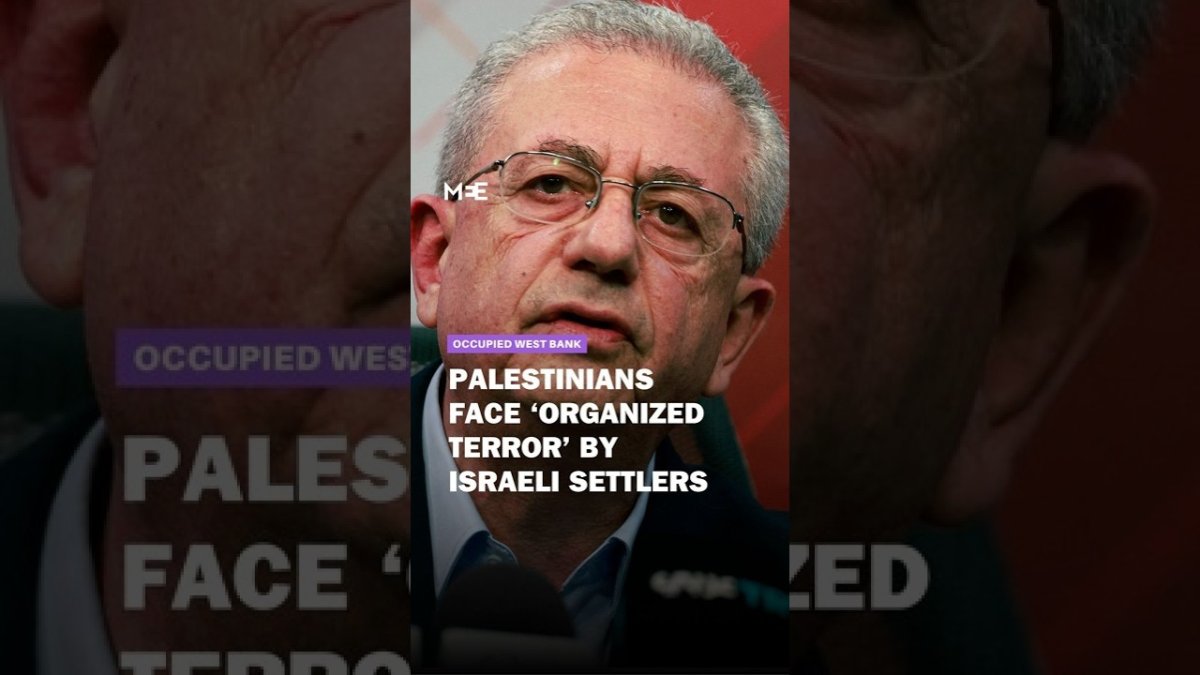
Palestinians facing 'organized terror' by Israeli settlers in West Bank, Barghouti tells CNN
In a recent Middle East Eye report published on July 10, 2026, Palestinian politician and physician Mustafa Barghouti, secretary-general of the Palestinian National Initiative, told CNN that Palestinians in the occupied West Bank face "organized terror" from Israeli settlers he described as "gang terrorists." Barghouti’s remarks draw attention to a pattern of violence that has
The Scale of Settler Violence
United Nations data record the extent of these incidents. The UN Office for the Coordination of Humanitarian Affairs documented over 950 settler attacks across more than 230 Palestinian communities in the occupied West Bank during the first half of 2026. OCHA further reports an average of six settler attacks per day throughout 2026. The UN Office of the High Commissioner for Human Rights stated that at least 13 Palestinians were killed and close to 500 injured in settler attacks during the first five months of 2026.
Displacement figures underscore the cumulative effect. Save the Children reported that 685 Palestinian children were displaced from their homes in the first quarter of 2026 alone, a total ten times the quarterly average recorded over the previous three years. A separate UN Human Rights Office report documented more than 36,000 Palestinians forcibly displaced in the 12-month period ending October 2025 due to settlement expansion and related restrictions. OCHA has recorded that 45 Palestinian communities have been fully displaced across the West Bank since January 2023 as a result of settler attacks and access restrictions.
Life Under Siege: Stories from the Ground
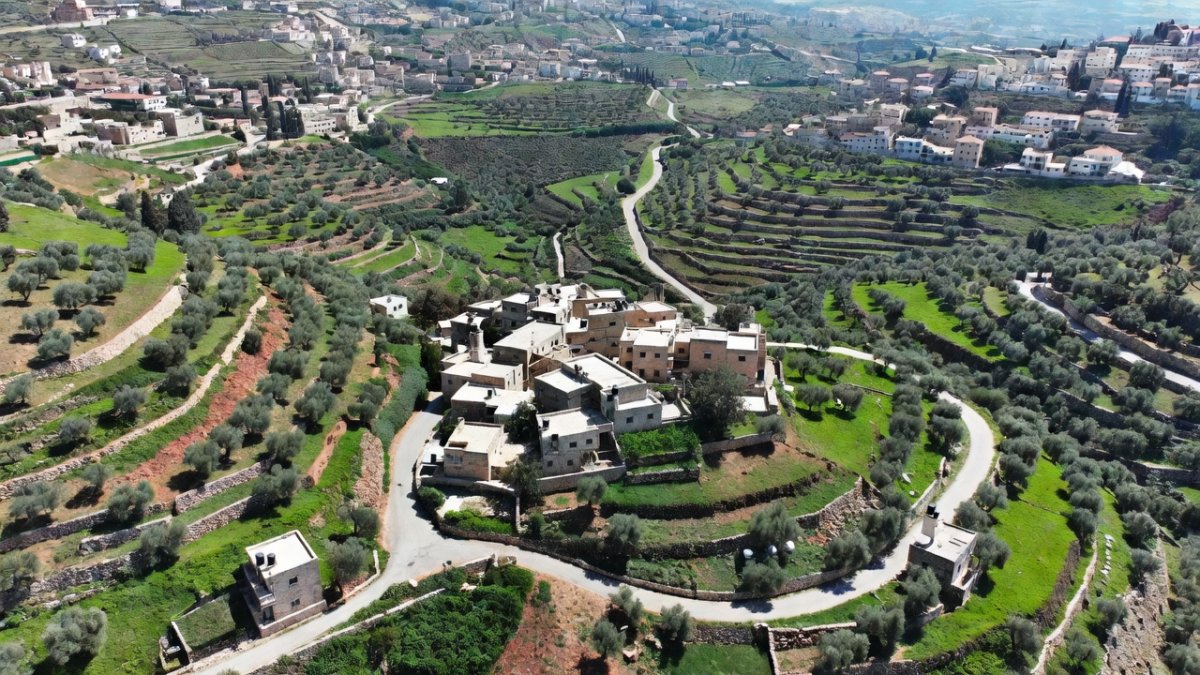
In towns such as Sinjil, north of Ramallah, residents have organized volunteer night watches and hilltop patrols to protect their communities. These measures emerged after repeated incursions by armed settlers into village outskirts and agricultural land. Families describe dividing shifts through the night, using basic communication tools to alert one another of approaching groups. The routine has altered daily life, with farmers limiting time in fields and parents restricting children’s movement after dark.
Local accounts emphasize the constant state of alert. Residents report damage to olive groves, blocked access roads, and threats issued directly at homes. These patrols represent an attempt to maintain presence on land amid repeated incidents that authorities have not prevented.
Israeli Voices of Warning
In June 2026 a coalition of former senior Israeli officials issued what they termed a “final warning” regarding settler violence in the West Bank. The group included former prime ministers, defense chiefs, a former state prosecutor, rabbis, and six Israel Prize laureates. Their statement highlighted the risk that unchecked attacks could further destabilize the region and erode legal norms within Israel itself. The signatories called for immediate measures to halt the violence and hold perpetrators accountable under existing Israeli law.
The intervention stands out because it originates from individuals who previously held senior positions in security and judicial institutions. Their concerns focus on the long-term consequences of sustained impunity for attacks on Palestinian civilians and property.
International Law and the Question of Accountability
The UN Commission of Inquiry has characterized the situation as involving “state-backed terror squads at the forefront of Israel’s ethnic cleansing and annexation.” The Commission’s findings link settler actions to broader policies of land appropriation and movement restrictions. OHCHR reporting on casualties and injuries aligns with these observations, documenting patterns that extend beyond isolated criminal acts.
International human rights mechanisms have repeatedly called for investigations and prosecutions. To date, few cases have resulted in convictions, according to UN monitoring. The absence of consistent accountability contributes to the continuation of attacks, as noted in successive OCHA and OHCHR updates.
What Comes Next
The human toll continues to mount through displacement, injury, and loss of life. Children removed from their homes face interrupted schooling and psychological strain, while farming families lose access to land that sustains their livelihoods. Communities such as those in the northern West Bank now allocate resources to self-protection rather than development.
Barghouti’s description of organized terror reflects the lived experience documented by UN agencies and local residents. The combination of daily attack averages, rising displacement numbers, and warnings from within Israel points to a trajectory that requires concrete steps to restore protection for Palestinian civilians under occupation. Without such measures, the pattern of violence and forced movement is expected to persist.
By Fatima Al-Rashid, Staff WriterThis article was produced with AI-assisted research and editorial support. Reporting is based on sources cited in the article.
What's Your Reaction?
 Like
0
Like
0
 Dislike
0
Dislike
0
 Love
0
Love
0
 Funny
0
Funny
0
 Wow
0
Wow
0
 Sad
0
Sad
0
 Angry
0
Angry
0

Gulf/MENA Correspondent at Global1.News. Based in Doha, covering Gulf politics, energy markets, diplomacy, and development across the Middle East and North Africa. Tracks the economic transformation of the Gulf states.










Comments (0)