
China Achieves Historic Sea-Based Rocket Booster Recovery
China Successfully Tests Sea-Based Rocket Booster Recovery System On July 10, 2026, at 12:15 p.m. local time, China achieved its first successful recovery of an orbital-class rocket booster when the Long March 10B lifted off from the Hainan commercial space launch site and placed a satellite into its designated orbit. Approximately six minutes after separation, the booster desc
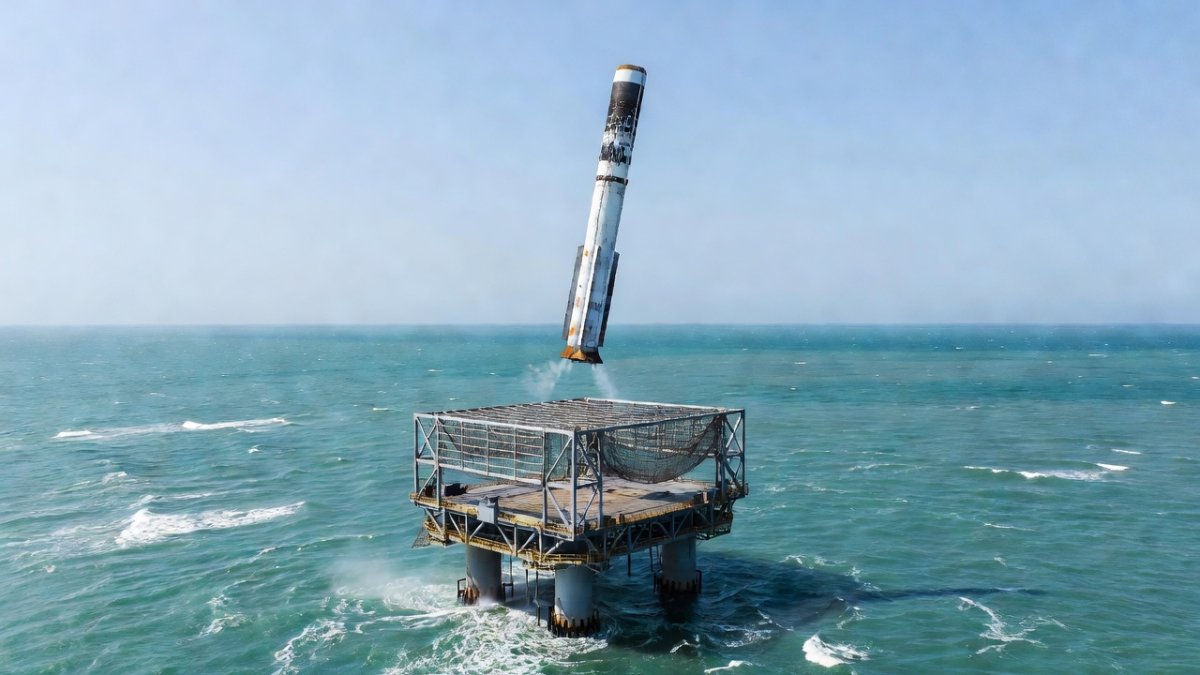
China Successfully Tests Sea-Based Rocket Booster Recovery System
On July 10, 2026, at 12:15 p.m. local time, China achieved its first successful recovery of an orbital-class rocket booster when the Long March 10B lifted off from the Hainan commercial space launch site and placed a satellite into its designated orbit. Approximately six minutes after separation, the booster descended vertically and was captured by a net-based retrieval system suspended above an offshore platform. This milestone marks a distinct engineering path in reusable launch technology and carries immediate implications for cost reduction and launch cadence across the Asia-Pacific region.
The test demonstrated that China can now close the loop on booster reuse without relying on landing legs, a choice that directly affects structural mass and payload margins. With the Long March 10 family slated to support crewed lunar missions before 2030, the recovery success accelerates the timeline for operational reusability. Regional observers note that the event occurred one day before JAXA’s scheduled RV-X flight in Akita Prefecture, sharpening the competitive context for both nations.
Market reaction was immediate: shares in China Spacesat and China Satellite Communications hit daily trading limits, reflecting investor expectations of lower per-launch costs. The achievement follows nearly a decade of sustained investment and comes after earlier landing-stage failures by LandSpace and CASC in 2025. For Japan and other Asia-Pacific space programs, the test underscores the narrowing window to field competitive reusable systems by the early 2030s.
Tags: China rocket recovery, Long March 10B, sea-based booster, reusable rockets, JAXA RV-X, Falcon 9 comparison, lunar missions
The Long March 10B Mission: A Technical Breakdown
The Long March 10B lifted off from Hainan at 12:15 p.m. local time on July 10, 2026, and successfully inserted its satellite payload into the designated orbit. Six minutes after booster separation, the first stage executed a controlled vertical descent toward a pre-positioned offshore platform. The booster was then captured by a net suspended above the platform, completing China’s first orbital-class recovery. Chen Muye of the China Academy of Launch Vehicle Technology stated that the approach “simplifies the rocket’s onboard structure, reduces its weight and could increase payload capacity” while remaining “highly adaptable to landing-point deviations, as coordinated net systems can effectively expand the capture window.”
The Long March 10B carries a payload capacity of at least 16 metric tons to low Earth orbit, compared with the Falcon 9’s 22.8 metric tons. This gap in raw lift is offset by the structural savings from eliminating landing legs and associated hardware. The net-capture method therefore represents a deliberate trade-off that prioritizes mass efficiency over the proven but heavier leg-based architecture used by SpaceX. For missions requiring maximum payload to lunar transfer orbits, even modest reductions in booster dry mass become strategically significant.
The successful sequence also validates the integration of guidance, navigation, and control systems required for precise alignment with a moving sea platform. Previous attempts by LandSpace and CASC in 2025 ended during the final landing phase, indicating that the July 10 test resolved critical last-kilometer challenges. With the Long March 10 family intended to support crewed lunar missions before 2030, the demonstrated recovery capability directly supports China’s goal of routine, lower-cost access to space.
Net Capture Versus Landing Legs: Engineering Trade-offs
The Chinese net-capture system employs four hooks on the booster to engage a suspended net, eliminating the need for heavy landing legs and associated hydraulic or mechanical systems. Chen Muye noted that this configuration reduces onboard structural mass and thereby increases available payload capacity. The approach also widens the acceptable landing envelope because the net can be adjusted in real time to accommodate trajectory dispersions that would otherwise require a missed landing or destructive re-entry.
In contrast, SpaceX’s Falcon 9 relies on four deployable landing legs that must withstand both touchdown loads and ocean-salt exposure during recovery at sea. Blue Origin’s New Shepard uses a similar leg-based design for suborbital flights. Both leg systems add dry mass that directly subtracts from payload performance, yet they allow the booster to land on prepared surfaces or drone ships without external capture infrastructure. The Chinese method shifts complexity from the vehicle to the recovery platform, a choice that may prove advantageous for high-volume launch campaigns where multiple recovery assets can be prepositioned.
From a Japan/Asia-Pacific perspective, the net system’s tolerance for positional error could reduce development risk for nations still maturing precision landing algorithms. However, it requires reliable coordination between the booster’s guidance and the platform’s positioning systems, introducing new operational dependencies. The trade-off illustrates two viable paths toward reusability, each optimized for different mission profiles and industrial capabilities.
China's Long Road to Reusable Launch Technology
China has invested nearly a decade in reusable rocket technology, culminating in the July 10, 2026 recovery. Earlier attempts by LandSpace and CASC in 2025 failed during the final landing phase, highlighting the difficulty of achieving reliable touchdown or capture under real-world conditions. The successful net-based recovery demonstrates that sustained state-level funding, combined with iterative testing at the Hainan commercial space launch site, has overcome key technical barriers.
The Long March 10B forms part of a broader family intended to support crewed lunar missions before 2030. Achieving booster reuse aligns with China’s dual objectives of expanding satellite constellations and lowering the cost per kilogram to orbit. With a demonstrated payload capacity of at least 16 metric tons to LEO, even partial reuse rates could materially improve the economics of large-scale constellation deployment.
For regional competitors, the test signals that China has moved from experimental recovery to a repeatable engineering solution. The choice of a sea-based net system further indicates a strategic preference for maritime recovery infrastructure that can be scaled without extensive land-based landing zones. This trajectory places additional pressure on Japan and other Asia-Pacific programs to accelerate their own reusable launch efforts if they wish to remain competitive in the commercial and governmental launch markets of the 2030s.
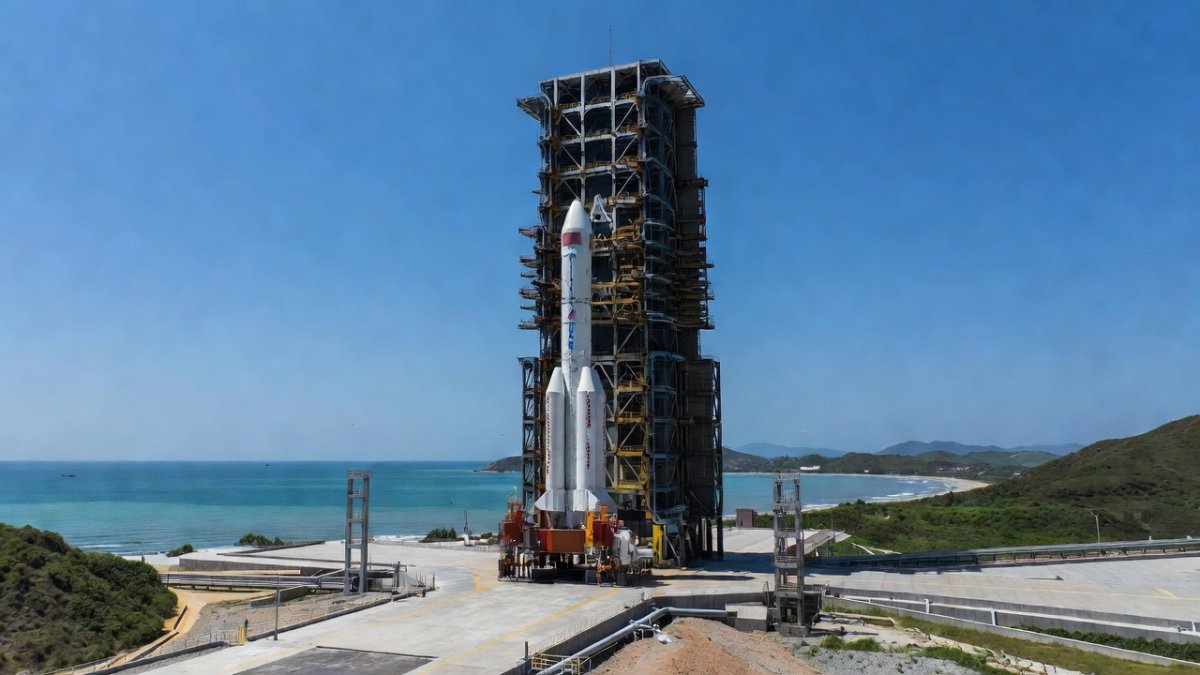
Japan's Response: JAXA RV-X and the Regional Space Race
JAXA is scheduled to launch its RV-X experimental reusable rocket on July 11, 2026, from Akita Prefecture, one day after China’s successful recovery. Development of the RV-X has been underway since 2016, with the explicit goal of achieving operational deployment by the early 2030s to eventually replace the H3 rocket. The timing of the Chinese test therefore arrives as JAXA prepares to gather its own flight data on reusable booster technologies.
China’s net-capture method presents both a benchmark and a potential alternative architecture for Japanese engineers. While JAXA has historically emphasized precision landing similar to SpaceX, the demonstrated tolerance of the Chinese system to trajectory deviations may prompt renewed evaluation of capture-based solutions. With China targeting crewed lunar missions before 2030, Japan faces a compressed timeline to validate its own reusable hardware if it intends to participate in future international lunar logistics.
The competitive landscape now includes not only launch cadence but also recovery methodology. JAXA’s choice to conduct the RV-X flight from a land-based range in Akita Prefecture reflects different geographic and regulatory constraints than China’s offshore platform approach. How quickly Japan translates the July 11 results into an operational system will determine whether it can maintain parity in the regional reusable launch sector.
Market and Strategic Implications
Shares in China Spacesat and China Satellite Communications reached daily trading limits immediately after the July 10 recovery, signaling investor confidence in reduced launch costs. A reusable Long March 10B with at least 16 metric tons of LEO capacity could lower the price per kilogram for constellation operators, accelerating deployment schedules for both commercial and governmental satellite networks. This cost trajectory directly challenges SpaceX’s current market position in Asia-Pacific launch services.
Strategically, reusable launch technology carries dual-use implications for regional security. The ability to rapidly replenish satellite constellations enhances resilience in contested environments, a consideration relevant to all Asia-Pacific nations. China’s decision to pursue a net-based recovery system also reduces the infrastructure footprint required for land-based landing sites, potentially allowing greater operational flexibility in the South China Sea and surrounding waters.
For Japan, the test underscores the urgency of converting JAXA’s RV-X experimental results into a flight-proven system by the early 2030s. Failure to close the reusability gap could increase dependence on foreign launch providers for both commercial and national security payloads, affecting long-term technological sovereignty.
What to Watch for Next
China’s next recovery test will reveal how quickly the net-capture system can transition from demonstration to routine reuse. Observers will monitor whether subsequent flights achieve multiple reuses of the same booster, a metric that ultimately determines economic viability. JAXA’s RV-X launch on July 11, 2026, will provide the first direct comparison of Japanese experimental data against the Chinese achievement.
Global developments in reusable rocket technology will also shape the competitive environment. SpaceX continues to launch approximately 150 times per year with boosters frequently reused dozens of times, setting a high operational benchmark. The speed at which China converts its net-based recovery into a comparable flight rate will determine its position in the international launch market.
Regional policymakers in Japan and elsewhere will track both technical milestones and policy responses. The outcome of these parallel efforts will influence not only commercial satellite deployment but also the broader balance of space capabilities across the Asia-Pacific through the remainder of the decade.
By Kenji Tanaka, Staff Writer
This article was produced with AI-assisted research and editorial support. Reporting is based on sources cited in the article.
What's Your Reaction?
 Like
0
Like
0
 Dislike
0
Dislike
0
 Love
0
Love
0
 Funny
0
Funny
0
 Wow
0
Wow
0
 Sad
0
Sad
0
 Angry
0
Angry
0

Japan Correspondent at Global1.News. Tokyo-based voice covering Japanese politics, technology, economy, and culture. Tracks the intersection of tradition and innovation in one of the world's most dynamic societies.















Comments (0)