
Gulf of Paria Widens as Trinidad Pours Oil on Troubled Venezuelan Waters
A Spill Detected, a Silence Maintained On the morning of 1 May 2026, Heritage Petroleum Company Limited recorded an oil spill at its offshore Main Field operation in the Gulf of Paria. The detection occurred at approximately 7:25 a.m., prompting immediate internal alerts within the company. Heritage Petroleum swiftly notified Trinidad and Tobago’s Ministry of Energy and Energy
A Spill Detected, a Silence Maintained
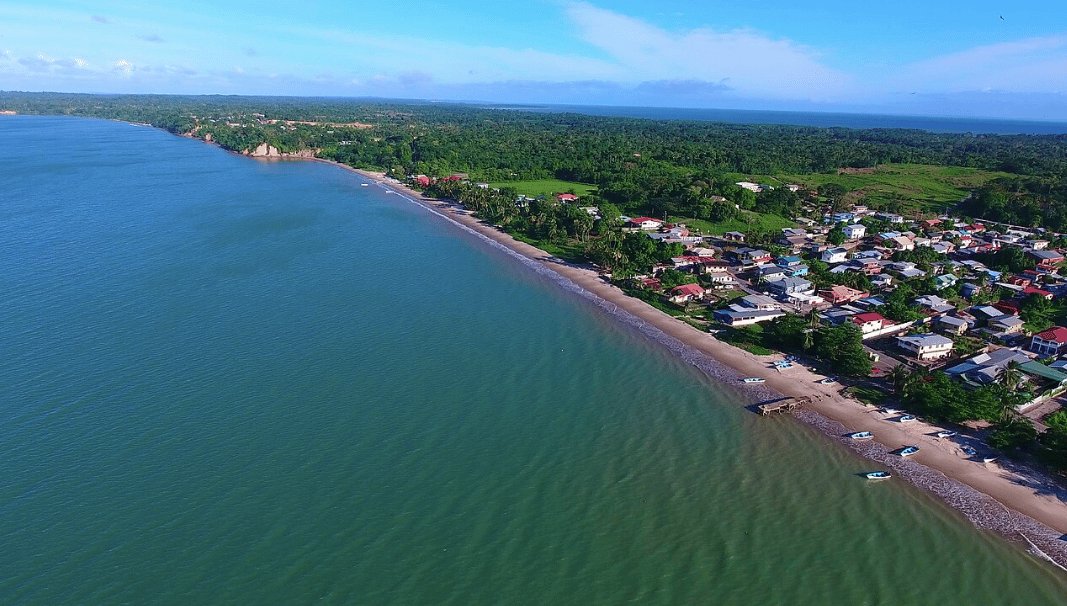
On the morning of 1 May 2026, Heritage Petroleum Company Limited recorded an oil spill at its offshore Main Field operation in the Gulf of Paria. The detection occurred at approximately 7:25 a.m., prompting immediate internal alerts within the company. Heritage Petroleum swiftly notified Trinidad and Tobago’s Ministry of Energy and Energy Industries, the Coast Guard, and the Environmental Management Authority. Port of Spain later estimated that roughly 10 barrels had escaped into the marine environment. The company acted to contain the release on the same day, completing repairs and returning the facility to service on 2 May. Despite these steps, neither Heritage Petroleum nor the Trinidad and Tobago government issued any public statement about the incident at the time.
In our tight-knit coastal communities along the western peninsula, news of such events usually travels quickly through family networks and fishing associations. Yet this time the information stayed within official channels. Trinidad’s own spill trajectory modelling indicated that, if left untreated, hydrocarbons could have drifted across the shared maritime border into Venezuelan waters. Chemical dispersants were applied at a location 6 to 8 nautical miles from that boundary. Follow-up drone and vessel surveys later confirmed no visible hydrocarbons remained on the surface. The absence of any announcement left residents and regional partners unaware until external voices raised the matter.
The decision to withhold details until Venezuela spoke publicly created an immediate atmosphere of suspicion. Neighbouring fishing villages that depend on the Gulf of Paria for their livelihood felt excluded from information that directly affected their daily routines. The silence stood in contrast to the rapid internal notifications made on the morning of the spill itself.
What Happened on May 1 at Heritage Petroleum's Main Field
Heritage Petroleum’s Main Field lies within Trinidad and Tobago’s waters in the Gulf of Paria. At 7:25 a.m. on 1 May 2026, operators identified the release and began containment measures. The company estimated the volume at approximately 10 barrels. Notifications went out at once to the Ministry of Energy and Energy Industries, the Coast Guard, and the Environmental Management Authority. Containment efforts succeeded the same day, with repairs finished and operations resumed on 2 May.
Trinidad and Tobago’s spill trajectory modelling showed the potential for hydrocarbons to reach Venezuelan waters if the response had been delayed. Dispersants were deployed 6 to 8 nautical miles from the maritime boundary. Subsequent drone and vessel inspections found no remaining surface hydrocarbons. These technical steps were completed efficiently, yet the lack of immediate public communication meant the wider community learned nothing until Venezuela raised the issue internationally.
Local fishermen and coastal residents in Trinidad often monitor the Gulf closely because their livelihoods depend on its health. The contained nature of the spill and the quick repair did not alter the fact that information about the event remained internal for more than ten days. The modelling data and dispersant locations underscored the cross-border dimension from the outset.
Venezuela's Demand and the Satellite Evidence
On 12 May 2026, Venezuela’s Foreign Minister Yván Gil went public, demanding information and compensation from Trinidad and Tobago. Caracas pointed to satellite imagery, including images from 28 April, that showed a slick originating from Trinidad before the official detection date of 1 May. Venezuela warned of potential impacts across 1,625 square kilometres spanning 12 strategic wetland areas. The government in Caracas insisted that Trinidad and Tobago had breached international convention obligations by failing to notify Venezuela promptly.
The satellite evidence placed the origin of the slick firmly within Trinidadian waters yet highlighted the risk of transboundary movement. Venezuela’s statements emphasised the scale of the affected zone and the ecological sensitivity of the wetlands involved. The timing of the imagery, predating the Trinidadian detection by several days, added weight to Caracas’s call for accountability.
Trinidad and Tobago’s modelling had already flagged the possibility of hydrocarbons crossing the border. The public intervention by Minister Gil therefore shifted the matter from a domestic operational incident to an international diplomatic concern. The demand for compensation and information reflected Venezuela’s view that notification requirements under relevant conventions had not been met.
The Opposition's Charge: A Deliberate Cover-Up
Trinidad and Tobago’s Opposition, through former Energy Minister Stuart Young, described the lack of disclosure as a deliberate cover-up and called for a formal investigation. Young argued that the public had a right to know about any incident with potential cross-border consequences. On the government side, Rishard Moonilal stated that talks with Venezuelan counterparts were being arranged to address the matter.
The Opposition’s position centred on the gap between the rapid internal notifications on 1 May and the absence of any public statement until Venezuela acted. Stuart Young’s demand for an inquiry reflected concerns that the delay undermined trust in official handling of energy-related incidents. Rishard Moonilal’s reference to upcoming discussions indicated an effort to manage the issue through bilateral channels.
Within Trinidadian communities, such calls for transparency resonate strongly because energy operations sit at the heart of national life. The contrast between the contained technical response and the prolonged silence fuelled the Opposition’s criticism. The arrangement of talks with Venezuela was presented as a step toward resolution, yet the demand for a formal investigation remained on the table.
The Gulf's Shared Ecosystem at the Centre of the Row
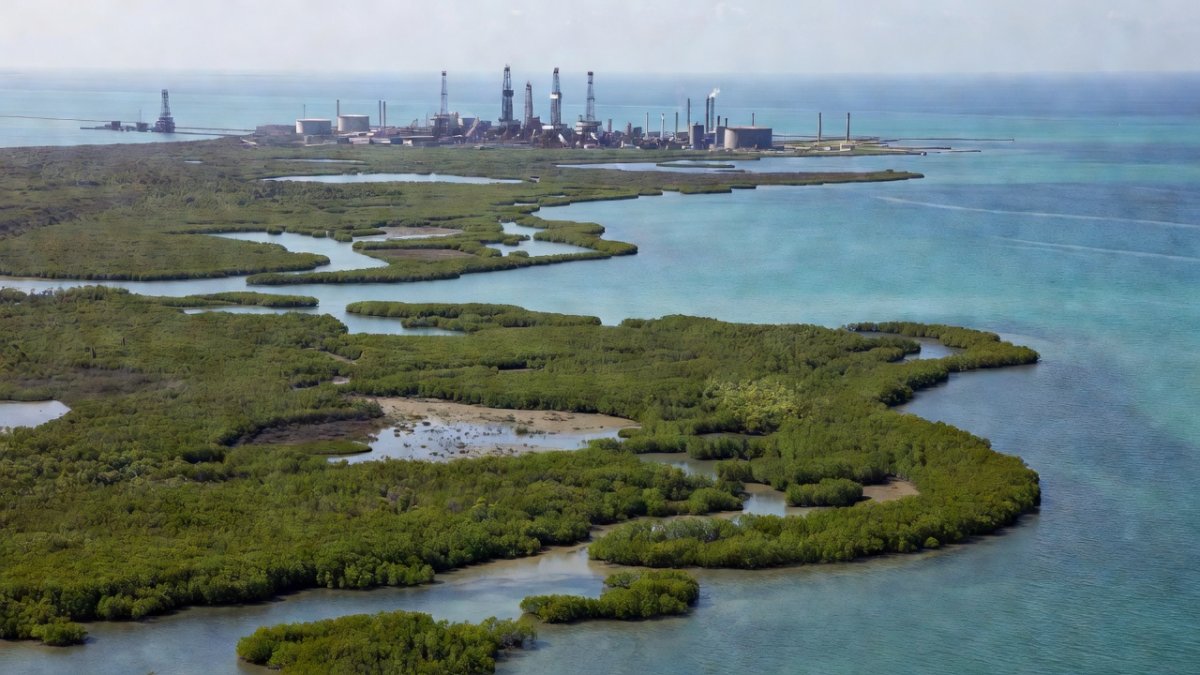
The Gulf of Paria forms a shared marine space between Trinidad and Tobago and Venezuela. Trinidad’s spill trajectory modelling confirmed that untreated hydrocarbons could have crossed the maritime boundary. Dispersants were used 6 to 8 nautical miles from that line, and inspections confirmed no visible surface hydrocarbons remained. Venezuela highlighted risks to 1,625 square kilometres of territory that include 12 strategic wetland areas.
Coastal communities on both sides of the Gulf rely on its waters for fishing and related activities. The modelling data and dispersant deployment locations illustrated the physical proximity of the two nations’ interests. Venezuela’s reference to the wetland zones underscored the ecological stakes involved in any transboundary movement of oil.
The shared nature of the Gulf means that operational decisions taken on one side can affect the other. Trinidad and Tobago’s containment measures prevented further release, yet the initial modelling had already identified the border-crossing risk. Venezuela’s statements placed the ecological implications at the centre of its diplomatic response.
Diplomatic Fallout and the Dragon Gas Context
Venezuela has recently claimed Trinidad as its own territory, echoing its position on Guyana. With Maduro now in US custody, Caracas has adopted a more confrontational diplomatic posture. The public statement by Foreign Minister Yván Gil on 12 May 2026 demanded information and compensation while citing the satellite imagery from 28 April. Trinidad and Tobago’s failure to notify Venezuela promptly was presented as a breach of international convention obligations.
The C360 editorial view captured the broader concern: “the most damaging spill may prove to be the one in diplomatic trust.” Rishard Moonilal indicated that talks with Venezuelan counterparts were being arranged, while the Opposition continued to press for a formal investigation. The combination of territorial claims and the custody of Maduro created an environment in which energy-related incidents carried heightened diplomatic weight.
The satellite evidence and the scale of the warned impact zone reinforced Caracas’s position. The absence of early public disclosure from Trinidad and Tobago amplified the tension. Diplomatic channels now face the task of addressing both the immediate incident and the longer-standing territorial assertions.
Regional Implications for CARICOM and Caribbean Energy
The incident in the Gulf of Paria carries implications for CARICOM energy cooperation. Trinidad and Tobago’s role as a regional energy producer means that any cross-border spill affects perceptions of reliability. Venezuela’s demand for notification and compensation, backed by satellite imagery from 28 April, highlighted the need for clear communication protocols between neighbouring states.
Within the Caribbean, shared maritime spaces require coordinated responses to environmental incidents. The modelling that showed potential movement into Venezuelan waters and the deployment of dispersants 6 to 8 nautical miles from the border illustrated the practical challenges. CARICOM members monitor such events because they influence regional energy security and environmental standards.
The public intervention by Venezuela’s Foreign Minister Yván Gil on 12 May shifted the matter onto an international stage. Rishard Moonilal’s reference to forthcoming talks suggested an attempt to manage the issue bilaterally. The Opposition’s call for investigation reflected domestic pressure for accountability that could influence how future incidents are handled across the region.
The Bottom Line: Oil, Water, and Trust Don't Mix
The sequence from the 7:25 a.m. detection on 1 May 2026 through the containment on the same day and the repair on 2 May demonstrated a contained technical response. Yet the absence of public disclosure until Venezuela’s Foreign Minister Yván Gil spoke on 12 May created lasting diplomatic strain. Satellite imagery from 28 April and warnings about 1,625 square kilometres of wetlands underscored the cross-border stakes.
Stuart Young’s charge of a deliberate cover-up and Rishard Moonilal’s mention of arranged talks reflect the domestic and bilateral dimensions. Venezuela’s territorial claims and the custody of Maduro added a confrontational context. The C360 observation that the most damaging spill may prove to be the one in diplomatic trust captures the core concern.
In Trinidad and Tobago’s coastal communities, the Gulf of Paria remains central to daily life. The incident showed that rapid operational action must be matched by timely communication if trust among neighbours is to be preserved. Oil, water, and trust remain difficult to reconcile when information is withheld.
By Sharon Sahatoo, Staff WriterThis article was produced with AI-assisted research and editorial support. Reporting is based on sources cited in the article.
What's Your Reaction?
 Like
0
Like
0
 Dislike
0
Dislike
0
 Love
0
Love
0
 Funny
0
Funny
0
 Wow
0
Wow
0
 Sad
0
Sad
0
 Angry
0
Angry
0

Caribbean Correspondent at Global1.News. Based in Port of Spain, Trinidad, covering Caribbean politics, economy, energy, climate, and culture. Amplifying the voices and stories of the Caribbean region.











Comments (0)