
US-Iran Ceasefire Collapses: Hegseth Cancels Israel Visit
The Ceasefire That Never Was The June ceasefire was signed after Khamenei's funeral and always fragile from the first handshake. Both sides knew it was a pause rather than peace. Within weeks the old grudges resurfaced in the form of quiet repositioning and whispered threats across the Strait of Hormuz. President Trump had granted Tehran a week off during the funeral ceremonies
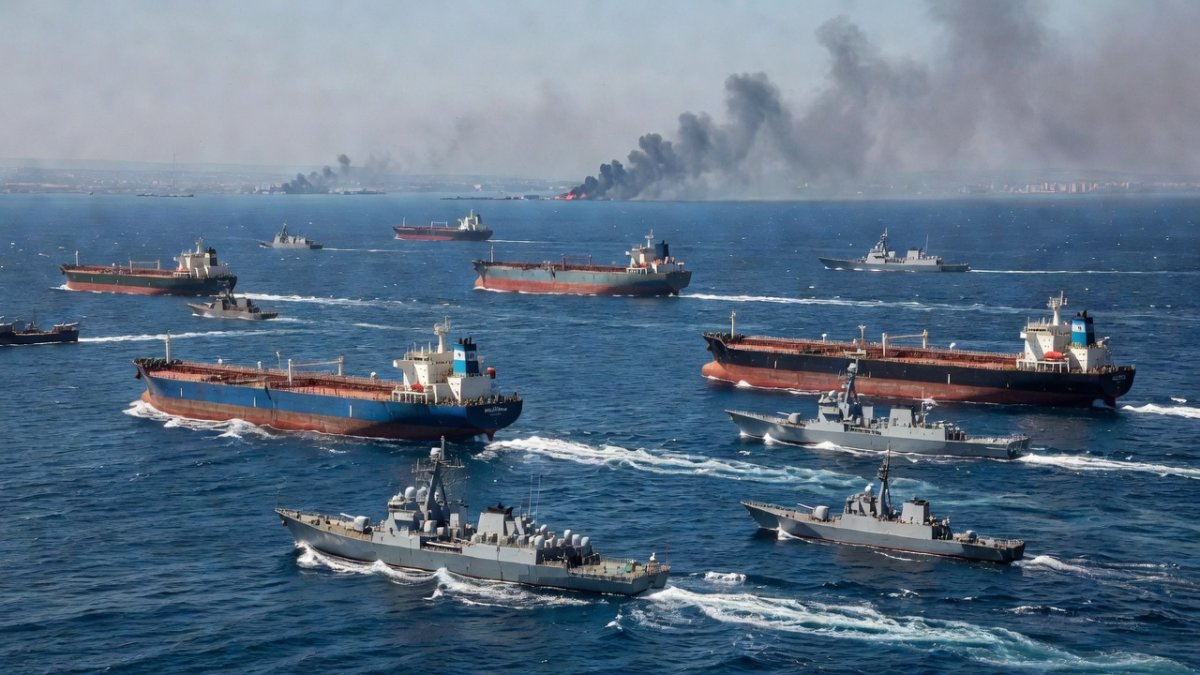
The Ceasefire That Never Was
The June ceasefire was signed after Khamenei's funeral and always fragile from the first handshake. Both sides knew it was a pause rather than peace. Within weeks the old grudges resurfaced in the form of quiet repositioning and whispered threats across the Strait of Hormuz.
President Trump had granted Tehran a week off during the funeral ceremonies but Iran struck commercial vessels in the Strait of Hormuz days after that grace period ended. Fox News reported the timing with clinical precision noting how quickly the lull collapsed into renewed aggression.
Global observers watched the fragile truce fray. The war that began in February 2026 had already disrupted travel and trade routes according to Britannica data yet markets briefly hoped the funeral pause might hold. Those hopes proved naive.
By early July the signs of breakdown were unmistakable. Iranian forces tested boundaries with small boat maneuvers and radar lock-ons. CENTCOM responded with overwhelming force rather than further diplomacy.
The underlying reality is that neither Washington nor Tehran trusted the other to honor the terms. The funeral ceasefire was theater for cameras while real preparations for the next round continued underground and at sea.
Analysts now admit the document was little more than a temporary bandage on a deep arterial wound. The blood was always going to flow again once the cameras left.
Opinion in the region hardened quickly. Hardliners on both sides used the fragile agreement as proof that negotiation equals weakness. That narrative gained traction fast.
The result is a return to open confrontation with higher stakes than before the funeral pause. No one should pretend surprise at this outcome.
Two Nights of Fire
CENTCOM struck more than eighty Iranian targets on July 7 hitting air defense systems radar installations anti-ship missiles and over sixty IRGC boats in a single coordinated wave. The operation was designed to cripple Iran's ability to close the Strait of Hormuz.
The following night roughly ninety additional targets were hit including missile storage sites drone facilities and naval command centers. Together the two nights represented the most intense American military action against Iran in years.
Iran's Health Ministry reported seventeen dead and one hundred fifteen wounded across six cities. Those numbers are almost certainly undercounts given the regime's history of minimizing casualties during strikes.
The CENTCOM statement was blunt stating the strikes were intended to further degrade Iran's ability to threaten freedom of navigation. That language leaves little room for misinterpretation about future intent.
Explosions rocked southern Iran on the night of July 10. Sky News reported multiple blasts while the United States denied involvement leaving Israeli action as the most likely explanation. The pattern of denials and suspicions is now familiar.
Airline disruptions spread across Middle East airspace within hours of the first strikes. Carriers rerouted flights adding hours to journeys and spiking costs for passengers and cargo alike.
The cumulative effect of these two nights plus the follow-on explosions has been to reset the military balance in the region at least temporarily. Iran lost significant defensive and offensive capacity in under forty-eight hours.
Yet the strikes also guaranteed retaliation cycles that could last months. Every destroyed radar or boat creates a new grievance that hardliners will exploit.
Freedom of navigation remains the stated goal but the practical result so far is heightened tension and disrupted commerce for everyone who uses the waterway.
Regional governments are now calculating how much more escalation they can absorb before their own economies buckle under the pressure.
Oil Markets in Chaos
Brent crude traded above one hundred ten dollars per barrel in late May before the fragile ceasefire brought temporary relief. Prices are spiking again as traders price in the renewed risk of supply disruptions through the Strait of Hormuz which carries twenty percent of global oil supply.
Trump revoked the oil waiver he had issued on June 21 just days after the strikes began. That waiver had allowed roughly one point five million barrels per day of Iranian oil revenue to flow into Tehran coffers. Its sudden removal tightens the economic noose.
Global markets dropped sharply according to AP News reporting as investors fled risk assets. Energy stocks moved in the opposite direction creating a classic war premium environment that rewards producers and punishes consumers.
Russia is benefiting from the higher oil prices according to a July 9 New York Times analysis. Moscow has quietly increased its own exports while Western attention remains fixed on the Persian Gulf.
The Joint Research Centre has already begun tracking secondary effects on global food prices driven by higher energy and fertilizer costs linked to the Iran war impacts. Those ripple effects will hit developing nations hardest.
Traders are now modeling scenarios where even a partial closure of the Strait could push Brent past one hundred forty dollars. Such levels would trigger recession signals across multiple economies simultaneously.
The oil market reaction reveals how little buffer exists in current supply chains. One major chokepoint under sustained threat is enough to destabilize prices worldwide.
Speculators have returned in force betting on continued volatility rather than any quick diplomatic resolution. That bet has proven profitable so far.
Consumer nations are scrambling for alternative supplies but few options can replace the volume that normally transits the Strait. Strategic reserves offer only temporary relief.
Hegseth Pulls the Plug on Israel
Defense Secretary Hegseth canceled his planned July 8-9 visit to Israel at the last minute. The trip was supposed to include meetings with Prime Minister Netanyahu and Defense Minister Katz to coordinate regional strategy.
Two reasons drove the cancellation. First the ongoing Iran operations demanded his full attention in Washington. Second the festering dispute over F-35 sales to Turkey created an awkward diplomatic backdrop that no one wanted to navigate in person.
Netanyahu has publicly opposed the F-35 sale to Turkey citing security concerns about advanced technology reaching a NATO ally with close ties to Qatar and occasional friction with Israel.
The cancellation sent a clear signal that American priorities had shifted dramatically toward managing the Iranian crisis rather than routine alliance maintenance. Israel was left to read the tea leaves without a face-to-face explanation.
Israeli officials expressed frustration in private briefings noting that the timing left them without clarity on American intentions for the coming weeks. Public statements remained measured but the underlying tension was obvious.
Hegseth's decision also reflected the reality that any high-profile visit during active strikes risked becoming a target for Iranian propaganda or worse. Security considerations played a role alongside the policy disputes.
The episode underscores how quickly the calendar of diplomacy can be upended by military events. A visit planned weeks in advance vanished in a matter of hours.
Allies are now wondering what other scheduled engagements might be sacrificed to the demands of the current crisis. Trust in predictable American engagement has taken another hit.
The F-35 Elephant in the Room
The F-35 sale to Turkey remains the unresolved dispute that complicated Hegseth's canceled visit. Netanyahu's public opposition has forced Washington into an uncomfortable triangle involving a NATO member and a key Middle East partner.
Turkey has long sought the advanced stealth fighters to modernize its air force yet concerns about technology transfer and Ankara's regional alignments have stalled approval. The current crisis has only sharpened those concerns.
Israeli officials argue that any F-35 transfer risks compromising operational security given Turkey's intelligence-sharing relationships. Those arguments carry weight in Congress where support for Israel remains strong.
At the same time the United States needs Turkish cooperation on multiple fronts including sanctions enforcement and regional basing. Alienating Ankara could create new problems even as the Iran situation demands focus.
The F-35 dispute illustrates how legacy alliance commitments can collide with immediate crisis management. Every weapons sale now carries secondary consequences that ripple across multiple theaters.
Netanyahu's stance has hardened public debate in Israel about reliance on American platforms. Some voices are calling for accelerated development of indigenous alternatives.
Washington has yet to find a formula that satisfies both Jerusalem and Ankara. The issue is likely to linger long after the current round of strikes concludes.
Defense contractors are watching closely because any precedent set here could affect future sales decisions across the region.
Israel's Night Moves
Explosions reported across southern Iran on July 10 carried the signature of Israeli action even though the United States denied involvement. The pattern of strikes on military infrastructure suggests careful targeting rather than random escalation.
Israeli planners appear focused on degrading Iran's remaining ability to project power through the Strait after the American strikes created openings. Coordination between the two allies remains opaque but the results are visible.
Sky News coverage highlighted the lack of official confirmation from either Washington or Jerusalem leaving analysts to piece together the operation from blast reports and satellite imagery.
The night moves also serve a domestic political purpose in Israel where public pressure for decisive action against Iranian threats remains high. Visible results help maintain support for the current government.
Yet each additional strike increases the risk of Iranian retaliation against Israeli territory or shipping. The calculation is delicate and the margin for error is shrinking.
Regional air forces have increased patrols in response to the uncertainty. Commercial aviation continues to suffer from the resulting airspace restrictions.
The July 10 incidents demonstrate that the conflict has entered a phase of shadow operations where attribution is deliberately murky. This reduces the chance of immediate escalation but raises the overall temperature.
Israel's strategy appears to be one of calibrated pressure designed to keep Iran off balance without triggering an all-out response. Whether that balance can be maintained remains an open question.
What Happens Now?
The immediate future hinges on whether Iran chooses symmetric retaliation or asymmetric disruption through proxies and mines in the Strait. Either path carries significant risks for Tehran given the damage already inflicted on its defenses.
Global food prices are already reflecting the uncertainty according to Joint Research Centre monitoring. Higher energy costs translate directly into fertilizer and transport expenses that will squeeze household budgets worldwide.
Airline schedules remain in flux with carriers reluctant to commit aircraft to routes that could be closed with little notice. The war that began in February 2026 continues to impose hidden costs on travelers and shippers alike.
Diplomatic channels are quiet but not entirely closed. Back-channel messages through third parties continue even as public rhetoric escalates. The question is whether those channels can produce results before the next round of strikes.
Oil traders are pricing in sustained volatility through the summer. Any sign of de-escalation could trigger a rapid unwind but few analysts expect that outcome in the near term.
Regional governments are reinforcing their own defenses and seeking alternative supply routes. The era of cheap secure energy transit through the Gulf appears to be ending.
Washington faces pressure to define clear objectives beyond the stated goal of protecting navigation. Without a political end state the military campaign risks becoming an open-ended commitment.
Markets will continue to punish uncertainty. Investors are already rotating into assets perceived as safe havens while energy producers enjoy windfall revenues.
The coming weeks will test whether the current level of force is sufficient to deter further Iranian moves or whether additional strikes become necessary. The answer will shape the conflict's trajectory for months.
The Bottom Line
The ceasefire was always an illusion sustained by funeral diplomacy rather than genuine agreement. Two nights of American strikes followed by suspected Israeli action have reset the battlefield but solved nothing fundamental.
Oil markets are pricing the new reality with brutal efficiency. Brent is climbing again and the Strait of Hormuz remains the world's most dangerous chokepoint carrying twenty percent of global supply.
Hegseth's canceled visit and the unresolved F-35 dispute with Turkey reveal how quickly secondary alliance issues get sidelined when shooting starts. Netanyahu's opposition has created an awkward triangle that Washington has yet to resolve.
Iran's reported casualties and lost military assets are real but the regime's capacity for asymmetric response remains intact. The next moves will likely come through proxies or maritime harassment rather than direct confrontation.
Global ripple effects on food prices airline schedules and trade volumes are already measurable. The war that began in February 2026 shows no sign of winding down.
The bottom line is that force has degraded Iranian capabilities but has not altered the underlying incentives driving the conflict. Until those incentives change the cycle of strikes and retaliation will continue with mounting costs for everyone involved.
Markets and militaries alike are now operating on the assumption that volatility is the new normal. That assumption carries its own dangerous momentum.
By Jessica Ali, Global 1 News
This article was produced with AI-assisted research and editorial support. Reporting is based on sources cited in the article.
What's Your Reaction?
 Like
0
Like
0
 Dislike
0
Dislike
0
 Love
0
Love
0
 Funny
0
Funny
0
 Wow
0
Wow
0
 Sad
0
Sad
0
 Angry
0
Angry
0

Editor-in-Chief at Global1.News. Atlanta-based journalist who cuts through the BS and tells it like it is. Lead anchor, host, and the voice you hear when the spin stops and the truth starts.













Comments (0)