
Al-Ummah Platform Bridges Research and Policy in the Muslim World
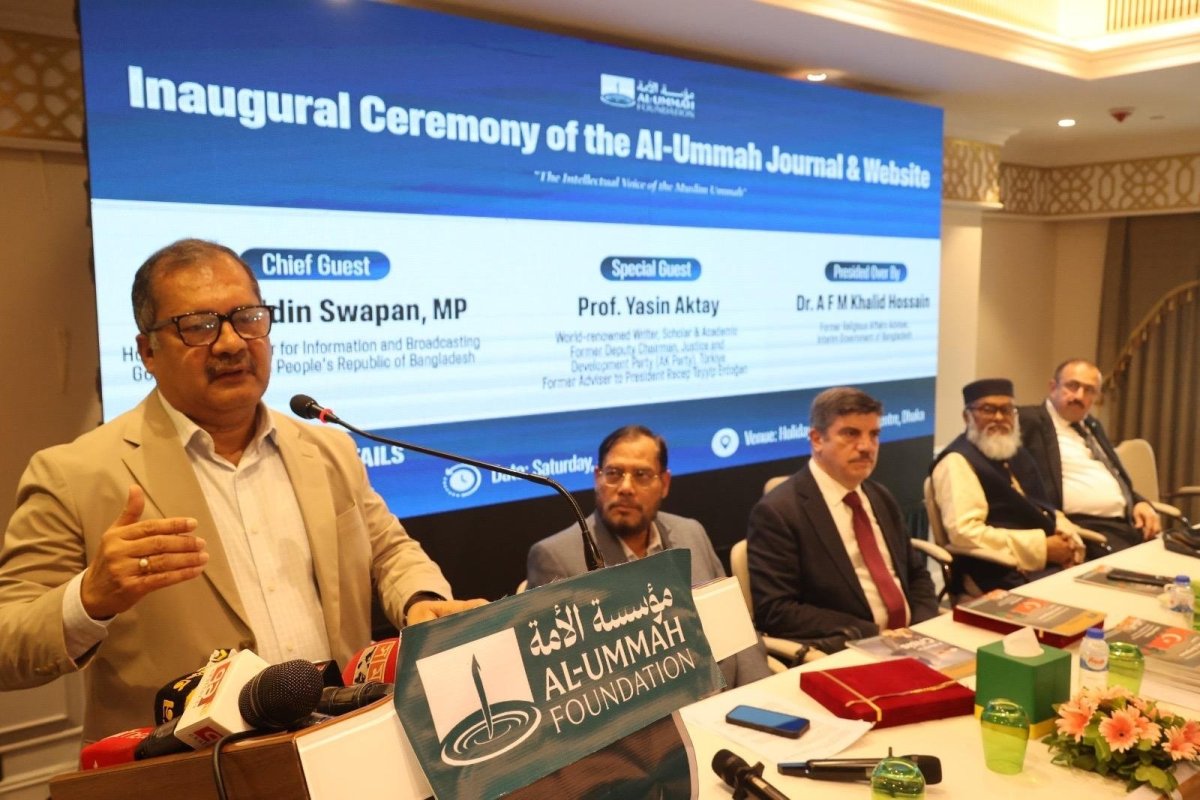
Al-Ummah Platform Bridges Research and Policy in the Muslim World The launch of Al-Ummah last week in Dhaka marks a deliberate attempt to create a structured space for evidence-based discussion across Muslim-majority societies. Organizers positioned the multilingual journal and digital platform as a response to the rapid spread of misinformation and the need for stronger links
Turkish Academic Networks and Regional Reach
Yasin Aktay, a Turkish academic and former adviser to President Recep Tayyip Erdoğan, delivered one of the keynote addresses. His participation underscores Ankara’s ongoing interest in shaping intellectual conversations beyond its borders. Turkey has long sought to leverage its Ottoman heritage and contemporary diplomatic weight to foster cooperation among Muslim states. Aktay stressed the difficulty of translating scholarly work into usable policy, a challenge that resonates with Turkey’s own efforts to project influence through institutions such as the Organization of Islamic Cooperation.
Turkish officials view platforms like Al-Ummah as complementary to Ankara’s broader foreign-policy goals. These include expanding educational exchanges, supporting Islamic finance initiatives and encouraging dialogue on technology governance. By participating in the Dhaka event, Turkish voices signal continuity in a strategy that pairs cultural diplomacy with concrete research partnerships.
OIC Member States Seek Coordinated Responses
Discussions at the launch repeatedly referenced the Organization of Islamic Cooperation. Speakers noted that OIC countries face shared pressures from artificial intelligence, shifting energy markets and external narratives about Islam. The platform’s stated aim of moving discourse from emotional debate toward rigorous analysis aligns with long-standing OIC calls for better knowledge production among its 57 members.
Bangladesh’s participation adds a South Asian dimension to these efforts. As an OIC member with a large Muslim population, Dhaka can serve as a bridge between Gulf states, Southeast Asia and Turkey. The presence of former religious affairs adviser A F M Khalid Hossain highlighted the practical stakes: advances in technology require leadership grounded in credible research rather than reactive statements.
Countering Disinformation Across Digital Spaces
Bangladesh Information and Broadcasting Minister Zahir Uddin Swapan warned that digital expansion has amplified both opportunities and risks. Misinformation, he noted, fuels polarization inside and between societies. Al-Ummah’s founders responded by committing to publish research papers, policy analyses and special reports that prioritize evidence over ideology.
This focus intersects with wider regional concerns. Gulf states pursuing Vision 2030-style diversification worry that unchecked online narratives can undermine investor confidence and social cohesion. Iran’s regional proxy activities and the ongoing IAEA monitoring of its nuclear program generate competing information ecosystems that often bypass scholarly scrutiny. A platform emphasizing responsible journalism could, in principle, offer an alternative channel for measured analysis.
Linking Islamic Scholarship to Contemporary Policymaking
Chairman Mohammed Zakir Hossain framed the initiative as an effort to strengthen the Muslim world’s intellectual voice through research rather than ideology. He acknowledged that lasting change requires sustained knowledge production and constructive dialogue. This approach echoes debates in several Muslim capitals about how classical Islamic thought can inform responses to artificial intelligence ethics, climate adaptation and financial regulation.
Islamic finance was listed among the topics for future issues. With Gulf economies accelerating diversification away from hydrocarbons, credible research on Sharia-compliant instruments carries direct economic implications. Turkey’s own experiments with participation banking and Malaysia’s established Islamic finance hubs illustrate the potential for cross-regional learning that Al-Ummah hopes to facilitate.
Strategic Calculus for Participating States
Each actor at the launch brings distinct incentives. Turkey gains an additional venue to cultivate soft power and academic networks. Bangladesh secures visibility as a host of international Muslim intellectual exchange, potentially attracting development partnerships. OIC institutions receive indirect support for their stated objectives of promoting cooperation and countering hostile narratives.
Second-order effects could include tighter research collaboration between Arab, Turkish and South Asian scholars, as well as incremental pressure on governments to justify policies with data rather than rhetoric. The platform’s multilingual format may also help surface perspectives that English-only outlets overlook, particularly from non-Arab Muslim societies.
Outlook for Evidence-Based Discourse
Organizers emphasized modest expectations. They do not claim to transform regional dynamics overnight. Instead, they aim to establish Al-Ummah as a steady hub for policy-relevant research. Success will depend on consistent funding, editorial independence and the willingness of governments to engage with findings that may challenge prevailing narratives.
In a region marked by Sunni-Shia competition, great-power maneuvering and rapid technological change, the value of such an initiative lies in its incremental contribution to informed debate. Whether Al-Ummah can maintain analytical rigor while navigating political sensitivities remains to be seen, yet its launch reflects a recurring recognition that intellectual infrastructure matters as much as diplomatic summits or military postures. By Malik Hassan, Staff Writer
This article was produced with AI-assisted research and editorial support. Reporting is based on sources cited in the article.
What's Your Reaction?
 Like
0
Like
0
 Dislike
0
Dislike
0
 Love
0
Love
0
 Funny
0
Funny
0
 Wow
0
Wow
0
 Sad
0
Sad
0
 Angry
0
Angry
0

Middle East Correspondent at Global1.News. Based in Beirut, covering politics, conflict, energy, and society across the Middle East. Brings context and depth to a region often reduced to headlines.












Comments (0)