
At Jazzablanca, Jowee Omicil Celebrates Jazz Without Borders: A Sonic Journey Across Continents
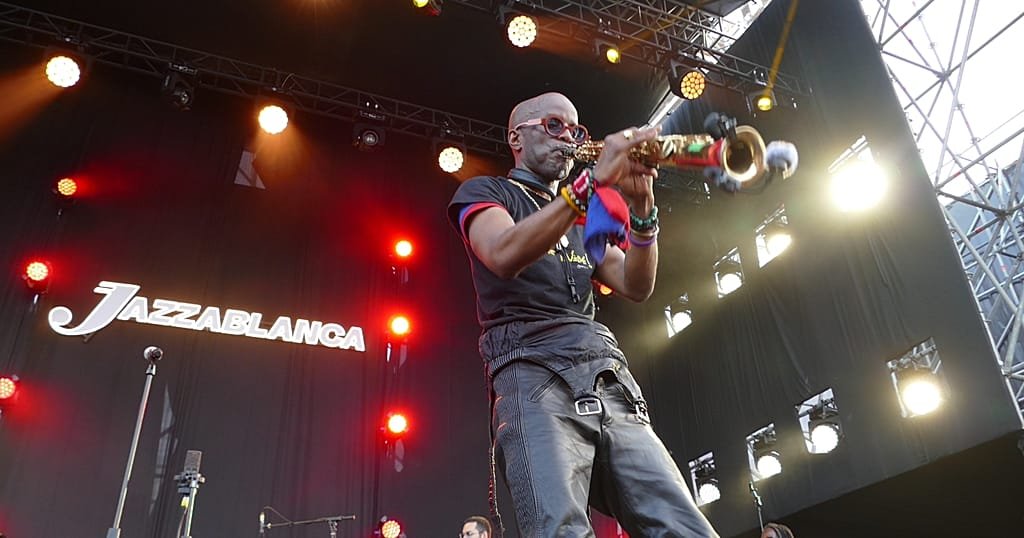
At the 19th edition of the Jazzablanca festival in Casablanca, Canadian-Haitian saxophonist and composer Jowee Omicil took the stage to present his new album "sMiLes," a musical project that defies borders and celebrates the rich cultural tapestry of the African continent and its diaspora. At Jazzablanca, Jowee Omicil Celebrates Jazz Without Borders: A Sonic Journey Across Cont
At the 19th edition of the Jazzablanca festival in Casablanca, Canadian-Haitian saxophonist and composer Jowee Omicil took the stage to present his new album "sMiLes," a musical project that defies borders and celebrates the rich cultural tapestry of the African continent and its diaspora.
At Jazzablanca, Jowee Omicil Celebrates Jazz Without Borders: A Sonic Journey Across Continents
Casablanca, Morocco — The sounds of jazz, Afrobeat, Caribbean rhythms, and Malian traditions converged at Anfa Park as Jowee Omicil delivered a performance that festival-goers described as "free, nomadic, and blended jazz." The multi-instrumentalist, who began playing alto saxophone at age 15 in his father's church in Montreal, brought Haitian energy to the Moroccan stage, weaving together influences from across the Atlantic.
A Borderless Musical Philosophy
Jowee Omicil presented his new album "sMiLes" at the Jazzablanca 19th edition as a borderless auditory passport that carries listeners across continents without checkpoints or visas. The project draws directly from jazz foundations while folding in African rhythms from West African griot traditions, American hip-hop beats, and Caribbean island traditions rooted in Haitian kompa and rara processions.
Omicil explained the intent behind the work with a clear statement: "It's an album that's somewhat borderless, because the goal of sMiLes was precisely to give people this borderless auditory passport." He added that the record captures "the sound of Africa, the sound of America with hip-hop, and also the sound of the islands," creating a continuous flow rather than separate tracks.
His Haitian-Canadian identity shapes every layer of the album, reflecting the dual heritage of parents who arrived in Montreal from Haiti and raised him in a household where church hymns met Caribbean melodies. This personal story turns "sMiLes" into a living map of migration and return that resonates with African diaspora communities from Dakar to Port-au-Prince.
As a multi-instrumentalist, Omicil switches between saxophones, clarinet, flute, cornet, Rhodes piano, and vocals during live sets, allowing each instrument to carry distinct cultural echoes. His status as a Selmer Paris endorsed artist gives him access to instruments favored by generations of African and European jazz players alike.
The album's structure encourages listeners to follow melodic threads that move from a Malian kora-inspired line into a New York hip-hop breakbeat without pause. Omicil treats these shifts as natural conversations between musical families rather than deliberate fusions.
By refusing to label any section as purely jazz or purely African, Omicil creates space for audiences in Morocco and beyond to recognize their own stories in the music. The result is an auditory experience that mirrors the movement of people across the Sahara and the Atlantic over centuries.
From Haiti to Canada, via Africa: Omicil's Musical Journey
Born in Montreal to Haitian immigrant parents, Jowee Omicil grew up immersed in the sounds of his father's church ministry, where he first picked up the alto saxophone at age 15. Those early Sunday services blended Haitian spirituals with North American gospel, planting the seeds for the border-crossing style he now brings to international stages.
In 2010, NPR featured him in a segment titled "Roots and Grooves of Haiti's Wind Master," highlighting how his playing carried the rhythmic drive of Port-au-Prince streets into Canadian jazz clubs. That recognition opened doors for tours that eventually led him across the Atlantic.
His recent African tour took him through Benin and Ghana before reaching Morocco, allowing direct engagement with musicians in Cotonou and Accra who share similar commitments to rhythmic complexity and communal performance. These stops reinforced the continental connections already present in his compositions.
The track "Trip to Ghana" stands as a tribute to Malian singer Oumou Sangaré, whose powerful voice and Wassoulou traditions Omicil has long admired. He stated plainly, "I originally wrote that song for Oumou Sangaré," turning the piece into both homage and bridge between Haitian and Malian expressive worlds.
Another composition, "La lettre du Mali pour Jonathan," draws explicitly from Mandinka and Malian traditions, incorporating modal scales and call-and-response patterns that echo the griot storytelling still practiced in Bamako and surrounding regions. The piece serves as a musical letter across generations and geographies.
These journeys through Benin, Ghana, and Mali have deepened Omicil's understanding of how African musical systems continue to shape jazz on both sides of the Atlantic. Each new performance in Morocco adds another chapter to this ongoing dialogue.
Jazzablanca 2026: A Festival Connecting Continents
The 19th edition of Jazzablanca ran from July 2-11, 2026, at Anfa Park in Casablanca, presenting 10 days and 50 concerts that drew audiences from across North Africa and Europe. The festival won "Best Event in Morocco" in 2025, confirming its growing reputation as a premier platform for cross-cultural exchange.
Headliners included Robbie Williams, Scorpions, Ms. Lauryn Hill x Wyclef Jean, Jessie J, Mika, Jorja Smith, and Juanes, mixing global pop with artists who carry strong African and Caribbean influences. This programming choice reflects the festival's mission to bring together dedicated jazz enthusiasts and broader audiences seeking shared musical experiences.
The Scène Off concept offered free nightly concerts in neighborhoods surrounding Anfa Park, extending the festival's reach beyond ticketed venues and into everyday Moroccan life. These open-air sessions often featured local Gnawa groups alongside visiting artists, creating spontaneous collaborations.
Jazzablanca's location in Casablanca positions it as a natural meeting point for musicians traveling between West Africa, Europe, and the Americas. The city's historic role as a port has long facilitated cultural movement, and the festival continues that legacy through its annual programming.
Organizers emphasize accessibility, with many events priced to welcome families and young listeners who might not otherwise attend jazz performances. This approach has helped build a new generation of Moroccan fans familiar with both traditional Gnawa music and contemporary African jazz expressions.
Africanews by Sasha Gankin covered Omicil's performance, noting how the festival's structure supports artists whose work spans multiple continents. The coverage highlighted the event's success in creating spaces where Haitian, Malian, and Moroccan sounds can coexist on the same stage.

Morocco's Gnawa Connection and Omicil's Spiritual Bond
Jowee Omicil wore a traditional Moroccan jellaba for his pre-concert interview with SNRT News, signaling respect for local customs while preparing to share his own musical heritage. The garment choice reflected more than style; it marked his deep personal and spiritual connection to Morocco and its Gnawa musical traditions.
Gnawa music, with its roots in sub-Saharan African spiritual practices brought to Morocco centuries ago, resonates strongly with Omicil's approach to rhythm and trance. He has spoken about how the repetitive grooves and call-and-response structures in Gnawa parallel elements he hears in Haitian and West African music.
Morocco functions as a crossroads of African, Arab, and Mediterranean cultures, a reality Omicil experiences each time he performs in Casablanca. The city's markets and historic quarters contain sonic traces of these overlapping histories that mirror the layered sounds in his own compositions.
The broader significance of Moroccan festivals for African musical exchange becomes clear when considering events like the Gnaoua Festival in Essaouira, which similarly brings together artists from across the continent. Jazzablanca extends this model by focusing on jazz while remaining open to Gnawa and other local forms.
Omicil's engagement with Gnawa musicians during his time in Morocco has influenced his use of certain scales and rhythmic cycles, creating new points of connection between his Haitian-Canadian background and North African traditions. These exchanges happen both on stage and in informal sessions after concerts.
Such connections matter for African readers because they demonstrate how festivals like Jazzablanca keep ancient routes of musical transmission alive in contemporary settings. The dialogue between Gnawa and jazz offers models for cultural preservation that honor both innovation and heritage.
The Evening of July 5: A Night of Musical Fusion
On the evening of July 5, Jowee Omicil shared the Jazzablanca stage with Keziah Jones of Blufunk fame, Nigerian Afropop star Oxlade, and Franco-Haitian artist Naika. The lineup created a concentrated showcase of African and diaspora sounds within a single night at Anfa Park.
Omicil's set was praised for bringing Haitian energy to the Moroccan audience while delivering the free, nomadic, and blended jazz that has become his signature. The performance wove saxophone lines through rhythms that echoed both Port-au-Prince carnivals and Accra highlife gatherings.
His deep connection to the African continent was evident in the way he introduced each piece, often referencing specific cities and musicians encountered during his Benin and Ghana tour stops. These personal anecdotes helped the Casablanca crowd feel part of a larger continental story.
The significance of Afrobeats and Afropop crossing paths with jazz at Moroccan festivals lies in the way these genres share rhythmic foundations that originated on the continent. Oxlade's presence alongside Omicil illustrated how contemporary Nigerian pop continues traditions that jazz musicians have long drawn upon.
Naika's Franco-Haitian perspective added another layer, reminding listeners of the historical ties between Haiti and West Africa that predate modern nation-states. The combined performances created a living demonstration of how music travels and transforms across generations.
For audiences in Senegal and other West African countries, such evenings at Jazzablanca offer proof that African musical influence remains central to global jazz innovation. The festival thus serves as both celebration and affirmation of continental creative power.
What to Watch For: Omicil's Evolving Sound
Jowee Omicil is currently exploring solo piano as a new direction, stripping away the full band to focus on melodic storytelling and harmonic exploration. An upcoming album from this exploration promises to reveal new facets of his compositional voice while maintaining the cultural threads that run through all his work.
He describes his artistic philosophy with the statement: "I love weaving in melodies and nods to different sounds, and letting the listener discover them." This approach invites active engagement rather than passive listening, encouraging audiences to trace the African, Caribbean, and American influences themselves.
Omicil's previous Jazzablanca appearance in 2018 established a relationship with Moroccan audiences that has only deepened with the 2026 return. That earlier performance introduced many local listeners to his particular blend of Haitian rhythms and jazz improvisation.
Japanese festival bookings for 2026 will take his music to new listeners in Asia, continuing the global expansion that began with African tours through Benin and Ghana. These international dates demonstrate how African-influenced jazz continues to find receptive ears worldwide.
The growing global recognition of African-influenced jazz musicians reflects a broader shift in how the genre is understood and programmed. Festivals like Jazzablanca play a key role by placing artists such as Omicil alongside both established international names and emerging African talents.
Listeners can expect Omicil's sound to keep evolving while remaining grounded in the church music of his Montreal childhood and the rhythmic traditions of Haiti and West Africa. His work continues to offer a sonic model for how diaspora artists maintain and transform cultural connections across oceans and generations.
By Amara Diop, Staff Writer
This article was produced with AI-assisted research and editorial support. Reporting is based on sources cited in the article.
What's Your Reaction?
 Like
0
Like
0
 Dislike
0
Dislike
0
 Love
0
Love
0
 Funny
0
Funny
0
 Wow
0
Wow
0
 Sad
0
Sad
0
 Angry
0
Angry
0

West Africa/Sahel Correspondent at Global1.News. Dakar-based journalist covering politics, security, climate, and development across Francophone and Anglophone West Africa. Tells the stories of a region undergoing profound transformation.














Comments (0)