
US-Iran Strikes Threaten Gulf Alliances After Hormuz...
In a recent BBC News Global News Podcast episode, reporters examined the widening crisis in the Persian Gulf as renewed US-Iran hostilities threaten to strain Washington's relationships with its Gulf Arab allies... US-Iran Escalation Threatens Gulf Alliances as Tanker Attacks Reshape Regional Dynamics Ankara – 10 July 2026 — The renewed exchange of strikes between Washington an
In a recent BBC News Global News Podcast episode, reporters examined the widening crisis in the Persian Gulf as renewed US-Iran hostilities threaten to strain Washington's relationships with its Gulf Arab allies...
US-Iran Escalation Threatens Gulf Alliances as Tanker Attacks Reshape Regional Dynamics
Ankara – 10 July 2026 — The renewed exchange of strikes between Washington and Tehran this week has placed Gulf Arab states in an increasingly untenable position, forced to navigate between their security partnership with the United States and the immediate threat of Iranian retaliation. The crisis erupted on Tuesday when Iran's Islamic Revolutionary Guard Corps (IRGC) struck three commercial tankers in the Strait of Hormuz, including vessels owned by Saudi Arabia and Qatar — two of Washington's closest regional allies. The United States retaliated with what US Central Command described as "powerful" strikes against more than 80 Iranian targets, and Tehran responded by launching missiles and drones at US-linked facilities in Kuwait, Bahrain, and Qatar, drawing America's Gulf partners directly into the crossfire for a second time since the conflict began in February. Gulf capitals now face difficult choices as Iranian retaliation lands on their soil while US security guarantees remain essential to their defence postures.
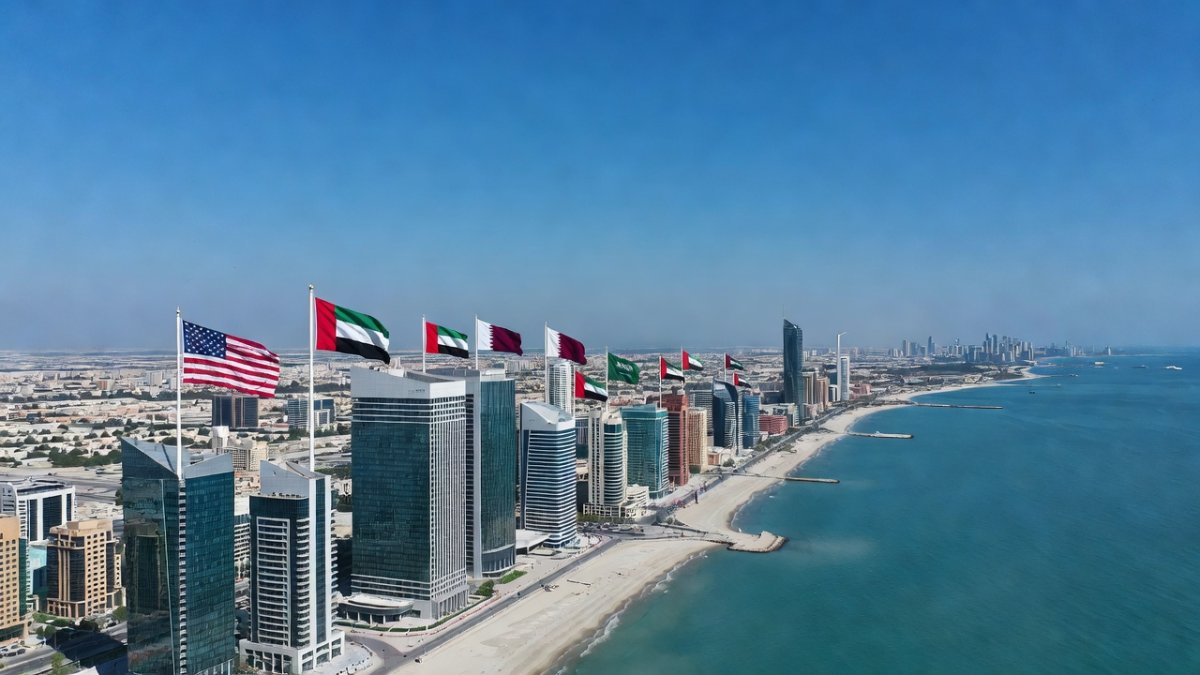
The Tanker Attacks That Broke the Ceasefire
On Tuesday, July 7, three tankers were struck while using the US-recommended Omani route through the Strait of Hormuz. The vessels included the Qatar-owned LNG tanker Al-Rekayyat, the Saudi-owned crude oil tanker Wadyan, and a Liberia-flagged crude tanker. Qatar's foreign ministry spokesperson Majed Al Ansari held Iran "fully responsible" for the attacks on commercial shipping. Saudi Arabia's foreign ministry denounced the strikes on its vessel in equally direct terms. Iran's foreign ministry spokesman Esmail Baghaei described the accusations as "contrary to the principle of good neighbourliness" and warned that commercial vessels using routes not coordinated with Iran face risks. These incidents shattered the fragile calm that had followed the 17 June Memorandum of Understanding.
The US response came swiftly through US Central Command. Strikes hit over 80 targets including air defence systems, coastal radar installations, and 60 small boats. Specific locations struck included Qeshm island, Bandar Abbas, and Sirik. The US Treasury simultaneously revoked the waiver that had temporarily lifted oil sanctions on Iran, a key component of the 17 June Memorandum of Understanding. Brent crude prices rose 3 percent to $76 per barrel in immediate reaction to the renewed hostilities. These measures signalled Washington's determination to respond forcefully to any disruption of maritime traffic in the vital waterway.
Iran's retaliation followed within hours. The IRGC claimed it had launched missiles and drones at "85 key US military facilities" in Kuwait and Bahrain, including a US Navy headquarters and an air base. Iranian media reported the first casualty as Guardsman Mohammadreza Khazini, killed by shrapnel while confronting enemy drones. Iran's health ministry reported 14 killed and 78 injured overall from the preceding US strikes. These figures underscore the direct human cost borne by Iranian forces and civilians alike during the latest round of escalation.
The attacks have inflicted wider diplomatic damage by eroding trust in the 17 June framework and prompting GCC members to reassess collective security mechanisms. Riyadh and Doha, despite their condemnation of Tehran, now face internal debates over whether public alignment with Washington risks further Iranian strikes on their energy infrastructure. GCC foreign ministers have convened emergency consultations, with some voices urging a unified statement that balances deterrence against escalation. This reaction reflects long-standing Gulf calculations that prioritise regime survival over open confrontation, even as the attacks expose the limits of relying solely on external security guarantees.
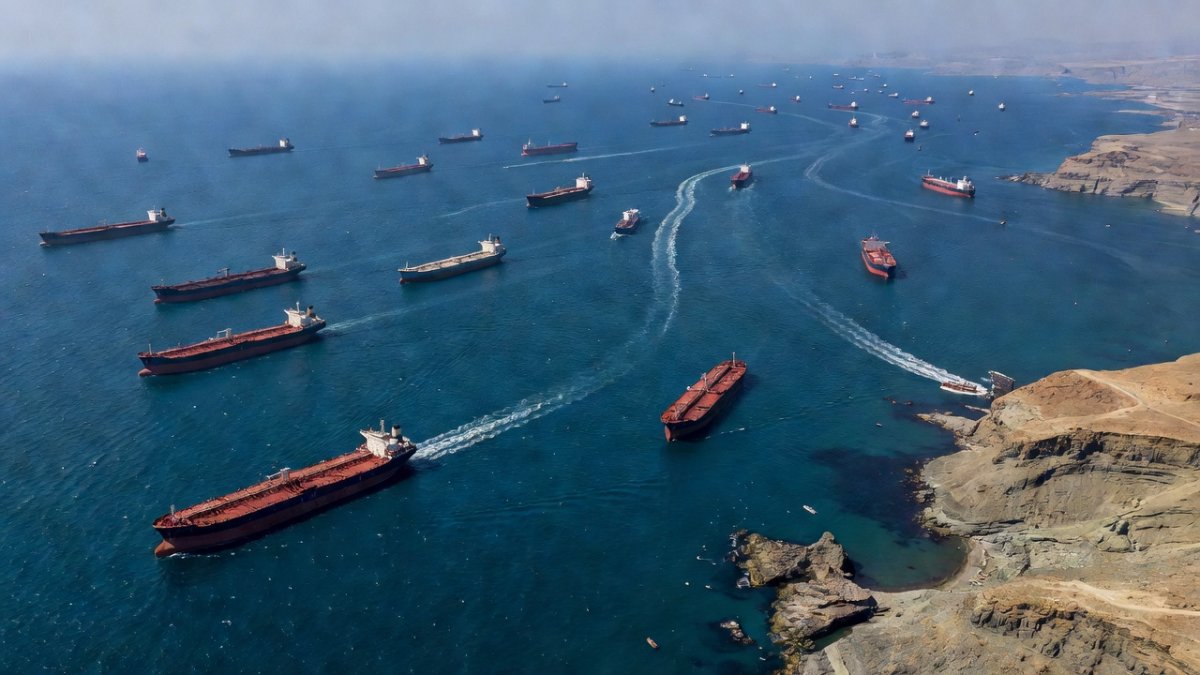
Gulf States Trapped Between Washington and Tehran
Gulf states remain Washington's security partners yet find themselves geographically vulnerable to Iranian retaliation. Kuwait, Bahrain, and Qatar all host US military bases and were directly struck by Iranian missiles during the latest exchanges. Kuwait lambasted Iran's "repeated attacks" on its territory. Jordan intercepted eight Iran-launched missiles headed toward regional targets. Qatar and Saudi Arabia, both seeing their own tankers attacked, condemned Iran but also fear being drawn deeper into a conflict they did not start. The Gulf Cooperation Council now confronts an existential dilemma: continued reliance on the US security umbrella exposes member states to direct retaliation, while any distancing from Washington could leave them more exposed to Iranian regional ambitions.
Since the beginning of the US-Israel war with Iran on 28 February, Gulf states have been repeatedly caught in the crossfire. Iranian missiles have struck Saudi oil refineries and Qatari air bases in earlier rounds. Saudi Arabia has secretly conducted its own strikes on Iranian military sites. The GCC states have attempted to maintain a careful balancing act by participating in US-led coalitions while also engaging in backchannel diplomacy with Tehran. The 17 June Memorandum of Understanding was intended to reduce these tensions through a 14-point framework, but this week's escalation has demonstrated the limits of that approach.
Defence diversification is emerging as a pragmatic response, with several Gulf capitals exploring expanded procurement from European suppliers and renewed interest in Chinese systems that avoid the political strings attached to US arms packages. Beijing's Belt and Road investments already provide leverage for quiet mediation, allowing Gulf states to hedge against Washington-Tehran cycles without fully abandoning the American umbrella. This approach draws on decades of Gulf diplomatic history, where strategic autonomy has been pursued through multi-vector partnerships rather than exclusive alliances, potentially positioning China as a stabilising interlocutor in future de-escalation talks.
The Strait of Hormuz — A Waterway in Crisis
Traffic through the Strait of Hormuz has fallen dramatically. Just 23 tankers and cargo ships crossed on Wednesday, down from 47 a week before, according to maritime intelligence firm Kpler. The pre-war average stood at 138 ships per day. The US-recommended Omani route saw zero vessels on Wednesday, falling from an average of 10 per day. The Iran-backed route through its own waters has seen only limited traffic. Martin Kelly of EOS Risk Group observed that shipping will peak and trough cautiously until Iran attacks another ship and the cycle starts again. These sharp reductions highlight how quickly commercial operators withdraw from contested waters.
A fifth of the world's oil and gas supplies transit the Strait of Hormuz. The current disruption therefore threatens global energy markets far beyond the immediate region. The 17 June MoU had committed Tehran to use "its best efforts for safe passage of commercial vessels with no charge for 60 days" and to "conduct dialogue with Oman" about the strait's future. Critics note the MoU remained deliberately vague on the strait itself. Jennifer Parker of UNSW stated that neither the promise of economic relief nor the threat of military punishment has, so far, changed Iran's behaviour. The combination of reduced traffic and rising insurance costs now places sustained pressure on energy supply chains worldwide.
War-risk premiums have surged, with some underwriters quoting rates several times higher than pre-escalation levels, directly inflating delivered energy prices for European and Asian importers. These costs ripple through global supply chains by delaying LNG cargoes bound for Japan and South Korea while forcing European refiners to seek costlier alternative crudes, amplifying inflationary pressures already present in post-conflict energy markets.
NATO and the International Response
Speaking at the NATO summit in Ankara, NATO Secretary General Mark Rutte described the US strikes as "absolutely necessary," arguing Iran was "basically violating the ceasefire." Donald Trump stated the MoU was "over" but indicated negotiations could continue. The NATO context remains crucial because the alliance is meeting in Turkey, a member that also shares maritime interests in the Eastern Mediterranean and Black Sea. Turkey's own complex relationship with Iran and the Gulf states adds another layer to the diplomatic calculations. Meanwhile, the UN reported that approximately 6,000 seafarers remain stranded aboard hundreds of vessels in and around the strait, creating a growing humanitarian concern.
The 17 June MoU had represented a breakthrough through months of backchannel diplomacy involving Oman, Qatar, and other Gulf intermediaries. This week's escalation has effectively shattered that framework. Questions now surround whether diplomatic channels remain open and whether the Gulf states that brokered the original deal can serve as intermediaries once again. Iran's speaker Mohammad Bagher Ghalibaf declared that the "era of bullying and extortion is over," reflecting Tehran's hardened position following the death of Ayatollah Ali Khamenei on 28 February.
Analysis — The Fragile US-Gulf Alliance Under Pressure
The crisis represents a stress test for the US-Gulf security architecture. For decades, Gulf states have relied on the United States as their primary security guarantor against Iranian aggression. Yet each round of US-Iran escalation since February has brought Iranian retaliation directly onto Gulf soil, including missiles into Saudi Arabia, drones into the UAE, and strikes on Qatari bases. Analysts suggest this pattern creates growing tension because Gulf leaders need the US security umbrella but cannot afford the retaliation that accompanies it. The evolution of the previous "maximum pressure" approach into direct military confrontation has placed Gulf states in the position of paying a disproportionate price for Washington's strategy.
The key question for Gulf capitals is whether Washington's current approach remains sustainable. If the United States cannot protect Gulf shipping without triggering Iranian retaliation against Gulf states themselves, the practical value of the alliance comes into question. Some Gulf states may accelerate defence diversification by deepening ties with China, Russia, or European powers. Others may pursue independent diplomatic channels with Tehran. The next 60 days will prove critical in determining whether the US-Gulf partnership emerges stronger or becomes frayed by the ongoing Iran conflict.
The next phase could see Gulf states quietly testing limited bilateral understandings with Tehran on maritime security while maintaining public US alignment, potentially opening space for Chinese or Russian mediation that reduces escalation risks without requiring full American disengagement. Such a trajectory would reshape broader geopolitical alignments involving Moscow and Beijing in the region.
By Irina Volkov, Staff Writer
This article was produced with AI-assisted research and editorial support. Reporting is based on sources cited in the article.
What's Your Reaction?
 Like
0
Like
0
 Dislike
0
Dislike
0
 Love
0
Love
0
 Funny
0
Funny
0
 Wow
0
Wow
0
 Sad
0
Sad
0
 Angry
0
Angry
0
Russia/Eastern Europe Correspondent at Global1.News. Covering Russian politics, energy, security, and the shifting dynamics of the post-Soviet space. Provides clear-eyed analysis on one of the world's most opaque regions.












Comments (0)