
Tnuva's Cottage Cheese Shortage: Foreign Technicians Refuse to Enter Israel, Delaying Repairs
Empty Shelves Greet Israeli Shoppers Amid Tnuva Shortage Shoppers across Israel have encountered bare sections in dairy aisles this week, with cottage cheese missing from stores operated by major chains including Shufersal and Rami Levy. The absence stands out because cottage cheese remains a daily essential in many households, often used in breakfasts, salads, and traditional meals. Retailers have attempted to mask the gaps by spreading other dairy items across the empty spaces, yet the visu

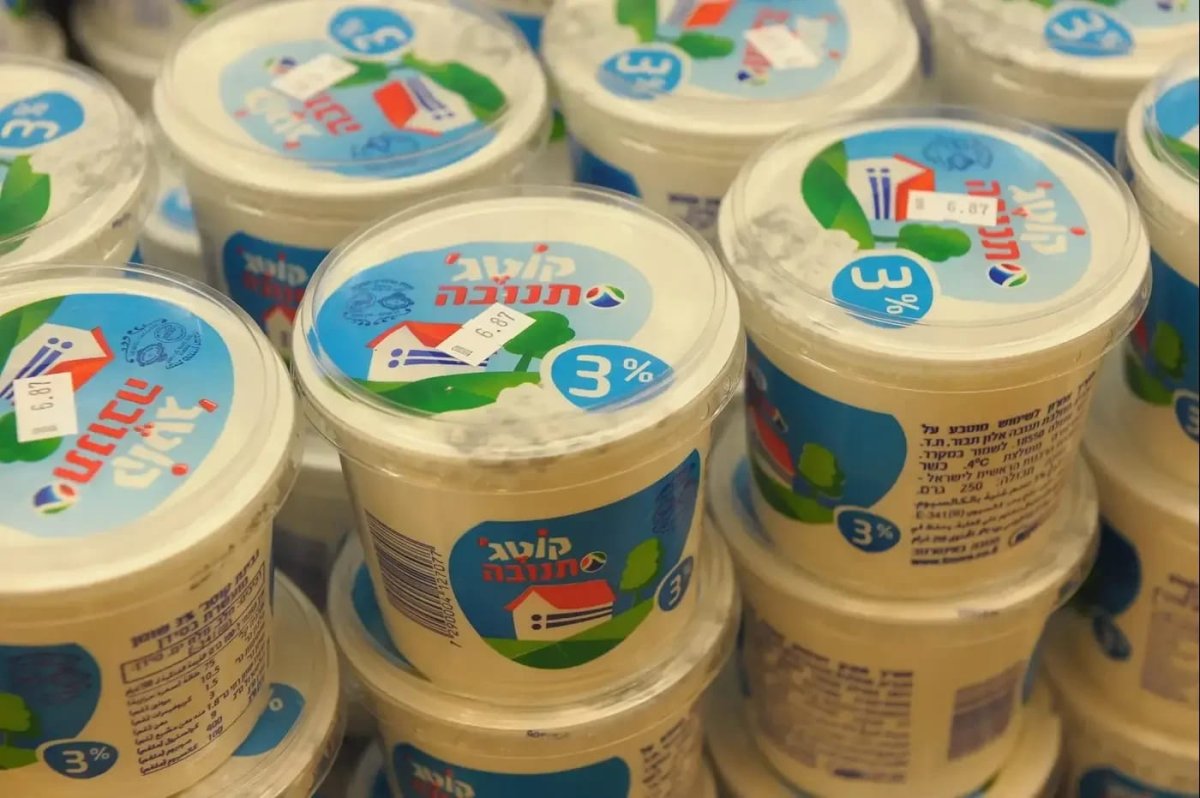
Empty Shelves Greet Israeli Shoppers Amid Tnuva Shortage
Shoppers across Israel have encountered bare sections in dairy aisles this week, with cottage cheese missing from stores operated by major chains including Shufersal and Rami Levy. The absence stands out because cottage cheese remains a daily essential in many households, often used in breakfasts, salads, and traditional meals. Retailers have attempted to mask the gaps by spreading other dairy items across the empty spaces, yet the visual effect does little to satisfy customers seeking the specific product.
The shortage traces directly to distribution failures rather than any drop in production. Tnuva, Israel's largest dairy company, continues to manufacture and package cottage cheese at its facilities, but the goods remain trapped inside an automated warehouse. Consumers report traveling between multiple locations without success, highlighting how quickly a localized technical issue can affect nationwide availability in a small country where supply chains are tightly integrated.
Demand for dairy products has increased roughly four percent since the start of the year, partly because fewer Israelis have traveled abroad amid ongoing security conditions. This rise in local consumption has amplified the visibility of the shortage, particularly as the Shavuot holiday period traditionally drives higher purchases of dairy items across the country.
Israeli families often structure their morning routines around cottage cheese as an affordable protein source that pairs with fresh vegetables and bread, a habit reinforced by decades of domestic agricultural policy favoring local dairy output. With security conditions limiting international flights and vacations, households have redirected spending toward supermarket staples, pushing consumption higher and exposing any break in the cold chain that links Galilee production sites to urban centers like Tel Aviv and Jerusalem.
Economists tracking household budgets note that even a temporary absence of this item forces substitutions that raise weekly grocery costs, especially for middle-income families already navigating elevated living expenses tied to regional tensions. The visual tactic of rearranging shelves cannot mask the underlying strain on supply logistics that normally deliver consistent volumes to every major retail network.
The Glitch at Alon Tavor Dairy Plant
The core problem sits at Tnuva's Alon Tavor dairy facility in the Lower Galilee, where a computer malfunction has disabled the automated warehouse system for more than a month. Production lines themselves operate normally, turning out packaged cottage cheese that then moves onto pallets. The automated system, however, controls all subsequent movement of those pallets and their release onto trucks for distribution to retailers.
Because the warehouse relies on computer-driven automation for nearly every step after packaging, manual workarounds have proven limited. Tnuva personnel have shifted to partial manual operations where possible, yet the scale of pallet handling in a modern facility makes full bypass impractical. The result is a growing backlog of finished product that cannot reach stores despite steady output from the nine Tnuva factories operating nationwide.
Industry observers note that such automated systems are designed for efficiency in high-volume environments, yet they create single points of failure when software issues arise. The Alon Tavor site processes large quantities of cottage cheese daily, so even a temporary halt in pallet movement quickly translates into empty shelves throughout the marketing chains that depend on Tnuva deliveries.
The malfunction has persisted beyond thirty days, leaving rows of sealed containers stacked inside the facility while production continues at full pace across the nine sites. Tnuva's internal teams have attempted limited manual pallet movement, yet the volume handled daily at Alon Tavor exceeds what human crews can sustain without the computer-guided cranes and conveyors that normally feed loading bays.
Analysts point out that reliance on a single automated hub for a staple product concentrates risk in ways that older manual warehouses avoided, particularly when the site serves retail networks spanning from the north to the southern development towns. The backlog grows each day, illustrating how tightly Israel's compact geography links one regional plant to nationwide availability.
Dematic's Refusal Amid Security Concerns
The automated warehouse at Alon Tavor is operated by the foreign company Dematic, whose technicians have declined to travel to Israel to address the malfunction. Company representatives cite the current security situation as the reason for withholding on-site support. Without these specialists, Tnuva's own computer personnel have worked around the clock to diagnose and correct the glitch using remote methods.
One industry source explained the impasse clearly: "This is a computer malfunction, and the company Dematic, which operates it, refuses to send a technician to the country due to the security situation. Since the dairy is mostly automatic, it is impossible to bypass the system manually, otherwise they would have done it long ago." The statement underscores how international business relationships intersect with Israel's security environment, affecting even routine maintenance in critical food infrastructure.
This development reflects wider patterns in which foreign contractors weigh travel risks when deciding whether to fulfill service agreements. Tnuva has nine factories spread across the country, yet the concentration of advanced automation at Alon Tavor has left the company dependent on external expertise that is currently unavailable. The situation illustrates how security considerations extend beyond military or diplomatic spheres into everyday commercial operations.
Remote troubleshooting by Tnuva staff has continued without interruption, yet the specialized diagnostics required for the Dematic system demand physical presence that remains unavailable. The refusal highlights how security assessments by overseas firms now shape timelines for restoring basic consumer goods, even when the underlying issue is purely technical rather than related to raw material shortages.
Impact on Israeli Households and Traditions
Cottage cheese holds a distinctive place in Israeli daily life, appearing on breakfast tables and in numerous recipes that form part of the national diet. Its absence therefore registers immediately with families who rely on it as an affordable, versatile staple. The timing compounds the difficulty, as the Shavuot holiday period brings heightened demand for dairy products and many households prepare traditional dishes that feature cottage cheese prominently.
Retailers serving diverse communities from urban centers to smaller towns have all reported the same gaps. The four-percent rise in overall dairy consumption this year stems in part from reduced overseas travel, meaning more meals are prepared at home with locally sourced items. When a staple disappears from shelves, the effect reaches beyond inconvenience into questions of household budgeting and meal planning during a period of elevated living costs.
Some chains have rearranged displays to fill visual voids, yet customers quickly notice the substitution. The shortage therefore affects not only immediate purchases but also the sense of routine stability that Israelis associate with consistent access to basic foods produced domestically.
During Shavuot, many families prepare cheese-filled pastries and blintzes that rely on cottage cheese as the primary ingredient, turning the holiday into a peak period when demand traditionally surges across all demographic groups. The current gap disrupts these preparations at a moment when security conditions have already kept more people at home, increasing the number of meals cooked from local dairy rather than restaurant or travel alternatives.
Smaller retailers in peripheral towns feel the pinch most acutely because they lack the inventory buffers available to larger urban branches, forcing residents to drive longer distances or alter weekly menus. This ripple effect touches budgeting decisions for pensioners and young families alike, who count on cottage cheese as a low-cost protein that stretches across multiple meals.
Tnuva and Industry Push Back on Shortage Claims
Industry sources have firmly rejected suggestions that the shortage might be artificial or deliberate. One source stated directly: "What interest could Tnuva have in not selling cottage cheese? After all, on every container it earns money, and when the cottage cheese is not sold, it loses. The company has nine factories across the country, and every day malfunctions can happen." The comment emphasizes the straightforward economic incentive for Tnuva to restore full distribution as rapidly as possible.
Attempts to import cottage cheese from abroad have failed because the product is not manufactured internationally in comparable form. Similar efforts to bring in milk also proved unsuccessful. These constraints highlight Israel's reliance on domestic dairy production and the limited options available when local supply chains encounter disruption.
Tnuva continues to emphasize that production remains uninterrupted and that the sole obstacle lies in warehouse logistics. The company's public statements focus on the technical nature of the issue rather than any broader market manipulation, aligning with the observation that unsold inventory represents direct financial loss.
Each unsold container represents immediate revenue loss for Tnuva, which operates under tight margins typical of Israel's regulated dairy sector where prices are monitored to protect consumers. The nine factories maintain output, yet the inability to move finished goods from Alon Tavor means capital remains tied up in inventory that cannot generate returns until distribution resumes.
Efforts Toward Restoring Normal Supply
Tnuva estimates that it will return to supplying ongoing demand within two weeks, though full recovery of shortages may take additional time. The company has indicated that less cottage cheese will reach stores this week, with hopes that regular supply will begin by the end of next week. Computer personnel at the firm are continuing intensive troubleshooting to resolve the automated system issues.
Manual operations have been introduced as a partial measure to move some pallets, yet the volume remains below normal capacity. The nine factories continue production at standard rates, creating a growing inventory that awaits only the restoration of automated release mechanisms. Tnuva's internal teams have prioritized this project, recognizing the importance of cottage cheese to Israeli consumers.
While the immediate goal is to clear the backlog at Alon Tavor, planners also consider how to prevent similar bottlenecks in the future. The current episode has already demonstrated the speed with which a single facility's distribution failure can affect shelves nationwide.
Company projections indicate that regular supply could resume by the close of next week, though clearing accumulated shortages across all retail chains may extend several additional weeks. Tnuva's computer teams continue round-the-clock efforts to restore the Dematic system, while limited manual handling provides only a fraction of normal throughput.
Automation and Security in Israel's Food Supply
The Tnuva situation reveals the extent to which modern food production depends on automated systems managed by international partners. When those partners cite security conditions as grounds for withholding personnel, the consequences reach directly into household kitchens. Israel's food supply chains, though robust, incorporate technologies that require specialized foreign support for maintenance and repair.
This dependency intersects with the broader security environment that shapes daily decisions across sectors. Fewer Israelis traveling abroad has already increased domestic dairy consumption, and the same conditions now limit the arrival of technicians needed to keep automated warehouses functioning. The result is a feedback loop in which security considerations influence both demand and supply simultaneously.
Looking Ahead for Israeli Food Security
For Israeli consumers, the cottage cheese shortage serves as a reminder of how interconnected production, automation, and regional stability have become. The expectation of restored supply within two weeks offers some reassurance, yet the episode underscores vulnerabilities that extend beyond any single company. Food security in Israel involves not only agricultural output but also the reliable operation of advanced logistics systems.
As Tnuva works to normalize distribution, the experience may prompt discussion about redundancy in automated facilities and the availability of local expertise for critical infrastructure. The current shortage remains a technical matter rather than a reflection of production capacity, yet it illustrates how quickly everyday staples can become scarce when external factors intervene.
Future planning may include developing domestic maintenance capabilities for automated dairy systems to reduce dependence on foreign technicians during periods of heightened security alerts. Such steps could help insulate the supply of essential foods from disruptions that originate far from the production floor itself.
By Hannah Berg, Staff WriterWhat's Your Reaction?
 Like
0
Like
0
 Dislike
0
Dislike
0
 Love
0
Love
0
 Funny
0
Funny
0
 Wow
0
Wow
0
 Sad
0
Sad
0
 Angry
0
Angry
0















Comments (0)