
Italy, EU Face China Shock 2.0 as Beijing Pushes Trade Cooperation
Italy, EU Face China Shock 2.0 as Beijing Pushes Trade Cooperation A recent CGTN report titled "Behind 'China Shock 2.0' – Italians call for more cooperation" highlights interviews with Italian citizens who favor expanded trade ties with China amid rising living costs. The discussion underscores public sentiment in Italy that confrontation risks exacerbating economic pressures
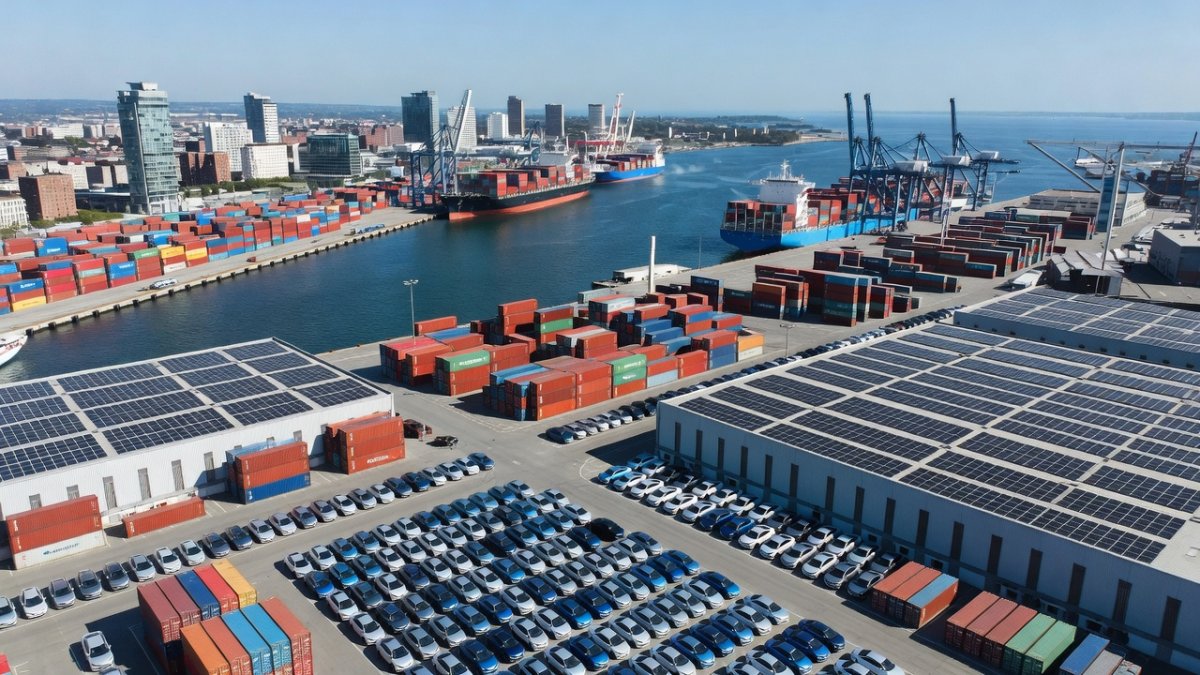
The Emergence of China Shock 2.0
China's high-technology exports have recorded notable increases, including integrated circuits rising by 26.8 percent and renewable energy products advancing by 50 percent in recent periods. These figures mark a shift toward sophisticated manufactured goods rather than the labor-intensive items associated with the original WTO-era trade expansion. The pattern reflects deliberate policy choices centered on technological upgrading. Under the 14th Five-Year Plan and its successor framework, Beijing has channeled state subsidies through the National Integrated Circuit Industry Investment Fund and provincial-level support schemes to accelerate domestic semiconductor fabrication and photovoltaic manufacturing capacity. The result is visible in European ports, where Chinese-made inverters and battery packs now compete directly with German and French producers on both price and performance metrics. This development echoes the original China Shock following China’s 2001 WTO accession, when import competition devastated labor-intensive sectors across the United States and Europe; analysts at MERICS note that the current phase targets higher-value segments, potentially amplifying employment displacement in advanced manufacturing clusters.
Under the Dual Circulation strategy, Chinese authorities prioritize domestic innovation alongside selective international linkages. This approach seeks to reduce external vulnerabilities while maintaining export competitiveness in sectors such as electric vehicles and clean energy equipment. The strategy connects directly to objectives of tech self-sufficiency pursued through coordinated efforts by the NDRC and MOFCOM. Analysts at the Chinese Academy of Social Sciences argue that Dual Circulation is not autarky but a calibrated hedge against Western export controls, allowing China to absorb foreign technology while building parallel supply chains. European firms in the automotive and electronics sectors now encounter intensified competition in areas previously considered strengths. This evolution carries implications for industrial policy across the continent, prompting the European Commission to accelerate its Net-Zero Industry Act and Chips Act with explicit targets for domestic production shares by 2030. CSIS scholars draw explicit parallels to the post-2001 period, warning that without coordinated responses, Europe risks repeating the regional manufacturing hollowing-out observed in the American Midwest two decades earlier.
Unlike the earlier shock driven by lower-cost consumer goods, the current phase centers on capital-intensive and knowledge-based products. European manufacturers in automotive and electronics sectors now encounter intensified competition in areas previously considered strengths. This evolution carries implications for industrial policy across the continent. Think tanks such as Bruegel have warned that failure to respond could result in permanent loss of market share in the electric vehicle value chain, with second-order effects on employment in traditional manufacturing regions of northern Italy, eastern Germany, and central France. The Centre for European Reform adds that German automotive suppliers face particular pressure from Chinese battery dominance, while French solar firms confront similar challenges in photovoltaic assembly, underscoring the need for targeted defensive measures under the EU’s Foreign Subsidies Regulation.
EU Trade Deficit and Negotiation Calculus
The European Union recorded a trade deficit of approximately €360 billion with China in the latest available data. Three-month talks between EU and Chinese officials are underway to address market access and subsidy concerns. Discussions at the recent G7 summit reflected shared anxieties among member states regarding supply dependencies in critical technologies. European Commission President Ursula von der Leyen has framed the negotiations as part of a broader “de-risking” agenda rather than outright decoupling, yet internal divisions persist. France and the Netherlands advocate stricter reciprocity on public procurement, while Hungary and Greece remain more receptive to Chinese investment in infrastructure. Executive Vice-President Margrethe Vestager has emphasized the role of anti-subsidy investigations in leveling the playing field, citing ongoing probes into Chinese electric vehicle and solar subsidies as essential tools to protect emerging European industries.
MOFCOM has maintained a firm position on retaliatory measures should restrictions intensify. European leverage derives from its large consumer market and regulatory authority, yet dependence on Chinese components for green transition goals limits options. Officials weigh the benefits of collective bargaining against risks of supply disruptions. The EU’s Carbon Border Adjustment Mechanism, scheduled for full implementation in 2026, is viewed in Beijing as a potential non-tariff barrier, prompting Chinese diplomats to threaten mirror measures on European luxury exports and agricultural products. Second-order effects include potential adjustments in investment screening and procurement rules. The calculus involves balancing defensive industrial policies with the need to secure affordable inputs for renewable infrastructure projects across member states. The European Council on Foreign Relations notes that any escalation could accelerate capital flight from Europe toward Southeast Asian assembly hubs. Bruegel analysts further highlight how the Foreign Subsidies Regulation could constrain Chinese state-backed entrants, drawing lessons from the original China Shock’s long-term wage stagnation effects in exposed regions.
Italy's Distinct Bilateral Track
The 16th China-Italy Joint Commission meeting convened in April 2026, co-chaired by MOFCOM Minister Wang Wentao and Italian Deputy Prime Minister Antonio Tajani. The session produced agreements on expanded air connectivity, including direct Venice-Shanghai flights to facilitate business and tourism flows. These steps illustrate Italy's pursuit of national commercial interests alongside EU membership obligations. Tajani has publicly emphasized that Italy seeks “balanced and reciprocal” relations, yet Rome continues to court Chinese participation in port modernization projects at Genoa and Trieste. Italian authorities navigate between collective EU positions on trade defense and specific opportunities in infrastructure and manufacturing cooperation. MFA channels remain active in coordinating messaging to avoid direct conflict with Brussels frameworks. This balancing act reflects Italy's geographic and economic exposure to Mediterranean trade routes. Historical parallels to the post-WTO era show Italy’s earlier openness to Chinese investment mirroring patterns seen in southern European economies during the first China Shock, where cost pressures reshaped local supply chains.
Regional influence considerations also factor into Rome's approach, as engagement with Beijing can complement outreach to North African and Middle Eastern partners. The bilateral track thus serves both immediate economic needs and longer-term diplomatic positioning. Italian think tanks such as the Institute for International Affairs highlight that Mediterranean connectivity projects could position Italy as a southern European gateway for Chinese goods, provided regulatory alignment with EU rules is maintained. The Centre for European Reform observes that Italy’s stance may moderate Brussels’ more hawkish impulses, particularly regarding the Carbon Border Adjustment Mechanism’s application to Chinese components vital for Italian automotive and machinery exporters.
Beijing's Counter-Narrative and Strategic Continuity
Chinese state media have countered narratives of market disruption by emphasizing mutual benefits from technology transfer and green development. The forthcoming 15th Five-Year Plan covering 2026-2030 is expected to reinforce commitments to tech self-sufficiency and sustainable growth targets. These priorities align with NDRC guidance on industrial upgrading. Officials in Beijing argue that Chinese overcapacity in solar and batteries actually accelerates global decarbonization, a claim supported by cost reductions that have made utility-scale renewables competitive with fossil fuels in southern Europe. European structural challenges, including energy costs and demographic pressures, receive attention in Beijing's public diplomacy as areas where Chinese capabilities could contribute. Officials highlight continuity in multilateral institution-building efforts that predate current tensions. MERICS researchers note this narrative builds on strategies refined since the 2001 WTO accession, when China similarly positioned its exports as globally beneficial despite domestic subsidy regimes.
The narrative frames expanded trade as supportive of global climate objectives rather than a source of imbalance. This positioning seeks to maintain diplomatic space even as regulatory scrutiny increases in Brussels and national capitals. Xi Jinping’s emphasis on “high-quality Belt and Road cooperation” continues to shape outreach to Italy and other southern European states. CSIS perspectives underscore that Beijing’s continuity in Dual Circulation messaging aims to blunt the impact of instruments like the Foreign Subsidies Regulation, preserving market access amid rising European defensive actions.
Strategic Calculus and Regional Ripple Effects
ASEAN economies may experience both opportunities and competitive pressures as Chinese green technology exports diversify. Access to affordable renewables could accelerate energy transitions in the Global South, altering traditional technology diffusion patterns. EU supply chain measures such as the Chips Act and Net-Zero Industry Act represent attempts to mitigate concentration risks. Vietnam and Malaysia have already attracted new Chinese battery and solar investments seeking to circumvent potential tariffs. Each side's leverage stems from differing priorities: Beijing seeks stable export outlets and technology partnerships, while European actors aim to protect emerging industries without derailing decarbonization timelines. Second-order effects could reshape investment flows toward alternative suppliers in Southeast Asia and elsewhere, potentially benefiting Japanese and South Korean firms that maintain tighter alignment with Western standards. Bruegel and the Centre for European Reform both caution that redirected flows may replicate post-2001 patterns, where Global South assembly hubs absorbed displaced production while facing new competitive pressures from Chinese overcapacity.
Outlook for Managed Competition
The three-month negotiation window offers a structured period for clarifying positions on subsidies and market access. Italy's continued bilateral engagement suggests that commercial interests will persist alongside collective defense mechanisms. The interplay between these tracks will determine whether tensions remain contained. Outcomes will hinge on whether incremental agreements can address specific sectoral concerns without broader escalation. Both sides retain incentives to avoid full decoupling given mutual economic exposures. Forward-looking assessments point to a period of calibrated engagement rather than resolution. European diversification efforts and Chinese industrial planning will continue to interact, shaping trade patterns through the remainder of the decade. Historical lessons from the original China Shock suggest that managed competition, incorporating anti-subsidy tools and the Carbon Border Adjustment Mechanism, offers the most viable path to preserving industrial resilience across Germany, France, and Italy while accommodating Global South reactions to shifting trade dynamics. By Prof. Marcus Chen, Staff Writer
This article was produced with AI-assisted research and editorial support. Reporting is based on sources cited in the article.
What's Your Reaction?
 Like
0
Like
0
 Dislike
0
Dislike
0
 Love
0
Love
0
 Funny
0
Funny
0
 Wow
0
Wow
0
 Sad
0
Sad
0
 Angry
0
Angry
0

World Politics Analyst at Global1.News. Based in Beijing, covering US-China relations, global trade, and geopolitical strategy. Brings deep analytical perspective to the power dynamics shaping international affairs.















Comments (0)