
U.S. Declines CUSMA Extension, Pushing Canada into Trade Negotiation Limbo
In a recent CBC News report on Power & Politics, analysts examined whether Canada now enters a 10-year period of trade uncertainty after the Trump administration declined to extend the Canada-U.S.-Mexico Agreement on July 1, 2026. U.S. Trade Representative Jamieson Greer confirmed the decision in a formal statement, signalling the beginning of what could become a drawn-out rene
In a recent CBC News report on Power & Politics, analysts examined whether Canada now enters a 10-year period of trade uncertainty after the Trump administration declined to extend the Canada-U.S.-Mexico Agreement on July 1, 2026. U.S. Trade Representative Jamieson Greer confirmed the decision in a formal statement, signalling the beginning of what could become a drawn-out renegotiation between the three North American economies.
U.S. Declines CUSMA Extension, Pushing Canada into Trade Negotiations
Ottawa, Ontario – July 9, 2026 — The Trump administration made its long-expected decision on July 1, 2026, the first mandatory review point built into the CUSMA text that replaced NAFTA in 2020. U.S. Trade Representative Jamieson Greer stated the United States intends to address the agreement's shortcomings and persistent trade deficits with Canada and Mexico.
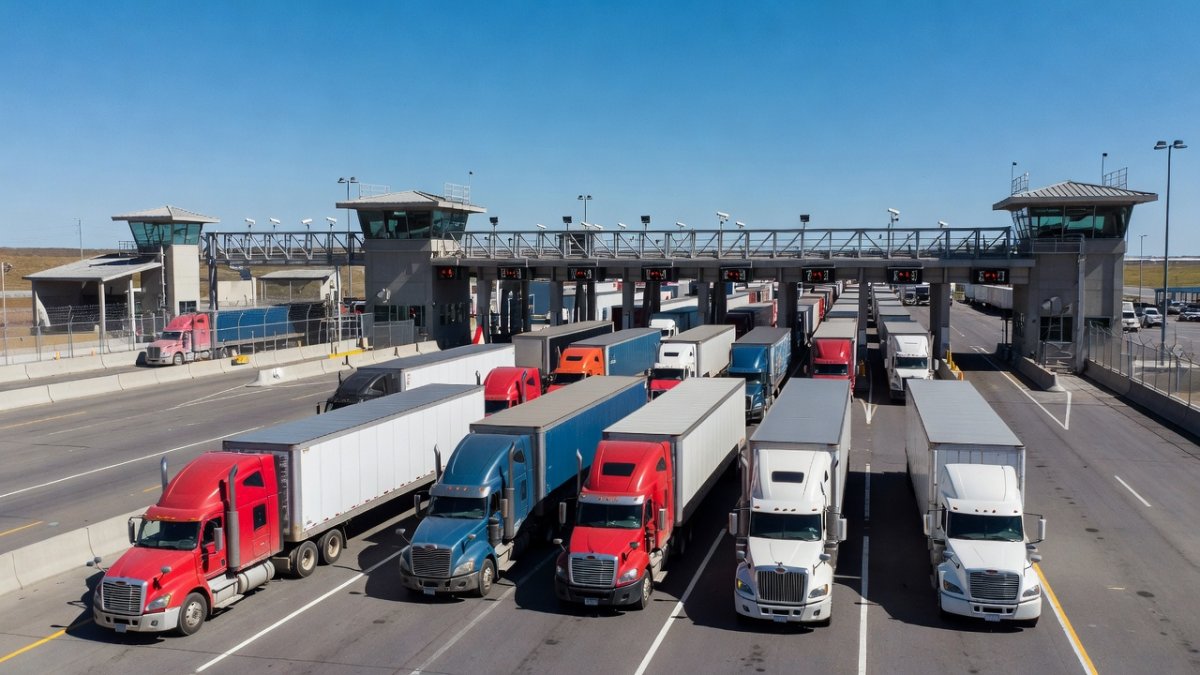
Under the CUSMA text, the agreement remains in force until 2036 unless one party issues a six-month notice of withdrawal. The Trump administration has not issued that notice, leaving the existing terms intact while negotiations proceed.
Canadian Government Response and Bilateral Opening
Canada-U.S. Trade Minister Dominic LeBlanc stated on July 1, 2026 that Ottawa remains open to bilateral negotiations with the United States. Prime Minister Mark Carney had already indicated ahead of the meeting that he did not anticipate major drama from the review process.
The Canadian position focuses on reducing existing U.S. tariffs on Canadian steel, aluminum, and autos. These tariffs continue to affect integrated supply chains that cross the border multiple times during vehicle assembly.
Canada's economy depends heavily on this trade relationship, with roughly 75 percent of Canadian exports directed to the United States. Any prolonged uncertainty directly affects employment in Ontario and Quebec manufacturing regions and energy exports from Alberta and Saskatchewan.
Trump Administration Priorities and Side-Deal Proposal
The Trump administration has identified two main objectives: increasing the percentage of U.S.-made content required in North American automobiles and securing greater access to Canada's dairy market under supply management.
U.S. officials have suggested pursuing protocols, or side deals, with individual countries rather than reopening the full trilateral agreement. A senior Trump administration official, speaking on condition of anonymity, noted that President Trump remains skeptical about whether such side deals can be reached quickly.
Trade expert Simon Lester of Rice University's Baker Institute has questioned whether the U.S. demands on auto content and dairy access can be achieved without major concessions from Canada that would require changes to domestic policy.
Domestic U.S. Politics Constraining Withdrawal
Republican members of Congress from agricultural states have expressed support for maintaining CUSMA in its current form. This political reality appears to be limiting the Trump administration's ability to pursue a full withdrawal at this stage.
The U.S. midterm elections scheduled for November 2026 add further pressure. Agricultural exporters in those states benefit from the stability CUSMA provides for cross-border shipments of grain, meat, and other products.
The Trump administration has indicated it wants to reach a conclusion quickly if possible, with some observers suggesting a potential agreement could emerge before Labour Day 2026 or that talks could extend into 2027.
Annual Renegotiation Option and Long-Term Outlook
The CUSMA text permits the three countries to enter annual renegotiations at any point until 2036, or to agree to an extension at any time. This mechanism provides a structured path for addressing irritants without immediate termination.
Canada's top priorities remain the removal of steel and aluminum tariffs and protection of the integrated auto sector that employs hundreds of thousands of workers across Ontario, Michigan, and Ohio. The dairy sector continues to face U.S. pressure for increased market access.

Impact on Canadian Industries and Supply Chains
The auto sector faces particular risk because components cross the Canada-U.S. border multiple times during production. Any new content rules would require re-engineering of these deeply integrated manufacturing networks.
Steel and aluminum producers in Hamilton, Sault Ste. Marie, and other centres continue to operate under tariff uncertainty that began during the first Trump term and has persisted. These tariffs directly raise costs for Canadian manufacturers and downstream industries.
Canada's dairy supply management system remains a perennial target. Any bilateral deal would require careful calibration to protect farm incomes in Quebec and Ontario while addressing U.S. demands for greater market access.
Federal-Provincial Coordination and Next Steps
Prime Minister Mark Carney's government must coordinate positions with provincial premiers whose economies depend on specific sectors. Ontario and Quebec hold direct stakes in autos and dairy, while Western provinces focus on energy and agriculture exports.
Parliament Hill will monitor developments closely as the House of Commons returns from summer recess. Any new agreement would require legislative approval in Canada, creating additional timelines beyond the U.S. midterm calendar.
The coming weeks will determine whether the two countries can reach a protocol before the November 2026 U.S. midterms or whether negotiations stretch into 2027 under the existing CUSMA framework that remains in effect until 2036.
By Alex Thompson, Staff Writer
This article was produced with AI-assisted research and editorial support. Reporting is based on sources cited in the article.
What's Your Reaction?
 Like
0
Like
0
 Dislike
0
Dislike
0
 Love
0
Love
0
 Funny
0
Funny
0
 Wow
0
Wow
0
 Sad
0
Sad
0
 Angry
0
Angry
0

Canada Correspondent at Global1.News. Based in Toronto, covering Canadian politics, energy, trade, and US-Canada relations. Provides the Canadian perspective on North American and global affairs.















Comments (0)