
AI Deepfake Copyright Losses Hit Japan Entertainment Hard
The Scale of AI Deepfake Content Targeting Japanese Celebrities The Japan Publicity Right Protection Organization study documented 43,483 suspected cases of AI-driven copyright infringement over just two months in mid-2025. These incidents primarily involved deepfake videos that superimposed celebrity faces onto various content, AI-generated voices of anime characters performin
The Scale of AI Deepfake Content Targeting Japanese Celebrities
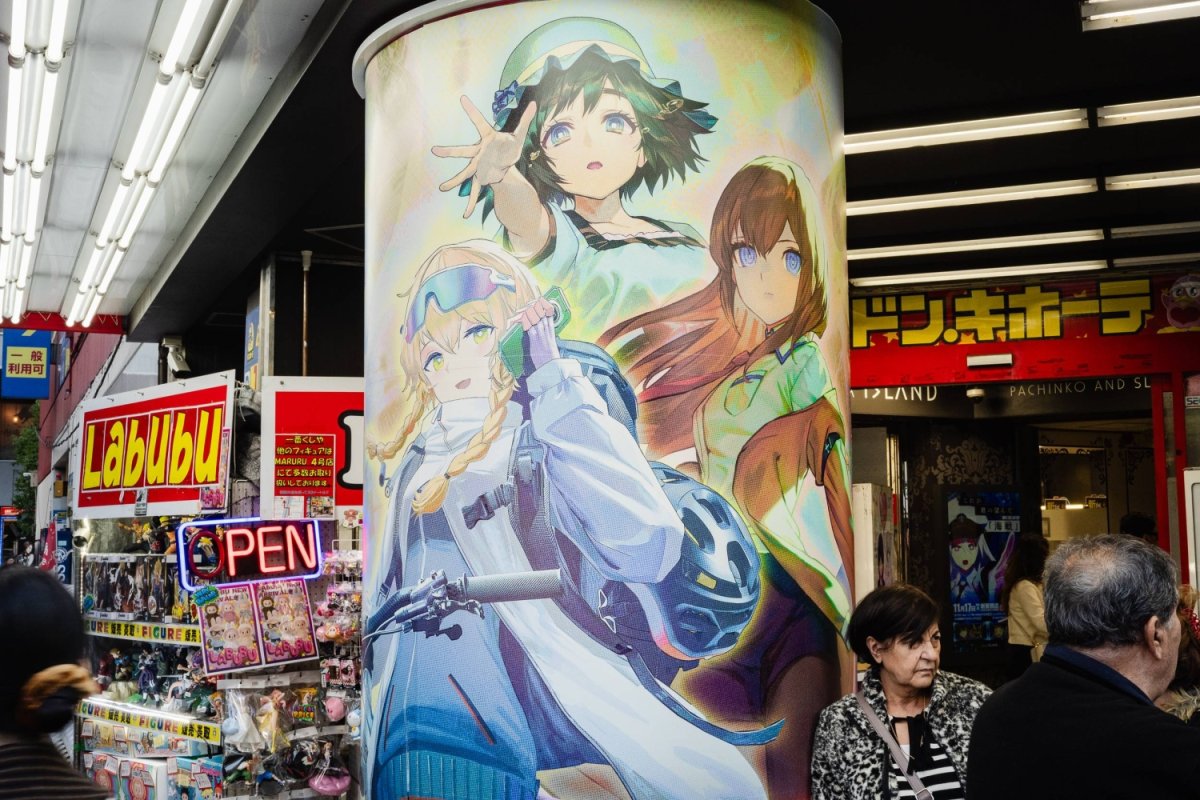
The Japan Publicity Right Protection Organization study documented 43,483 suspected cases of AI-driven copyright infringement over just two months in mid-2025. These incidents primarily involved deepfake videos that superimposed celebrity faces onto various content, AI-generated voices of anime characters performing popular songs, and full live-action recreations of anime scenes using images of well-known performers. The material quickly spread across social media platforms, accumulating roughly 335 million views and demonstrating the rapid reach of such synthetic content within Japan's highly visual entertainment ecosystem.
Japan's idol and voice actor culture places exceptional value on controlled likenesses and vocal performances, making these AI outputs particularly disruptive. Fans often form deep attachments to specific performers, and unauthorized recreations undermine the exclusivity that agencies cultivate through careful image management. The volume of views indicates strong public interest, yet it also signals potential erosion of trust when audiences cannot distinguish authentic material from fabricated versions, affecting long-term brand equity for individual talents and their affiliated companies.
Financial estimates derived from licensing fees and advertising equivalents placed losses between ¥2 billion and ¥4.5 billion. Because the calculation relied solely on identifiable cases, JAPRO explicitly stated that real damages could be substantially higher. This scale of exposure highlights how generative AI tools can bypass traditional gatekeepers in Japan's entertainment sector, where publicity rights have historically served as a primary safeguard for performers' commercial value.
The JAPRO Study: Methodology and Key Findings
JAPRO conducted its survey across 174 companies operating within Japan's entertainment industry, focusing on documented instances of unauthorized AI content between June and July 2025. Researchers compiled data on deepfake videos, synthetic voice performances, and image-based anime adaptations, then cross-referenced these against estimated licensing rates for likeness and voice usage. The methodology also incorporated advertising value calculations tied directly to the 335 million accumulated views, producing the ¥2 billion to ¥4.5 billion loss range.
By grounding estimates in concrete licensing benchmarks rather than speculative projections, the study provided a conservative baseline for industry impact. JAPRO researchers emphasized that their detection methods captured only publicly visible or reported cases, leaving many private or quickly removed instances unaccounted for. This limitation suggests the true economic footprint extends well beyond the reported figures, particularly as AI generation tools become more accessible and harder to trace.
The two-month observation window further underscores the velocity of content creation. Within this brief period, the combination of celebrity faces, anime character voices, and live-action conversions generated massive engagement, illustrating how quickly synthetic media can scale in Japan's dense social media environment. These findings establish a factual foundation for subsequent policy discussions without relying on anecdotal evidence.
Corporate Awareness and Response Gaps
Among the 174 surveyed companies, only 28 percent described themselves as fully or somewhat aware of the full scope of AI-related damages. This limited awareness reveals a significant disconnect between the rapid proliferation of deepfake content and the operational readiness of entertainment firms to monitor or respond. Many organizations appear to lack systematic tracking mechanisms, allowing infringements to accumulate before they register as material threats to revenue or reputation.
Even more striking, just 1.1 percent of companies had established internal guidelines for addressing AI copyright violations. With 52 percent indicating they were currently considering options and the remainder reporting no plans at all, the sector shows uneven preparedness. Structural features of Japan's entertainment industry, including fragmented agency structures and reliance on individual talent contracts, may contribute to this slow institutional response.
The low adoption of formal policies creates vulnerabilities that extend beyond immediate financial losses. Without standardized procedures, companies risk inconsistent handling of takedown requests or licensing negotiations, potentially weakening collective bargaining power against AI platforms. The data points to an urgent need for sector-wide coordination to translate awareness into actionable frameworks.
Japan's Legal and Regulatory Landscape
In April 2026, Japan's Justice Ministry convened an expert panel specifically tasked with examining civil liability arising from unauthorized use of likenesses and voices through generative AI. The panel's mandate focuses on clarifying boundaries of permissible use and defining remedies available to rights holders. The ministry intends to release guidelines by summer 2026 that will outline concrete criteria for establishing civil liability in these cases.
Concurrently, the ruling Liberal Democratic Party urged the government to incorporate criminal penalties into Japan's existing AI law, which was enacted in 2025. That statute currently empowers government investigations into AI-related harms but contains no criminal sanctions for violations. The LDP proposal targets both deepfake pornography and broader copyright infringements, seeking stronger deterrence mechanisms than civil remedies alone can provide.
Separately, the Japan Fair Trade Commission initiated an investigation in December 2025 into the unauthorized use of news content by AI-powered services. This parallel inquiry reflects broader governmental attention to how generative technologies interact with intellectual property across multiple content sectors. Together, these developments signal a coordinated but still evolving regulatory response that must balance innovation with protection of established rights.
Implications for Japan's Entertainment Industry
The documented losses threaten core revenue streams that depend on controlled licensing of performer images and voices. For voice actors and idols whose commercial value rests heavily on distinctive vocal qualities and visual personas, AI replicas can directly substitute for official appearances or recordings, reducing demand for authentic work. This substitution effect risks compressing earnings across an industry already characterized by intense competition and precarious employment structures.
Japan's intellectual property framework, centered on publicity rights, now faces adaptation pressures from technologies that can generate convincing facsimiles at scale. Agencies must reconsider contract language, monitoring investments, and collective strategies to preserve the economic value of individual likenesses. The JAPRO findings indicate that current protections may prove insufficient without updated enforcement tools and clearer liability standards.
Longer term, sustained exposure to unauthorized AI content could alter audience expectations and trust dynamics within Japan's entertainment market. When synthetic versions proliferate, the premium placed on official releases may decline, affecting not only individual talents but also the broader ecosystem of production companies, broadcasters, and merchandise partners that rely on authentic celebrity associations.
What to Watch for in the Coming Months
The Justice Ministry's planned release of civil liability guidelines by summer 2026 will provide the first detailed governmental interpretation of how existing publicity rights apply to generative AI outputs. Industry participants will scrutinize these guidelines for clarity on thresholds for infringement and available remedies, as they will shape negotiation positions with platforms and influence internal compliance investments.
Parallel legislative activity by the Liberal Democratic Party on criminal penalties will determine whether Japan's 2025 AI law gains stronger enforcement teeth. Any amendments targeting deepfake pornography and copyright violations could accelerate corporate adoption of monitoring systems and guidelines, particularly among the 52 percent of companies currently in the consideration phase.
Outcomes from the Japan Fair Trade Commission's ongoing investigation into news content usage will offer additional signals about regulatory priorities. Combined with corporate policy developments, these milestones will reveal whether Japan's entertainment sector can close the awareness and preparedness gaps identified in the JAPRO survey before further economic damage accumulates.
Tags: AI deepfake Japan, JAPRO study, copyright infringement, celebrity likeness, Justice Ministry panel, LDP criminal penalties, entertainment industry losses, generative AI regulation, JFTC investigation, publicity rights
By Kenji Tanaka, Staff Writer
This article was produced with AI-assisted research and editorial support. Reporting is based on sources cited in the article.
What's Your Reaction?
 Like
0
Like
0
 Dislike
0
Dislike
0
 Love
0
Love
0
 Funny
0
Funny
0
 Wow
0
Wow
0
 Sad
0
Sad
0
 Angry
0
Angry
0

Japan Correspondent at Global1.News. Tokyo-based voice covering Japanese politics, technology, economy, and culture. Tracks the intersection of tradition and innovation in one of the world's most dynamic societies.















Comments (0)