
Uganda's Lawyers Challenge Courtroom Traditions
Uganda's Lawyers Challenge Courtroom Traditions In Uganda, the professional body representing advocates has taken a firm stance against practices that many see as remnants of colonial rule. The Uganda Law Society directed its members to cease using titles such as "My Lord" and "My Lady" when addressing judges and magistrates. It also instructed lawyers to stop bowing before jud
Uganda's Lawyers Challenge Courtroom Traditions
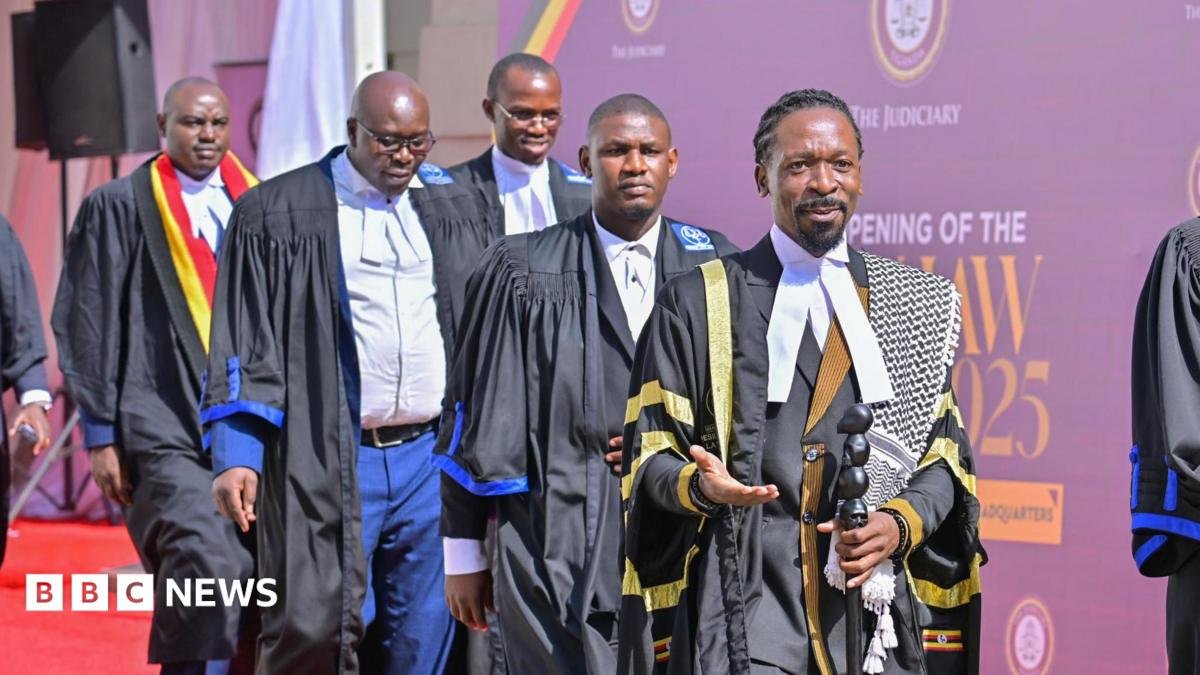
In Uganda, the professional body representing advocates has taken a firm stance against practices that many see as remnants of colonial rule. The Uganda Law Society directed its members to cease using titles such as "My Lord" and "My Lady" when addressing judges and magistrates. It also instructed lawyers to stop bowing before judicial officers. These steps form part of an effort to reshape how justice is experienced by ordinary citizens in a country that gained independence more than six decades ago.
The Directive and Its Stated Reasons
The Uganda Law Society described the honorifics and physical gestures as feudal and colonial in nature. According to the society's statement, such customs place judicial officers above the citizens who ultimately employ them through the state. The organisation argued that these inherited forms of address and deference have contributed to a sense of distance between the courts and the people they serve. In place of the old titles, the society recommended straightforward forms such as "Mr Justice," "Madam Justice," or simply the surname of the judicial officer where suitable. It further directed that advocates and litigants stand upright and speak as free citizens rather than adopting postures of subservience.
The statement was signed by the society's president, Isaac Ssemakadde. It framed the changes as necessary reforms aimed at decolonising justice and restoring dignity. The Uganda Law Society represents advocates across the country and positions itself as the voice of the legal profession in these matters.
Judiciary Response and Institutional Boundaries
The judiciary has made clear that it does not accept direction from the lawyers' association on questions of courtroom conduct. Judiciary spokesperson James Ereemye stated that the Uganda Law Society lacks authority to instruct judges on what to do or say. He indicated that the courts would continue to require the established standards of decorum from lawyers appearing before them. Ereemye described the society as a section of younger members who had not fully grasped principles of agenda setting in institutional management.
This exchange highlights the separation between the professional body for advocates and the independent judicial arm of government. While the Uganda Law Society can guide its own members, the judiciary maintains that courtroom procedures remain within its own domain. The disagreement reflects ongoing tensions about who holds the power to shape daily practices inside Ugandan courtrooms.
Similar Conversations Across the Continent
Uganda is not alone in examining these inherited customs. Across Africa, lawyers and judges have questioned whether wigs, robes, elaborate titles, and formal gestures still suit modern judicial systems. In 2011, Kenya's then-Chief Justice Willy Mutunga openly criticised the traditional dress code for judges and chose to take his oath of office wearing a suit instead. Comparable discussions have taken place in Zimbabwe, Malawi, and Ghana, where practitioners argue that certain colonial-era elements create unnecessary barriers between citizens and the courts.
These debates often centre on the same core concern: whether practices brought from European legal systems continue to serve the societies that inherited them. In each country the conversation touches on questions of dignity, accessibility, and the relationship between the legal profession and the wider public.
Senegal's Own Colonial Legal Inheritance
Senegal, like Uganda, carries the imprint of a European colonial legal system, though the French civil-law tradition differs in important ways from the English common-law model. Senegal's courts still operate within a framework shaped during the colonial period, complete with formal procedures and titles that reflect French judicial culture. While the specific honorifics differ, the underlying question of how much deference citizens owe to judicial officers remains relevant in Dakar as it does in Kampala.
Many Senegalese lawyers and citizens have long noted that the formal atmosphere of the courts can feel distant from everyday life. The French colonial legacy emphasised hierarchy and written procedure, creating a system in which judges occupy an elevated position reinforced by language and ritual. Efforts to make justice more approachable in Senegal have focused on language use in court, the training of judicial officers in local realities, and greater attention to how ordinary people experience legal proceedings. These initiatives parallel the Ugandan discussion, even though the precise titles and gestures differ between the two legal families.
Pan-African Questions of Dignity and Reform
The exchange in Uganda forms part of a wider African reflection on what independence truly means for institutions that were designed under colonial rule. Legal professionals across the continent continue to weigh the value of inherited forms against the need for systems that feel owned by the people they serve. In both common-law and civil-law settings, the conversation returns to the same themes: accessibility, respect, and the removal of unnecessary symbols of hierarchy.
For Senegal, the Ugandan directive offers a reminder that reform efforts need not follow a single script. Each country must decide which elements of its colonial legal inheritance strengthen justice and which ones hinder it. The goal in both places remains the same: courts that command respect through fairness rather than through inherited ceremony. As these discussions continue, they contribute to a shared African project of shaping judicial systems that reflect local values while upholding the rule of law.
By Amara Diop, Staff WriterThis article was produced with AI-assisted research and editorial support. Reporting is based on sources cited in the article.
What's Your Reaction?
 Like
0
Like
0
 Dislike
0
Dislike
0
 Love
0
Love
0
 Funny
0
Funny
0
 Wow
0
Wow
0
 Sad
0
Sad
0
 Angry
0
Angry
0

West Africa/Sahel Correspondent at Global1.News. Dakar-based journalist covering politics, security, climate, and development across Francophone and Anglophone West Africa. Tells the stories of a region undergoing profound transformation.














Comments (0)