
Teodoro: Philippines Needs 4% of GDP for Defense vs China
Teodoro's Call for Stronger Defense Spending Resonates Across Communities Defense Secretary Gilberto Teodoro Jr. has urged the government to raise defense spending to as much as 4 percent of GDP, a step he says is essential to counter Chinese aggression and safeguard the Philippines' maritime rights. Speaking at a Stratbase Institute forum, Teodoro stressed that the country mus
Teodoro's Call for Stronger Defense Spending Resonates Across Communities
Defense Secretary Gilberto Teodoro Jr. has urged the government to raise defense spending to as much as 4 percent of GDP, a step he says is essential to counter Chinese aggression and safeguard the Philippines' maritime rights. Speaking at a Stratbase Institute forum, Teodoro stressed that the country must realign its priorities because the budget is finite and more for defense means less for other areas. This proposal comes as the nation marks the 10th anniversary of the 2016 arbitral ruling that invalidated China's sweeping claims in the South China Sea. The current Department of National Defense budget stands at P305.87 billion, representing roughly 1.3 to 1.4 percent of GDP when pensions and related items are included. At 2 percent of the country's roughly P31-trillion economy, annual defense spending would reach P620 billion; at 4 percent it would climb to P1.2 trillion. Teodoro made clear that these increases are not optional but required for credible deterrence.
For ordinary Filipinos, especially those in coastal towns and fishing villages, this call carries deep meaning. Families who rely on the sea for their livelihood understand that stronger defense could mean safer waters for their boats and a firmer stand against intrusions that disrupt daily catches. In communities from Batanes to Tawi-Tawi, fishers have watched foreign vessels encroach on traditional grounds, sometimes forcing them to return with empty nets or damaged equipment. Teodoro noted that the Philippines currently spends about 1.3 to 1.4 percent of GDP on defense, with the Department of National Defense budget at P305.87 billion this year. Raising it to 4 percent of the roughly P31-trillion economy would bring spending to around P1.2 trillion annually. Such a shift would allow more patrol vessels, better surveillance systems, and sustained presence that directly protects the daily income of thousands of households.
Remembering the 2016 Arbitral Ruling and Its Enduring Relevance
The forum where Teodoro spoke celebrated the 10th anniversary of Manila's arbitral win over Beijing, handed down in The Hague on July 12, 2016. Teodoro described the ruling as already beyond debate and part of the country's legal arsenal. He expressed confidence that Filipinos have embraced it and that no future leader could easily abandon it without losing public support. The decision affirmed the Philippines' exclusive economic zone and rejected China's nine-dash line, giving coastal communities legal grounding to assert their rights over waters that have sustained generations of fishers and traders.
In many households across the archipelago, the ruling remains a source of quiet pride. Grandparents tell stories to children about standing up for what is right, while workers in ports and markets see it as protection for the resources that sustain their jobs. The ruling's potency was evident in this year's Balikatan exercises, which drew more than 17,000 troops from seven countries, the largest in the drills' history. These joint operations demonstrated how the 2016 decision continues to anchor broader international cooperation, from logistics support to shared maritime awareness that benefits fishing communities and coastal economies alike.
Facing the P1.66-Trillion Deficit and Necessary Trade-Offs
Teodoro acknowledged that increasing defense funds would force cuts elsewhere because the budget is a finite item. The Philippines is already dealing with a P1.66-trillion budget deficit this year, and economic growth targets for 2026 have been downgraded to 3.5 to 4.5 percent. He left the question of sourcing additional funds to others but insisted that ramping up to 2, 3, or even 4 percent of GDP is necessary. These numbers reflect a difficult reality: every additional peso allocated to defense must come from somewhere, whether education infrastructure, health services, or road networks that connect rural markets to cities.
These fiscal pressures touch every Filipino family. Students may see slower improvements in school facilities, while farmers and jeepney drivers could face continued challenges in accessing better roads or support programs. A mother in a provincial town waiting for a new health center or a student hoping for upgraded classrooms understands that defense increases carry immediate opportunity costs. Teodoro warned that deterrence needs actual spending and may require lessening some public entitlements to build a credible and resilient force. He called resistance to this shift the worst enemy in the journey toward a credible deterrent posture, emphasizing that the choice is between short-term comfort and long-term security for the same communities.
How Increased Defense Funding Would Touch Everyday Filipino Lives
Imagine a fishing community in Palawan where fathers and sons head out before dawn. Greater defense resources could translate into better patrol presence that protects their traditional fishing grounds from foreign vessels. Mothers selling fish in the market would feel more secure knowing their sons return safely each evening. This human side of the budget debate shows why Teodoro's proposal matters beyond numbers. When patrol boats can respond faster and surveillance covers wider areas, families avoid the economic losses that come from lost catches or damaged gear, preserving the modest but steady income that supports children's schooling and daily meals.
Workers in industries affected by cartelization in certain commodities would also benefit from stronger internal resilience. Teodoro pointed out that entities identified with the People's Republic of China have captured parts of critical infrastructure and retail trade, creating barriers for legitimate businesses. Families running small stores or trying to start enterprises would gain from a more level playing field that supports broader economic growth. In markets from Cebu to Davao, vendors have felt the squeeze of concentrated control over supply chains; reversing that trend through better oversight would open opportunities for micro-entrepreneurs and keep prices more stable for ordinary households.
Internal Security Remains Vital Alongside External Defense
Teodoro emphasized that the military's shift to external defense cannot be total because internal security stays a principal responsibility of the Armed Forces of the Philippines. If the country is not resilient internally on peace and order or national security, external initiatives become compromised. This balance matters to communities dealing with local issues while also facing broader regional tensions. Peace and order at the barangay level directly affects whether farmers can bring produce to market or whether small businesses can operate without fear of extortion.
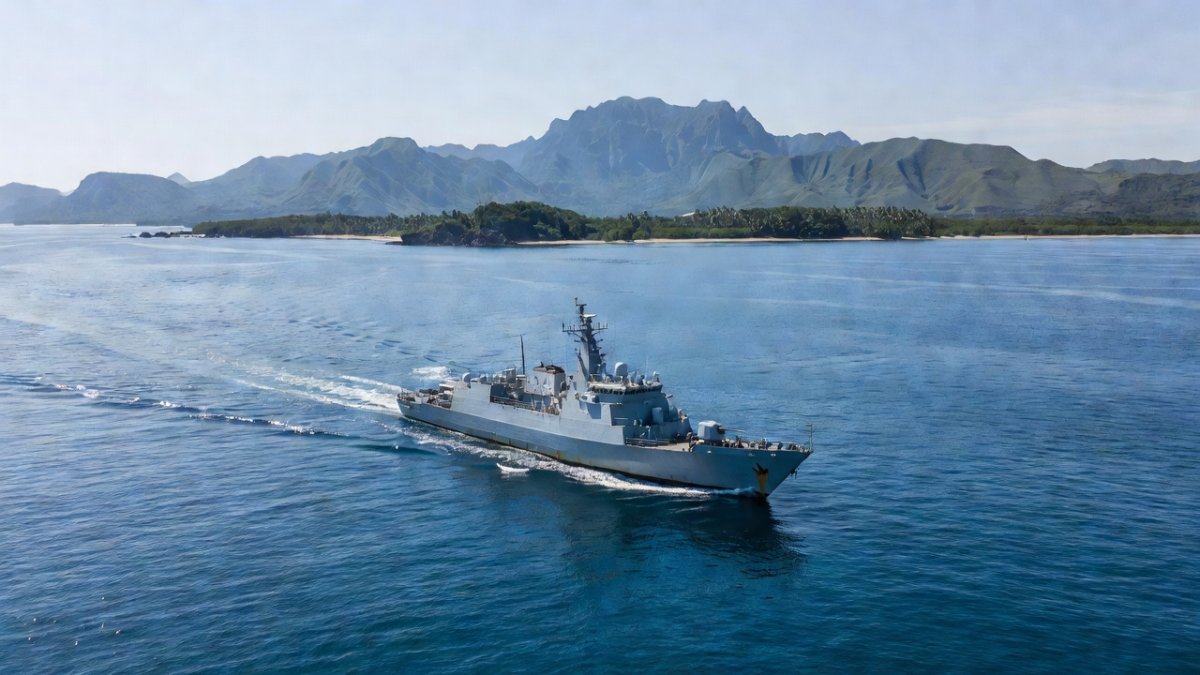
Neighbors like Indonesia are already moving defense spending toward 5 percent of GDP, recently acquiring 47 advanced Rafale fighter jets. The Philippines, by contrast, has long relied on alliances. New access agreements with Japan, New Zealand, Canada, and France build on the long-standing mutual defense treaty with the United States. Japan is transferring five Abukuma-class destroyer escorts at no purchase cost, though the Philippines will cover sailing, training, and berthing expenses that Teodoro noted are decades overdue. These partnerships multiply the effect of every peso spent while still requiring the country to shoulder meaningful operational costs that strengthen sovereignty rather than dependence.
Public Support and the Road Ahead for Philippine Security
Teodoro argued that a public unwilling to shoulder the cost of stronger defense could doom the country's transition. He framed this as a free-rider problem that communities must confront together. For students, workers, and families across the nation, the discussion is about shared responsibility in protecting the homeland they love. The 2016 ruling continues to serve as a foundation that ordinary Filipinos embrace. As the country weighs these budget decisions amid tight finances, the focus remains on how real people in fishing villages, markets, and farms experience the outcomes.
Looking ahead, the path requires honest conversations in every household about what security truly costs. A fisher in Palawan who gains safer waters, a vendor in Manila who sees fairer competition, and a student in the provinces who eventually benefits from a stable economy all stand to gain when defense spending matches the threats the nation faces. Teodoro's message underscores that building credible defense requires both commitment and concrete resources that ultimately safeguard the daily lives of all Filipinos. The choice before the country is whether to invest now in protecting what matters most or to accept greater vulnerability that future generations will inherit.
Comparative Defense Modernization Across ASEAN
Vietnam has steadily increased its defense budget to around 2.3 percent of GDP, focusing on submarine acquisitions and coastal radar networks to protect its own claims in the South China Sea. Malaysia recently committed to modernizing its air force with new fighter jets while maintaining spending near 1.5 percent of GDP, emphasizing joint patrols with neighbors. Indonesia stands out by pushing defense allocations toward 5 percent of GDP, highlighted by its purchase of 47 Rafale fighters and plans for indigenous frigate construction. These moves show how ASEAN peers balance external threats with domestic industrial growth, offering lessons for Manila on building local shipbuilding capacity alongside imported platforms.
Economic Trade-Offs of Reaching P1.2 Trillion in Defense Spending
Allocating P1.2 trillion to defense could fund 20 new offshore patrol vessels, expanded submarine facilities, and nationwide surveillance drones, yet it would require trimming roughly P200 billion from education infrastructure, P150 billion from health programs, and P100 billion from road and bridge projects. Such cuts might delay 5,000 new classrooms and slow construction of 300 rural health units, directly affecting families in provinces where access to basic services remains limited. The trade-off underscores the need for phased implementation that protects social spending while meeting security imperatives.
Stories from Fishing Communities at Scarborough Shoal and Palawan
In the waters near Scarborough Shoal, veteran fisherman Mang Pedro from Masinloc recounts how Chinese coast guard vessels blocked his banca three times last year, forcing him to abandon nets worth P15,000. In Palawan’s Honda Bay, mother-of-three Aling Rosa describes watching her husband’s catch drop by half after repeated harassment, leaving their children’s school fees unpaid. Stronger naval presence funded by higher defense budgets could restore their daily hauls and protect generational fishing grounds that feed entire barangays.
Cartelization’s Burden on Sari-Sari Stores and Local Entrepreneurs
Small sari-sari store owners in Cebu and Davao report paying inflated wholesale prices for imported goods controlled by firms linked to foreign interests, squeezing already thin margins. Local entrepreneurs trying to launch food delivery services or hardware shops face supply chain barriers that favor large players. Greater internal security and regulatory oversight tied to defense resilience could dismantle these monopolies, allowing micro-businesses to thrive and stabilize prices for everyday consumers.
Japan Destroyer Transfer and Gains for Filipino Shipyard Workers
The transfer of five Abukuma-class destroyer escorts from Japan involves no acquisition cost but requires Philippine investment in berthing facilities at Subic and Cavite. These upgrades would create hundreds of skilled jobs for welders, electricians, and marine engineers at local shipyards, transferring technology that strengthens domestic repair capabilities for years to come.
Implications for the 2028 Elections and West Philippine Sea Policy
Teodoro’s push for sustained high defense spending could become a defining campaign issue in 2028, with candidates forced to clarify whether they will maintain or dilute the 2016 ruling’s enforcement. A 4 percent GDP commitment would lock future administrations into long-term procurement contracts and alliance deepening, shaping West Philippine Sea policy around credible presence rather than episodic responses. Voters in coastal provinces may weigh these promises against immediate social needs when casting ballots.
Stability in the West Philippine Sea and Its Effect on OFWs
Overseas Filipino workers in Singapore, Malaysia, and Brunei rely on secure sea lanes for remittances that total billions annually. Heightened tensions disrupt shipping schedules and raise insurance costs for vessels carrying OFW families’ earnings. Sustained defense modernization would reduce these risks, ensuring uninterrupted income flows that support households back home and maintain the Philippines’ position as a reliable labor source in the region. By Bella Reyes, Staff Writer
This article was produced with AI-assisted research and editorial support. Reporting is based on sources cited in the article.
What's Your Reaction?
 Like
0
Like
0
 Dislike
0
Dislike
0
 Love
0
Love
0
 Funny
0
Funny
0
 Wow
0
Wow
0
 Sad
0
Sad
0
 Angry
0
Angry
0

Philippines/Southeast Asia Correspondent at Global1.News. Manila-based journalist covering Philippine politics, environment, maritime security, and social issues. Passionate about marine conservation and the communities protecting the Philippines' natural heritage.













Comments (0)