
Venezuela Earthquakes: One Month, Families Still Searching
The worst day in Victor Calderón’s life began with a radio crackle somewhere off the coast of Venezuela. For 18 days, the 49-year-old fisherman had been at sea, isolated from the news that was about to shatter his world.
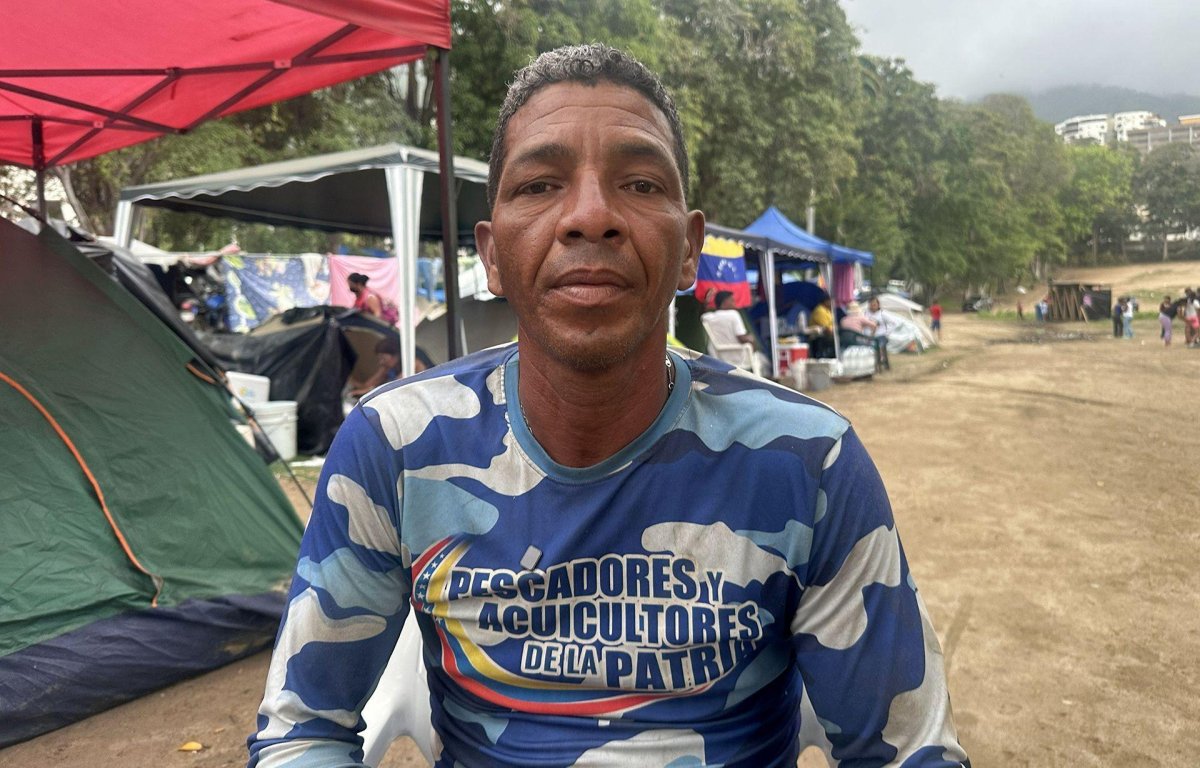
The worst day in Victor Calderón’s life began with a radio crackle somewhere off the coast of Venezuela. For 18 days, the 49-year-old fisherman had been at sea, isolated from the news that was about to shatter his world. When he finally learned what had happened—that the twin earthquakes had struck the northern coastline with devastating force—he was told the building where his entire family lived had collapsed. By the time he returned to shore, 26 members of his family were gone. Sisters, nieces, nephews, grandchildren, his stepfather, nine cousins. The youngest was two years old. The oldest was in his late 70s. Victor’s family had lived in a public housing complex known as OPPE 26, in the town of Caraballeda, La Guaira state. That complex has become the epicenter of a human tragedy that, one month later, still has no end in sight.
Caracas, Venezuela — Article continues...
Ground Zero: The Collapse of OPPE 26
Caraballeda is a coastal town that once symbolized modest progress for working-class Venezuelans. Today, it is a graveyard of twisted rebar and pulverized concrete. The OPPE 26 housing complex, where Victor’s family lived, was a cluster of 12 residential blocks. Ten of them collapsed entirely during the twin quakes that struck within hours of each other one month ago. The scale of the destruction is difficult to comprehend. More than 5,300 people have been confirmed dead, according to government tallies updated almost daily. Another 16,500 were injured. The government has not released an official count of the missing, but independent estimates place the number in the tens of thousands.
As the afternoon sun went down at OPPE 26 this week, rescue workers pulled three more bodies from beneath the rubble. Among them was an 11-year-old girl. Her father, heaving deep sobs, had spent an entire month searching for her. His desperate hunt had finally ended, but not in the way he had hoped. Across the complex, similar scenes play out daily. Families sift through debris with bare hands, hoping for closure that remains elusive.
A Fisherman’s Grief and a Nation’s Questions
Victor Calderón’s daughter and granddaughter survived the quakes. They now live in a tent on a golf course, a surreal refuge for a family reduced from dozens to a handful. Victor himself is still processing the loss of 26 relatives in a single day. “I was at sea,” he told reporters. “I couldn’t even say goodbye.” His story is not unique. Across La Guaira state and the broader northern coastline, entire extended families have been wiped out. The human toll is measured not just in numbers but in the silence of homes that will never again hear children’s laughter.
But alongside the grief, a deeper question has taken root: how could this have happened? Almost everyone at the Caraballeda housing complex asks the same thing. How could ten of 12 buildings collapse in a single event? Were the building plans flawed? Were corners cut? Were inadequate materials used? Is there evidence of negligence? These questions are not abstract. They are the raw, angry demands of people who lost everything and want to know who is responsible.
Government Denials and the Minister’s Defense
Public Works Minister Juan José Ramírez has insisted the buildings were sound. In public statements, he argued that no nation could have coped with the sheer scale of the disaster. “This wasn’t one but two almost simultaneous earthquakes, both moving in different directions,” he said. “All around us you can see both public and private buildings were brought down.” The minister’s defense is technically accurate—the twin quakes were unprecedented in their intensity and proximity. But for the families of the dead, that explanation rings hollow. They point to the fact that many private buildings in the same area remained standing, while entire public housing blocks turned into tombs.
The question of accountability is now central to the national conversation. Venezuela has a long history of corruption in public works, and many suspect that the OPPE 26 complex was built with substandard materials or flawed engineering. Without a transparent investigation, those suspicions will only deepen. The government has not announced any independent inquiry into the collapses, and international forensic teams that could have helped have largely left the country.
The Delcy Rodríguez Administration and the Reconstruction Challenge
This week, the government of acting president Delcy Rodríguez donated 200 homes to affected families. It is a gesture that, while welcome, barely scratches the surface. The overall need may be 100 times higher—potentially 20,000 homes or more. Reconstruction will take years and billions of dollars in investment. The World Bank has estimated that the twin quakes caused $19.6 billion in damage, a staggering sum for a country already in economic freefall.
Rodríguez was sworn in as acting president in January, days after US forces seized Venezuelan leader Nicolás Maduro and took him to New York to stand trial on charges of narcoterrorism. While she has the backing of the Trump administration, the reality is that Washington controls Venezuela’s oil industry—the main source of revenue for any reconstruction effort. It remains far from clear how the rebuild will unfold. Will US-controlled oil revenues be redirected to humanitarian aid? Or will they be used to service debt and political priorities? The uncertainty is paralyzing for a government that needs to act quickly.
Rescue and Despair: The Story of Hernán Gil and Laura Barrios
Amid the devastation, there have been moments of improbable hope. At one of the pancaked private buildings in the coastal town of Catia La Mar, an unlikely rescue took place eight days after the earthquakes struck. From beneath the concrete slabs, a security guard named Hernán Gil was pulled out alive from an underground car park. His survival was a miracle, a brief flicker of light in an otherwise dark month.
But for every Hernán Gil, there are dozens of families still waiting. Laura Barrios continues to search in the same building for her brother-in-law, whose body remains trapped in the same subterranean car park. “The other day was the Day of the Child in Venezuela,” Laura sobs. “But we have no children to celebrate. Ours are gone.” Her words capture the essence of this tragedy: a nation that once celebrated its children now mourns them in silence.
Infrastructure Vulnerability Across Latin America
The Venezuelan earthquakes are not an isolated event. They are a warning for the entire region. Across Latin America, rapid urbanization, weak building codes, and corruption in public works have created a ticking time bomb. From Mexico City to Lima to Santiago, millions of people live in housing that may not survive the next major quake. The OPPE 26 complex is a case study in what happens when infrastructure is built without accountability.
The twin quakes have exposed a systemic failure that goes beyond Venezuela’s political crisis. They have revealed the vulnerability of public housing projects across the continent, many of which were built during periods of economic boom with little oversight. The question now is whether governments will learn from this disaster or wait for the next one to strike. For the families of Caraballeda and Catia La Mar, the answer cannot come soon enough.
A Long Road Ahead
One month after the earthquakes, the search for loved ones continues. The international crews that came to help have mostly left, leaving families to dig through rubble on their own. The resentment is palpable. The government has promised accountability, but no independent investigation has been announced. The reconstruction will require billions of dollars, but the funding is tied to US-controlled oil revenues. And the people—the fishermen, the mothers, the children—are left waiting.
Victor Calderón still goes to the golf course tent where his daughter and granddaughter live. He looks out at the sea that once provided his livelihood and now reminds him of everything he lost. “I don’t know what comes next,” he says. “But I know we cannot rebuild if we do not first know the truth.”
By Elena Vasquez, Staff Writer
This article was produced with AI-assisted research and editorial support. Reporting is based on sources cited in the article.
What's Your Reaction?
 Like
0
Like
0
 Dislike
0
Dislike
0
 Love
0
Love
0
 Funny
0
Funny
0
 Wow
0
Wow
0
 Sad
0
Sad
0
 Angry
0
Angry
0

Latin America Correspondent at Global1.News. Based in Mexico City, covering politics, economics, energy, and culture across the region. Brings an on-the-ground perspective to stories spanning from the Rio Grande to Patagonia.












Comments (0)