
Nvidia Has to Guarantee OpenAI's $500 Billion Loan Because the Banks Said No
Nvidia is in talks to guarantee $250 billion of OpenAI's $500 billion Ohio data center because conventional lenders won't fund it. When the chip supplier becomes the bank, the AI infrastructure financing model has hit its limits. Here's what it means for independent hosting providers.
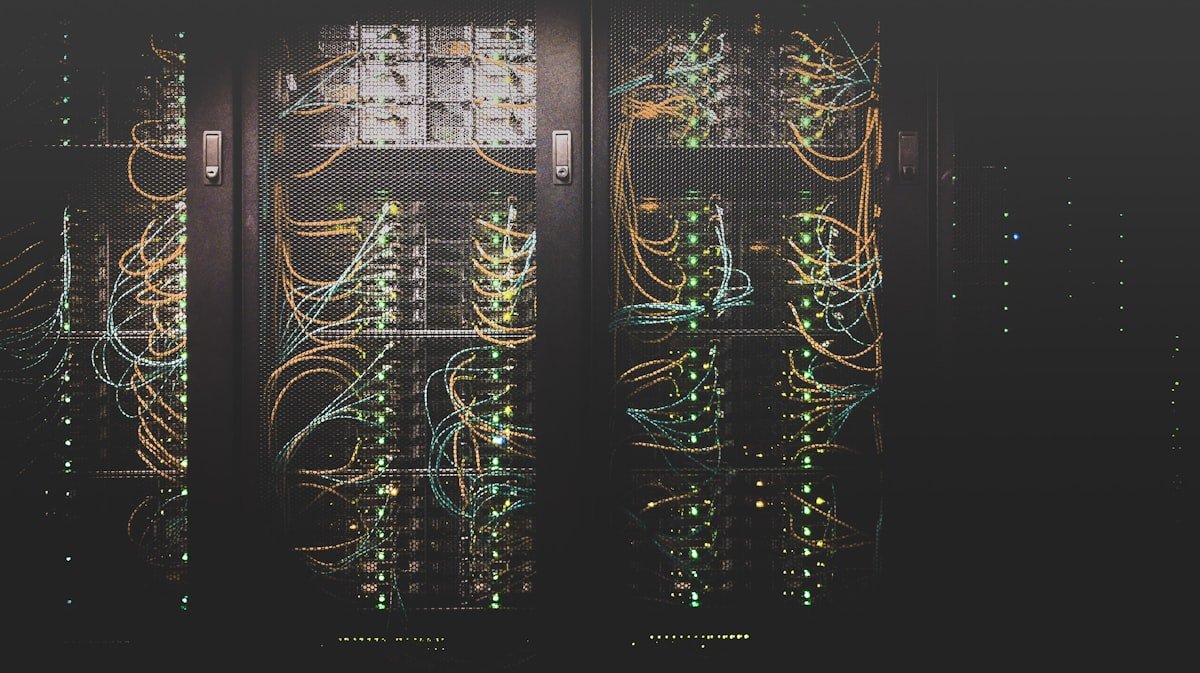
Nvidia Has to Guarantee OpenAI's $500 Billion Loan Because the Banks Said No
Let me tell you something that's been sitting wrong with me since Sunday. Nvidia — the GPU company — is in talks to guarantee $250 billion of financing for OpenAI's Ohio data center. Not lend. Guarantee. As in, if OpenAI defaults, Nvidia pays the bank.
I've been running hosting infrastructure for over a decade. I've seen a lot of creative financing in this industry. But this one is different. When the chip supplier has to backstop the customer's construction loan, it's not a sign of strength — it's a sign that the conventional debt markets already took a look at this $500 billion project and said "no thanks."
Let me unpack what's actually happening here, because the headlines are spinning it as a sign of AI's unstoppable momentum. I read it differently.
The Deal That Shouldn't Exist — Nvidia Becomes OpenAI's Credit Card
Here's what we know. OpenAI wants to build a massive data center campus in Pike County, southern Ohio — roughly 10 gigawatts of power capacity when fully built out. First phase around 2028 at roughly 800 megawatts. Total cost could exceed $500 billion including the chips.
The power is being developed by SB Energy — SoftBank's US energy subsidiary — on or near federal land at the Portsmouth Site. The power itself is described as "government-controlled" and funded separately by Japan under a recent trade deal. Commerce Secretary Howard Lutnick is personally involved in deciding who gets access to that power.
And Nvidia? Nvidia is reportedly in talks to guarantee roughly $250 billion of the financing. That means Nvidia's balance sheet — not OpenAI's, not a traditional bank's — is what makes this project bankable. Nvidia has already invested $30 billion in OpenAI, for context.
The Wall Street Journal broke this on July 26. CNBC confirmed it. Reuters confirmed it. The numbers are real, the talks are ongoing, and the implications are enormous for anyone who runs actual infrastructure.
Why Conventional Lenders Are Hesitant — This Is the Story Nobody's Telling
When a project needs a chip vendor to guarantee the lease, it tells you something about how traditional lenders view the risk. And here's the thing — I don't blame them.
OpenAI is not a profitable company. It's not even close. Despite generating billions in revenue, the organization burns through cash at a staggering rate — mostly on compute costs. The entire business model depends on either (a) achieving AGI before the money runs out, or (b) raising more capital at ever-larger valuations.
That's not a criticism. That's the structure of the AI industry right now. But it's not the kind of credit profile that makes commercial loan officers comfortable with a $500 billion construction project.
So Nvidia steps in. Nvidia has the balance sheet — $193.7 billion in data center revenue in fiscal 2026 alone. Nvidia also has the incentive — every data center OpenAI builds will be filled with Nvidia GPUs. If OpenAI can't build, Nvidia can't sell.
The backstop reportedly covers the lease and construction debt, not the chips themselves. But Nvidia is also separately discussing financing OpenAI's chip purchases for the project — a deal that could total as much as $350 billion.
Let that sink in. The GPU company is now also the bank. The chip maker is now the credit department. The line between hardware vendor and financial guarantor has completely disappeared.
The NYT Dropped a Related Bomb — 20 Million AI Chips Today, 200 Million by 2028
On the same day the Dow was dropping 1,100 points, the New York Times published a piece that should scare every hosting provider reading this. They report that there are roughly 20 million AI chips in data centers worldwide today. That figure is expected to double every nine months, putting the world on pace for 200 million chips by the end of 2028 — a tenfold increase.
The NYT compares the current moment to building the railroads in the 1800s, FDR's New Deal, and the Manhattan Project. In scale, they're not wrong. But those earlier projects were funded by government treasuries and public bonds, not by a single chip company's balance sheet.
Twenty million chips today. Two hundred million in two and a half years. That's not a growth curve — that's a hockey stick that requires a fundamental rethinking of how power, cooling, and financing all work together. And right now, the financing piece is looking like the weakest link.
Meanwhile, the Market Just Sent a Message — Dow Drops 1,153 Points in One Day
July 29 was not a good day for Wall Street. The Dow Jones Industrial Average dropped 1,153 points — 2.2% — its worst single-day decline in over a year. The Nasdaq fell 1.7%, putting it 9.8% below its all-time high from last month. The S&P 500 finished at -1.52%.
Oil surged 7.2% to $84.90 a barrel on the escalating Iran conflict — day six of strikes with no resolution in sight. The Federal Reserve voted 9-3 to hold rates steady at 3.5% to 3.75%, but three officials wanted to hike — a hawkish split that spooked markets further.
And here's the piece that connects directly to our story: Nvidia stock fell. The AI trade, which has been the market's only sure bet for two years, suddenly looks vulnerable. When the market starts questioning whether $500 billion data centers make financial sense, the entire AI infrastructure thesis wobbles.
TheStreet's coverage explicitly noted "Nvidia Stock Falls as OpenAI Data Center Plans Raise AI Spending Questions." That's the headline. The market is looking at the Nvidia-OpenAI backstop and asking: if this deal needs Nvidia's guarantee, what does that say about the other $700 billion in AI capex companies are planning?
The Structural Reality — When the Chip Company Is Also the Bank
Here's what I see as someone who's been on the operational side of this industry for a decade. The AI infrastructure buildout is facing a financing crisis that nobody wants to name.
The hyperscalers — Google, Microsoft, Amazon, Meta — have balance sheets that can absorb hundreds of billions in capex. We've seen it. Google raised its 2026 capex to $195-205 billion in its Q2 earnings. Supermicro reported a $60 billion backlog. The building is happening.
But for everyone else — including OpenAI, which is the most visible AI company in the world — conventional financing is hitting its limit. The Nvidia backstop is a canary in the coal mine. If OpenAI can't get a $500 billion campus financed without Nvidia's guarantee, what does that mean for the dozens of smaller AI companies trying to build their own infrastructure?
It means the buildout is bifurcating. The hyperscalers with AAA-rated balance sheets will keep building. But the AI-native companies — the ones driving the actual innovation — will increasingly depend on creative financing structures, government power allocations, and vendor-backed guarantees. That's not a stable foundation for a $700 billion annual capex cycle.
The Nvidia backstop is also a massive concentration of risk. One company is now simultaneously the dominant GPU supplier AND the financial guarantor for its largest customer's infrastructure. That's not diversification. That's a single point of failure with a $250 billion price tag.
What This Actually Means for Independent Hosting Providers
I don't write these articles to scare you. I write them because understanding what's happening at the top of the market tells you where the opportunities and risks are at our level.
First — watch the financing, not just the headlines. When you see "$500 billion data center," ask who's paying for it. If the answer is "the chip vendor is guaranteeing the loan," that project is not the same as a Google or AWS buildout. Treat hyperscaler projects and vendor-backed projects differently in your capacity planning.
Second — the cooling cycle I wrote about last week is accelerating. When Nvidia has to guarantee OpenAI's construction debt, it means the overbuild correction is already underway for non-hyperscaler AI infrastructure. The conventional debt markets are tightening. Projects that can't get traditional financing will either get cancelled or require increasingly creative structures. That's a signal to be cautious about betting your business on unlimited AI demand growth.
Third — position as the alternative. If AI-native companies can't get cheap financing for their own infrastructure, they'll rent. They'll colo. They'll buy compute from hyperscalers and independent providers. That's an opportunity for us. The hosting providers who have existing capacity, real relationships, and sane pricing will be the beneficiaries when the construction financing window closes.
Fourth — watch the Japan-funded power angle. The fact that Japan is funding the power infrastructure for this Ohio campus under a trade deal is a geopolitical signal I'm still unpacking. Government-controlled power allocation is a new variable in data center economics. If the US government is deciding which AI companies get access to cheap power, the competitive landscape shifts in ways we haven't modeled yet.
The Bottom Line
Nvidia guaranteeing OpenAI's construction loans is not a sign that AI infrastructure is unstoppable. It's a sign that the financing model has reached its limits for everyone except the AAA-rated hyperscalers. When the GPU vendor has to become the bank, the party is not getting started — it's getting restructured.
The AI buildout is real. The chips are real. The demand is real. But the financing is showing cracks, and cracks in the financial layer propagate faster than cracks in the physical layer. If you're running a hosting business, plan for a world where construction financing tightens, vendor-backed guarantees become more common, and the hyperscalers pull further ahead while everyone else rents.
That's the reality of July 2026. The chip company is now the bank. Plan accordingly.
— Allan Ali, Founder
This article was produced with AI-assisted research and editorial support. Reporting is based on sources cited in the article.
What's Your Reaction?
 Like
0
Like
0
 Dislike
0
Dislike
0
 Love
0
Love
0
 Funny
0
Funny
0
 Wow
0
Wow
0
 Sad
0
Sad
0
 Angry
0
Angry
0

Publisher of Global1.News. Automation architect, systems builder, and the guy making sure the truth gets published.













Comments (0)