
Ford Met Rogers CEO at Home Over Ticket Resale Law
Ford Received Home Visit from Rogers CEO to Discuss Ticket Legislation Premier Doug Ford received a personal visit from Rogers Communications CEO Tony Staffieri at his Etobicoke home just days after the Ontario government introduced legislation to cap ticket resale prices, raising questions about the influence of corporate lobbying on provincial policy. The hour-long Sunday meeting, which also included Minister of Public and Business Service Delivery Stephen Crawford, has become a flashpoint ...
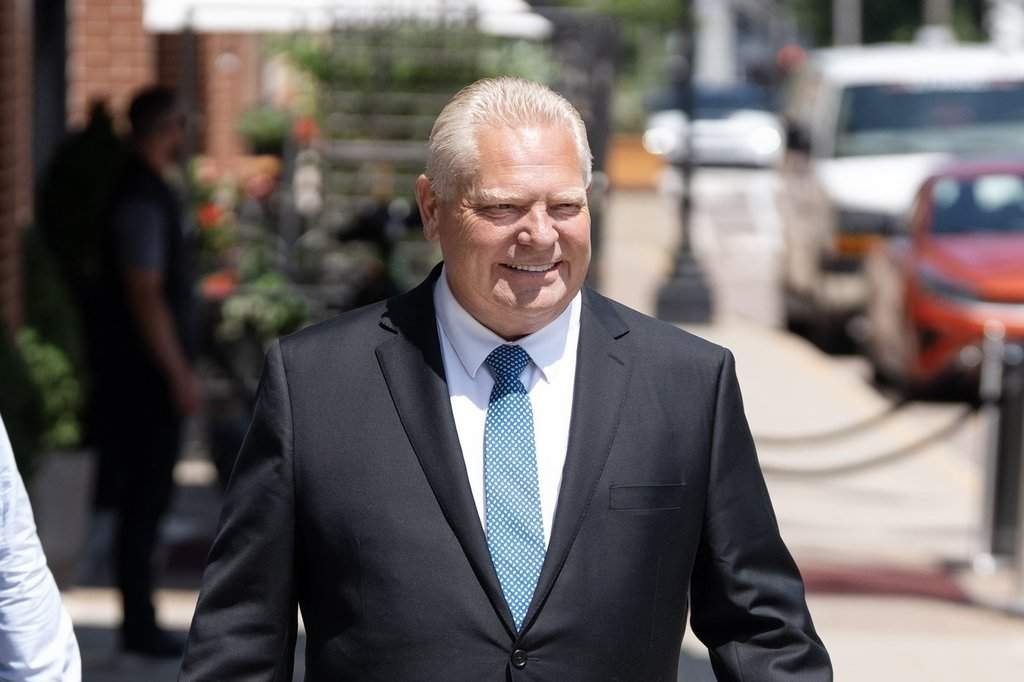
Ford Received Home Visit from Rogers CEO to Discuss Ticket Legislation
Premier Doug Ford received a personal visit from Rogers Communications CEO Tony Staffieri at his Etobicoke home just days after the Ontario government introduced legislation to cap ticket resale prices, raising questions about the influence of corporate lobbying on provincial policy. The hour-long Sunday meeting, which also included Minister of Public and Business Service Delivery Stephen Crawford, has become a flashpoint in the debate over who benefits from Ontario's crackdown on ticket scalping.
Tags: Doug Ford, Tony Staffieri, Rogers Communications, Ontario ticket legislation, ticket scalping, Ontario politics, Stephen Crawford, Ford government, season tickets, FIFA World Cup 2026
The Meeting at the Premier's Home
Toronto, Ontario – July 30, 2026 — Premier Doug Ford's itinerary, obtained by Global News through freedom of information laws, reveals that Rogers CEO Tony Staffieri met with Ford and Minister Crawford at the premier's Etobicoke residence on a Sunday. Sources with knowledge of the conversation said the hour-long meeting was partly focused on the government's new ticket legislation, which prevents sellers from listing tickets above face value.
The legislation, introduced as part of the 2026 Ontario budget, was touted by the Ford government as a populist measure to protect consumers. "The rules are clear and so are the consequences: The days of scalpers ripping people off in Ontario are done," Ford declared earlier this year when the bill was tabled.
According to Ontario's Integrity Commissioner, Staffieri registered as a lobbyist on behalf of Rogers Communications for a range of issues intersecting with the provincial government, including "communicating with the Government of Ontario about changes to the Ticket Sales Act."
What the Legislation Does
The ticket resale cap prevents sellers from listing tickets above their original face value, targeting what the province described as predatory scalping practices that priced everyday fans out of major events. The rules came into effect on April 24 when the budget received royal assent, just ahead of Toronto hosting six matches for the 2026 FIFA World Cup.
The government made efforts to educate resale platforms about the new regime. Letters were sent to 27 secondary sellers, including industry giants StubHub and SeatGeek, informing them of the new requirements. In early June, the provincial government took the further step of publicly naming SeatGeek and StubHub in its enforcement actions.
However, despite these measures, tickets on some platforms continued to be sold well above face value. Multiple industry sources told Global News that the legislation has been nearly impossible to enforce, prompting the province to prepare a regulatory overhaul.
Rogers' Stake in the Ticket Market
Rogers Communications owns Ontario's major professional sports teams — the Toronto Maple Leafs, Toronto Raptors, Toronto FC and Toronto Blue Jays — giving the telecommunications giant a significant financial interest in how ticket resale regulations are structured. The company also received $11.7 million in funding from the Ontario government in 2025.
The legislation creates particular challenges for season ticket holders, who purchase seats in bulk at a discounted rate months before a season begins. Under the new law, individuals who sell a portion of their tickets at a profit to subsidise the rest of their season package could face penalties — a practice that has long been common among Maple Leafs and Raptors season seat holders.
Rogers Communications noted in a statement that "season ticket holders are among the most loyal fans," who make a "significant contribution" to the sports ecosystem. "As with many topics that affect our customers, fans and communities, we regularly engage with government and other stakeholders," the company said.
Political Reactions and Criticism
Opposition critics seized on the meeting as evidence of what they describe as the Ford government's closeness to corporate power. NDP MPP Tom Rakocevic said the premier's willingness to meet privately with a telecommunications and sports executive while ignoring the concerns of ordinary fans reveals the government's true priorities.
"The premier is willing to meet with the head of Rogers and not listen to the everyday fans," Rakocevic said. He argued that if season ticket holders want to resell their seats, they should be able to do so at face value without government interference — or alternatively, that the rules should be applied uniformly and not subject to behind-closed-doors negotiations.
The premier's office pushed back against suggestions that the meeting influenced policy, stating that "no changes came as a result of this meeting." Ford's office said he regularly meets with businesses and stakeholders as part of standard government operations.
Enforcement Challenges and Regulatory Overhaul
Months after the legislation was introduced, the bill is now set to undergo significant changes as the province acknowledges enforcement has proven unworkable. Multiple industry sources told Global News that Ford's office has instructed Minister Crawford to prepare new regulations to fix the law, with the specific options still to be determined.
The enforcement challenge is rooted in the complexity of the ticket resale market. While the law formally caps resale prices at face value, monitoring compliance across dozens of platforms and thousands of transactions has overwhelmed the province's enforcement capacity. Some industry sources suggested the legislation was rushed through during the spring at the premier's behest, driven by the political imperative of having a price cap in place before the World Cup arrived in Toronto.
Quebec is watching Ontario's experience closely, as other provinces consider similar measures amid rising public frustration with ticket prices for major sporting and entertainment events.
What This Means for Ontario Sports Fans
For the average Ontario sports fan, the situation remains uncertain. The ticket price cap was sold as a consumer protection measure that would make live events more accessible, but the enforcement gaps and looming regulatory overhaul mean the practical impact has been mixed at best. Some fans report seeing fewer tickets listed on resale platforms, while others say high-value games remain effectively priced beyond reach through informal market arrangements.
Season ticket holders — many of whom have held seats for decades, passing them down through families — face the most direct disruption. The practice of selling a few high-demand games to offset the cost of a full season package has been an unwritten rule of Canadian sports fandom for generations. The legislation now casts this tradition into doubt, and the promised regulatory changes will determine whether these fans can continue their long-standing arrangements.
The Ford government has pledged to strike a balance between protecting consumers and respecting the legitimate interests of season ticket holders. With the regulatory overhaul underway and the World Cup now concluded, the coming months will reveal whether that balance can be achieved — or whether Ontario's experiment with ticket price caps will join the list of well-intentioned consumer policies that proved unworkable in practice.
By Alex Thompson, Staff Writer
This article was produced with AI-assisted research and editorial support. Reporting is based on sources cited in the article.
What's Your Reaction?
 Like
0
Like
0
 Dislike
0
Dislike
0
 Love
0
Love
0
 Funny
0
Funny
0
 Wow
0
Wow
0
 Sad
0
Sad
0
 Angry
0
Angry
0

Canada Correspondent at Global1.News. Based in Toronto, covering Canadian politics, energy, trade, and US-Canada relations. Provides the Canadian perspective on North American and global affairs.












Comments (0)