
Fire Thunderstorms Hit Europe — Latin America Knows the Danger
**Keywords:** wildfire, pyrocumulonimbus, Amazon, Pantanal, climate change, France, Brazil, deforestation, fire thunderstorm, Latin America, Gironde, INPE, El Niño When a wildfire grows powerful enough to create its own thunderstorm, the line between earth and sky blurs.
When a wildfire grows powerful enough to create its own thunderstorm, the line between earth and sky blurs. In late July 2026, that's exactly what happened in southwestern France, where the Gironde department's raging blaze — already 42,000 hectares and growing — generated the country's first recorded pyrocumulonimbus, a fire-born thunderstorm that turned the inferno into a self-sustaining meteorological monster. For Latin America, where the Amazon and Pantanal have witnessed this phenomenon during their own catastrophic fire seasons, Europe's fire storm is both a warning and a mirror.
When Fire Creates Its Own Sky — Europe's Pyrocumulonimbus and Latin America's Fire Cloud Crisis
Brasília, Brazil — July 30, 2026 — As France battles its most extreme wildfire event in modern history, the appearance of a pyrocumulonimbus cloud over the Gironde region signals a troubling new chapter in the climate crisis — one that Latin America knows all too well.
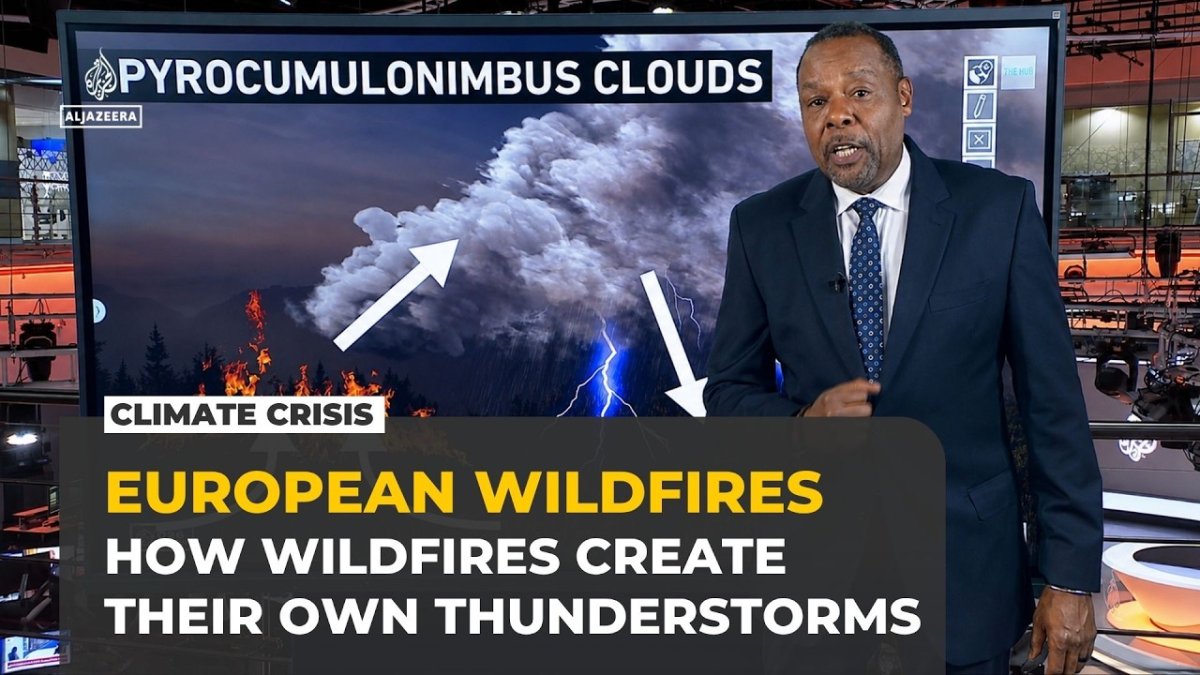
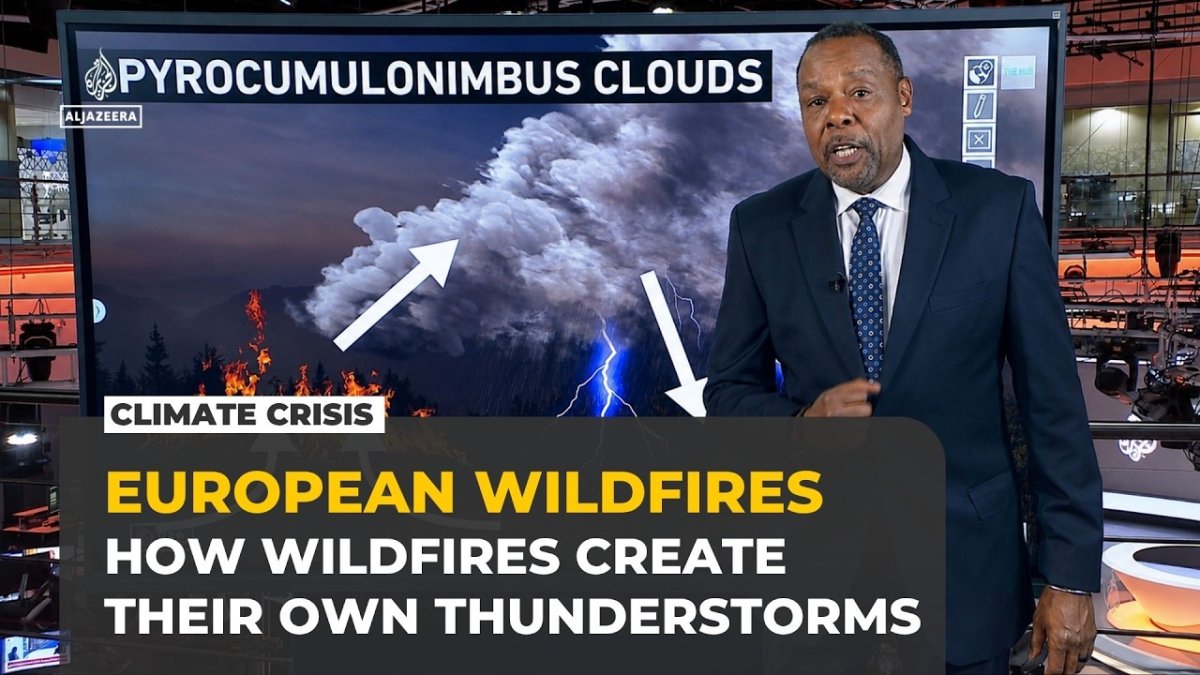
The Pyrocumulonimbus Phenomenon — When Wildfires Become Weather Systems
A pyrocumulonimbus — pyroCb for short — is not an ordinary cloud. It is a fire-generated thunderstorm that forms when the extreme heat of an intense wildfire drives massive updrafts of hot, smoke-laden air high into the atmosphere. As this superheated column rises, it cools and condenses into towering cumulonimbus-like clouds that can punch through the upper troposphere and even inject smoke and aerosols into the stratosphere.
What makes pyroCb so dangerous is not just its size, but its behavior. These fire clouds generate their own weather: dry lightning that ignites new fires far from the front line, erratic downdraft winds exceeding 100 miles per hour that spread embers over vast distances, and fire whirls — small but intense tornado-like vortices that hurl burning debris. In France, firefighters described the phenomenon as an "orage de feu," or fire storm, that made the Gironde blaze self-sustaining and unpredictable. The pyroCb essentially allows the fire to create conditions that fan itself, a feedback loop that terrifies fire crews on every continent.
Climate change is making pyroCb events more frequent worldwide. Hotter, drier conditions dry out vegetation faster, allowing fires to burn hotter and larger — providing the extreme heat and energy needed to form these thunderstorm clouds. What used to be a rare occurrence, primarily observed in Australia and western North America, has now arrived in Europe with alarming regularity since 2017.
Europe's Burning Summer — France's Gironde Fire and the First PyroCb
The Gironde wildfire, ignited amid a brutal heatwave with temperatures surpassing 40 degrees Celsius (104 degrees Fahrenheit), has consumed approximately 42,000 hectares of pine forest and scrubland — an area four times the size of Paris. More than 200,000 people have been evacuated from their homes in what authorities describe as one of the largest peacetime evacuations in French history. Over 2,200 firefighters, supported by European Union water-bombing aircraft and international reinforcements, have been battling the blaze for over a week.
On July 22, fire whirls — tourbillon de feu — were observed in the town of Saumos. Within days, the fire had generated enough heat to punch through the atmosphere and create a full pyrocumulonimbus cloud. Satellite imagery captured the towering smoke column with its mushroom-like top spreading over the patchwork landscape of forests and farmland. Meteorologists confirmed it as the first recorded pyroCb in France, a milestone that underscores how climate change is expanding the geographic range of extreme fire behavior.
The connection to climate is direct: Europe's summers are warming faster than the global average, vegetation is drier for longer periods, and the conditions that produce megafires are becoming the new normal. French and European officials have acknowledged that the Gironde fire is a glimpse into a future where fire seasons are longer, more intense, and more unpredictable.
Latin America's Fire Cloud Legacy — Amazon PyroCb and the 2024 Catastrophe
While Europe may be experiencing its first recorded pyrocumulonimbus, Latin America has lived with this phenomenon for years. The Amazon rainforest, the Pantanal wetlands, and the Cerrado savanna have all produced fire-generated thunderstorms during severe drought years, with consequences that ripple across the continent and beyond.
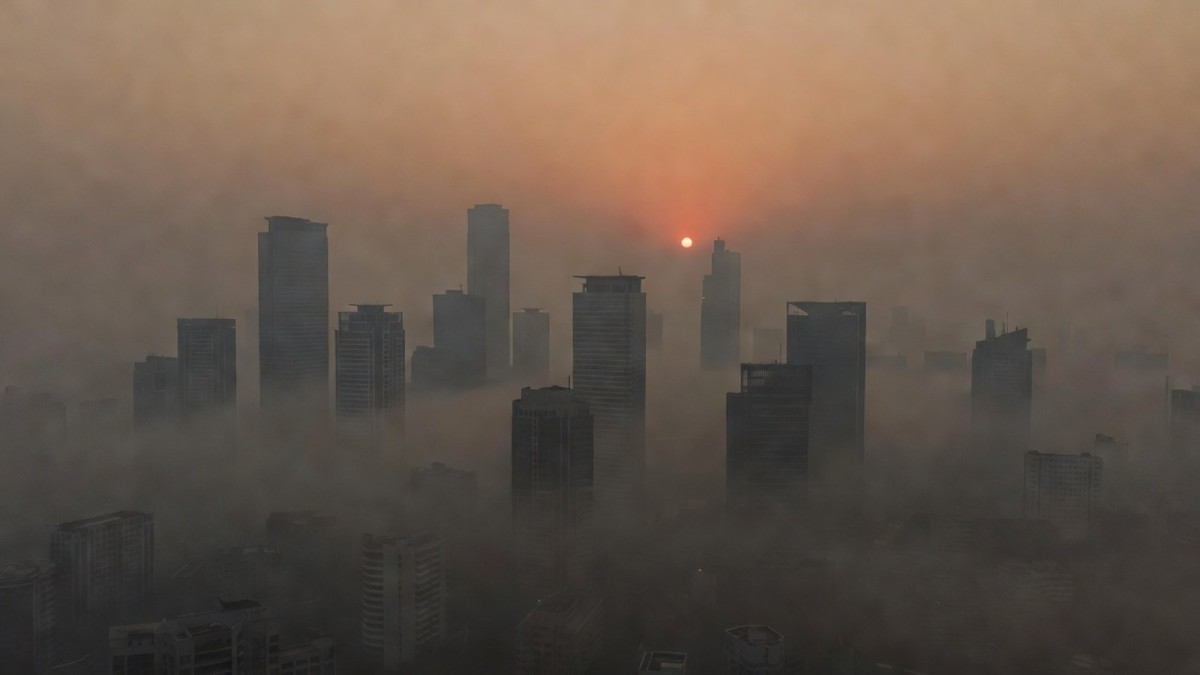
The 2024 fire season in the Brazilian Amazon was one of the worst on record. Satellite data from Brazil's National Institute for Space Research (INPE) documented the formation of massive pyrocumulonimbus clouds as fires consumed an estimated 13.4 million acres — an area larger than Costa Rica. Carbon emissions from these fires reached approximately 183 million metric tons in September 2024 alone. Smoke plumes, described as nearly a quarter the size of North America, blanketed Brazil and neighboring countries, causing hazardous air quality, reduced visibility below 500 meters in some cities, and health emergencies across the region.
In the Pantanal, the world's largest tropical wetland, the 2020 and 2024 fire seasons produced pyroCb events that injected smoke high into the atmosphere. The Pantanal's unique ecosystem — home to jaguars, giant river otters, and hyacinth macaws — proved especially vulnerable during drought years when water levels dropped and fire swept through dried-out marshes with devastating speed.
Brazil's Fire Season Outlook 2026 — Progress on Deforestation, Vigilance on Fires
The contrast between 2024 and 2026 could not be starker — and that is both good news and a warning. Under the Lula administration's renewed environmental enforcement, with Marina Silva's policy framework still guiding the Ministry of Environment, Brazil has achieved historic reductions in Amazon deforestation. INPE's DETER alert system reported just 1,295 square kilometers of deforestation in the first half of 2026 — a 38 percent drop compared to the same period in 2025 and the lowest level in a decade. June 2026 alone saw a 35 percent reduction, with approximately 297 square kilometers of alerts.
The 2025 fire season was the mildest in 40 years, with approximately 7.7 million acres burned — a 32 percent reduction compared to the ten-year average. Brazil's government has invested heavily in fire prevention and response: 4,385 brigadistas have been hired, a 26 percent increase; aerial water-dropping capacity has expanded by 133 percent; and the Amazon Fund has been extended to cover the Pantanal and Cerrado biomes. Integrated Fire Management protocols, combining satellite monitoring with on-the-ground prevention, have been credited with the dramatic turnaround.
Yet the fire season is only beginning. INMET, CEMADEN, and CPTEC forecasts for the second half of 2026 indicate conditions favoring increased drought and fire risk across multiple biomes. The accumulated hydrological deficit from previous drought years, combined with above-average temperatures, means that any ignition — whether from land clearing, lightning, or arson — could escalate rapidly into the kind of megafire that produces pyroCb.
Tipping Point Risks — Amazon Cumulative Loss and the Climate Feedback Loop
The deeper concern extends beyond any single fire season. The Brazilian Amazon has lost approximately 20 percent of its original forest cover since the 1970s. Scientists warn that crossing the threshold of 20 to 25 percent deforestation could trigger an irreversible tipping point, transforming large portions of the rainforest into degraded savanna — a process known as savannization. This would release staggering amounts of stored carbon, disrupt rainfall patterns across South America, and eliminate one of the planet's most critical biodiversity reservoirs.
Pyrocumulonimbus events accelerate this feedback loop. When fire clouds inject smoke and black carbon into the upper atmosphere, they alter radiation balances and cloud formation processes. The soot deposited on glaciers in the Andes speeds up melting; the aerosols disrupt rainfall patterns that the Amazon depends on for its own moisture recycling. A forest that burns produces more pyroCb; more pyroCb means more lightning and wind that spread fire; more fire means more deforestation; more deforestation means less moisture recycling and a drier forest — a cascade that pushes the biome closer to the tipping point with every burning season.
Globally, wildfire activity in the first half of 2026 has been over 50 percent above long-term averages, according to satellite monitoring systems. The fires in France, the pyroCb over Gironde, and the emerging conditions in the Amazon are not isolated events — they are connected symptoms of a climate system under accelerating stress.
The Bottom Line — What This Means for Latin America
Europe's first recorded pyrocumulonimbus is a wake-up call that resonates far beyond France. For Latin America, where fire-generated thunderstorms have already left their mark on the Amazon, Pantanal, and Cerrado, the message is clear: climate change does not respect borders, and fire behavior is becoming more extreme everywhere.
Brazil's progress on deforestation is real and significant — the lowest rates in a decade deserve recognition. But deforestation is only one driver of fire risk. Climate-driven drought, rising temperatures, and the legacy of accumulated forest loss create conditions where even well-managed landscapes can burn. The Pantanal and Cerrado remain highly vulnerable. The Amazon's tipping point looms.
The solutions are known: sustained enforcement, expanded Indigenous territory protection, restoration of degraded areas, and, above all, global emissions reductions that address the root cause of the heat and drought that make megafires possible. France's fire thunderstorm is not a distant curiosity — it is a preview of what every fire season in Latin America could become if the world does not act with the urgency this crisis demands.
By Elena Vasquez, Staff Writer
This article was produced with AI-assisted research and editorial support. Reporting is based on sources cited in the article.
What's Your Reaction?
 Like
0
Like
0
 Dislike
0
Dislike
0
 Love
0
Love
0
 Funny
0
Funny
0
 Wow
0
Wow
0
 Sad
0
Sad
0
 Angry
0
Angry
0

Latin America Correspondent at Global1.News. Based in Mexico City, covering politics, economics, energy, and culture across the region. Brings an on-the-ground perspective to stories spanning from the Rio Grande to Patagonia.












Comments (0)