
Senegal's Kiiraay Moment: Faye Launches New Party, Splits With Sonko in Political Earthquake
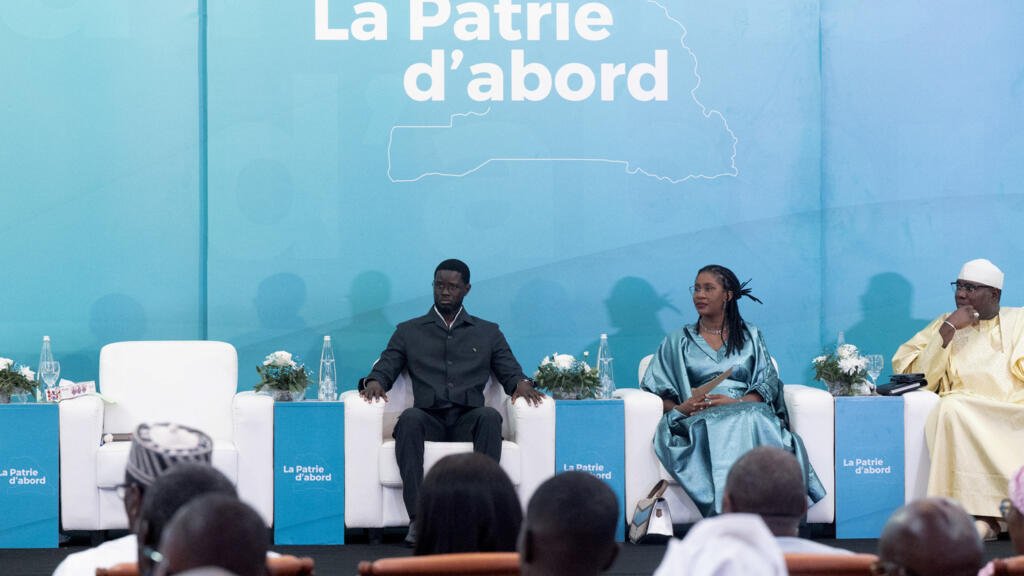
Dakar, Senegal — On a Saturday afternoon at the King Fahd Palace in Dakar, President Bassirou Diomaye Faye stood before a crowd of supporters and unveiled a shield. Not a physical one — but a political one. "Kiiraay," he declared, the Wolof word for shield or protection, the name of his new political party — the Republican Patriots.
Senegal's Kiiraay Moment: Faye Launches New Party, Splits With Sonko in Political Earthquake
Dakar, Senegal — On a Saturday afternoon at the King Fahd Palace in Dakar, President Bassirou Diomaye Faye stood before a crowd of supporters and unveiled a shield. Not a physical one — but a political one. "Kiiraay," he declared, the Wolof word for shield or protection, the name of his new political party — the Republican Patriots. With that single word, Faye formalised what had been the worst-kept secret in Senegalese politics for months: his alliance with Ousmane Sonko, the fiery opposition leader who helped lift him to the presidency in 2024, was over.
The launch of Kiiraay – Les Patriotes républicains marks the most significant rupture in Senegal's political landscape since the two men swept to power on a wave of anti-establishment fervour, promising to clean up governance and restore faith in democratic institutions. Now, the reform movement that brought them together is pulling itself apart — and at a moment when Senegal can least afford instability.
Two Men, One Ticket, Divergent Paths
To understand the weight of this split, one must go back to 2024. Bassirou Diomaye Faye was the secretary-general of Pastef — the African Patriots of Senegal for Work, Ethics and Fraternity — the party founded and led by Ousmane Sonko. When Sonko was barred from running for president amid a string of legal battles that his supporters called politically motivated, he turned to Faye as his stand-in. The message was clear: a vote for Faye was a vote for Sonko's vision.
They won. And for a brief moment, Senegal became the darling of African democratic renewal — a country where the opposition could actually take power through the ballot box, where youthful energy could displace an entrenched establishment. Faye became president; Sonko became prime minister. Together, they embodied the hopes of a generation of Senegalese who had grown tired of the old politics.
But power has a way of testing alliances. Behind the scenes, tensions simmered over who really controlled the reform agenda. Faye, now head of state, began to develop his own vision of governance — one that required engaging with international institutions, navigating debt negotiations, and building a broader national coalition. Sonko, from his position as prime minister and Pastef leader, remained the popular firebrand, determined to preserve the movement's original anti-establishment, pan-Africanist character.
The breaking point came in May 2026, when Faye dismissed Sonko as prime minister. In a move that surprised few who had been watching closely, Sonko was subsequently elected speaker of the National Assembly — a position that keeps him in the political arena but removes him from the executive branch. However, Sonko retained something crucial: control of 130 of the 165 seats in the National Assembly through his continued leadership of Pastef.
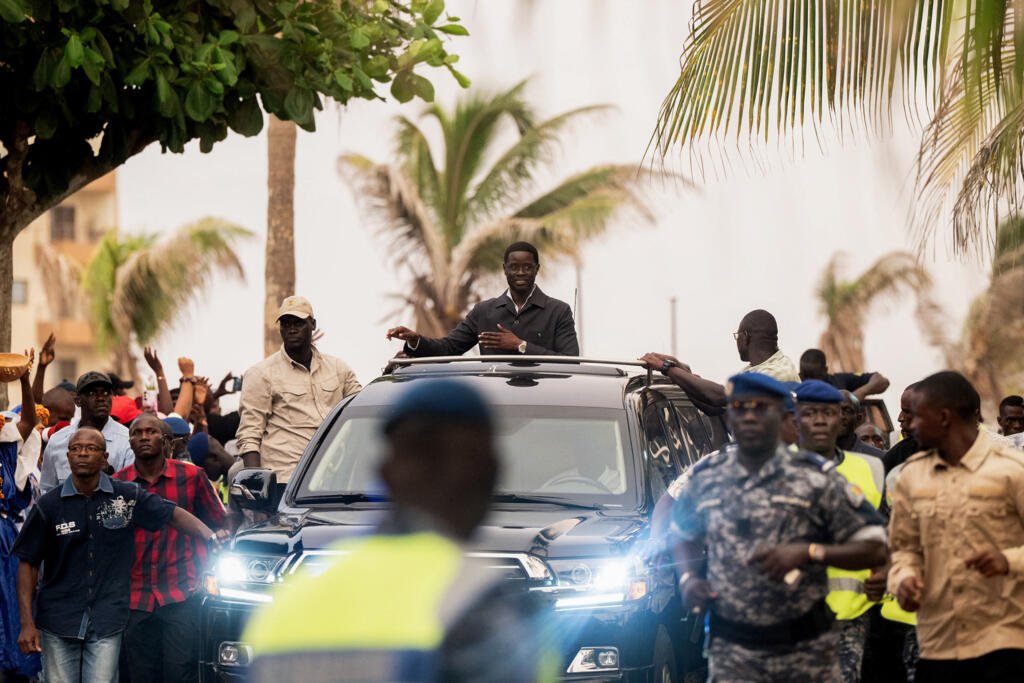
Kiiraay: More Than a Name
The choice of "Kiiraay" as the party's name is deeply symbolic and deliberately cultural. Wolof is Senegal's most widely spoken language, spoken by an estimated 80 percent of the population either as a first or second language. It is the language of the streets, the markets, the taxi ranks, the homes — the language of everyday Senegalese life. By choosing a Wolof name over French, Faye is making a statement about where his political loyalties lie: with the people, not the Francophone elite.
A shield, in Senegalese tradition, is not merely a defensive object. It represents protection of the family, the community, the vulnerable. It evokes the warrior traditions of the Wolof and Serer kingdoms that resisted colonial domination. In choosing Kiiraay, Faye is positioning himself not just as a political leader but as a protector of Senegal's interests at a time when the country faces its most serious economic crisis in decades.
At the launch ceremony, Faye described Kiiraay as "the majority party in this country" and outlined a vision of "a broad political platform built on the values of patriotism, grassroots engagement, and national unity." The language was deliberately inclusive — an attempt to reach beyond the Pastef base and build a coalition that includes civil society, traditional leaders, and ordinary citizens who may be tired of the political infighting.
A Debt Crisis Like No Other
The Faye-Sonko split is not happening in a vacuum. It is unfolding against the backdrop of a debt crisis that threatens Senegal's economic stability and, by extension, its social fabric. Public debt has reached 132 percent of GDP — a staggering figure for a country that, until recently, was considered one of West Africa's most stable economies.
The International Monetary Fund has suspended a $1.8 billion loan programme amid disputes over economic reforms. The suspension is a serious blow to a government that needs international financing to service existing debts, fund infrastructure projects, and maintain basic public services. Without IMF support, Senegal faces the prospect of turning to more expensive lenders, cutting public spending, or both — moves that would directly affect the everyday lives of Senegalese citizens already feeling the pinch of rising prices and stagnant wages.
Faye's approach to the debt crisis was one of the key points of disagreement with Sonko. The president has taken a more pragmatic, institutionally-oriented approach — engaging with the IMF, seeking to renegotiate terms, and trying to balance fiscal responsibility with social spending. Sonko, true to his populist roots, has been more critical of what he sees as IMF-imposed austerity, arguing that Senegal should prioritise its own development agenda over the demands of international creditors. These are not trivial differences. They represent fundamentally different philosophies of governance — and they have real consequences for the 18 million Senegalese who are watching their political leaders struggle to agree on a way forward.
The Constitutional Dimension
Adding to the tension is a dispute over constitutional reform. In June 2026, Senegalese police fired tear gas at protesters demonstrating against proposed constitutional changes — a rare sight in a country that prides itself on its democratic traditions and history of peaceful protest. The constitutional reforms, backed by Faye, are seen by Sonko's supporters as an attempt to centralise presidential power. Faye's camp argues they are necessary modernisations of a legal framework inherited from the colonial era.
The protests and the police response have raised concerns among civil society organisations and international observers about the direction of Senegal's democracy. The country has long been held up as a model of democratic stability in West Africa — a region that has seen its share of coups, constitutional crises, and political violence. The sight of tear gas canisters being fired at citizens demanding a voice in their country's constitutional future is a sobering reminder that even mature democracies require constant nurturing.
For his part, Faye has also taken on a broader regional role as chairman of the Economic Community of West African States (ECOWAS), giving him a platform on the continental stage that extends well beyond Senegal's borders. This dual role — president of a debt-strapped nation and leader of West Africa's premier regional bloc — creates both opportunities and complications. It enhances his stature but also divides his attention, and it gives Sonko's supporters ammunition to argue that the president is more focused on international diplomacy than on the domestic crisis.
What This Means for Everyday Senegalese
For the average Senegalese, the political drama playing out in Dakar's corridors of power may feel distant — but its consequences are anything but. The debt crisis means higher prices for imported goods, pressure on the CFA franc, and uncertainty about public sector salaries and social programmes. The political infighting means delayed decisions on everything from infrastructure projects to education reform. And the uncertainty surrounding the Faye-Sonko relationship creates an atmosphere of instability that discourages investment and complicates economic planning.
In the markets of Dakar's Medina neighbourhood, in the fishing communities of Saint-Louis, in the peanut-farming regions of Kaolack and Diourbel, people are watching. Senegal has a vibrant civic culture — the "teranga" (hospitality) for which the country is famous extends to political engagement. Street debates, radio call-in shows, and the ubiquitous "concertation" gatherings where communities discuss issues of the day are all part of Senegal's democratic fabric. The Faye-Sonko split is the subject of intense discussion in every tea shop, every taxi, every household gathering.
The Road Ahead
Analysts describe the current situation as an unprecedented contest between the presidency and the ruling party in Senegal's modern democratic history. Faye controls the executive branch and has the legitimacy of a directly elected mandate. Sonko controls the legislature and has deep roots in the party machinery that helped put Faye in office. Neither can govern effectively without at least some degree of cooperation from the other — and yet their relationship has deteriorated to the point where cooperation seems increasingly unlikely.
What happens next depends on several factors. Can Faye build Kiiraay into a genuine political force capable of challenging Pastef's parliamentary dominance? Can Sonko maintain party discipline and prevent defections to the new presidential party? Will the IMF and other international creditors be willing to work with a government that appears divided on fundamental economic questions? And, most importantly, will ordinary Senegalese continue to have faith in a political system that, for all its democratic credentials, seems unable to deliver the stability and prosperity they were promised?
Senegal has navigated political crises before. It has a tradition of dialogue — the "cadre de concertation" that brings together political actors, civil society, and traditional authorities to resolve disputes. But the Faye-Sonko split is different. It is not a conflict between a government and an opposition; it is a conflict within the government itself, between two men who were once allies, who share a history, who were elected on a joint platform, and who now find themselves on opposite sides of almost every major question facing the country.
The shield that Faye has raised — Kiiraay — is meant to protect Senegal from the storms ahead. But whether it will prove strong enough to shelter a nation navigating debt, division, and democratic growing pains is a question that only time, and the Senegalese people, can answer.
By Amara Diop, Staff Writer
This article was produced with AI-assisted research and editorial support. Reporting is based on sources cited in the article.
What's Your Reaction?
 Like
0
Like
0
 Dislike
0
Dislike
0
 Love
0
Love
0
 Funny
0
Funny
0
 Wow
0
Wow
0
 Sad
0
Sad
0
 Angry
0
Angry
0
West Africa/Sahel Correspondent at Global1.News. Dakar-based journalist covering politics, security, climate, and development across Francophone and Anglophone West Africa. Tells the stories of a region undergoing profound transformation.











Comments (0)