
Gulf of Paria widens as Trinidad pours oil on troubled Venezuelan waters
The simmering dispute between Trinidad and Tobago and Venezuela over a May Day oil spill in the Gulf of Paria has boiled over once again, with Caracas formally demanding detailed information and compensation from Port of Spain — claims the Trinidadian government insists are vastly overstated. Venezuela's Foreign Minister, Yvan Gil, has accused Trinidad of failing to report the incident promptly and of downplaying what he describes as a serious environmental threat to shared ecosystems.
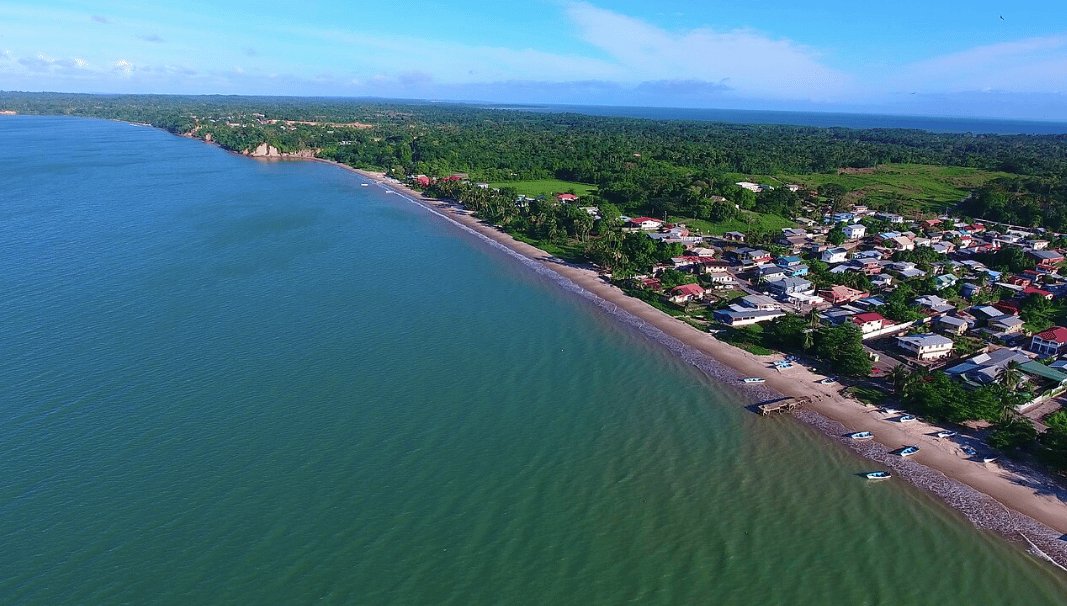
The simmering dispute between Trinidad and Tobago and Venezuela over a May Day oil spill in the Gulf of Paria has boiled over once again, with Caracas formally demanding detailed information and compensation from Port of Spain — claims the Trinidadian government insists are vastly overstated.
Venezuela's Foreign Minister, Yvan Gil, has accused Trinidad of failing to report the incident promptly and of downplaying what he describes as a serious environmental threat to shared ecosystems. But in Port of Spain, officials are standing firm, describing the affair as a minor, quickly-contained spill of no more than 10 barrels.
For everyday Trinidadians watching from home, the back-and-forth is more than just diplomatic theatre. The Gulf of Paria supports fishing communities on both sides of the border, and for a country where the energy sector accounts for roughly a third of GDP and the vast majority of export revenues, how this dispute is handled carries real consequences for household budgets, fuel prices, and national pride.
The May Day Incident
The trouble began on May 1, 2026, when state-owned Heritage Petroleum Company Ltd detected a leak at Riser Platform No. 2 in the Main Soldado Field — a mature oil and gas producing area in the Gulf of Paria, the brackish inland sea shared by Trinidad and Venezuela.
According to the Ministry of Energy and Energy Industries, an estimated 10 barrels of oil were released before the leak was identified and repaired the following day. Chemical dispersants were deployed six to eight nautical miles from the maritime border, and follow-up inspections using both drones and surface vessels confirmed no visible hydrocarbons remained on the water.
"Visual observations confirmed that the dispersant effectively broke up the hydrocarbon," the Ministry stated at the time. The leak source was repaired and returned to service on May 2, they added.
The Ministry also noted that oil spill trajectory modelling had shown the hydrocarbons could have crossed the Trinidad-Venezuela maritime border in the Gulf of Paria if left untreated — which is precisely why dispersants were deployed pre-emptively, approximately six to eight nautical miles from the border, shortly after approval was granted by authorities.
Venezuela's Demands Escalate
Nearly three months later, Venezuela is not satisfied. During a press conference this week, Foreign Minister Gil presented satellite imagery which he claimed showed an oil slick originating from Trinidadian waters. He demanded that Port of Spain provide full details of the incident, including the type of hydrocarbon spilled, the volume released, and the mitigation measures taken.
Gil warned that the spill could impact up to 1,625 square kilometres across twelve of Venezuela's strategic wetland systems. Four national parks are said to be at risk, along with more than 140 species of fish. The Venezuelan Foreign Minister also raised the alarm about the livelihoods of over 500 fishermen who depend on the Gulf of Paria's waters for their daily catch and family income.
"Trinidad and Tobago is obligated, first, to immediately report any oil spill or environmental incident to the Venezuelan government; that is the first priority," Gil told the press. "Second, we must have information on the type of product that was spilled and the measures taken to mitigate it."
He further demanded compliance with international environmental law and reparative measures for any damage caused, citing the 1990s delimitation treaty that governs how both countries exploit hydrocarbon deposits on either side of their shared maritime border. Venezuela claims several diplomatic communiqués were sent to the Trinidadian government before receiving a substantive response, a charge Port of Spain has not directly addressed.
Port of Spain's Response
Trinidad's Energy Minister, Dr. Roodal Moonilal, has consistently described the spill as minor, telling local media that only an estimated 10 barrels were released and that the incident was contained within hours. He rejected suggestions that Trinidad had failed in its reporting obligations, noting that the Ministry had activated its oil spill response protocols immediately upon detection and that the relevant authorities were notified through established channels.
The Ministry of Energy and Energy Industries has expressed a commitment to ongoing dialogue with Venezuelan authorities and to developing a structured framework for managing any future cross-border incidents. "The Ministry is also committed to working with its counterparts in the Bolivarian Republic of Venezuela to develop a structured framework to manage any incidents of this nature which may arise in the future along our shared border," the Ministry stated in a release.
For Trinidadians watching this unfold, the dispute raises familiar questions about transparency in the energy sector and the balance between resource extraction and environmental stewardship. The Gulf of Paria is not only an oil and gas producing zone but also a vital fishing ground and ecologically sensitive area, home to extensive mangrove forests and diverse marine life that local communities rely upon.
A Shared and Sensitive Ecosystem
The Gulf of Paria sits between Trinidad's western coast and Venezuela's eastern mainland. It is a shallow, brackish water body where salinities drop below 23 parts per thousand during the wet season, and its coastlines are lined with mangroves that serve as critical nursery habitats for fish and crustaceans. The ecosystem supports not only commercial fisheries but also subsistence fishing communities on both sides of the maritime boundary.
Venezuelan authorities say their preliminary assessments found "severe risks" to ecosystems in the states of Sucre and Delta Amacuro, warning of threats to mangroves, wetlands and the wider environmental balance of the region. Venezuela's Ministries of Ecosocialism (Environment), Fisheries and Aquaculture, state oil company Petróleos de Venezuela (PDVSA), and the Navy have all been involved in the assessment and response, indicating the seriousness with which Caracas views the matter.
Trinidad, for its part, points to the containment and dispersant deployment as evidence of responsible management. The government has maintained that the environmental impact was minimal and that any suggestion of widespread ecological damage is not supported by the facts on the ground. But environmental groups in Trinidad have called for greater transparency, noting that aging infrastructure in the country's mature oil fields has long been a source of concern for communities living near production facilities.
Energy Sector Implications and Regional Context
This dispute unfolds against the backdrop of a complex energy relationship between the two countries. Trinidad and Tobago is one of the Caribbean's largest oil and gas producers, with extensive exploration activity both on land and in shallow waters. The country also has major cross-border gas monetisation projects with Venezuela, including the bp Loran deal that advances Trinidad's role as a regional energy hub and secures vital revenue streams for the treasury.
The Main Soldado Field, where the May Day spill originated, is part of Trinidad's mature oil-producing infrastructure — much of it operated by Heritage Petroleum, the state-owned company formed from the assets of former Petrotrin. Aging infrastructure has been a recurring concern for environmental watchdogs in the region, though the Ministry insists all operations meet regulatory standards and that response protocols are tested regularly.
For the wider Caribbean, the Gulf of Paria dispute serves as a reminder of the delicate balance small island states must strike between energy development and environmental protection. As Small Island Developing States (SIDS), Caribbean nations are particularly vulnerable to the impacts of environmental degradation — a reality that makes transboundary incidents like this one all the more significant. The outcome of this dispute could set a precedent for how Caribbean neighbours manage shared environmental resources and resolve cross-border pollution claims.
The dispute also carries implications for CARICOM, the regional bloc that counts both Trinidad and Tobago as a member and Venezuela as a close partner through Petrocaribe and other regional initiatives. Regional observers will be watching closely to see whether the matter is resolved bilaterally or whether it requires mediation through CARICOM or international channels.
What Happens Next
For now, the two governments remain in dialogue, with Trinidad offering cooperation on a future framework while rejecting the characterisation of the spill as a major environmental disaster. Venezuela, however, is pressing its case publicly, using satellite imagery and diplomatic channels to demand accountability.
Whether this dispute escalates into a formal international claim or fades into the background of bilateral relations remains to be seen. What is clear is that the Gulf of Paria — a body of water that has for centuries connected rather than divided Trinidad and Venezuela — is once again at the centre of a contest over resources, responsibility, and regional trust. For the fishing communities, environmental advocates, and energy workers whose lives intersect with these waters, the stakes could not be higher.
By Sharon Sahatoo, Staff Writer
This article was produced with AI-assisted research and editorial support. Reporting is based on sources cited in the article.
What's Your Reaction?
 Like
0
Like
0
 Dislike
0
Dislike
0
 Love
0
Love
0
 Funny
0
Funny
0
 Wow
0
Wow
0
 Sad
0
Sad
0
 Angry
0
Angry
0

Caribbean Correspondent at Global1.News. Based in Port of Spain, Trinidad, covering Caribbean politics, economy, energy, climate, and culture. Amplifying the voices and stories of the Caribbean region.












Comments (0)