
WestJet Flight Attendants Issue 72-Hour Strike Notice
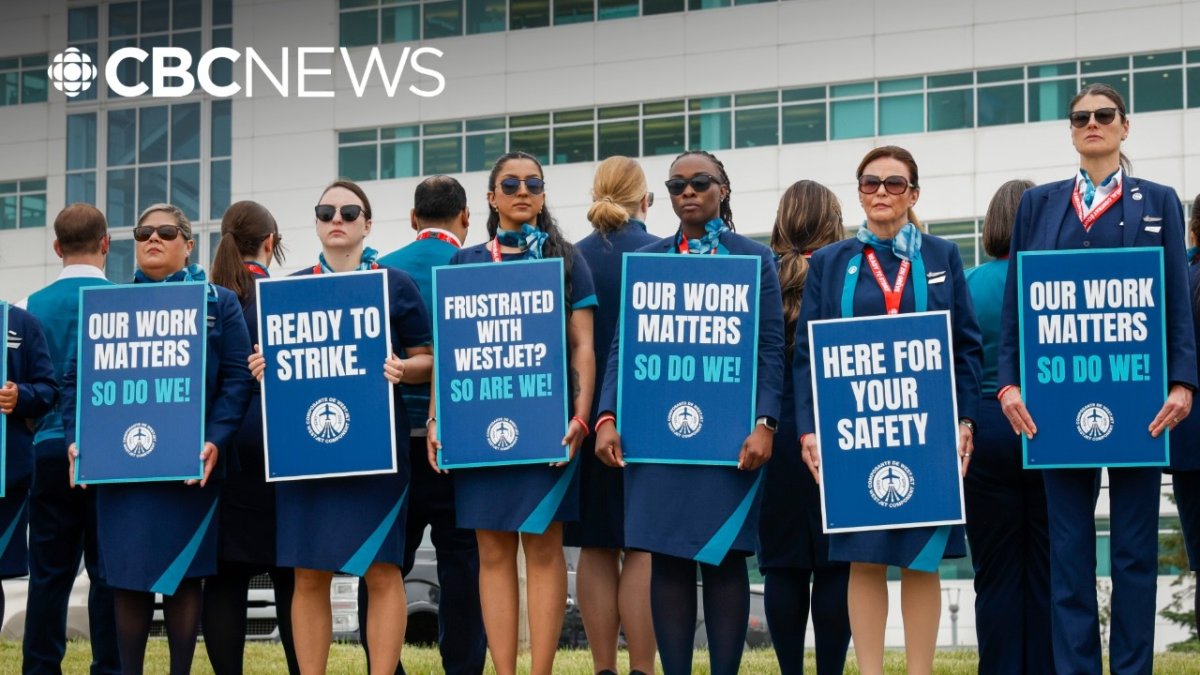
WestJet and the union representing its 4,400 flight attendants have exchanged 72-hour strike and lockout notices, setting the stage for a potential work stoppage that could disrupt air travel for tens of thousands of Canadians during the busy August long weekend. In a recent CBC News report, the details of the escalating labour dispute were laid out as both sides dig in on key issues including unpaid ground duties and compensation structures. WestJet and Flight Attendants' Un
WestJet and the union representing its 4,400 flight attendants have exchanged 72-hour strike and lockout notices, setting the stage for a potential work stoppage that could disrupt air travel for tens of thousands of Canadians during the busy August long weekend. In a recent CBC News report, the details of the escalating labour dispute were laid out as both sides dig in on key issues including unpaid ground duties and compensation structures.
WestJet and Flight Attendants' Union Trade Strike and Lockout Notices as August Long Weekend Approaches
Calgary, Alberta – July 30, 2026 — The Canadian Union of Public Employees (CUPE) Local 8125, representing 4,400 WestJet cabin crew members, issued a 72-hour strike notice early Thursday morning. The airline responded within hours by issuing its own 72-hour lockout notice, meaning job action could begin as soon as Sunday, August 2 at 12:01 a.m. MT if no deal is reached at the bargaining table.
The Dispute at a Glance
WestJet operates more than 600 flights per day and carries over 70,000 passengers on peak travel days, making it Canada's second-largest air carrier behind Air Canada. The company and its unionised flight attendants have been in negotiations for months, but the two sides remain far apart on compensation for ground duties performed between flights, among other issues.
The union says flight attendants are not compensated for tasks such as pre-flight briefings, post-flight paperwork, and time spent on the ground between boarding and deplaning. CUPE argues these unpaid duties represent a fundamental fairness issue for workers whose schedules already involve irregular hours, time zone changes, and extended periods away from home. Many flight attendants report spending two to three hours per shift performing ground-related duties without additional pay.
WestJet maintains that all duties are compensated through what it describes as a "credit hour" system rather than an hourly wage, and says the current framework adequately accounts for the full scope of a flight attendant's responsibilities. The airline says its compensation model is consistent with industry standards across North America.
What the Leaders Are Saying
Alia Hussain, President of CUPE Local 8125, said in a statement Thursday morning that the union remains committed to reaching a fair agreement without disrupting travel for the Canadian public.
"We have been clear about what needs to change, and we have worked hard to reach a fair deal," Hussain said. "There's still time to avoid a strike. We will continue to bargain around the clock until this is resolved."
Hussain also called on the federal government to respect the collective bargaining process and refrain from intervening, a pointed reference to the government's recent use of Section 107 of the Canada Labour Code to force striking Air Canada flight attendants back to work in 2025. That move by the Liberal government drew sharp criticism from labour organisations across the country, who argued it undermined the constitutional right to collective bargaining.
WestJet CEO Alexis von Hoensbroech struck a conciliatory but firm tone in the company's response. "The decision to issue a lockout notice, in response to the actions taken by the union, was not one that was made lightly," von Hoensbroech said. "We sincerely regret the inconvenience and uncertainty this continues to cause for our guests. We greatly value the work and contributions of our cabin crew, and it is our responsibility to ensure the integrity of our network and to minimise the risk of stranding our guests, crew and aircraft."
Impact on Travellers
For Canadians planning travel over the August long weekend — one of the busiest travel periods of the year — the labour dispute introduces significant uncertainty. WestJet has announced that passengers with flights scheduled between July 30 and August 4 may make a one-time change or cancel their booking with no fee. The airline is encouraging travellers to monitor their flight status closely and consider rebooking earlier if possible.
Not all WestJet services will be affected. The airline says its regional WestJet Encore service and code-share flights operated by partner airlines such as Delta Air Lines will continue to operate normally. Should flight delays or cancellations occur, WestJet says affected guests will be refunded or reaccommodated "as applicable." The airline's cargo operations and WestJet Vacations packages may also face disruptions, although the company has not provided specific details on those segments.
The two sides have also reached an agreement on how to manage the logistics of a work stoppage. Cabin crew working a flight when any job action begins would complete the trip to its destination. Those unable to immediately return to their home base would receive hotel accommodation for up to a week or a flight back to another Canadian city, subject to seat availability. This wind-down plan was negotiated specifically to avoid stranding flight crews in cities away from their home bases.

The Broader Labour Context
The WestJet dispute unfolds against a backdrop of heightened labour tensions in Canada's airline industry. In 2025, Air Canada flight attendants represented by CUPE were forced back to work after the federal Liberal government invoked Section 107 of the Canada Labour Code, effectively legislating an end to their strike and imposing binding arbitration. That decision sparked widespread criticism from labour advocates and raised questions about the federal government's commitment to free collective bargaining.
CUPE 8125's reference to government non-intervention in the WestJet dispute reflects an awareness of that precedent. The union is making clear it wants a negotiated settlement, not a legislated one. Federal Labour Minister Seamus O'Regan Jr. has not yet commented publicly on the WestJet situation, but his office is closely monitoring developments.
John Gradek, who teaches aviation management at McGill University, said even a brief shutdown would cost WestJet millions of dollars during the height of summer travel on a long weekend. "The timing could not be worse for either side," Gradek said. "Both the airline and the union have significant leverage and significant exposure. A strike or lockout during the busiest travel weekend of the summer creates enormous pressure on both parties to reach a deal, but it also raises the stakes considerably."
Financial Stakes and Industry Pressures
The financial implications of even a short work stoppage are substantial. WestJet reported strong summer booking numbers earlier this year, with load factors approaching 90 per cent on many domestic and transborder routes. A multi-day shutdown during the long weekend could cost the airline tens of millions of dollars in lost revenue, rebooking costs, and customer compensation, not to mention long-term reputational damage among travellers who may choose other carriers for future trips.
For flight attendants, the stakes are equally high. CUPE has argued that WestJet cabin crew earn significantly less than their counterparts at Air Canada and other North American carriers, particularly when factoring in unpaid ground duties. The union says the current compensation model leaves many flight attendants struggling with the high cost of living in cities such as Vancouver, Toronto, and Calgary, where housing costs have risen sharply in recent years.
The labour dispute also comes as Canada's airline industry continues to rebuild from the pandemic-era downturn. Both WestJet and Air Canada have faced ongoing challenges related to labour shortages, aircraft delivery delays, and rising fuel costs. Industry analysts have noted that strained labour relations across the sector could threaten Canada's ability to maintain competitive air service, particularly on domestic and transborder routes.
What Happens Next
The clock is now ticking. With the 72-hour notice period in effect, the critical deadline is 12:01 a.m. MT on Sunday, August 2. If no deal is reached by that time, flight attendants could walk off the job and WestJet could implement a lockout, effectively grounding much of the airline's mainline fleet.
Some flight disruptions could begin even earlier. WestJet has warned that flights may start being grounded as early as Friday, July 31, as the company moves to position aircraft and crew in anticipation of a potential work stoppage. The airline has already begun implementing its wind-down plan, which was negotiated with the union earlier this week.
Both sides say they remain committed to reaching a deal. Bargaining sessions are expected to continue around the clock through the weekend. The question is whether the gap on compensation — specifically the dispute over unpaid ground duties and the credit hour system — can be bridged in time. Federal mediators have been involved in the talks, and their presence could prove critical in helping the two sides find common ground before the Sunday deadline.
For Canadian travellers, the advice from both the airline and the union is the same: check your flight status, know your rights, and have a backup plan. The August long weekend is a time for family and relaxation, but for thousands of WestJet passengers this year, it may also be a test of patience as Canada's second-largest airline faces one of the most consequential labour disputes in its history.
By Alex Thompson, Staff Writer
This article was produced with AI-assisted research and editorial support. Reporting is based on sources cited in the article.
What's Your Reaction?
 Like
0
Like
0
 Dislike
0
Dislike
0
 Love
0
Love
0
 Funny
0
Funny
0
 Wow
0
Wow
0
 Sad
0
Sad
0
 Angry
0
Angry
0

Canada Correspondent at Global1.News. Based in Toronto, covering Canadian politics, energy, trade, and US-Canada relations. Provides the Canadian perspective on North American and global affairs.















Comments (0)