
Israeli Sources: No Enrichment at Iran's Pickaxe Mountain
Israeli intelligence sources have told i24NEWS English that there is no active uranium enrichment taking place at Iran's Pickaxe Mountain underground facility, walking back earlier reports that Iran had moved thousands of centrifuges to the site. The clarification comes as President Trump threatens to bomb the mountain complex and as Netanyahu prepares to share intelligence with Washington.
In a recent i24NEWS English report, Israeli sources have cast doubt on earlier intelligence assessments, telling media outlets that there is no active uranium enrichment taking place at Iran's heavily fortified Pickaxe Mountain underground facility. The disclosure marks a significant shift in the public narrative surrounding one of the most closely watched nuclear sites in the Middle East and comes amid heightened US-Israeli tensions with Tehran over the future of its nuclear program.
Israeli Sources Cast Doubt on Enrichment at Iran's Pickaxe Mountain
Jerusalem, Israel — Israeli intelligence sources have informed media, including i24NEWS English, that contrary to recent reports suggesting Iran was actively enriching uranium deep inside the Pickaxe Mountain complex, there is currently no enrichment activity taking place at the site. The statement, delivered to multiple outlets in recent days, has sent ripples through defense and diplomatic circles already on edge over escalating US threats to strike the facility.
 " alt="Aerial view of the Natanz nuclear complex and Pickaxe Mountain area in central Iran" class="img-fluid">
The Intelligence Puzzle: What Israeli Sources Are Saying
Israeli defense officials have been careful to distinguish between the presence of nuclear infrastructure at Pickaxe Mountain and active enrichment operations. Sources clarified that while uranium enrichment centrifuges may have been moved to the site following the June 2025 Operation Midnight Hammer strikes, there is no evidence that they are currently being used to enrich uranium. This distinction is critical: storage of centrifuge components does not constitute a violation of the April 2026 ceasefire framework in the same way that active enrichment would.
The clarification from Israeli sources appears aimed at calibrating the public conversation around the facility, which has become a flashpoint in US-Iran tensions. President Donald Trump threatened on July 21 to bomb Pickaxe Mountain "pretty soon, and very heavily," after the Wall Street Journal reported that Israeli intelligence believed Iran had moved thousands of centrifuges into the mountain tunnels.
What Is Pickaxe Mountain and Why Does It Matter?
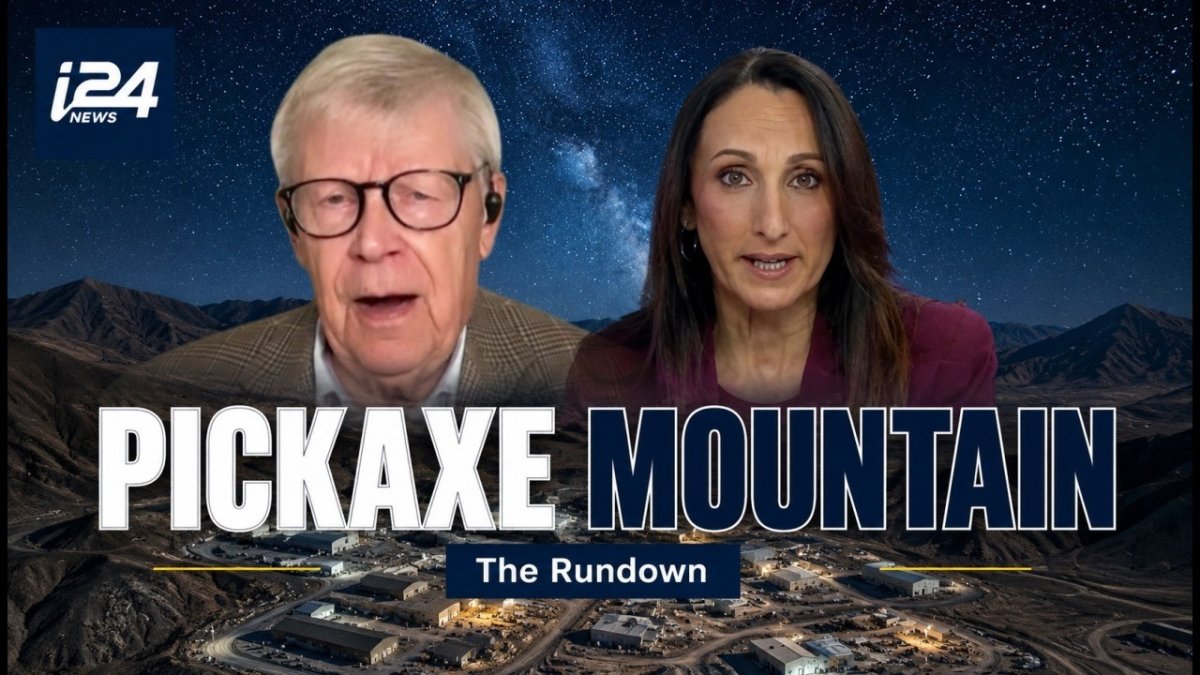
Pickaxe Mountain, known in Persian as Kuh-e Kolang Gaz La, is an underground nuclear facility under construction approximately two kilometers south of Iran's main uranium enrichment complex at Natanz, about 220 kilometers south of Tehran. The facility is built deep inside a mountain, making it one of the most fortified and difficult-to-target sites in Iran's nuclear infrastructure. Unlike Iran's above-ground facilities at Natanz, Fordow, and Isfahan — which were bombed by US and Israeli forces in June 2025 — Pickaxe Mountain was designed from the outset to withstand aerial bombardment.
The site was first identified by Western intelligence agencies years ago and has been under continuous satellite monitoring. Its strategic significance lies in its depth and fortification: standard bunker-busting munitions may struggle to reach the facility's core, which is buried under hundreds of meters of solid rock. This has made Pickaxe Mountain the central focus of US and Israeli concerns about Iran's ability to reconstitute its nuclear program after the June 2025 strikes.
From Operation Midnight Hammer to the Present
In June 2025, the United States and Israel carried out a coordinated military campaign — dubbed Operation Midnight Hammer — targeting Iran's three main nuclear facilities at Fordow, Natanz, and Isfahan. The strikes caused extensive damage to Iran's enrichment infrastructure and significantly set back its nuclear program. However, the operation did not target Pickaxe Mountain directly, largely because intelligence at the time assessed that the facility was not yet operational.
In the months that followed, Western intelligence agencies detected movement of centrifuge components and other nuclear-related equipment into the Pickaxe Mountain tunnels. The Wall Street Journal reported on July 21, citing Israeli and US officials, that Iran had transferred thousands of centrifuges into the underground complex as early as last fall. This assessment triggered a new wave of concern in Washington and Jerusalem, leading directly to Trump's threat to strike the facility.
Now, Israeli sources appear to be walking back the most alarming interpretation of those reports, emphasizing that the presence of centrifuges does not equal active enrichment. Whether this represents a genuine refinement of intelligence or a strategic messaging decision remains an open question.
" alt="Satellite imagery analysis of Iran's nuclear sites in central Iran" class="img-fluid">
The Trump Factor and US-Israel Coordination
The timing of the Israeli clarification is notable. Prime Minister Benjamin Netanyahu was reported on July 27 to be preparing to provide Trump with detailed intelligence on Pickaxe Mountain, ahead of potential US strike planning. The Israeli message — that there is no active enrichment at the site — could influence the scope and urgency of any US military action.
Trump has been unequivocal in his threats. "We are not finished at all in Iran," Trump said in a statement following the July 21 WSJ report. "Pickaxe Mountain is coming pretty soon, and very heavily." Multiple US Air Force B-1 Lancer strategic bombers departed the United Kingdom shortly after the president's threat, signaling readiness for a major strike operation. The Pentagon confirmed that forces were in position, though no formal order to strike has been issued.
The Israeli assessment that no enrichment is taking place could provide Washington with diplomatic cover to delay or recalibrate its response, particularly if the assessment is shared and validated by US intelligence agencies. However, it could also complicate the narrative of urgency that both the Trump administration and Netanyahu's government have built around the Iranian nuclear threat.
Iran's Nuclear Ambitions Under New Leadership
The Pickaxe Mountain question is unfolding against a broader shift in Iran's political landscape. In July 2026, the New York Times reported that US intelligence agencies assess Iran's new Supreme Leader, Ayatollah Mojtaba Khamenei, as being more open to pursuing nuclear weapons than his father and predecessor, the late Ayatollah Ali Khamenei. The assessment adds a new dimension of urgency to the nuclear standoff, as Western intelligence agencies grapple with the question of whether Iran's new leadership is more willing to cross the nuclear threshold.
Mojtaba Khamenei, who assumed the role of Supreme Leader following his father's death, has long been considered more hawkish on nuclear and security issues. US intelligence assessments suggest he views a nuclear weapon as a necessary deterrent against regime change efforts, a position that represents a significant departure from his father's more cautious approach of maintaining a nuclear threshold capability without crossing into weaponization.
This shift in leadership dynamics makes the question of what exactly is inside Pickaxe Mountain even more consequential. If Iran's new leadership is indeed more willing to pursue a bomb, any hidden enrichment capability — even one that is currently dormant — becomes a strategic time bomb.
Regional and International Implications
The conflicting signals around Pickaxe Mountain have implications that extend far beyond the facility itself. For Israel, the site represents both a military concern and an intelligence challenge. The Mossad and Aman (Israeli military intelligence) have been tasked with providing the most accurate possible assessment of what Iran is doing underground, and any misjudgment — in either direction — carries serious consequences.
For the Gulf states, the question of whether Iran is rebuilding its nuclear program underground affects their own security calculations and diplomatic postures. The United Arab Emirates, Saudi Arabia, and Bahrain have all deepened security cooperation with Israel in recent years, in large part due to shared concerns about Iran. If Pickaxe Mountain is not actively enriching, it could ease some of the immediate pressure on Gulf capitals to take sides in a potential US-Iran military confrontation.
For the IAEA and the international nonproliferation regime, the episode highlights the fundamental challenge of monitoring underground nuclear facilities. If centrifuges can be moved, stored, and potentially activated deep inside a mountain without detection, the entire verification framework that underpins the Nuclear Nonproliferation Treaty faces a credibility crisis.
The April 2026 ceasefire between Iran, the United States, and Israel provided a temporary de-escalation after months of direct military confrontation. However, the Pickaxe Mountain question — and the conflicting intelligence assessments surrounding it — threatens to unravel that fragile calm. As Israeli and US officials continue to share intelligence and coordinate their response, the region watches closely, aware that what is buried beneath the mountain could determine the course of Middle East security for years to come.
By Hannah Berg, Staff Writer
This article was produced with AI-assisted research and editorial support. Reporting is based on sources cited in the article.
What's Your Reaction?
 Like
0
Like
0
 Dislike
0
Dislike
0
 Love
0
Love
0
 Funny
0
Funny
0
 Wow
0
Wow
0
 Sad
0
Sad
0
 Angry
0
Angry
0

Israel Correspondent at Global1.News. Based in Tel Aviv, covering Israeli politics, security, technology, and society. Provides balanced, deeply-sourced reporting on one of the most closely-watched regions in the world.












Comments (0)