
Trump Just Banned Chinese Power Inverters — Your Data Center Supply Chain Just Got Hit
The Trump administration banned Chinese power inverters today, sending shockwaves through the AI data center supply chain. Combined with Meta's $145B capacity doubling and Goldman Sachs projecting $1.1T hyperscaler capex by 2027, the electrical equipment bottleneck just got worse.
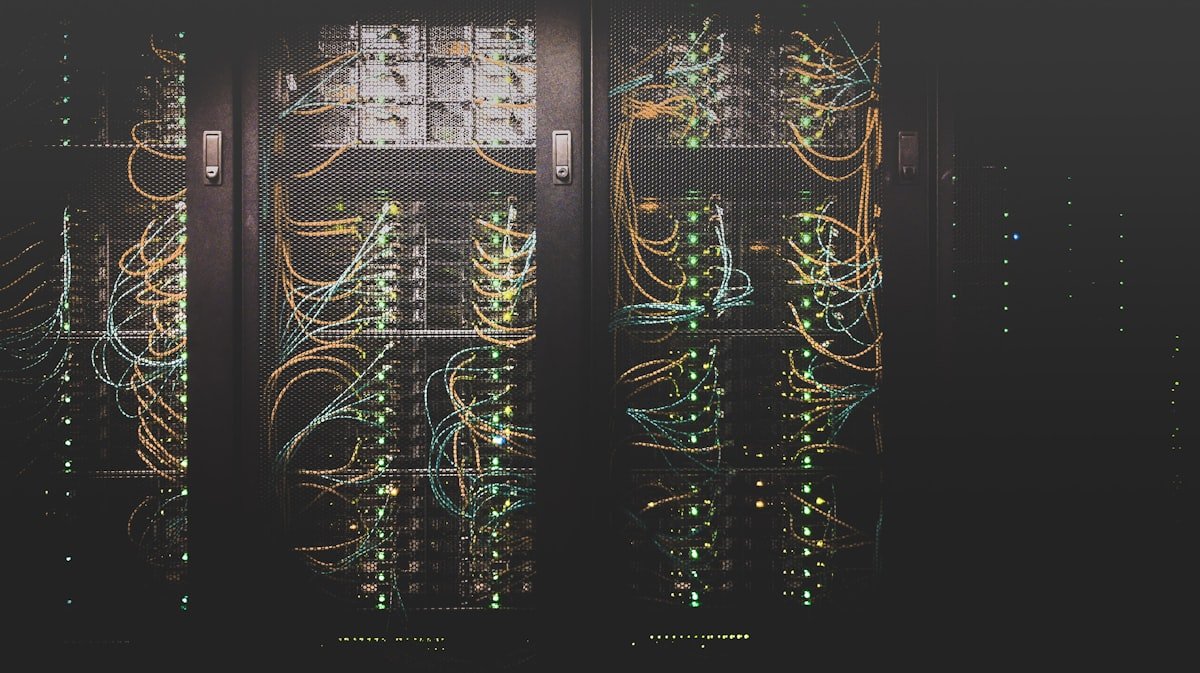
The Trump Administration Just Broke Your Data Center Supply Chain — and Nobody's Connecting the Dots
Let me tell you something that happened today that should be scaring the hell out of anyone who runs infrastructure in this country.
The Trump administration, through the FCC, announced a ban on imports of Chinese-made power inverters. Not just any inverters — the kind that connect renewable energy sources, batteries, and backup power systems to the grid. The same inverters that every data center under construction right now either uses or plans to use. Effective immediately, with the FCC rolling out the measures this afternoon.
And alongside the inverters, they banned new Chinese humanoid and quadruped robots too — but honestly? The robot ban is just noise for this conversation. The inverter ban is the one that matters for anyone who runs servers for a living.
Now, I know what you're thinking. "Allan, inverters are cheap commodity hardware. Plenty of non-Chinese suppliers." And you'd be half right — there are non-Chinese suppliers. But the half you're missing is the part that's about to bite every data center developer, colo operator, and hyperscaler in the teeth.
What the FCC Actually Did Today
The Federal Communications Commission unveiled measures Tuesday afternoon that bar Chinese imports of "connected power inverters" — devices that enable renewable energy sources and batteries to connect to grids and data center equipment. The stated rationale: protecting the U.S. AI supply chain from Chinese threats of disruption, data theft, and cyberattacks. An administration official put it plainly: "The President has made clear that the United States must have independent and secure supply chains for critical and emerging technologies."
Here's the thing about inverters in a data center context. They're not just in the solar panels on the roof. They're fundamental to how power flows through every modern facility:
— Every UPS system has an inverter converting DC battery power back to AC.
— Every grid interconnection for backup generators uses them.
— Every facility that uses battery storage for peak shaving or demand response — and that's most of them now — depends on them.
— And every data center that wants to integrate on-site renewable generation? That runs through an inverter too.
Chinese manufacturers, led by Huawei and Sungrow, dominate the global inverter market. Huawei alone controls about 23% of the global solar inverter market. Sungrow has another 20%. Add in the smaller Chinese players and you're looking at roughly 60% of global inverter supply coming out of China. The alternative suppliers — ABB, Siemens, Schneider — don't have the spare capacity to backfill a sudden ban. Their lead times were already stretching before today.
I told you a week ago that transformer lead times had hit 260 weeks — five years. Now inverters are joining the bottleneck list.
The Timing Could Not Be Worse
This ban lands in the middle of the most aggressive AI infrastructure buildout in American history. And I'm not exaggerating when I say "in history" — the numbers back it up.
Meta had a leaked internal memo surface on July 9th that lays out plans to deploy seven gigawatts of computing infrastructure this year and double that to fourteen gigawatts in 2027. Spending in 2026 alone? Up to $145 billion — the very top of the range they guided in April. And it's not just Meta. The memo reveals long-term contracts already locked in for memory from Samsung, flash storage from Sandisk, and fiber-optic equipment from Sumitomo Electric — multi-year commitments signed in the middle of a memory shortage severe enough to be raising consumer hardware prices.
But here's what Meta can't lock in with a contract: power inverters. Not when the FCC just made them a national security issue.
The math on this is brutal. Meta's incremental seven gigawatts of capacity for 2027 carries a capital bill in the $350-400 billion range if you use Jensen Huang's own estimate of $50-100 billion per gigawatt. That's $350 billion of data center construction that needs inverters — and the primary global supplier of those inverters just got banned from the U.S. market.
This isn't a Meta problem. It's an industry problem.
Wall Street Says $1.1 Trillion — But Where Does the Equipment Come From?
Goldman Sachs published a note recently projecting hyperscaler capital spending will reach approximately $1.1 trillion in 2027, with a bull case as high as $1.4 trillion. Morgan Stanley came in at the same figure — $1.1 trillion. Moody's Ratings projects $785 billion in 2026 alone, closing in on a trillion by 2027.
Those numbers are breathtaking. They're also built on an assumption that the physical supply chain can deliver everything those dollars demand. That assumption just got a lot shakier.
Let me walk through the problem chain:
Step one: Hyperscalers need to build 20-plus gigawatts of new capacity to hit those spending targets. Step two: Every gigawatt requires transformers (260-week lead times), switchgear (already stretched), and now inverters (newly banned from the dominant source). Step three: The non-Chinese inverter suppliers — ABB, Siemens, Schneider, Enphase — are already running near capacity on existing commercial and utility orders. They don't have 20 gigawatts of spare inverter manufacturing sitting idle.
You see where this is going. The money is there. The demand is real. The equipment isn't.
This is the eighth bottleneck I've documented in this series — memory supply, rack density, community consent, market pricing signals, water resources, cyber-physical security, and now inverter supply. Each one independently constrains the AI buildout. Together, they create a ceiling that $1.1 trillion in capex can't simply buy its way past.
What This Actually Means for Independent Hosting Providers
First — Lock your power equipment orders right now. If your colo provider or data center operator uses Chinese inverters in their power infrastructure — and odds are good they do — they have a ticking clock. The ban targets "new imports," which means existing installations are grandfathered but replacements and expansions are not. If you need to expand capacity or replace UPS systems in 2027, the equipment may not be available at any price. Start the procurement process this quarter.
Second — This is another structural advantage for established facilities. Data centers that are already built, with existing power contracts and commissioned electrical infrastructure, don't need new inverters. They're already online. Every new bottleneck makes already-built colo space more valuable relative to greenfield construction. If you're a hosting provider with space in an existing facility that already has its power equipment installed and operating, your capacity just became more scarce. Price accordingly.
Third — Watch secondary markets in regions with diverse inverter supply chains. Not every country relies on Chinese inverters to the same degree. Markets in Europe, where Siemens and ABB have stronger local manufacturing bases, may be less affected. If you're evaluating colocation or data center partnerships abroad, ask about inverter sourcing as part of your due diligence — it's not a question anyone was asking six months ago, but it will matter.
Fourth — The hyperscaler advantage of infinite money has a new limit. Up until now, the conventional wisdom has been that hyperscalers can solve any supply chain problem by throwing more dollars at it. That worked for GPUs — Nvidia allocates to the biggest buyers. It didn't work for transformers — there are only so many factories in the world and they take years to build. It won't work for inverters either, not when the top supplier is legally barred from selling to you. Independent hosting, with smaller scale, decentralized procurement, and longer operational timelines, is less exposed to single-supplier disruption. That's an advantage worth leaning into.
The Structural Reality — There's No Shortcut Out of This
The optimists will point out that reshoring inverter manufacturing is a stated goal of the policy. "Bring the production back to the U.S." — it's right there in the administration's own language. And sure, in three to five years, new factories could come online. That doesn't help the data centers that need inverters next year.
Scaling up inverter production isn't like spinning up a SaaS product. It requires semiconductor fabrication capacity (for the power electronics), transformer-grade copper winding capacity, enclosure manufacturing, and testing infrastructure — all of which are also in short supply because everything that plugs into a wall is being consumed by the AI buildout. You can't just build a new inverter factory; you need to build the supply chain for the factory first.
The more fundamental point is this: we've spent two years treating AI infrastructure as a purely financial question — how much will the hyperscalers spend, what will the returns be, when will the monetization arrive? But the buildout has always been a physical question too. You can't build a data center with money alone. You need concrete, steel, copper, transformers, switchgear, and now — inverters that aren't made in China. Each of those is a constraint that operates independently of the capital markets.
And the constraints are compounding. Every new bottleneck makes the existing ones tighter, because hyperscalers respond to each constraint by competing harder for the remaining supply, which drives up costs and lead times for everyone — including the hosting providers who are just trying to keep their existing facilities running.
The Bottom Line
Today's inverter ban is not, by itself, a crisis. There are alternative suppliers. The market will adjust over time. But in the context of everything else that's squeezing AI infrastructure — the transformer shortage, the grid interconnection delays, the community backlash, the credit market stress — it's another compounding constraint on a buildout that's already straining against physics, not just finance.
The hyperscalers will solve this eventually. They have the balance sheets, the procurement teams, and the political connections to make it work. But "eventually" is measured in years, and the capex commitments are measured in months. Between now and the time alternative supply chains come online, there's a gap — and that gap is where independent hosting providers with existing, operational infrastructure have the advantage.
This isn't a warning about something that might happen. The FCC announced the ban today. The clock is already ticking.
— Allan Ali, Founder
This article was produced with AI-assisted research and editorial support. Reporting is based on sources cited in the article.
What's Your Reaction?
 Like
0
Like
0
 Dislike
0
Dislike
0
 Love
0
Love
0
 Funny
0
Funny
0
 Wow
0
Wow
0
 Sad
0
Sad
0
 Angry
0
Angry
0

Publisher of Global1.News. Automation architect, systems builder, and the guy making sure the truth gets published.











Comments (0)