
Cyclospora 2026: US Parasite Outbreak Exposes Global Food Safety Gaps
The United States is in the grip of the largest Cyclospora parasite outbreak ever recorded, with 1,947 laboratory-confirmed cases of cyclosporiasis across 34 states and a further 5,100 suspected infections under investigation. The outbreak, linked to shredded iceberg lettuce served at Taco Bell restaurants, has sent consumer confidence in fresh produce plummeting and raised urgent questions about food safety surveillance — questions that resonate deeply for India's rapidly ex
The United States is in the grip of the largest Cyclospora parasite outbreak ever recorded, with 1,947 laboratory-confirmed cases of cyclosporiasis across 34 states and a further 5,100 suspected infections under investigation. The outbreak, linked to shredded iceberg lettuce served at Taco Bell restaurants, has sent consumer confidence in fresh produce plummeting and raised urgent questions about food safety surveillance — questions that resonate deeply for India's rapidly expanding food processing and agricultural export sectors.
Cyclospora 2026: The Largest US Parasite Outbreak in History
New Delhi, India — The numbers are staggering. Michigan, a state that typically records fewer than 50 Cyclospora infections in an entire year, has reported over 3,300 confirmed and suspected cases since May 2026. Across the country, the US Centers for Disease Control and Prevention (CDC) has documented 1,947 laboratory-confirmed domestically acquired cases of cyclosporiasis, with 145 hospitalisations. The outbreak has now surpassed the 2019 nationwide surge of approximately 4,700 cases in its trajectory, making it the largest Cyclospora outbreak in American history.
The Taco Bell Connection: Tracing the Lettuce Trail
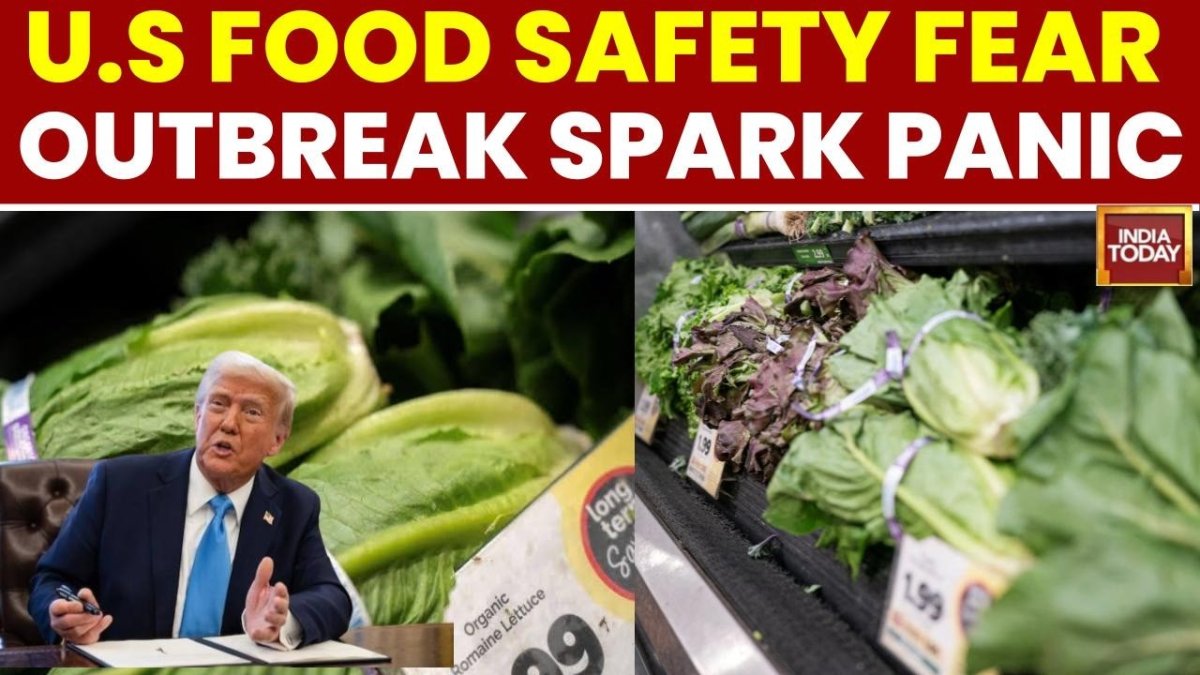
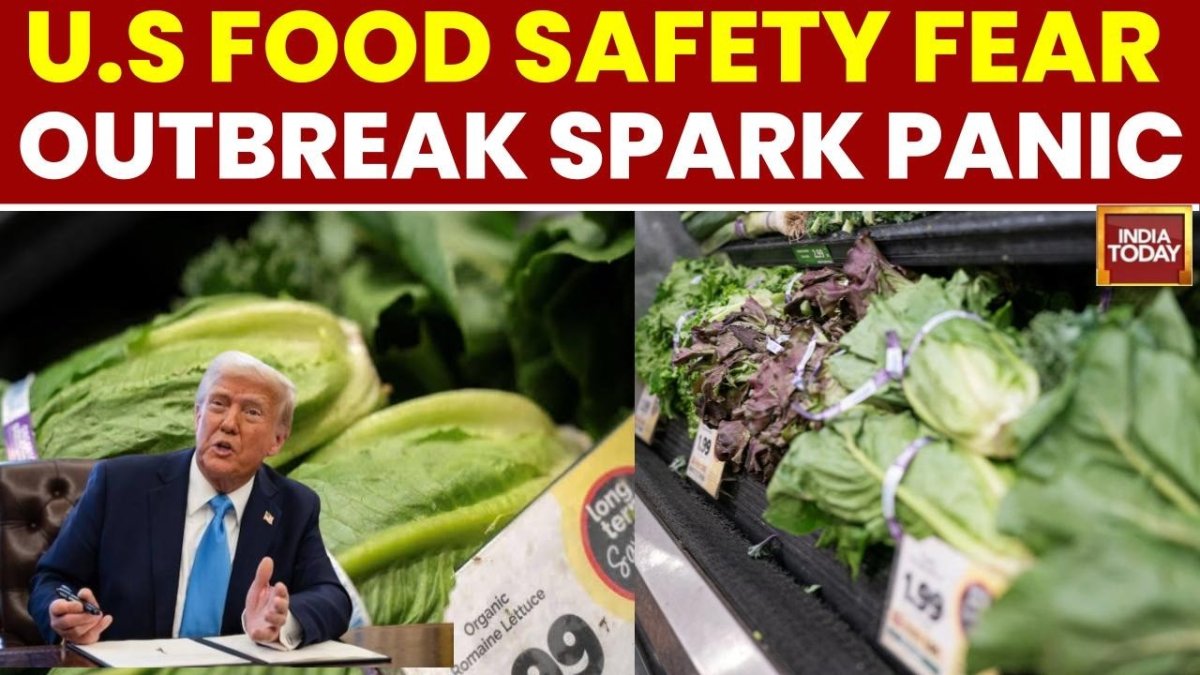
Federal and state investigators have zeroed in on shredded iceberg lettuce served at Taco Bell restaurants as the likely vehicle of transmission. The CDC confirmed on July 24, 2026, that nine states are now linked to the outbreak: Michigan, Ohio, West Virginia, Kentucky, Illinois, Kansas, Oklahoma, and Pennsylvania. Taylor Farms, a major produce supplier, initiated a recall of all iceberg lettuce sourced from its central Mexico facilities. However, in a complication that has frustrated investigators, the US Food and Drug Administration (FDA) later announced that the initial Cyclospora test on Taylor Farms lettuce was a false positive — though the recall stands as a precautionary measure.
The economic impact has been immediate and severe. Taco Bell parent company Yum Brands reported a sharp decline in customer traffic, with consumers avoiding not only the chain but also other quick-service restaurants that serve fresh produce. Chipotle, Sweetgreen, Chop't, and Panera have all reported weaker customer visits in markets affected by the outbreak. Consumer behaviour has shifted perceptibly — diners are avoiding salads, skipping lettuce on burgers, and questioning the safety of fresh produce generally.
What Is Cyclospora and Why Is This Outbreak Different?
Cyclospora cayetanensis is a microscopic, single-celled parasite that infects the small intestine and causes cyclosporiasis — an illness characterised by explosive, watery diarrhoea, stomach cramps, nausea, fatigue, weight loss, and dehydration. Symptoms typically appear approximately one week after ingestion of contaminated food or water and can persist for weeks without antibiotic treatment.
What makes this outbreak unprecedented is not just its scale but the conditions that allowed it to grow. In July 2025, the CDC scaled back its Foodborne Diseases Active Surveillance Network (FoodNet), ending active federal surveillance of Cyclospora and making routine monitoring dependent on state health departments. The CDC's Cyclospora surveillance team was cut from 11 specialists to just 3. The retired director of the FDA's Office of Food Safety, Mark Moorman, told CNN that investigators have never — in three decades — definitively identified the root cause of a Cyclospora outbreak. "There is no kill step for Cyclospora," Moorman said, referring to the fact that standard washing and sanitising procedures used in commercial produce processing do not eliminate the parasite.
As if the primary outbreak were not enough, the CDC has identified a second, separate Cyclospora cluster of 72 cases with no identified food source — suggesting the parasite may be more widespread in the US food supply than previously understood.
What This Means for India: FSSAI and the Food Safety Imperative
For India, the US Cyclospora outbreak is not merely a distant public health event — it is a warning. The Food Safety and Standards Authority of India (FSSAI), the country's principal food regulator, oversees a vast and complex food ecosystem that ranges from street-side vendors to multi-billion-rupee food processing plants. While Cyclospora contamination is less frequently reported in India compared to bacterial pathogens like Salmonella or E. coli, the parasite has been detected in imported fresh produce and herbs entering Indian markets.
India's agricultural export sector, which ships fruits, vegetables, and herbs to markets across the Middle East, Europe, and Southeast Asia, must take note of the US experience. A single contamination event — even one involving a product that tests negative upon re-analysis — can trigger a cascade of consumer avoidance, import restrictions, and reputational damage. The Indian Council of Agricultural Research (ICAR) and its network of food-testing laboratories should evaluate their capacity to detect Cyclospora specifically, as the parasite requires specialised testing protocols that differ from standard bacterial pathogen screening.
The outbreak also exposes a structural weakness in foodborne disease surveillance that India shares with the US: over-reliance on reactive investigation rather than proactive monitoring. India's Integrated Disease Surveillance Programme (IDSP) collects data on foodborne illness outbreaks, but underreporting remains a significant challenge. The CDC's experience — where surveillance cuts allowed a historic outbreak to grow undetected — should inform India's ongoing efforts to strengthen its own disease monitoring infrastructure.
Supply Chain Vulnerabilities: From Mexico to Michigan to Mumbai
The Taylor Farms recall highlights a vulnerability that is equally relevant to India's food supply chain: contamination at the point of production. The lettuce implicated in the outbreak was grown in central Mexico, processed in the United States, and distributed to Taco Bell restaurants across multiple states. The globalised nature of modern food supply chains means that a contamination event in one region can cascade across an entire continent within days.
India faces similar challenges at a different scale. The country's vast network of mandis (wholesale agricultural markets) and fragmented cold-chain infrastructure creates multiple points where contamination can occur — from open-air handling of fresh produce to inadequate temperature control during transport. The FSSAI's Food Safety and Standards (Contaminants, Toxins and Residues) Regulations set maximum limits for contaminants in food products, but enforcement remains uneven across states. The US experience demonstrates that even the world's wealthiest nation with advanced food safety systems can be caught off guard by a microscopic parasite.
Treatment, Prevention, and the Antibiotic Question
Cyclosporiasis is treatable with a course of prescription antibiotics, typically trimethoprim-sulfamethoxazole. Most patients recover fully after completing the prescribed course, though symptoms can persist or recur if treatment is delayed. For the 145 Americans hospitalised in this outbreak, the illness has been severe enough to require medical intervention — a reminder that foodborne illness, often dismissed as a minor inconvenience, can impose significant health and economic costs.
Prevention, however, remains the most effective strategy. The CDC recommends thorough washing of fruits and vegetables under running water, practising good hand hygiene, and avoiding food that may have been contaminated with human waste. But because Cyclospora can cling tightly to fresh produce, washing alone may not be sufficient. Commercial processors in the US are now exploring new intervention technologies — including advanced washing systems, irradiation, and controlled-atmosphere storage — that could serve as models for India's food processing sector.
Lessons for India's Food Testing Infrastructure
The US outbreak has revealed a critical blind spot in food safety: the absence of a reliable detection and intervention protocol for Cyclospora. The FDA's false-positive test result on Taylor Farms lettuce, followed by a recall that was maintained despite the contradictory finding, illustrates the difficulty regulators face when the testing technology itself produces ambiguous results.
For India, the implications are clear. The FSSAI's network of 72 notified food-testing laboratories and 14 referral laboratories must be equipped with the capability to detect Cyclospora — a capability that requires specialised molecular testing (PCR-based) that many Indian food labs may not currently possess. The ICAR's National Bureau of Agriculturally Important Microorganisms and other research institutions should consider developing indigenous testing protocols tailored to Indian produce varieties and growing conditions.
The Bottom Line
The largest Cyclospora outbreak in American history is a wake-up call for food safety regulators worldwide. The parasite's ability to evade standard detection methods, survive washing procedures, and exploit gaps in disease surveillance networks means that no country — including India — can afford to be complacent. As India's food processing industry grows at 11 per cent annually and its agricultural exports cross Rs 2.5 lakh crore, investing in next-generation food safety infrastructure is not a regulatory luxury — it is an economic and public health imperative. The question is not whether India will face its own large-scale Cyclospora event, but whether the FSSAI, ICAR, and state food safety authorities will have the tools and protocols in place when it arrives.
— By Dr. Raj Patel, Staff Writer
This article was produced with AI-assisted research and editorial support. Reporting is based on sources cited in the article.
What's Your Reaction?
 Like
0
Like
0
 Dislike
0
Dislike
0
 Love
0
Love
0
 Funny
0
Funny
0
 Wow
0
Wow
0
 Sad
0
Sad
0
 Angry
0
Angry
0

India/South Asia Correspondent at Global1.News. Analytical voice with a background in science and health journalism. Based in New Delhi, covering Indian politics, education, healthcare, technology, and policy. Breaks down complex data into clear, actionable reporting.













Comments (0)