
Toyota Sales Slide Fifth Month as Iran Crisis, China Slump Bite
Toyota Motor's global sales fell 1.1% in June to 926,688 units, marking the fifth consecutive monthly decline as Middle East turmoil and a 17% drop in China sales pressured the world's largest automaker. North America provided a rare bright spot with 0.9% growth in first-half sales, driven by hybrid vehicle demand. Toyota maintained its position as the world's top-selling automaker for the seventh straight year with 5.39 million vehicles sold in the first half, but the sus...
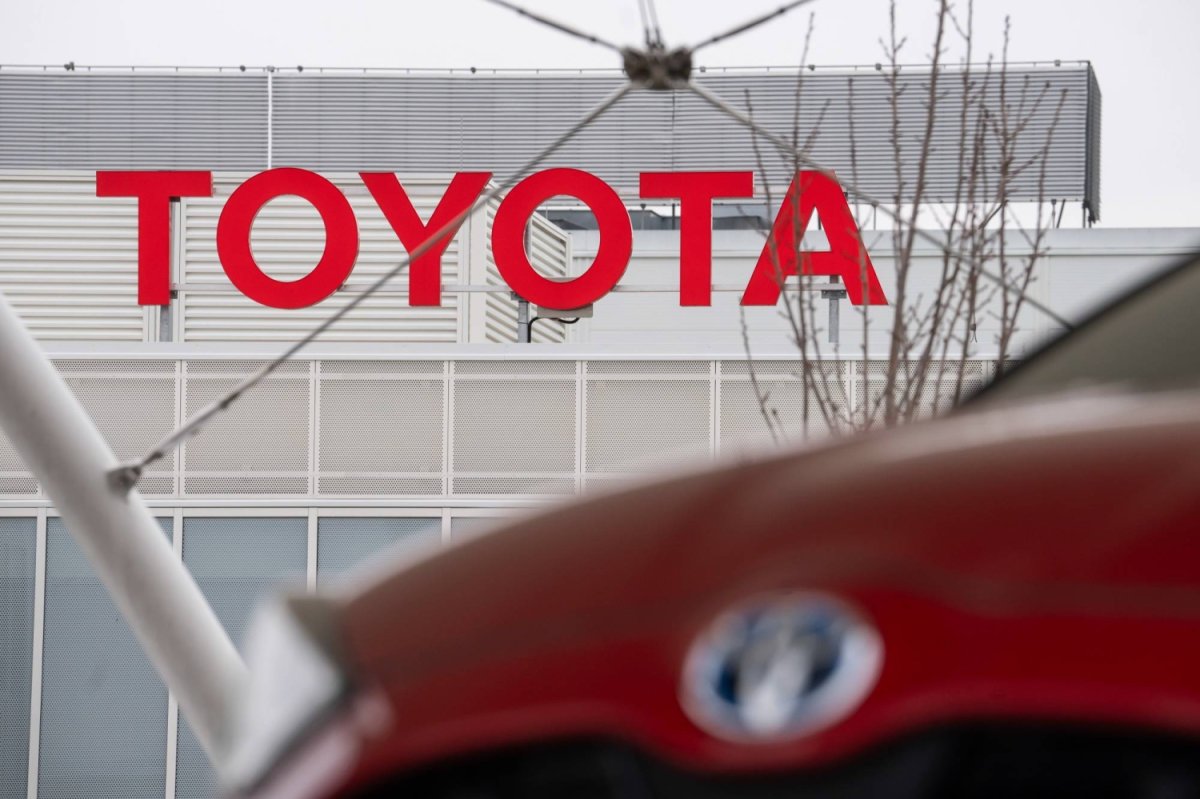
Toyota Sales Slide Fifth Month as Iran Crisis, China Slump Bite
Tokyo, Japan — Toyota Motor Corp.'s global sales fell for the fifth consecutive month in June 2026, as turmoil in the Middle East and a deepening slump in China's automotive market continued to pressure the world's largest automaker. Group sales, including subsidiary Daihatsu Motor, slipped 1.1 percent year-on-year to 926,688 units, according to data released Thursday.
Tags: Toyota Motor, global sales, Japan automakers, Iran conflict, China market, Daihatsu, supply chain disruption, Middle East, hybrid vehicles, North America
Regional Breakdown: China and Middle East Lead Decline
By country and region, the sharpest contractions came from Toyota's two most challenged markets. Sales in China slid 17.1 percent to 694,670 units for the first half of 2026, reflecting intensifying competition from domestic electric vehicle manufacturers such as BYD and Xiaomi, as well as a broader economic slowdown in the world's largest auto market. The Middle East, meanwhile, saw a 21.6 percent drop in sales to 218,855 vehicles, as the ongoing US-led military campaign against Iran disrupted shipping routes, raised insurance costs, and dampened consumer demand across the Gulf states.
Soaring oil and raw-material costs, along with disrupted supply routes through the Strait of Hormuz, are squeezing global manufacturers as the conflict in the Middle East enters its seventh month. Toyota is particularly exposed because its just-in-time manufacturing model relies on the seamless flow of components across borders.
North America Bright Spot: Hybrid Demand Drives Growth
Not all regions followed the downward trend. Sales in North America edged up 0.9 percent to 1.45 million vehicles in the first half, buoyed by robust demand for Toyota's hybrid lineup. Models such as the RAV4 Hybrid, Camry Hybrid, and the recently launched Prius Prime plug-in continue to attract buyers seeking fuel efficiency amid volatile gasoline prices. The North American performance suggests that Toyota's long-standing bet on hybrid technology — rather than a full pivot to all-electric vehicles — is paying off in markets where charging infrastructure remains uneven.
Production Momentum: Output Rising Despite Sales Dip
While sales slipped, global production rose 2.2 percent in June to 984,408 vehicles, indicating that Toyota is managing its supply chain challenges more effectively than earlier in the year. The production increase may also reflect a deliberate strategy to rebuild inventory buffers that were depleted during the post-pandemic semiconductor shortage. However, analysts warn that sustained Middle East disruptions could erode this production momentum if key components such as microcontrollers and aluminum sheet — much of which passes through Red Sea and Gulf shipping lanes — face new bottlenecks.
First-Half Performance: Industry Lead Maintained Despite Headwinds
For the first half of 2026, Toyota group sold 5.39 million vehicles worldwide, retaining the title of the world's top-selling automaker for the seventh consecutive year. The result keeps Toyota ahead of German rival Volkswagen AG, which has faced its own challenges in China. Yet the five-month sales slide underscores the fragility of Toyota's position: the company's dominance is increasingly dependent on its resilience in markets — notably North America and Japan — that are relatively insulated from the geopolitical turmoil reshaping global trade.
The Kyodo News data confirms that while Toyota's absolute market share remains formidable, the growth trajectory has flattened. Investors will be watching the July-September quarter closely for signs of whether the decline is a cyclical trough or the beginning of a structural erosion in Toyota's global footprint.
METI and Government Response: Japan's Industrial Policy Stakes
Toyota's struggles carry implications beyond the company's bottom line. Japan's Ministry of Economy, Trade and Industry (METI) views the automotive sector as a pillar of national industrial strategy. Toyota alone accounts for roughly 8 percent of Japan's exports and sustains an extensive domestic supply chain of parts manufacturers, many of them small and medium enterprises concentrated in Aichi Prefecture and the Chukyo industrial region. A prolonged sales downturn could ripple through Japan's manufacturing base, potentially affecting employment and regional economies.
METI officials have signaled support for Japanese automakers navigating the China-Middle East dual pressure, including expanded trade credit guarantees and diplomatic efforts to secure alternative shipping routes. However, Tokyo's policy toolkit is limited by Japan's dependence on Middle Eastern oil — a vulnerability that the current crisis has thrown into sharp relief.
Strategic Implications: Japan's Auto Sector at a Crossroads
The five-month sales decline raises fundamental questions for Toyota and the broader Japanese automotive industry. China, once Toyota's most important growth market, is rapidly transforming into a battleground where local EV makers command cost and regulatory advantages. Meanwhile, the Middle East crisis has exposed the fragility of supply chains that depend on stable sea lanes. Toyota's leadership faces pressure to accelerate localization of production in key markets, diversify component sourcing away from conflict-adjacent regions, and refine its multi-pathway technology strategy that balances hybrids, plug-ins, hydrogen fuel cells, and battery electric vehicles.
For Japan's policymakers, Toyota's situation is a cautionary tale about the risks of overconcentration in any single market or supply corridor. The government's economic security agenda — which includes subsidies for domestic semiconductor production and critical mineral supply chains — reflects a growing recognition that Japan's industrial competitiveness depends on resilience as much as innovation.
What to Watch For
In the coming months, analysts will focus on three indicators: whether Toyota's North American hybrid momentum can offset further declines in China and the Middle East; whether production output can be sustained if the Iran conflict disrupts additional supply routes; and whether Toyota's upcoming electric vehicle launches — including the bZ3X crossover and a next-generation solid-state battery prototype — can gain traction in markets where Chinese competitors are already deeply entrenched.
Toyota's July-September earnings release, expected in early November, will provide the first comprehensive picture of how the company's margin structure is holding up under the combined pressure of geopolitical disruption and market transition. For Japan Inc., the outcome will be more than a corporate earnings story — it will be a measure of whether one of the country's flagship industries can navigate the most volatile global environment since the 1973 oil shock.
By Kenji Tanaka, Staff Writer
This article was produced with AI-assisted research and editorial support. Reporting is based on sources cited in the article.
What's Your Reaction?
 Like
1
Like
1
 Dislike
0
Dislike
0
 Love
0
Love
0
 Funny
0
Funny
0
 Wow
0
Wow
0
 Sad
0
Sad
0
 Angry
0
Angry
0

Japan Correspondent at Global1.News. Tokyo-based voice covering Japanese politics, technology, economy, and culture. Tracks the intersection of tradition and innovation in one of the world's most dynamic societies.















Comments (0)