
Myanmar Leader Min Aung Hlaing Calls on Japanese Firms
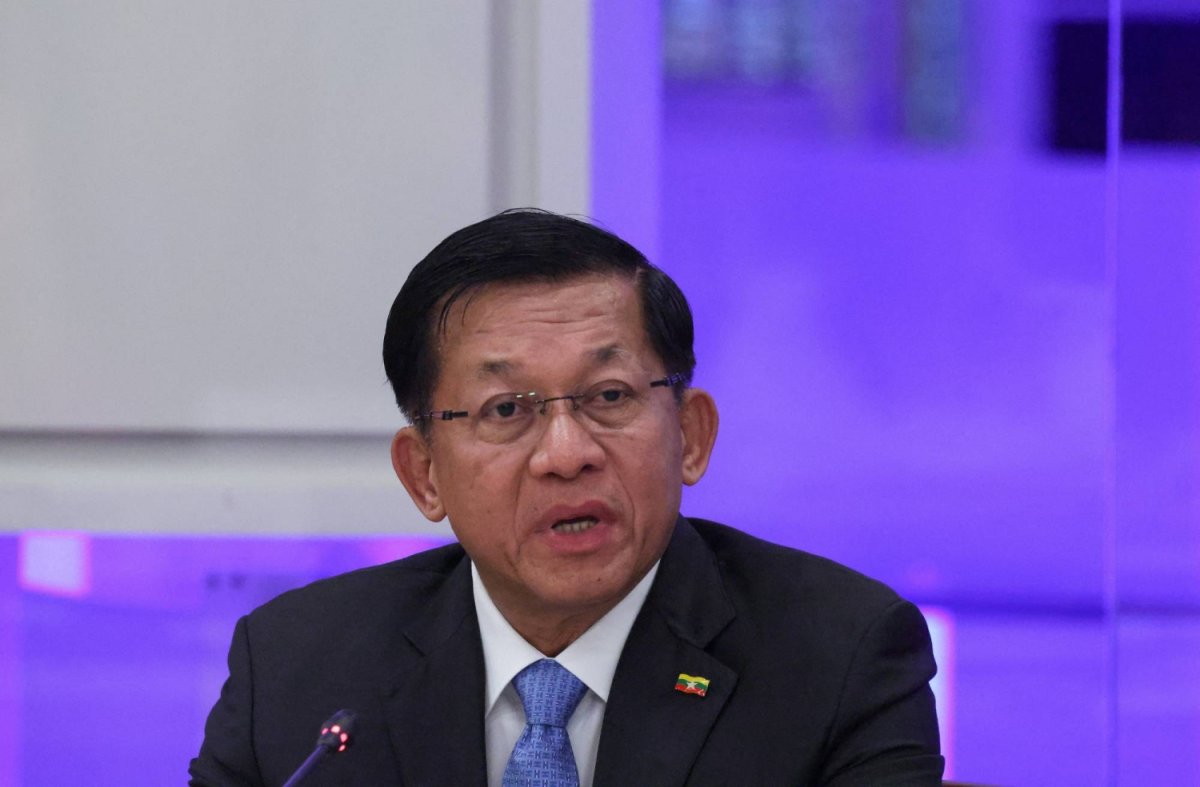
Myanmar Leader Min Aung Hlaing Calls on Japanese Firms to Invest Myanmar President Min Aung Hlaing has issued a direct appeal to Japanese companies to expand investment and trade in the conflict-ravaged Southeast Asian nation, speaking at a business event in Yangon on July 30, 2026. The call comes at a moment of acute diplomatic tension: Japan has not recognized the military regime that seized power in the February 2021 coup, nor the administration Min Aung Hlaing now...
Myanmar Leader Min Aung Hlaing Calls on Japanese Firms to Invest
Myanmar President Min Aung Hlaing has issued a direct appeal to Japanese companies to expand investment and trade in the conflict-ravaged Southeast Asian nation, speaking at a business event in Yangon on July 30, 2026. The call comes at a moment of acute diplomatic tension: Japan has not recognized the military regime that seized power in the February 2021 coup, nor the administration Min Aung Hlaing now leads following his transition from military commander-in-chief to civilian president in April 2026.
Tags: Myanmar, Japan, Min Aung Hlaing, Japanese investment, Yangon, military junta, Japan-Myanmar relations, METI, Southeast Asia, rare earth minerals, BIMSTEC, Kirin Holdings
The Yangon Business Event and the Investment Appeal
Speaking before an audience of Japanese business representatives and Myanmar government officials in Yangon, Myanmar's commercial capital, Min Aung Hlaing positioned the country as an underexploited market ripe for Japanese capital. The appeal covers both trade expansion and new investment across sectors including manufacturing, infrastructure, and natural resource extraction. The event itself represents the regime's continuing effort to project normalcy and attract foreign capital despite the country's ongoing civil war.
Neither the Japan External Trade Organization (JETRO) nor the Ministry of Economy, Trade and Industry (METI) have issued formal statements on the president's overture. Japan's official position — non-recognition of the military regime — creates a carefully managed distance between state-level diplomatic relations and the operational reality of Japanese companies already present in Myanmar.
Japan's Diplomatic Balancing Act
Tokyo has walked a delicate line since the 2021 coup. Japan has not recognized the junta or the subsequent administration, maintaining instead that it deals with Myanmar's representation at a technical and humanitarian level. This position places Japan between Western allies who have imposed sweeping sanctions and regional partners like Thailand and China who have engaged more openly with the regime.
Japan's approach is shaped by several factors: the presence of approximately 400 Japanese companies that entered Myanmar after the 2011 transition to civilian government, strategic competition with China for influence in Southeast Asia, and humanitarian concerns about the Rohingya crisis and ongoing civil conflict. The Ministry of Foreign Affairs (MOFA) has continued to fund humanitarian programs through ASEAN channels while avoiding direct engagement with regime officials at the ministerial level.
The non-recognition stance means that Min Aung Hlaing's investment call lands in a policy grey zone. Japanese companies must weigh the commercial opportunity against compliance with international sanctions regimes — particularly those imposed by the United States, the European Union, and the United Kingdom — as well as reputational risk from civil society scrutiny.
The Business Reality: 400 Companies and Growing Caution
Approximately 400 Japanese companies established operations in Myanmar following the 2011 political and economic reforms that opened the country after decades of military isolation. Major Japanese names include Toyota, which operates an assembly plant near Yangon, and Suzuki, which has a significant manufacturing presence. Consumer goods giant Kirin Holdings ended its joint venture with Myanmar Economic Holdings Limited in 2021, citing human rights concerns following the military takeover.
The caution among Japanese firms has intensified in recent years. In 2025, three Japanese companies — Kamigumi, Mitsubishi Corporation, and Marubeni Corporation — confirmed their withdrawal from a major port development project in Yangon following sustained pressure from civil society organizations in both Myanmar and Japan. A separate investigative probe in 2025 identified 10 Japanese firms with possible business links to the military junta, raising compliance and reputational questions across the Japanese business community.
The investment climate has deteriorated significantly since 2021. Myanmar's economy has contracted sharply amid the civil war, international sanctions, and the collapse of the banking system. Currency controls, supply chain disruptions, and labor shortages have made routine business operations increasingly difficult for foreign firms.
Geopolitical Dimensions: China's Shadow and Rare Earth Resources
Myanmar's strategic importance extends beyond its domestic market. The country sits at the crossroads of China's Belt and Road Initiative, with Chinese-built pipelines running from Myanmar's coast to Yunnan province, bypassing the Malacca Strait. China has been the junta's primary diplomatic and economic lifeline since the 2021 coup, providing arms, financing, and UN Security Council cover.
Japan's interest in Myanmar is partly competitive — Tokyo views Southeast Asia as a critical arena for countering China's expanding influence. Myanmar is also a significant supplier of rare earth minerals, particularly heavy rare earth elements critical for advanced manufacturing, electronics, and defense technology. The country's natural gas reserves, which currently supply neighboring Thailand and China, represent another strategic resource that Japanese trading houses have historically sought to access.
The competition between Japanese and Chinese economic engagement in Myanmar mirrors broader dynamics across the Mekong subregion, where Japan has promoted the "quality infrastructure" alternative to China's BRI model. However, the political risk associated with engagement with an unrecognized regime complicates this strategy considerably.
Human Rights, Sanctions, and Ethical Considerations
International sanctions regimes continue to constrain business activity in Myanmar. The United States, the European Union, the United Kingdom, and Canada maintain targeted sanctions against Myanmar's military leadership, military-owned enterprises, and sectors that generate revenue for the regime. The junta has been accused by human rights organizations, United Nations investigators, and the International Court of Justice of crimes against humanity and genocide, particularly relating to the Rohingya population in Rakhine State.
The civil war that erupted after the 2021 coup has killed tens of thousands and displaced over 2 million people. Multiple ethnic armed organizations control large parts of the country's border regions, and the regime's territorial control remains contested. Any new Japanese investment would need to navigate sanctions compliance, human rights due diligence, and the physical security risks of operating in an active conflict zone.
Japanese civil society organizations, including the Myanmar Japan Civil Society Network, have called for greater transparency around Japanese corporate activities in Myanmar and have pressed for a fully responsible exit strategy rather than continued engagement under the junta's terms.
What This Means for Japanese Business and METI Policy
For Japanese companies currently operating in Myanmar, Min Aung Hlaing's investment appeal presents both opportunity and risk. The regime's need for foreign capital and expertise is acute — foreign direct investment has collapsed since 2021, and international sanctions have cut off large portions of the formal financial system. A Japanese company with risk tolerance and compliance infrastructure could potentially negotiate favorable terms.
However, the reputational and regulatory risks are substantial. The extraterritorial reach of US and EU sanctions means that Japanese banks facilitating transactions linked to Myanmar could face secondary sanctions. METI has not issued formal guidance on new investment in Myanmar since the coup, leaving companies to navigate the policy ambiguity independently.
The Japanese government's position is further complicated by the need to balance commercial interests with its G7 commitments and its human rights-focused foreign policy narrative. Japan has positioned itself as a champion of a "free and open Indo-Pacific" — engagement with an internationally isolated military regime cuts against this messaging.
What to Watch For
Several developments will shape the trajectory of Japan-Myanmar economic engagement in the coming months. Min Aung Hlaing's planned visit to Thailand for regional discussions, including the Bay of Bengal Initiative for Multi-Sectoral Technical and Economic Cooperation (BIMSTEC) framework, will test whether Myanmar's diplomatic isolation is easing at the regional level.
The response from Japan's business community will be indicative. Watch for statements from Keidanren (the Japan Business Federation), JETRO investment surveys, and any official METI commentary on the regime's investment appeal. Individual corporate decisions — whether to expand, maintain, or exit Myanmar operations — will signal the risk appetite of Japanese capital in this volatile environment.
On the sanctions front, any shift in Western policy toward conditional engagement — which some Southeast Asian governments have advocated — could open the door for Japanese companies to expand their footprint. Conversely, intensified conflict or new atrocity allegations would strengthen the case for divestment and isolation.
For Japanese firms with exposure to Myanmar, the prudent path remains a watching brief: maintain existing operations where legally permissible, defer new investment commitments, and prepare contingency plans for a range of political and security scenarios. The Yangon business event has opened a conversation — whether Japanese capital chooses to walk through that door depends on factors far beyond Min Aung Hlaing's control.
By Kenji Tanaka, Staff Writer
This article was produced with AI-assisted research and editorial support. Reporting is based on sources cited in the article.
What's Your Reaction?
 Like
0
Like
0
 Dislike
0
Dislike
0
 Love
0
Love
0
 Funny
0
Funny
0
 Wow
0
Wow
0
 Sad
0
Sad
0
 Angry
0
Angry
0

Japan Correspondent at Global1.News. Tokyo-based voice covering Japanese politics, technology, economy, and culture. Tracks the intersection of tradition and innovation in one of the world's most dynamic societies.














Comments (0)