
Gaza Karate Kids Use Martial Arts for War Trauma Recovery
In the shattered streets of Gaza, where summer once meant laughter and games, Palestinian children are now turning to karate and martial arts to rebuild shattered nerves and reclaim a sliver of childhood amid relentless loss and displacement.
In the shattered streets of Gaza, where summer once meant laughter and games, Palestinian children are now turning to karate and martial arts to rebuild shattered nerves and reclaim a sliver of childhood amid relentless loss and displacement.
Gaza's Karate Kids Channel Discipline and Focus to Survive War's Lasting Scars
Gaza City, Gaza Strip — Children here rise each morning not for school or play but to queue for water and carry food from communal kitchens, yet some now step onto makeshift mats for karate sessions that channel their trauma into controlled movement and mental strength.
The karate program and how it helps children cope with trauma
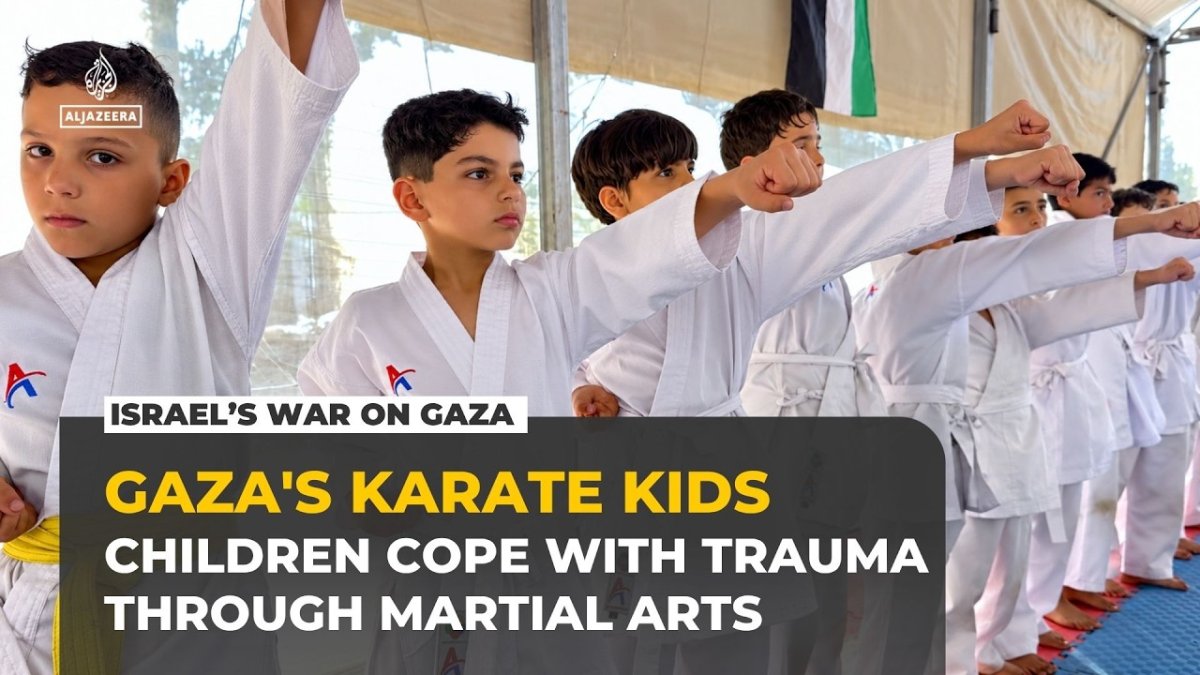
Al Jazeera English released its video report titled Gaza's karate kids on or around 26 July 2026, showing Palestinian children practising martial arts as a direct response to the trauma of war, displacement and loss that has defined their lives since October 2023.
These sessions give young participants repeated physical routines that replace the chaos of air strikes with predictable sequences of blocks, strikes and breathing exercises.
Trainers in the report emphasise how the discipline of karate helps children regain a sense of control after their homes in places such as Jabalia refugee camp were destroyed.
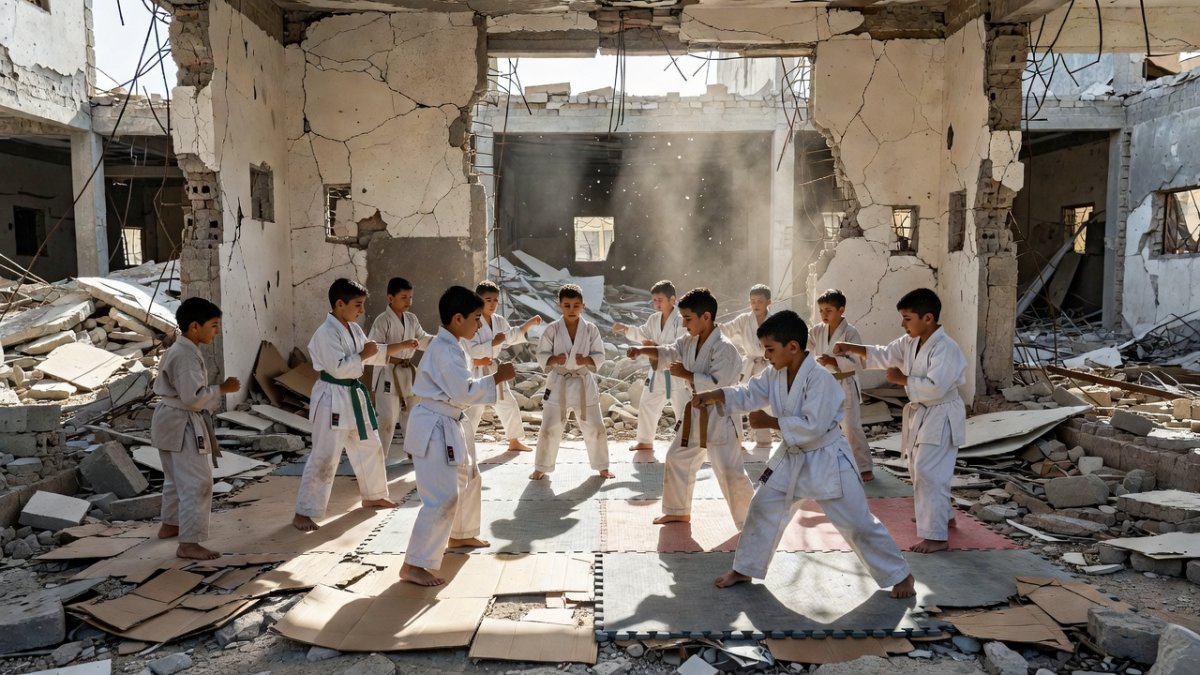
These karate sessions unfold on whatever flat ground remains in Gaza City, with kids lining up in rows to repeat blocks, strikes and breathing drills that turn the madness of daily survival into something steady and predictable. The Al Jazeera footage captures how the simple act of moving together on those makeshift mats gives the youngsters a rhythm that pushes back against the constant uncertainty of queues for water and food. Trainers keep the focus tight on form and control, showing the children that their bodies can still follow orders even when the world outside feels completely broken.
Young participants light up during the drills, their faces shifting from wary to focused as they punch and kick in unison, proving the routines are doing more than just passing time. The discipline builds a quiet confidence that carries beyond the session, helping them face another day of displacement with a bit more steel in their spines. It is this raw, hands-on approach that turns trauma into something manageable, one controlled movement at a time.
The broader context: Gaza's children after three years of war
More than 73,000 people have been killed since the war began in October 2023, including thousands of children, while most buildings stand damaged or destroyed and the majority of the population remains displaced.
For the third consecutive year, summer brings no camps, trips or games; instead children collect firewood and queue at communal kitchens as described in Maram Humaid's 8 July 2026 Al Jazeera article.
Faten Nabhan, 35, from western Gaza City, lost her husband Raafat in an Israeli air strike on their Jabalia home in October 2024 and now cares for six school-age children with no access to drawing, colours or organised activities.
She told reporters she feels deep sorrow that her children spend their childhood memorising Quran verses instead of playing, a reality confirmed by a UNICEF assessment in May that found young children lack safe and stimulating environments.
Sport as therapy: the science and practice of trauma recovery through physical activity
The Al Jazeera report documents how repeated karate drills provide structured physical activity that interrupts cycles of fear and hyper-vigilance in children who have witnessed repeated violence.
Community initiatives highlighted in the coverage operate with very limited resources yet deliver daily sessions that combine movement, focus and peer support where formal psychological services remain scarce after the October 2025 ceasefire.
Physical repetition in martial arts creates measurable calm, allowing children to process loss without words when play itself has become a forgotten need.
Repeated physical routines like those in karate directly calm the nervous system by replacing hyper-vigilance with predictable patterns of movement and breath, giving trauma-affected children a way to process fear without needing words. Studies from conflict zones around the world show that structured activity lowers stress hormones and improves sleep, exactly the kind of relief these Gaza kids need after years of air strikes and loss. The sessions create small islands of calm where the body learns safety again through repetition rather than through talk therapy that simply is not available.
In places hit by long wars, similar grassroots sports programmes have helped youngsters rebuild focus and peer bonds when formal services collapsed. The measurable calm that comes from drilling the same sequences day after day lets children carry their grief in a steadier way, turning scattered energy into purposeful action. This is why the karate mats matter so much right now.
The South African perspective: parallels with SA's own history of sport for social healing
South African sports fans recognise this story because our own communities have long used organised sport to mend divisions after decades of conflict and forced removals.
Grassroots clubs across townships still run rugby, soccer and netball programmes that teach discipline and belonging to children who grew up amid violence, exactly as karate now serves Gaza's displaced youth.
Transformation committees at SA Rugby and the Department of Sport continue to fund such initiatives because physical activity builds national pride and unity in ways that speeches alone cannot achieve.
When South Africans watch these Gaza children on the mat, they see echoes of our own journey where sport turned pain into purpose and gave young people a reason to stand taller.
South African sports fans know this story deep in our bones because our own townships used rugby, soccer and netball to stitch communities back together after forced removals and violence. The same spirit that kept grassroots clubs alive during the darkest years now echoes in Gaza, where kids on the mat are learning the same lessons of discipline and belonging that turned pain into purpose here at home. SA Rugby and the Department of Sport have long backed these efforts because they understand that physical activity builds unity faster than speeches ever could.
When we watch these Gaza children stand taller after a session, it reminds every South African of our own journey where sport gave young people a reason to believe in themselves again. The passion and resilience on display hit close to home, showing that a disciplined body can still carry hope even when everything around it has fallen apart. That connection makes the story feel like part of our shared fight.
Community resilience and the role of grassroots initiatives
With most formal summer structures gone, local volunteers in Gaza have stepped forward to run the karate classes featured in the Al Jazeera video, filling the gap left by destroyed infrastructure and restricted aid.
These same community efforts mirror the township clubs that kept sport alive in South Africa during the darkest years, proving that ordinary people can create safe spaces even when governments and international bodies fall short.
Each session strengthens not only individual children but the wider social fabric, giving parents like Faten Nabhan a small measure of relief that their sons and daughters are learning focus rather than only fear.
Local volunteers in Gaza are running these karate classes with almost nothing but their own time and whatever open space still stands, stepping up exactly where destroyed infrastructure and restricted aid have left huge gaps. They keep the sessions going day after day because they see how the structure helps families like Faten Nabhan’s find a small slice of relief amid the sorrow. This kind of ordinary-people power mirrors the township clubs that kept sport alive in South Africa when bigger systems failed, proving that communities can create safe spaces even in the toughest conditions.
Each session strengthens not only the kids but the wider social fabric, giving parents a moment to breathe while their children learn focus instead of only fear. The volunteers’ dedication shows that real healing starts at ground level, with people refusing to let war steal every last bit of childhood. It is this bottom-up grit that keeps the flame of resilience burning.
What to watch for: the future of these programs
Continued Israeli attacks after the October 2025 ceasefire threaten the survival of these fragile karate initiatives, which depend on volunteers and whatever space remains standing in Gaza City and surrounding areas.
South African sports organisations that have experience scaling grassroots trauma programmes after our own conflicts could share practical models if access and funding lines open.
Without sustained support, the children now finding brief moments of control on the mat risk losing even this modest outlet as displacement and resource shortages deepen.
These Gaza karate kids remind every South African sports lover that a disciplined body can still carry hope when the world around it has fallen apart, and that our own history proves sport can help a wounded nation stand again.
By Dante Williams, Staff WriterThis article was produced with AI-assisted research and editorial support. Reporting is based on sources cited in the article.
What's Your Reaction?
 Like
0
Like
0
 Dislike
0
Dislike
0
 Love
0
Love
0
 Funny
0
Funny
0
 Wow
0
Wow
0
 Sad
0
Sad
0
 Angry
0
Angry
0

Breaking News and Investigations Correspondent at Global1.News. Based in London, covering global breaking news, security, and investigative stories. Known for digging deeper and connecting the dots across continents.










Comments (0)