
The Strategic Ramifications of Russian-North Korean Intelligence Cooperation in Northeast Asia
The Strategic Ramifications of Russian-North Korean Intelligence Cooperation in Northeast Asia North Korea's Persistent Gaps in Indigenous Reconnaissance Capabilities North Korea's launch of Malligyong-1 in November 2023 marked a notable step in Pyongyang's efforts to develop an independent satellite reconnaissance program. Yet the satellite's single low Earth orbit platform in
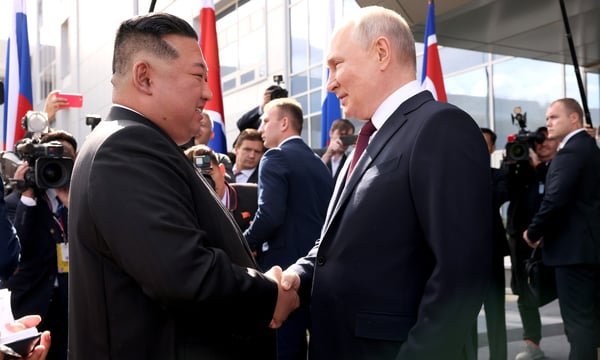
North Korea's Persistent Gaps in Indigenous Reconnaissance Capabilities
North Korea's launch of Malligyong-1 in November 2023 marked a notable step in Pyongyang's efforts to develop an independent satellite reconnaissance program. Yet the satellite's single low Earth orbit platform inherently restricts continuous coverage, creating significant gaps in revisit times that undermine its effectiveness against time-sensitive targets such as mobile missile launchers, aircraft movements, and naval deployments. These limitations highlight a structural mismatch between North Korea's growing intelligence requirements and its current technological base, forcing Pyongyang to seek external augmentation rather than relying solely on domestic development.
Analysts at the Korea Institute for International Economic Policy have long noted that such constraints erode the credibility of North Korea's deterrence posture. Without persistent surveillance, the Democratic People's Republic of Korea struggles to monitor South Korean and United States force dispositions in real time, limiting its ability to respond dynamically to perceived threats. This shortfall has prompted renewed interest in partnerships that could bridge the gap without requiring full technology transfers, preserving North Korean autonomy while addressing immediate operational deficiencies.
Historical patterns in Northeast Asian security further illustrate how such capability shortfalls have shaped inter-Korean dynamics. Past episodes of limited reconnaissance have compelled Pyongyang to adopt riskier signaling strategies, increasing the potential for miscalculation along the demilitarized zone. The persistence of these gaps therefore carries direct implications for stability on the peninsula, influencing both South Korean defense planning and the broader calculations of the Republic of Korea Ministry of Foreign Affairs.
The Calculus Behind Potential Russian Intelligence Sharing Arrangements
Russia maintains an extensive constellation of military and civilian Earth observation satellites with coverage over Northeast Asia, offering a ready-made alternative to technology transfers. By sharing processed intelligence rather than hardware, Moscow could enhance North Korean situational awareness while retaining full control over sensitive collection methods and data streams. This approach allows calibration of information flows according to political conditions, thereby preserving Russian leverage in the bilateral relationship.
Scholars at the Asan Institute for Policy Studies have emphasized that such arrangements align with Russia's broader strategic objectives in the region. Intelligence sharing avoids the proliferation risks associated with satellite technology exports, which could invite additional international scrutiny. At the same time, it strengthens North Korea as a counterweight to Western influence without committing Moscow to deeper military integration that might strain relations with other regional actors.
The arrangement also reflects Russia's interest in maintaining flexibility amid evolving sanctions regimes. Data can be restricted or suspended based on shifting priorities, ensuring that Pyongyang remains dependent on continued cooperation. This dynamic introduces new variables into crisis management scenarios, where Russian decisions on intelligence provision could directly shape North Korean responses to developments on the Korean Peninsula.
Recalibrating South Korean Deterrence Under Enhanced North Korean Awareness
Should Russian satellite-derived intelligence reach Pyongyang, South Korean planners would face the prospect of diminished operational secrecy regarding force dispositions and major installations. Facilities such as Osan Air Base, Kunsan Air Base, Camp Humphreys, and United States Forces Korea headquarters could become subject to more timely monitoring, eroding the reconnaissance edge long enjoyed by the Republic of Korea and its allies. This shift would necessitate adjustments in deployment patterns and exercise schedules to mitigate exposure.
Analyses from the Korea Development Institute underscore the economic and strategic costs of such adaptation. Accelerated investment in indigenous satellite programs would likely follow, alongside greater emphasis on counter-surveillance measures and hardened command structures. These responses would reshape defense budgeting priorities and influence procurement decisions within the Ministry of National Defense, potentially straining resources already allocated to other modernization initiatives.
The psychological dimension of this development also merits attention. South Korean public confidence in deterrence could waver if perceptions grow that North Korea possesses near-real-time visibility into allied movements. Policymakers in Seoul would therefore need to communicate reassurance measures clearly, drawing on established frameworks of extended deterrence to maintain domestic support for alliance commitments.
Strengthening ROK-US Alliance Coordination in Response
The Republic of Korea-United States alliance would serve as the primary mechanism for addressing the intelligence asymmetry introduced by potential Russian sharing. Joint planning sessions could incorporate new protocols for obscuring critical assets and developing redundant surveillance architectures less vulnerable to external observation. Such coordination would build upon decades of interoperability developed through combined exercises and shared threat assessments.
Officials at the Ministry of Foreign Affairs have historically prioritized alliance resilience during periods of technological change on the peninsula. In this context, enhanced intelligence fusion between Seoul and Washington could offset North Korean gains, ensuring that alliance decision-making remains informed by superior collection capabilities. This approach would also reinforce the credibility of mutual defense commitments amid shifting regional power balances.
Furthermore, the alliance framework provides avenues for diplomatic engagement aimed at discouraging expanded Russian-North Korean ties. Coordinated messaging through multilateral forums could highlight the destabilizing effects of intelligence sharing, appealing to shared interests in non-proliferation and regional stability. These efforts would complement military adaptations with political strategies designed to shape adversary incentives.
China's Prospective Reactions and the Northeast Asian Security Environment
Beijing's response to deepened Russian-North Korean intelligence cooperation would likely reflect its own stake in Korean Peninsula stability. While China maintains close ties with Pyongyang, expanded Russian influence could complicate Beijing's preferred role as the primary external interlocutor. Analysts anticipate measured diplomatic signaling rather than outright opposition, given overlapping interests in preventing uncontrolled escalation.
The arrangement would nevertheless introduce new frictions into trilateral dynamics among China, Russia, and North Korea. South Korean strategists would monitor these interactions closely, recognizing that shifts in Chinese tolerance for Russian activities could alter the broader balance of influence in Northeast Asia. Historical precedents of great-power competition on the peninsula suggest that such realignments often produce ripple effects extending beyond immediate military considerations.
Regional institutions such as the Korea Institute for International Economic Policy have documented how external partnerships influence North Korean behavior over time. In this instance, Chinese reactions could either constrain or enable further Russian involvement, depending on assessments of net strategic benefit. Seoul's foreign policy would therefore require calibrated engagement with Beijing to manage these uncertainties.
Implications for Crisis Signaling and Export Control Regimes
Russia's position as an intelligence provider would elevate its influence over escalation pathways on the Korean Peninsula. The ability to modulate information flows grants Moscow a potential role in shaping North Korean perceptions during periods of tension, affecting the timing and content of crisis signals. This development would complicate existing mechanisms for de-escalation that rely on predictable patterns of behavior.
Export control monitoring would also face new challenges. Distinguishing between legitimate commercial satellite data and militarily relevant intelligence shared under bilateral arrangements would strain verification processes. South Korean and allied authorities would need to refine existing frameworks to account for this indirect form of capability enhancement, drawing lessons from prior episodes of technology circumvention.
These factors collectively underscore the strategic significance of intelligence sharing as a tool of statecraft. Unlike hardware transfers, data provision offers reversible and adjustable support, allowing Russia to calibrate involvement according to evolving geopolitical conditions while preserving core technological advantages.
Long-Term Policy Considerations for Seoul
Over the longer term, South Korea would benefit from diversifying its reconnaissance architecture to reduce reliance on any single source of intelligence superiority. Investments in commercial satellite partnerships and allied data-sharing agreements could provide resilience against potential disruptions. Such measures would align with established patterns of technological adaptation observed in Korean defense policy since the early post-Cold War period.
Engagement with research institutions including the Asan Institute for Policy Studies would support evidence-based strategy formulation. Their assessments of Russian-North Korean dynamics offer valuable context for anticipating future developments and calibrating responses that protect South Korean interests without unnecessarily provoking escalation. This scholarly input complements operational planning conducted within government channels.
Ultimately, the potential for Russian intelligence sharing reinforces the importance of sustained diplomatic vigilance. By integrating military, economic, and political instruments, Seoul can navigate the resulting uncertainties while upholding its commitment to a stable and denuclearized Korean Peninsula within the wider Northeast Asian security architecture.
By Prof. David Park, Staff WriterThis article was produced with AI-assisted research and editorial support. Reporting is based on sources cited in the article.
What's Your Reaction?
 Like
0
Like
0
 Dislike
0
Dislike
0
 Love
0
Love
0
 Funny
0
Funny
0
 Wow
0
Wow
0
 Sad
0
Sad
0
 Angry
0
Angry
0

East Asia/Technology Correspondent at Global1.News. Seoul-based voice covering Korean politics, technology, business, and culture. Analyzes how technology and geopolitics intersect across East Asia.












Comments (0)