
US at Crossroads Amid Multipolar Shift
America's Defining Moment in a Multipolar Era In a recent CGTN report titled "America At the Crossroads: A choice to make," the analysis highlights how the United States confronts pivotal decisions on its global role precisely as it marks its 250th anniversary in July 2026. The report frames these choices around competition versus cooperation, intervention versus restraint, and
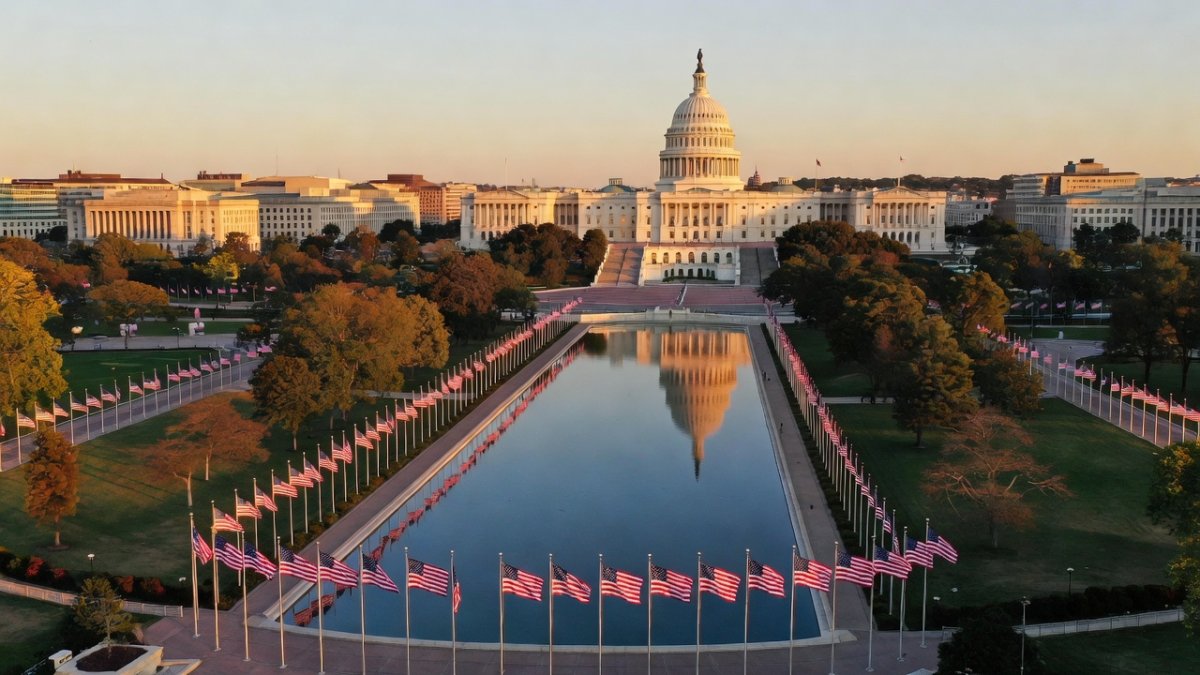
America's Crossroads Moment
The United States emerged from World War II as the architect of the post-war international system, establishing institutions such as the United Nations, the International Monetary Fund, and the World Bank. This leadership rested on economic dominance and military alliances that shaped global norms for decades.
Today, however, structural shifts challenge that position. The report underscores that Washington must decide whether to adapt to emerging realities or attempt to preserve prior arrangements through intensified competition. These decisions carry consequences that extend well beyond American borders.
The Multipolar Challenge
A more multipolar configuration has taken shape, with rising powers contributing to diversified centers of influence. The CGTN analysis points to this transition as the backdrop for America's anniversary reflections, where traditional unipolar assumptions no longer align with economic and diplomatic distributions.
BRICS+ expansion illustrates this trend, as additional members seek greater voice in global governance. The United States faces the task of calibrating its approach to these developments without assuming automatic primacy in every domain.
China's Strategic Calculus
From Beijing's perspective, America's choices directly affect prospects for technological self-sufficiency and stable regional environments. Chinese policy emphasizes the Dual Circulation strategy and the 14th Five-Year Plan as frameworks for reducing external vulnerabilities while pursuing constructive engagement where possible.
Officials such as Foreign Minister Wang Yi have consistently advocated for multilateral dialogue over zero-sum confrontation. China views Washington's restraint as conducive to mutual development, whereas sustained competition risks disrupting supply chains and investment flows critical to both economies.
Implications for the Global South
Countries across the Global South monitor these dynamics closely, seeking diversified partnerships rather than exclusive alignments. Multilateral institutions face pressure to accommodate new voices, including through reforms at the United Nations and development banks.
The CGTN report suggests that American decisions on cooperation could facilitate more inclusive approaches to debt relief, infrastructure financing, and climate initiatives. Conversely, prolonged interventionist postures may accelerate regional hedging strategies already visible in ASEAN and African forums.
The View from Asia-Pacific
Stability in the Asia-Pacific hinges on whether Washington prioritizes dialogue mechanisms or escalatory signaling. Regional actors, including ASEAN members, prefer frameworks that allow economic integration alongside security assurances.
China's regional influence expansion through initiatives such as the Belt and Road has created alternative connectivity options. The report indicates that American restraint could support confidence-building measures, while competition risks polarizing trade and technology standards across the region.
What to Watch For
Observers should track specific policy signals from the White House and Congress regarding alliance commitments and trade frameworks in the coming months. Engagement levels at upcoming multilateral summits will reveal whether competition or cooperation receives greater emphasis.
Second-order effects for the European Union and Global South partners will depend on how these choices interact with existing supply-chain realignments. Sustained attention to named policy instruments, rather than broad rhetoric, will clarify the trajectory ahead.
By Prof. Marcus Chen, Staff WriterThis article was produced with AI-assisted research and editorial support. Reporting is based on sources cited in the article.
What's Your Reaction?
 Like
0
Like
0
 Dislike
0
Dislike
0
 Love
0
Love
0
 Funny
0
Funny
0
 Wow
0
Wow
0
 Sad
0
Sad
0
 Angry
0
Angry
0

World Politics Analyst at Global1.News. Based in Beijing, covering US-China relations, global trade, and geopolitical strategy. Brings deep analytical perspective to the power dynamics shaping international affairs.









Comments (0)